Tirumala (Aravidu)
Brother of Aliya Rama Raya and the first king of the fourth, Aravidu, dynasty of Vijayanagara. He commanded a wing of the army in the battle of 1565 and lost an eye there. He fled with King Sadasiva and the treasury to Penukonda, which became the capital. He took the throne about 1569–70 and divided the empire into three viceroyalties, the Telugu one under his son Sriranga at Udayagiri and Penukonda. The Telugu poem Vasucharitramu was dedicated to him. Heras dates his death to 1572, Sewell to 1578.
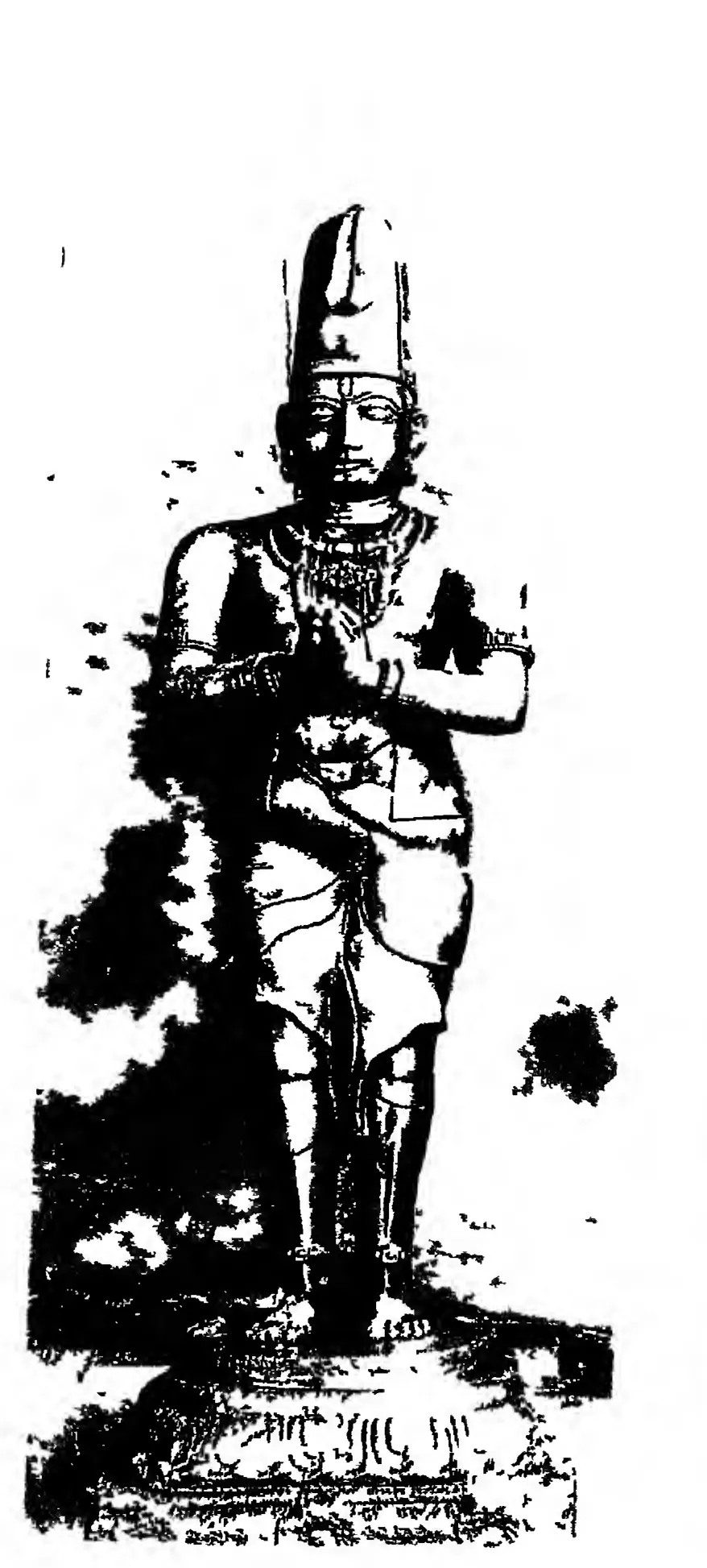
Tirumala, a brother of Aliya Rama Raya, was regent of Vijayanagara after the battle of 1565 and then its first king of the Aravidu dynasty. H. Heras, writing in 1927, dated his accession to late 1569, after the death of Sadasiva.123 He dated Tirumala’s death to the beginning of 1572.123 A doubtful prophecy in the Mackenzie collection puts his age at death at ninety-two.123
Sewell in 1932 has him seize the throne about 1570 and die in 1578.4 In 1900 Sewell had written that Tirumala was succeeded by his son Ranga in 1575.5 See Vijayanagara and Aliya Rama Raya.
Family
According to the Vasucharitramu, Tirumala was one of the five sons of Sriranga of the Aravidu family, among whom Rama Raya was the most famous.6 Tirumala married Vengalamba and had four sons, Raghunatha, Sriranga Raya, Rama and Venkata, the Vasucharitramu says.6
Sewell’s later pedigree makes Vengala a daughter of Krishnadeva Raya.7 The annals of Hande Anantapuram say that Tirumala’s wife was a daughter of Krishnadeva Raya’s queen Chinna Devi.8 Heras noted that two copper-plate grants name Tirumala’s queen Channadevi, while many others call her Vengalamba.9 See Krishnadeva Raya.
The battle of 1565
Before the battle, Sewell says, Rama Raya sent Tirumala to hold the fords of the Krishna.1011 Ferishta calls him “Yeltumraj”.1011 He went with 20,000 horse, 100,000 foot and 500 elephants.1011 In the battle he commanded the left wing against the army of Bijapur.1011
The Italian traveller Cesare Federici, as Krishnaswami Aiyangar noted, says that Tirumala lost an eye in the battle.12 A Telugu verse addressed to him compares him with his queen to Siva, who has three eyes between his two halves.1314 Alone, it compares him to the one-eyed Sukracharya, “being in either case the ‘all knowing’”.1314
Regent at Penukonda
When the army broke, Tirumala fled to the fortress of Penukonda, in the present Anantapur district.1516 With him went King Sadasiva, the royal family and a convoy of 550 elephants laden with treasure.1516
Federici says that he tried to bring people back to the ruined capital but failed.1718 He also says that Tirumala took horses from the Portuguese traders and sent them away unpaid.1718 Penukonda became the capital.1619 The Anantapur gazetteer records that its fort was repaired and extended under his orders.1619
Sewell, writing in 1900, said that Tirumala murdered Sadasiva in 1568, “so it is said”, though inscriptions of 1567 at Vellore still name Sadasiva as king.2021 See Vijayanagara.
King
Heras wrote that the feudatory chiefs (subordinate rulers) rebelled.2223 In his account, Tirumala met the danger by dividing the empire into three viceroyalties “on a racial basis”, each under one of his surviving sons:2223
- the Telugu viceroyalty in the north under Sriranga2223
- the Kannada viceroyalty in the west under Rama at Srirangapatna (then Seringapatam)2223
- the Tamil viceroyalty in the east and south under Venkatapati at Chandragiri2223
Heras added that the capital of the Telugu viceroyalty seems to have been Udayagiri.24 From there Sriranga took Kondavidu and Vinukonda before ruling at Penukonda.24
Krishnaswami Aiyangar wrote that Tirumala “was as much of a scholar as a general”, and that he withstood a Muslim attack on Penukonda.25 He also says that Tirumala handed down the empire intact, “though in so doing he appears unwittingly to have sowed the seed of its dismemberment”.25 See Udayagiri and Kondavidu.
Poets and books
The Telugu poet Bhattu Murti, called Ramarajabhushana, dedicated his Vasucharitramu to Tirumala.6 Its introduction says that Tirumala drove the Nizam’s army from the field and won a complete victory at Penukonda.6
A commentary on Jayadeva’s Gita Govinda, the Srutiranjani, is attributed in some manuscripts to Tirumala himself.26 Other manuscripts attribute it to Cherukuri Lakshmidhara.26 Late in life, Heras wrote, Tirumala made Sriranga his heir to the throne and gave him a share in the government.3 Heras dated this to the end of 1571.3 See Venkatapati II.
Footnotes
-
H. Heras, The Aravidu Dynasty of Vijayanagara, Vol. I (1927), p. 246 (archive.org (opens in a new tab)). ↩ ↩2 ↩3
-
Heras, The Aravidu Dynasty, Vol. I (1927), p. 250 (archive.org (opens in a new tab)). ↩ ↩2 ↩3
-
Heras, The Aravidu Dynasty, Vol. I (1927), p. 260 (archive.org (opens in a new tab)). ↩ ↩2 ↩3 ↩4 ↩5
-
Sewell, Historical Inscriptions (1932), p. 402 (archive.org (opens in a new tab)). ↩
-
Sewell, A Forgotten Empire (1900), p. 218 (archive.org (opens in a new tab)). ↩
-
Krishnaswami Aiyangar, Sources of Vijayanagar History (1919), pp. 216–217, extract 66, the Vasucharitramu of Bhattu Murti (archive.org (opens in a new tab)). ↩ ↩2 ↩3 ↩4
-
Robert Sewell, ed. S. Krishnaswami Aiyangar, The Historical Inscriptions of Southern India (1932), p. 401 (archive.org (opens in a new tab)). ↩
-
Krishnaswami Aiyangar, Sources of Vijayanagar History (1919), p. 178, extract 56, the annals of Hande Anantapuram (archive.org (opens in a new tab)). ↩
-
Heras, The Aravidu Dynasty, Vol. I (1927), p. 249 (archive.org (opens in a new tab)). ↩
-
Robert Sewell, A Forgotten Empire (Vijayanagar) (1900), p. 201 (archive.org (opens in a new tab)). ↩ ↩2 ↩3 ↩4
-
Sewell, A Forgotten Empire (1900), p. 203 (archive.org (opens in a new tab)). ↩ ↩2 ↩3 ↩4
-
S. Krishnaswami Aiyangar (ed.), Sources of Vijayanagar History (1919), introduction, p. 18 (archive.org (opens in a new tab)). ↩
-
Krishnaswami Aiyangar, Sources of Vijayanagar History (1919), p. 221, extract 67, a chatu verse about Tirumala Raya (archive.org (opens in a new tab)). ↩ ↩2
-
Krishnaswami Aiyangar, Sources of Vijayanagar History (1919), p. 222 (archive.org (opens in a new tab)). ↩ ↩2
-
Sewell, A Forgotten Empire (1900), p. 206 (archive.org (opens in a new tab)). ↩ ↩2
-
W. Francis, Madras District Gazetteers: Anantapur (1905), p. 20 (archive.org (opens in a new tab)). ↩ ↩2 ↩3 ↩4
-
Sewell, A Forgotten Empire (1900), p. 208, quoting Federici (archive.org (opens in a new tab)). ↩ ↩2
-
Sewell, A Forgotten Empire (1900), p. 209 (archive.org (opens in a new tab)). ↩ ↩2
-
Francis, Anantapur (1905), p. 21 (archive.org (opens in a new tab)). ↩ ↩2
-
Sewell, A Forgotten Empire (1900), p. 212 (archive.org (opens in a new tab)). ↩
-
Sewell, A Forgotten Empire (1900), p. 213 (archive.org (opens in a new tab)). ↩
-
Heras, The Aravidu Dynasty, Vol. I (1927), p. 253 (archive.org (opens in a new tab)). ↩ ↩2 ↩3 ↩4 ↩5
-
Heras, The Aravidu Dynasty, Vol. I (1927), p. 254 (archive.org (opens in a new tab)). ↩ ↩2 ↩3 ↩4 ↩5
-
Heras, The Aravidu Dynasty, Vol. I (1927), p. 255 (archive.org (opens in a new tab)). ↩ ↩2
-
Krishnaswami Aiyangar, Sources of Vijayanagar History (1919), introduction, p. 19 (archive.org (opens in a new tab)). ↩ ↩2
-
Krishnaswami Aiyangar, Sources of Vijayanagar History (1919), p. 212, extract 64, the Srutiranjani (archive.org (opens in a new tab)). ↩ ↩2
Photos
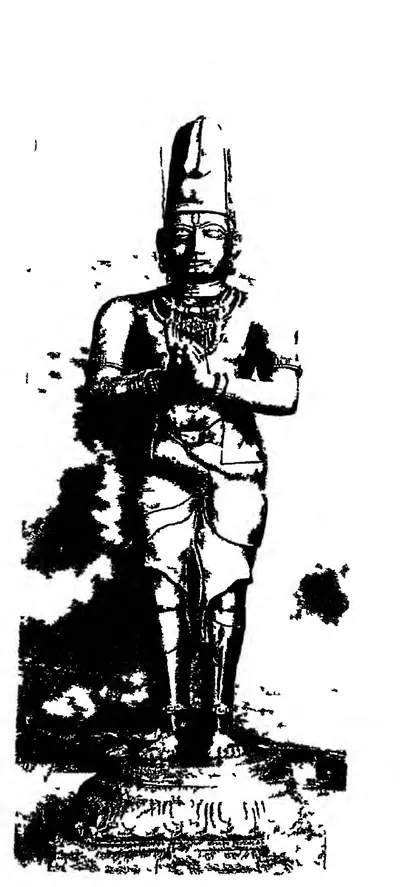 "A king, perhaps Tirumala", unlabelled stone image in the Tirumala temple (ASI Annual Report 1911-12, plate LXXVI, fig. 5 (PDF p. 354))Historic photograph · 1915
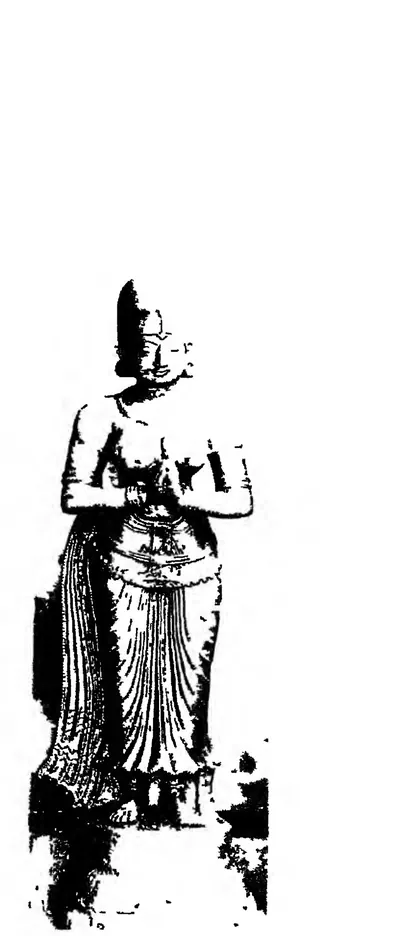 "His queen, perhaps Vengalamba", unlabelled stone image in the Tirumala temple (ASI Annual Report 1911-12, plate LXXVI, fig. 6 (PDF p. 354))Historic photograph · 1915
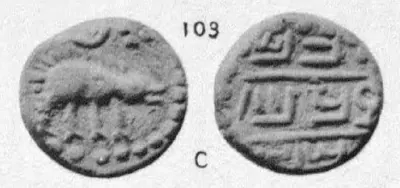 Copper coin No. 103: boar facing right, sword and sun above; legend Chalam Triramala taka (Elliot, Coins of Southern India, 1886, Plate III, No. 103 (PDF p. 191 of scan 00074712bsb))Coin · 1886
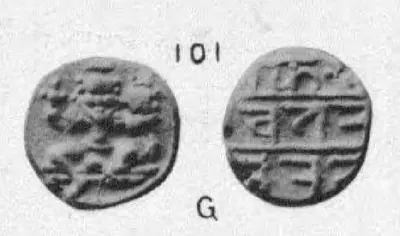 Gold coin No. 101: Siva and Parvati seated; legend possibly Sri Rama Triramala Raya (Elliot, Coins of Southern India, 1886, Plate III, No. 101 (PDF p. 191 of scan 00074712bsb))Coin · 1886
Related
Dynasties
References
Notes (0)
Sources (5)
Spotted an error on this page? Tell us
Last updated: