Kondavidu
Village and hill fortress in Guntur district. It was the capital of the Reddi kings in the 14th and early 15th centuries, a prize fought over by Orissa, Vijayanagara and Golconda in the 16th, and the seat of the Murtazanagar or Kondavidu Circar.
Kondavidu is a village below a range of fortified hills in the Narasaraopet taluk of Guntur district.1 The Imperial Gazetteer of 1908 places it at 16°16′ N, 80°16′ E, with a population of 1,979 in 1901.1 It was once the capital of a province stretching from the Krishna to the Gundlakamma river.1
The fortress
The fortifications run along the tops of a small range of hills.1 The gazetteer describes them as extensive, built of large stones and many miles round.1 In 1908 they were in fair repair.1
The inside of the fort was overgrown with jungle.1 It held the ruins of storehouses and magazines (stores for arms and gunpowder).1 The highest point of the hill is 1,701 feet above the sea.1 It had once served as a sanatorium (a place to regain health) for officers stationed at Guntur.1
The gazetteer dates the fortress to the 12th century.1 The Kistna district manual says that it had “doubtless been a stronghold for some centuries” before the Reddis took it.2
Capital of the Reddis
After the fall of the Kakatiyas, the Reddis made Kondavidu their capital.2 The Kistna manual says that Pulayya Vema Reddi (Prolaya Vema Reddi) established himself in the hill fort.2 It dates the line from 1328 to 1428.2
Using inscriptions, the Godavari gazetteer says that the family’s first capital was at Addanki.3 It says that they moved to Kondavidu later.3 The Imperial Gazetteer calls Kondavidu the seat of the Reddi dynasty from 1328 to 1482.1
Between Orissa, Vijayanagara and Golconda
Robert Sewell says that Kondavidu was under the Gajapati kings of Orissa from 1454.4 In 1515 the Vijayanagara king Krishnadeva Raya took it after a siege of two months.4 He defeated the Gajapati in a battle nearby.4
Krishnadeva Raya left his minister Saluva Timma as governor.4 An inscription at the fort names the commander there as Nadendla Gopamantri.4 The Kistna manual says that Krishnadeva Raya gave Kondapalli back to Orissa but kept Kondavidu.5
The Qutb Shahis of Golconda attacked it many times.6 The Kistna manual follows the Golconda chronicle.6 It says that Sultan Quli besieged the fort while Vijayanagara forces from Bellamkonda and Vinukonda attacked his army again and again.6 In the end he took the fort and pulled it down.6
A Vijayanagara army then retook and repaired it.6 Sultan Quli besieged it a second time.6 He forced its garrison to agree to pay a yearly tribute of three lakhs of pagodas (gold coins).6
The manual says that around 1536 the fort failed to pay, and Sultan Quli took it again.6 He set up a pillar of victory in the fort.6 The Imperial Gazetteer dates Golconda’s captures of Kondavidu to 1531, 1536 and 1579.1
The Golconda chronicle describes the last siege, in AH 987 (1579; AH is the Islamic way of counting years).7 The Qutb Shahi general Amir Shah Mir dragged guns up the hill to break the walls.7 His elephants forced open a gate.7 A son-in-law of the late Vijayanagara ruler Rama Raya was taken prisoner.7
The chronicle says that with the fort, the whole country “from the sea-shore as far as the Beejanuggur frontier” passed to Golconda.7 The Kistna manual marks this as the end of Hindu rule in the district.5
The Circar
Under Muslim rule the place was called Murtazanagar.1 The province named after it was the “Murtezanuggur, or Condavir” Circar (province) of the British treaties.8 It was later known as Guntur.8 The Nizam Salabat Jang ceded the Kondavidu country to the French in 1752.9 It passed to the English in 1788.1
Footnotes
-
Imperial Gazetteer of India: Madras, Vol. I (1908), p. 336 (archive.org (opens in a new tab)). ↩ ↩2 ↩3 ↩4 ↩5 ↩6 ↩7 ↩8 ↩9 ↩10 ↩11 ↩12 ↩13 ↩14 ↩15
-
Gordon Mackenzie, A Manual of the Kistna District (1883), pp. 9–10 (archive.org (opens in a new tab)). ↩ ↩2 ↩3 ↩4
-
F. R. Hemingway, Madras District Gazetteers: Godavari, Vol. I (1907), p. 25 (archive.org (opens in a new tab)). ↩ ↩2
-
Robert Sewell, A Forgotten Empire (1900), ch. 10 (Gutenberg (opens in a new tab)). ↩ ↩2 ↩3 ↩4 ↩5
-
Mackenzie, Kistna District (1883), p. 11 (archive.org (opens in a new tab)). ↩ ↩2
-
Mackenzie, Kistna District (1883), pp. 26–28 (archive.org (opens in a new tab)). ↩ ↩2 ↩3 ↩4 ↩5 ↩6 ↩7 ↩8 ↩9
-
Golconda chronicle, in Muhammad Qasim Ferishta, tr. John Briggs, History of the Rise of the Mahomedan Power in India, Vol. III (1829), pp. 437–438 (archive.org (opens in a new tab)). ↩ ↩2 ↩3 ↩4 ↩5
-
Henry George Briggs, The Nizam, Vol. I (1861), pp. 70, 234 (archive.org (opens in a new tab)); Imperial Gazetteer: Madras, Vol. I (1908), p. 186 (archive.org (opens in a new tab)). ↩ ↩2
-
Hemingway, Godavari (1907), p. 30 (archive.org (opens in a new tab)). ↩
Photos
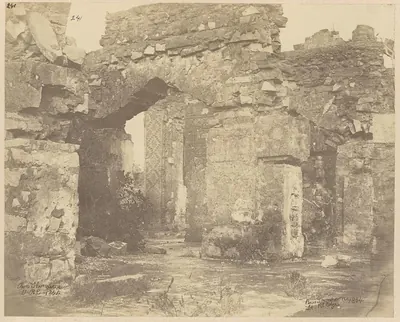
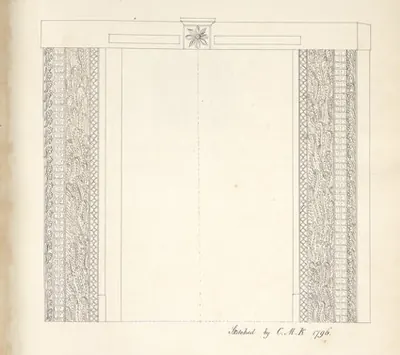 "Gateway at Kondavid Durg. Hindoo Architecture": a carved door frame in the lower fort of Kondavid, drawing signed "C.M.K. 1796" (Colin Mackenzie)Drawing · 1796
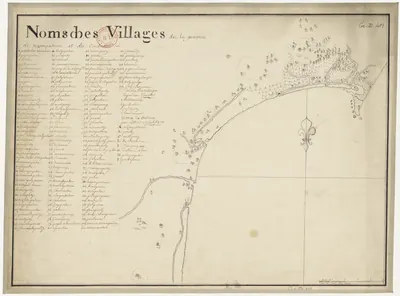 "Noms des villages de la province de Nizampatnam et du Condavir": French manuscript map of the coast with numbered villages and a key, 18th centuryMap · 1750
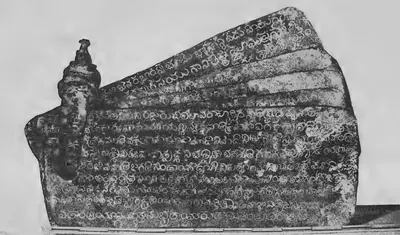
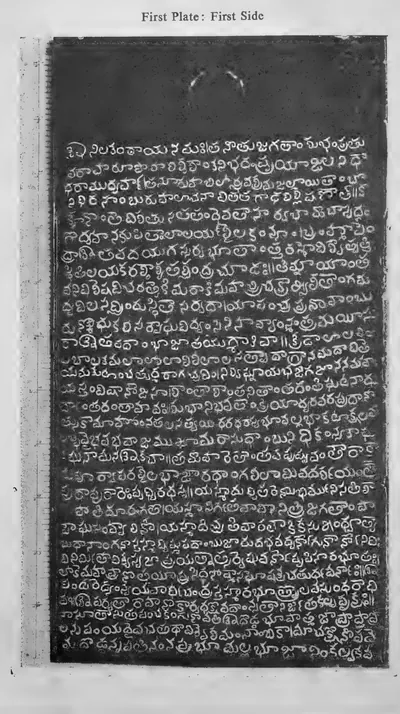
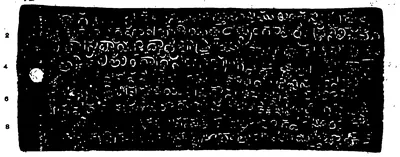 "Plates of Ganadeva of Kondavidu.—Saka-Samvat 1377", first side of the first plate (lines 1-9) (Indian Antiquary XX, plate with p. 390)Inscription rubbing · 1891
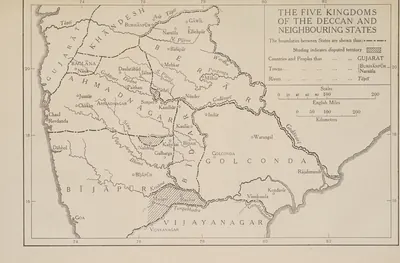 "The Five Kingdoms of the Deccan and Neighbouring States", with Golconda holding Telingana from Warangal to Rajahmundry and Kondavir (The Cambridge History of India, Vol. III (1928), Map 6)Map · 1928
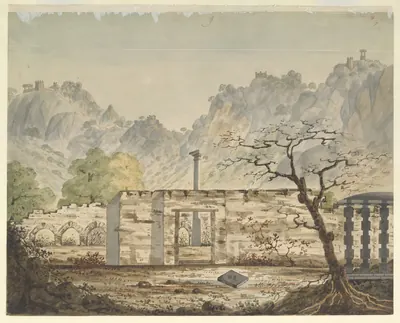 Kondavid-drug near Guntur, 19 February 1804 (drawing signed "W.R.")Drawing · 1804
Related
Dynasties
People
Prolaya Vema Reddi
c. 1325–1353 CE
Founder of the Reddi kingdom of Addanki and Kondavidu (c. 1325–1353). He took over the country between Srisailam and the sea after the fall of the Kakatiyas. His grants of 1345 and 1346 say he restored the Brahman villages seized by the Muslim conquerors of Warangal. Later records remember him for the flights of steps at Srisailam and Ahobilam, and the poet Errapragada dedicated his Harivamsa to him.
Anavema Reddi
c. 1364–1386 CE
Third Reddi king (c. 1364–1386), younger son of Prolaya Vema, who ruled from Kondavidu and carried the kingdom's grants into the Godavari delta. He is known from five copper-plate grants (Pachchanitandiparru 1374, Nadupuru, Pedapalakaluru 1378, Vanapalli 1380 and others) and from records at Srisailam and Draksharama. He was surnamed Vasantaraya for his spring festival. The poet Srinatha's connection with the Reddis probably began under him.
Srinatha
c. 1365–1440 CE
Telugu poet of the late 14th and early 15th centuries, often ranked with the three translators of the Mahabharata. He served Peda Komati Vema of Kondavidu as vidyadhikarin and composed his grants and inscriptions. He then wrote for the Reddis of Rajahmundry. His Sringaranaishadham, Bhimakhandam and Kasikhandam are dedicated to Reddi kings and ministers, and they are a main source for their history.
Kumaragiri Reddi
c. 1386–1402 CE
Reddi king of Kondavidu (c. 1386–1402), son of Anavota. He is remembered for his spring festival and his court's foreign trade, and as the patron after whom Kataya Vema named his commentary on Kalidasa. He gave the Godavari country around Rajahmundry to his minister and brother-in-law Kataya Vema. At the end of his reign he lost Kondavidu to his kinsman Peda Komati Vema.
Peda Komati Vema
c. 1402–1420 CE
Fifth Reddi king of Kondavidu (c. 1402–1420), a grandson of Prolaya Vema's elder brother Macha, known as a scholar-king. The Sringaradipika commentary on the Amarusataka and other works are ascribed to him, and the poet Srinatha served him as vidyadhikarin and composed his grants. His reign was spent in wars with the Rajahmundry Reddis, Vijayanagara and the Recherla Velamas.
Kapilendra (Kapilesvara)
c. 1434–1470 CE
Founder of the Suryavamsi Gajapati dynasty of Orissa, who took the throne of the last Eastern Ganga king in 1434–35 and reigned until about 1470. He conquered the Reddi kingdoms of Rajahmundry and Kondavidu, and governed them through his nephew Raghudeva and his kinsman Ganadeva. He relieved Devarakonda from the Bahmanis in 1459, and his son Hamvira and Raghudeva took Warangal in 1460. His records credit him with conquests down the coast to the Kaveri.
Hamvira (Hambira)
c. 1459–1478 CE
Son of the Gajapati king Kapilendra and the leading general of his conquests in the Telugu and Tamil countries. He captured the fort of Warangal on 2 February 1460 and made the Chiruvroli grant on the Krishna in 1461. In 1464 his son Dakshina-Kapilesvara governed Kondavidu and the forts of the south. Ferishta writes of an 'Ambur Ray' who took the Orissan throne with Bahmani help after Kapilendra's death. This man has been identified with Hamvira, but the succession is disputed.
Muhammad Shah III
1463–1482 CE
Bahmani sultan (1463–1482) who came to the throne as a boy. He brought Rajahmundry, Kondapalli and the Krishna–Godavari coast under Bahmani rule, and spent three years settling Telangana. In 1481 he had his great minister Mahmud Gawan executed because of a forged letter, a deed the sources blame for the break-up of the kingdom.
Purushottama (Gajapati)
c. 1470–1497 CE
Gajapati king of Orissa from 1469–70 to 1496–97, son of Kapilendra. Early in his reign the Bahmanis took Rajahmundry and Kondapalli or Kondavidu, after a disputed succession in which he may have bought their help. His attempt to recover the Godavari country in the 1470s ended with Muhammad Shah III's invasion of Orissa. But by 1489 his grants and inscriptions reach the Krishna and the Ongole country again. Orissan tradition credits him with an expedition to Kanchi and a romantic marriage.
Prataparudra (Gajapati)
c. 1497–1540 CE
Gajapati king of Orissa from 1496–97 to about 1540, son of Purushottama, and the last great king of the Suryavamsi line. At his accession his empire reached from Bengal to the Guntur and Nellore country. In 1512–19 the Vijayanagara king Krishnadeva Raya took Udayagiri, Kondavidu and Kondapalli, captured his son Virabhadra, marched to Simhachalam and married his daughter. The Qutb Shahi sultan of Golconda then took the Godavari–Krishna country. The legal digest Sarasvativilasa bears his name. He was a disciple of Chaitanya.
Krishnadeva Raya
1509–1529 CE
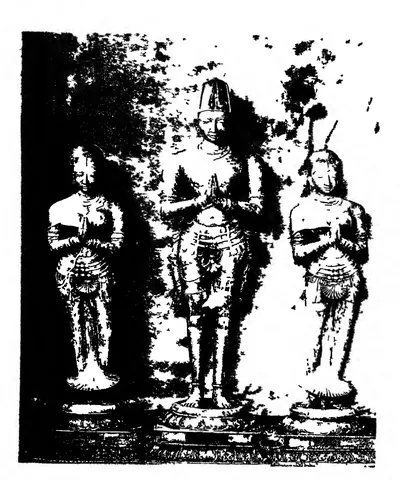
King of Vijayanagara from 1509 to 1529, of the Tuluva dynasty, and the most famous ruler of the empire. In 1512–16 he took Udayagiri, Kondavidu and Kondapalli from the Gajapati Prataparudra. He marched to Simhachalam and married the Gajapati's daughter. In 1520 he defeated the Adil Shah at Raichur. He wrote the Telugu poem Amuktamalyada, in which the god says Telugu is the best of the languages of the land. His court, with Allasani Peddana and Nandi Timmana, began the age of the Telugu prabandha (long narrative poem).
Achyuta Raya
1529–1542 CE
King of Vijayanagara from 1529 or 1530 to 1542, half-brother and successor of Krishnadeva Raya. He was crowned at Tirupati after years of confinement at Chandragiri. He lost Raichur and Mudkal to Bijapur, while Sultan Quli of Golconda attacked Kondavidu. His court poem credits him with a southern campaign and a victory at Raichur. Nuniz, who lived at his capital, called him a tyrant ruled by his two brothers-in-law, the Salakam Tirumalas, whose regency after his death led to civil war.
Ibrahim Qutb Shah
1530–1580 CE
Fourth Qutb Shahi sultan of Golconda (1550–1580), a younger son of Sultan Quli. He spent seven years as an exile at Vijayanagara under Rama Raya. He came back to take the throne with the help of the Telugu foot soldiers who held the forts. He joined the alliance that destroyed Vijayanagara at Talikota in 1565, and he conquered Rajahmundry, the northern coast and Kondavidu. Telugu poets dedicated works to him and to his officers, and Telugu records call him Ibharama. A Sanskrit copper-plate grant from Nellore calls him Malikibharama.
Aliya Rama Raya
1542–1565 CE
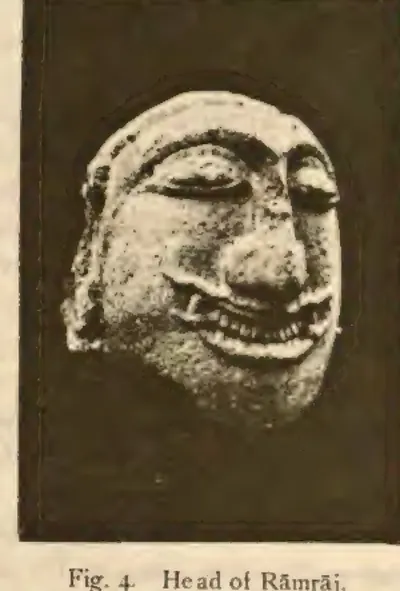
Chief of the Aravidu family and son-in-law (aliya) of Krishnadeva Raya. After Achyuta Raya's death, he and his brothers Tirumala and Venkatadri overthrew the regent Salakam Timma. He placed Sadasiva on the throne in 1542 and ruled the empire in his name until 1565. His family's lands lay around Kurnool, Adoni and Gooty, and his governors held Kondavidu. He played the Deccan sultans against each other until they joined against him. He was captured and beheaded in the battle of January 1565.
Muhammad Quli Qutb Shah
1566–1612 CE
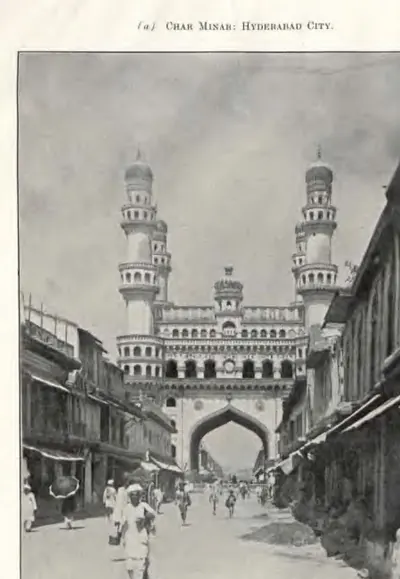
Fifth Qutb Shahi sultan of Golconda (1580–1612), third son of Ibrahim Qutb Shah. He founded the city of Bhagnagar, later Hyderabad, on the Musi river around 1589–91, and built the Charminar, the Jami Masjid and the Dar-ush-Shifa hospital there. Ferishta says he named the city after a singer, Bhagmati. The sources differ on who she was and on how the city got its later name. He wrote poetry in Persian and the old Urdu of the Deccan.
Madayyagari Mallana
Telugu Shaiva poet of Kondavidu, counted among the eight poets of Krishnadeva Raya's court. His Rajasekhara Charitramu, a story-poem, is dedicated to Nadindla Appa, nephew and son-in-law of the king's minister Saluva Timma, and its opening traces the minister's family. The Rayavachakamu places him with the king after the victory over the sultans.
Malik Hasan Bahri
before 1486 CE
Bahmani noble, born a Brahman and brought up as a Muslim. As Nizam-ul-Mulk he took Rajahmundry and Kondapalli or Kondavidu for Muhammad Shah III in about 1471, and governed all of Telingana. He resented its division by Mahmud Gawan and led the plot that had the minister executed in 1481. He then ruled the kingdom as Malik Naib until he was killed in 1486 after a campaign at Warangal. His son Ahmad founded the Nizam Shahi kingdom of Ahmadnagar.
Najib-ullah Khan
Brother of the Nawab Muhammad Ali Walajah and governor of Nellore in the 1750s. In 1753 the adventurer Muhammad Kamal drove him out of Nellore, but he won it back and had Kamal beheaded. In 1757 he refused his brother's demand for an extra payment and rebelled. His garrison beat off the attack of the Nawab's army and an English force under Colonel Forde. He went over to the French, received Bussy at Nellore in 1758 and joined Moracin against Tirupati. When the French siege of Madras failed in 1759, he killed the Frenchmen with him and was confirmed in Nellore for a tribute of 30,000 pagodas. In 1762 an English force under Caillaud took the Nellore fort from him for the Nawab.
Nandi Timmana
Telugu poet of Krishnadeva Raya's court and one of the Ashtadiggajas (the eight great poets), popularly called Mukku Timmana. He was a Niyogi Brahman and a Saiva, and a nephew of the poet Malayamaruta. He wrote the Parijatapaharanamu, dedicated to the king, the story of Krishna bringing the parijata tree from heaven for Satyabhama. Its introduction is a source for the careers of Narasa Nayaka and Krishnadeva Raya. Tradition says it was written to reconcile the king with a queen.
Pingali Ellanarya
Telugu poet of about 1602, author of the Tobhya Charitramu, also called the Sarvesvara Mahatmyamu, a poem in four cantos on a Christian subject. He wrote it for Tumma Rayapa Reddi, a minor chief in the Kondavidu country. Chenchiah and Bhujanga Rao say it was based on an account of the life of St Thomas kept in the patron's family.
Saluva Timma (Timmarasu)
Chief minister of Vira Narasimha and of Krishnadeva Raya of Vijayanagara, known in Telugu tradition as Timmarasu and Appaji, 'father'. Nuniz says he saved Krishnaraya from being blinded and made him king. He managed the campaign against Orissa, took Kondavidu in 1515 and governed it through his family, the Nadindla brothers. Nuniz says the king later blinded and imprisoned him, suspecting him of poisoning the young prince. Telugu tradition makes the king and his minister the heroes of many tales.
Sultan Quli Qutb-ul-Mulk
before 1543 CE
Persian-born officer of the Bahmani sultanate who governed Telingana from Golconda. He conquered much of Telangana and the Krishna–Godavari coast, and founded the Qutb Shahi dynasty. He was assassinated in 1543. According to the Golconda chronicle, he was killed at prayer in the mosque of Golconda fort. According to Ferishta, a slave killed him while he was examining jewels.
Vemana
Telugu poet of short moral, religious and satirical verses, each ending with the refrain 'Viswad abhi rama vinara Vema'. His verses were the moral schoolbook of the Telugu country. Nothing certain is known of his life: C. P. Brown, who collected and translated the verses from 1824, heard that he lived about 1600, while Chenchiah and Bhujanga Rao preferred the early 15th century.
Monuments
Inscriptions
Kondavidu plates of Ganadeva (1455)
c. 1455 CE
Three copper plates, sent to E. Hultzsch from the Kistna district and edited by him in 1891. They record a gift of the village of Chavali in the Repalle taluk to a number of Brahmins by Ganadeva, called Rautaraya, governor of Kondavidu. The gift was made on the day of a lunar eclipse in Saka 1377. The grant praises 'king Kapila' of the Solar race, the Gajapati of Orissa, whose capital was Cuttack. A pillar inscription of the same Ganadeva at Chintapallipadu is a year older, of April 1454.
Kondavidu pillar inscription of Nadindla Gopa (1520)
1520 CE
A four-sided pillar near the agrahara (Brahmin village) at Kondavidu, inscribed in Sanskrit and Telugu. H. Luders edited it with H. Krishna Sastri in 1901. It is dated at a lunar eclipse on 2 May 1520. It records that Nadindla Gopa, governor of Kondavidu and nephew of Saluva Timma, rebuilt the temple of Raghunayaka at Kondavidu. He gave the temple the customs on goods on every road of the Kondavidu country, with a list of rates for some fifty articles. The record curses Odda, Telugu and Turuka kings who might break the grant.
References
Notes (0)
Sources (6)
Spotted an error on this page? Tell us
Last updated: