Palakollu
Market town in the western Godavari delta, six miles north of Narasapur. It is known as Kshirarama for its Shiva temple, one of the five Pancharama shrines. It was the first Dutch settlement on this coast, founded in the mid-17th century, and passed finally to the British in 1825.
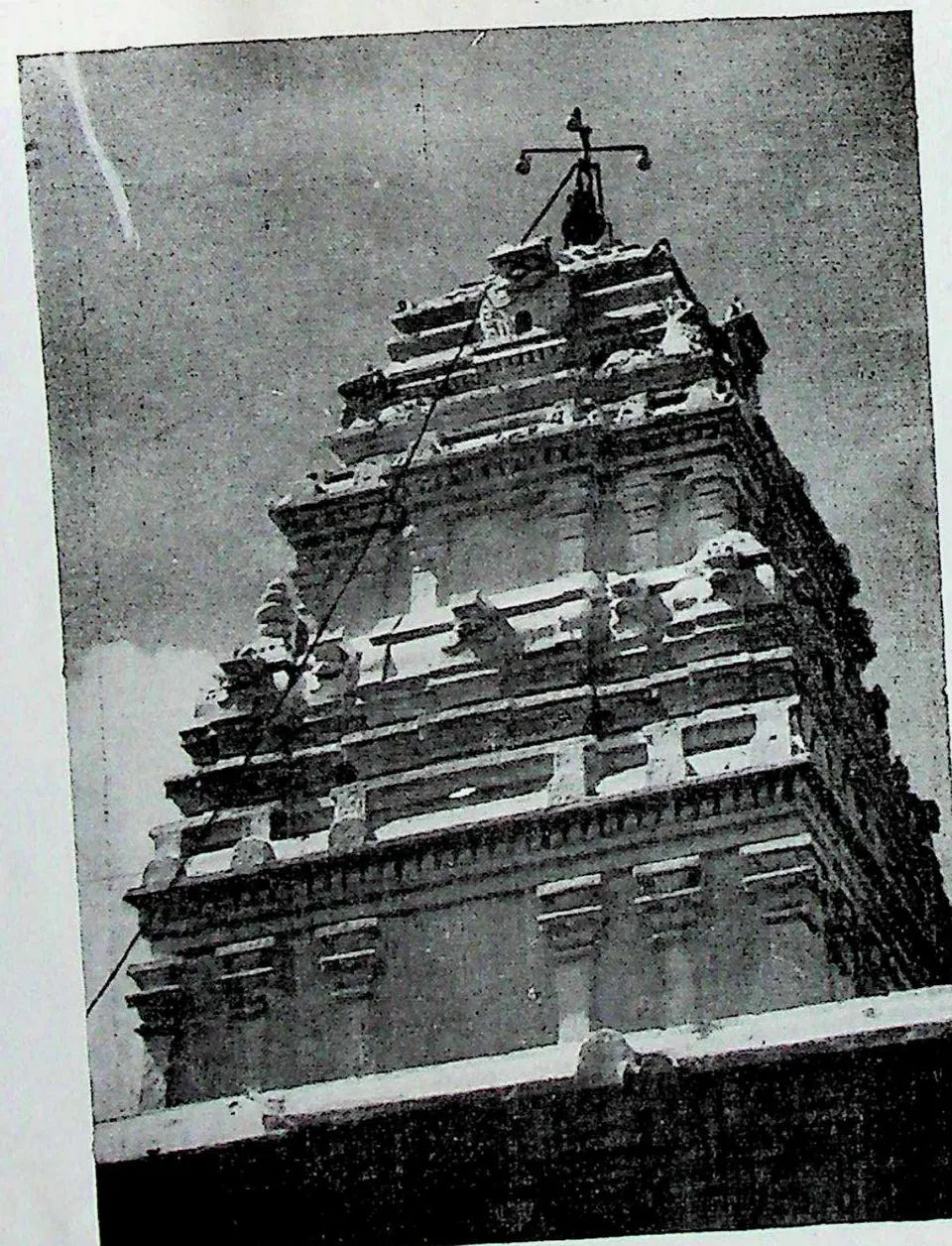
Palakollu lies in the western delta of the Godavari, on the Narasapur canal six miles from Narasapur. The Imperial Gazetteer of 1908 placed it at 16° 31′ N, 81° 44′ E, with a population of 10,848 in 1901.1 It called it “a flourishing town and the chief market of the Western Delta of the Godavari”.1 The town traded chiefly in fruit, rice and yarn.1
The district boundaries moved around it, and Robert Sewell listed it in 1882 under the Narasapur taluk of Godavari district.2 By 1908 that taluk had been transferred to Krishna (then Kistna) district.1 It is now in West Godavari district.3
Kshirarama
The town’s Sanskrit name was Kshirarama, and the annual report on epigraphy for 1937–38 explained Kshirarama as the Sanskritised name of Palakollu.4 M. Rama Rao, following the poet Srinatha, gave the legend of the five pieces of the Tripura demons’ linga (stone emblem of Shiva).35 In it, Rama set up one piece in the village of Balakota, also called Kshirarama.35 The Godavari district gazetteer of 1907 also counted Palakollu among the five holy places of the Pancharama legend.6
Rama Rao attributed the Shiva shrines of all five to the Eastern Chalukya king Chalukya-Bhima I.73 But the temple’s own inscriptions begin in 1136.73 See Kshiraramalingesvara temple, Palakollu.
The Dutch settlement
The Imperial Gazetteer calls Palakollu the first European settlement in the Godavari district, founded by the Dutch in 1652.81 For some time it was the headquarters of their establishments on this part of the coast.1
The sources disagree on when the English first took it:291
- Sewell gives 1781, and credits the capture to the English “under Lord Macartney”.2
- V. Rangacharya also gives 1781.9
- The Imperial Gazetteer gives 1783.1
The gazetteer adds that the Dutch stayed on, paying a small quit-rent (fixed rent), until 1804.1 The place was restored to Holland by the convention of 1814, and finally ceded to the British in 1825.1
Its Dutch cemetery, in the heart of the town, has tombstones dating back to 1662.1 Sewell gave the two earliest as 1662 and 1665.2 The gazetteer also noted the gardens of Batavian oranges and pummelos introduced by the Dutch.1
Footnotes
-
Imperial Gazetteer of India: Madras, Vol. I (1908), p. 327, s.v. Palakollu (archive.org (opens in a new tab)). ↩ ↩2 ↩3 ↩4 ↩5 ↩6 ↩7 ↩8 ↩9 ↩10 ↩11 ↩12
-
Robert Sewell, Lists of the Antiquarian Remains in the Presidency of Madras, Vol. I (1882), p. 41, s.v. Palakol (archive.org (opens in a new tab)). ↩ ↩2 ↩3 ↩4
-
Rama Rao, Eastern Calukyan Temples (1964), p. 42 (archive.org (opens in a new tab)). ↩ ↩2 ↩3 ↩4 ↩5
-
Annual Report on South Indian Epigraphy for 1937–38 (1942), p. 99 (archive.org (opens in a new tab)). ↩
-
Rama Rao, Eastern Calukyan Temples (1964), p. 16 (archive.org (opens in a new tab)). ↩ ↩2
-
F. R. Hemingway, Madras District Gazetteers: Godavari (1907), p. 207 (archive.org (opens in a new tab)). ↩
-
M. Rama Rao, Eastern Calukyan Temples of Andhra Desa (1964), preface (unnumbered) (archive.org (opens in a new tab)). ↩ ↩2
-
Imperial Gazetteer of India: Madras, Vol. I (1908), p. 272 (archive.org (opens in a new tab)). ↩
-
V. Rangacharya, A Topographical List of the Inscriptions of the Madras Presidency, Vol. II (1919), p. 902, Narasapur taluk, Palakol (archive.org (opens in a new tab)). ↩ ↩2
Photos
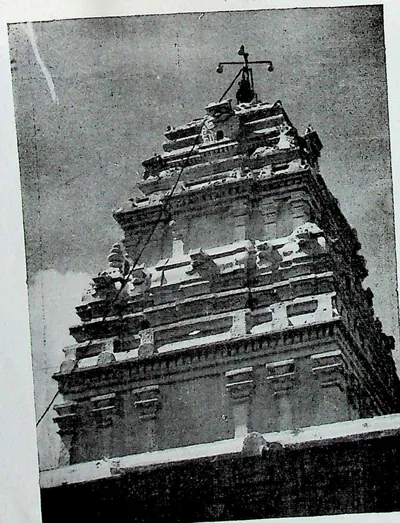 "41. Vimāna - Rāmalingēśwara Temple - Pālakol" (M. Rama Rao, Eastern Calukyan Temples of Andhra Desa, 1964, Fig. 41 (PDF p. 113))Historic photograph · 1964
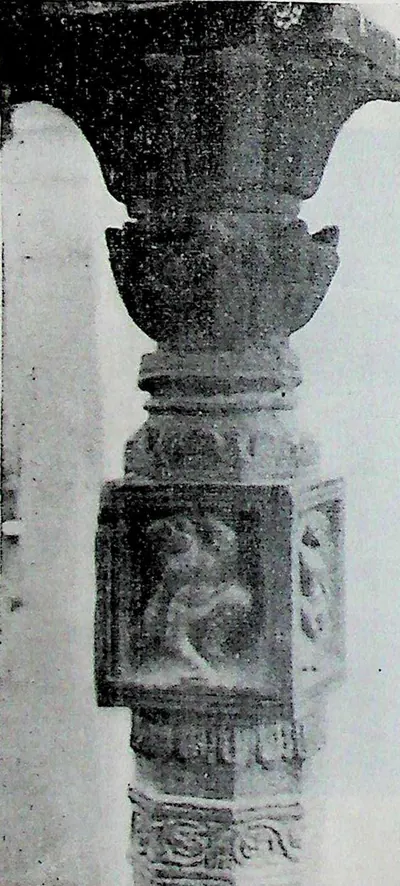 "42. Pillar with Sculpture - Pālakollu" (M. Rama Rao, Eastern Calukyan Temples of Andhra Desa, 1964, Fig. 42 (PDF p. 115))Historic photograph · 1964
Related
People
Monuments
References
Notes (0)
Sources (6)
Spotted an error on this page? Tell us
Last updated: