Daily life & festivals
Food, dress, homes and games; Sankranti, Ugadi, Bathukamma, Bonalu and other festivals.
About the sources. Kings and wars fill most of the records, and ordinary days leave few traces. This page gathers what the sources say about food, dress, houses, games and the festival year. Before about 1800, the evidence comes mostly from Telugu poetry, from inscriptions and from foreign visitors. Suravaram Pratapa Reddy read the poetry for this purpose in his social history of the Andhras (1949). After 1870, the district gazetteers of the Madras Presidency and the surveys of Hyderabad State describe village life at length, from the point of view of the officials who wrote them.
Food
Marco Polo described a kingdom he called Mutfili in the late 13th century.1 He said simply that its people lived “on flesh, and rice, and milk”.1 Polo does not name its rulers. His editor Henry Yule identified Mutfili as the Kakatiya kingdom of Telingana, called after its port of Motupalli.2
Telugu poets give more detail.3 Pratapa Reddy quotes a verse of the Vijayanagara emperor Krishnadevaraya.3 It pictures well-off village Reddis in the rains. They eat rice with a dish of four kinds of wild greens, cooked with tender tamarind leaves and plenty of oil. Then they sit on cots by the fire.3 Pratapa Reddy adds that the wives of watchmen carried pots of ambali, a millet gruel, to their husbands guarding the fields.3 Millets (jonna, sajja) and wheat were plentiful.3
Around 1900 the main food depended on water. In the Godavari district, rice was eaten even in the uplands, often mixed with millets.4 In the hill country, jonna (great millet) was the commonest food.4
Anantapur was one of the driest districts.5 There the poor lived on great millet, foxtail millet, little millet or ragi, depending on the part of the district.5 Only the richer classes ate rice regularly. Rice puffed in hot sand, and beaten rice (atukulu), were treats.5
In Hyderabad State, the poor ate cakes of jowar and bajra.6 They ate them with curries of vegetables, pulses and onions, seasoned with tamarind and chillies.6 But rice was widely eaten in the Telangana districts.6
Labourers in Godavari ate three meals a day: at 8 in the morning, at midday and at 8 at night.7 Coffee was drunk less than in the Tamil south. Smoking was common among men and women of most castes.7
Drink had its own history. Tavernier saw toddy (tari), the sap of the palm, brought into Golconda every day.8 It came in leather bottles on five or six hundred horses.8 He noted that the king drew a large income from taxing it.8
Pratapa Reddy notes a custom of the late 18th and early 19th centuries.9 Wealthy people earned merit by setting up water-sheds (chalivendram).9 There, summer travellers were given buttermilk, spiced drinks and cool water.9
Dress
Tavernier watched the Golconda soldiers in the mid-17th century.10 They wore only a length of cotton cloth around the waist. They kept their hair long and knotted on the head, and covered it with a three-cornered scrap of cloth.10 From the poetry of the Reddi period, Pratapa Reddy collects names for women’s clothes. Among them are saris worked with gold thread, and dyed bodices.11
The gazetteers describe dress around 1900 region by region. In Godavari, men of the upper classes wore a waist-cloth, often red.12 Women generally wore white cotton, and silk was rare. Labourers in the fields tucked their cloths up for work.12 Tattooing was a common ornament among women. Patterns included Krishna’s flowering tree, and the conch and discus of Vishnu.12
In Anantapur the winter is cold, and clothes were thicker than on the coast.13 The woollen blanket (kambli) was carried almost everywhere, and turbans were large and white.13 Ordinary villagers wore coarse cotton woven locally. Some spun the thread from their own cotton and paid only for the weaving.13
In Hyderabad State, the villager wore a waist-cloth, a short cotton jacket, a turban and a blanket.14 In Telangana the turban was always white.14 Women wore a sari over a short bodice. Many Muslim women wore a skirt with a bodice and a long scarf.14 Banjara women stood out in embroidered skirts and bodices hung with cowries and beads. They wore brass and horn bracelets up to the elbow.15
Houses
Pratapa Reddy quotes a verse from the Palnadu country about a priest’s one-room house.16 It is crowded with work, dust, calves, stale food, small children, leaf plates, dirty clothes and firewood.16
By 1900, houses varied with the land and the climate.17 In the Godavari delta, most village houses had mud walls and roofs thatched with palmyra leaves.17 There was often a mud ceiling under the thatch, as a loft and a fire-break.17 Better-off families built one of two kinds of house:17
- a “hall house” (chavadi illu), with a long hall from front to back
- a “courtyard house” (manduva illu), with rooms opening onto a verandah round an open court17
Front steps were decorated with lines of lime powder, and doorposts with turmeric and vermilion.17
In Anantapur, good clay for tiles was rare.18 So houses had stone walls and flat roofs of rafters, brushwood and earth, which often leaked.18 Cattle were kept in the front room. In some southern villages, houses had their own watch-towers.18
In Hyderabad State, a cultivator’s house had three or four rooms of mud round a small courtyard.19 The poorest lived in huts of reeds and woven fences, plastered with mud and cow-dung.19 Koya houses in the Godavari hills were of bamboo, with thatch of grass or palmyra.20
Games and pastimes
Pratapa Reddy found many games in the Telugu poets.21 Palkuriki Somanatha, writing in the Kakatiya period, mentions the stick dance kolatam and the dances gondli and perini.21 Pratapa Reddy picks out two games of the period as truly Telugu: uppanapatte and tip-cat (gilli-danda). Both were still played in his day.21 Spinning tops were a favourite with children.21
Cock-fighting was old and popular.22 Telugu tradition makes a cock-fight between rival groups the start of the Palnadu war.22 Pratapa Reddy describes the knives tied to the birds’ spurs and the written manuals of the sport.22 Fights were held in the cold season around Sankranti. He notes that cock-fighting had been banned about thirty years before he wrote.22 Girls played at weddings of dolls and at keeping house.23
The gazetteers list much the same games around 1900. Godavari boys flew kites and played marbles, tip-cat, a kind of rounders and blind man’s buff.24 Girls tossed tamarind seeds and played board games with cowries.24 Men played cards. One local game, dasavatari, used 120 cards in ten suits, named after the incarnations of Vishnu.24
Cock-fighting was everywhere in Godavari. Boatmen going down the river carried their birds, to fight the cocks of the villages they passed.24 Shadow-puppet shows were common.24
In Anantapur, girls played hide-and-seek and kolatam.25 Boys played marbles, tops, tip-cat, prisoner’s base, and cricket with a brick for a wicket.25 Travelling players acted scenes from the Ramayana and Mahabharata.25 On the Telugu New Year’s Day, young and old went out to hunt wild pig. A good hunt was taken as a good sign for the year.25
In Hyderabad State, villagers spent their evenings talking at the village meeting-place.26 They enjoyed fairs, travelling players and recitations of religious poems.26
The festival year
Festivals marked the farming year. Inscriptions show that some were already great occasions for gifts in the 12th century.27 In 1145–46 a Telugu Choda king of the Nellore country granted land to a Shiva temple “on the occasion of Uttarayana Sankranti”, the winter solstice festival.27
Pratapa Reddy found Sankranti, Deepavali, Sivaratri and Nagula Chavithi in poetry of the Reddi period.28 Srinatha describes people gambling through the night of Sivaratri.28 Deepavali was called divvela panduga, “the festival of lamps”. Pratapa Reddy heard it called divili panduga in Telangana in his own day.28
Ugadi. The Nellore manual of 1873 calls the Telugu New Year’s Day “a very important feast”.29 People rubbed themselves with oil and bathed early.29 The family priest passed round water mixed with neem flowers, jaggery and new tamarind. People believed it would keep them healthy for the year.29 In the evening, the priest read out the forecasts of the new almanac to the gathered family.29
Sankranti. In Nellore the first day, Bhogi, began with oil baths and bonfires in the streets.30 On the second day, new rice was boiled with milk, green gram and sugar in a new pot. A good boil was a good sign.30 Houses were repaired and whitewashed, potters sold new pots, and relatives were invited and given cloth.30 The third day was for the cattle. They were decked with bells and their horns were painted.30
Pratapa Reddy counts Sankranti among the most important festivals of the Telugus.31 Even the poorest communities kept the festival in their own way. In Godavari, both Malas and Madigas honoured their ancestors at Pongal, and Madigas worshipped their tanning pots.32 In Hyderabad, the Komatis worshipped their caste goddess Kanyaka Paramesvari at Makar Sankranti.33
Eruvaka. On the full moon of Jyeshtha, farmers washed and painted their bullocks.34 They decorated the ploughs and took them in procession to the fields to begin ploughing.34 Pratapa Reddy traces this custom through the poets.34
Dasara. At Vijayanagara, the nine-day festival in September was the high point of the court’s year.35 Domingo Paes was a Portuguese visitor of about 1520.35 He described dancing, the review of the army, and the sacrifice of 250 buffaloes and 4,500 sheep on the last day.35 Fernão Nuniz described the nine decorated “castles” set up by the leading captains.35
Three and a half centuries later, Dasara, Sankranti and Sivaratri were the most popular festivals of Visakhapatnam (then Vizagapatam) district.36 At Vizianagaram, the raja’s grandfather had brought in performances of scenes from the Ramayana.36
In Nellore, schoolboys went from house to house during the nine nights, singing and collecting presents.37 On the ninth day books were worshipped. On the tenth, every artisan and labourer worshipped his tools, and zamindars (landholders) paraded through the streets.37
Deepavali and Holi. In Nellore, Deepavali lasted five days.38 They were days of cleaning, oil baths, lamps, fireworks and sweets.38 Pratapa Reddy notes that in the Vijayanagara period, Holi was kept as the spring festival (vasantotsavam). On that day, coloured water was thrown at passers-by.39
Hyderabad State. The Imperial Gazetteer lists these festivals:40
- the usual Hindu festivals: Holi, Deepavali, Dasara, Nagapanchami, Ramanavami, Pitrapaksha and Sivaratri
- the Pola festival, when cattle were garlanded and led through the village
- the Muslim festivals of Muharram, Bakrid, Ramzan Id and Shab-i-barat
- the Persian New Year (Nauroz), kept as a state holiday40
Bathukamma and Bonalu
The library’s early sources say little about the two festivals now most closely tied to Telangana. But they are not silent.41 The Hyderabad survey of 1920 describes how Komati women worshipped Badakamma in the month of Aswin.41 This was an image of the goddess Gauri, set on a heap of many kinds of flowers.41 Married women linked arms and sang and danced round it in a large circle. Then they carried it in procession and placed it in a stream or tank.41
The same survey lists Badkamma and Bodhamma among the vows kept by Kapu women.42 Pratapa Reddy compares the women’s circular clapping dances of medieval poetry with the Batakamma song of Telangana and the Boddemma of Rayalaseema.43 He suggests that both come from the old gondli dance. That link is his own reading.43
For Bonalu, the survey records only a related rite.44 Among the Dasaris, the goddesses Pochamma and Ellamma were calmed in the month of Shravan with sheep and fowls.44 Pochamma was shown as a pot of water with neem leaves, covered by a lighted lamp. This worship was called Bonal.44 The great Bonalu festivals of Hyderabad and Secunderabad are not described in the sources consulted here.
Muharram
Muharram was kept with great ceremony in Hyderabad from Qutb Shahi times.45 Muhammad Quli Qutb Shah built the Badshahi Ashurkhana in 1592–96.45 Under his grandson Abdullah Qutb Shah, it received its standards (alams) for Muharram.45
A farman (royal order) of Abul Hasan Qutb Shah gave money to a mosque founded by Malik Mishk.46 The money was for feeding the poor and for the ceremonies of the first ten days of Muharram.46 The yearly urs (saint’s festival) at the Moula Ali hill, held on 17 Rajab, also went back to the Qutb Shahi period.47
In the districts, Muharram was shared. In Visakhapatnam, Hindus joined in it.48 In Anantapur, Hindus kept their own Muharram. They set up the standards, which they called Pirlu (“saints”).49 But a Muslim had to set them up and bless the meat.49 The fire-pit of the Muslim rite often became a fire-walk, at which vows were made.49
Village goddesses and jataras
Beside the temple festivals, every village honoured its own goddesses. In Godavari the gazetteer names Nukalamma, Paradesamma, Mallamma, Poleramma, Muthyalamma and others. Each had a brother called Poturaju.50 They were usually worshipped only at a yearly festival, when a buffalo, sheep and fowls were sacrificed.50 Grain was soaked in the buffalo’s blood. The harvest was foretold from how well the grain sprouted.50
Before the harvest, farmers ran three times round their fields, calling on the village goddess.51 In Anantapur, the gazetteer noted that people gave more worship to Hanuman and the village goddesses than to the great gods.52 The vanni tree had a part in the Dasara rites there.52
Pratapa Reddy traces the jatara, the great fair-festival, to the yearly chariot festivals of temples.53 Poets mention these from about 1300.53 The Nellore manual lists dozens of such gatherings.54 They ranged from a few hundred people to 50,000 at the hill shrine of Penchalakona in May.54
The manual also mentions the urs at the tombs at Anumasamudram, which drew devotees from as far as Hyderabad and Madras.54 It mentions the festival of the goddess Kotamma at Kota, held every five years.54 The authorities had put down its swinging rite.54
The forest communities kept their own festivals. The Koyas held feasts for the new millet harvest and for the earth goddess.55 At these feasts the men went hunting. The women pelted with mud those who came back empty-handed.55 The hill Reddis made pilgrimage to the shrine of Saralamma at Pedakonda.56 The great Sammakka–Saralamma jatara at Medaram in Warangal district is not described in any of the historical sources consulted here.
Footnotes
-
Henry Yule and Henri Cordier, The Book of Ser Marco Polo, Vol. II (1903), p. 360 (archive.org (opens in a new tab)). ↩ ↩2
-
Henry Yule and Henri Cordier, The Book of Ser Marco Polo, Vol. II (1903), p. 362, note 1 (archive.org (opens in a new tab)). ↩
-
Suravaram Pratapa Reddy, Andhrula Sanghika Charitra (1949), PDF p. 228 (archive.org (opens in a new tab)). ↩ ↩2 ↩3 ↩4 ↩5
-
F. R. Hemingway, Madras District Gazetteers: Godavari, Vol. I (1907), pp. 44–45 (archive.org (opens in a new tab)). ↩ ↩2
-
W. Francis, Madras District Gazetteers: Anantapur (1905), pp. 31–32 (archive.org (opens in a new tab)). ↩ ↩2 ↩3
-
Imperial Gazetteer of India: Hyderabad State (1909), p. 26 (archive.org (opens in a new tab)). ↩ ↩2 ↩3
-
Hemingway, Godavari (1907), p. 45 (archive.org (opens in a new tab)). ↩ ↩2
-
Jean-Baptiste Tavernier, tr. V. Ball, Travels in India, Vol. I (1889), p. 158 (archive.org (opens in a new tab)). ↩ ↩2 ↩3
-
Pratapa Reddy, Andhrula Sanghika Charitra (1949), PDF p. 382 (archive.org (opens in a new tab)). ↩ ↩2 ↩3
-
Tavernier, Travels in India, Vol. I (1889), p. 157 (archive.org (opens in a new tab)). ↩ ↩2
-
Pratapa Reddy, Andhrula Sanghika Charitra (1949), PDF p. 148 (archive.org (opens in a new tab)). ↩
-
Hemingway, Godavari (1907), p. 44 (archive.org (opens in a new tab)). ↩ ↩2 ↩3
-
Francis, Anantapur (1905), p. 31 (archive.org (opens in a new tab)). ↩ ↩2 ↩3
-
Imperial Gazetteer: Hyderabad (1909), p. 26 (archive.org (opens in a new tab)). ↩ ↩2 ↩3
-
Syed Siraj ul Hassan, The Castes and Tribes of H.E.H. the Nizam’s Dominions, Vol. I (1920), pp. 15–16 (archive.org (opens in a new tab)). ↩
-
Pratapa Reddy, Andhrula Sanghika Charitra (1949), PDF p. 148 (archive.org (opens in a new tab)). ↩ ↩2
-
Hemingway, Godavari (1907), pp. 42–44 (archive.org (opens in a new tab)). ↩ ↩2 ↩3 ↩4 ↩5 ↩6
-
Francis, Anantapur (1905), pp. 30–31 (archive.org (opens in a new tab)). ↩ ↩2 ↩3
-
Imperial Gazetteer: Hyderabad (1909), p. 26 (archive.org (opens in a new tab)). ↩ ↩2
-
Hemingway, Godavari (1907), p. 66 (archive.org (opens in a new tab)). ↩
-
Pratapa Reddy, Andhrula Sanghika Charitra (1949), PDF pp. 77, 85 (archive.org (opens in a new tab)). ↩ ↩2 ↩3 ↩4
-
Pratapa Reddy, Andhrula Sanghika Charitra (1949), PDF p. 85 (archive.org (opens in a new tab)). ↩ ↩2 ↩3 ↩4
-
Pratapa Reddy, Andhrula Sanghika Charitra (1949), PDF p. 382 (archive.org (opens in a new tab)). ↩
-
Hemingway, Godavari (1907), p. 45 (archive.org (opens in a new tab)). ↩ ↩2 ↩3 ↩4 ↩5
-
Francis, Anantapur (1905), p. 32 (archive.org (opens in a new tab)). ↩ ↩2 ↩3 ↩4
-
Imperial Gazetteer: Hyderabad (1909), pp. 26–27 (archive.org (opens in a new tab)). ↩ ↩2
-
Alan Butterworth and V. Venugopaul Chetty, A Collection of the Inscriptions on Copper-Plates and Stones in the Nellore District, Part I (1905), pp. 354–355 (archive.org (opens in a new tab)). ↩ ↩2
-
Pratapa Reddy, Andhrula Sanghika Charitra (1949), PDF p. 99 (archive.org (opens in a new tab)). ↩ ↩2 ↩3
-
John A. C. Boswell, A Manual of the Nellore District (1873), p. 187 (archive.org (opens in a new tab)). ↩ ↩2 ↩3 ↩4
-
Boswell, Nellore District (1873), p. 193 (archive.org (opens in a new tab)). ↩ ↩2 ↩3 ↩4
-
Pratapa Reddy, Andhrula Sanghika Charitra (1949), PDF p. 281 (archive.org (opens in a new tab)). ↩
-
Hemingway, Godavari (1907), pp. 59–60 (archive.org (opens in a new tab)). ↩
-
Siraj ul Hassan, Castes and Tribes (1920), p. 352 (archive.org (opens in a new tab)). ↩
-
Pratapa Reddy, Andhrula Sanghika Charitra (1949), PDF p. 255 (archive.org (opens in a new tab)). ↩ ↩2 ↩3
-
Robert Sewell, A Forgotten Empire (1900), “Narrative of Domingos Paes” and “Chronicle of Fernão Nuniz”, ch. 22 (Gutenberg (opens in a new tab)). ↩ ↩2 ↩3 ↩4
-
W. Francis, Madras District Gazetteers: Vizagapatam, Vol. I (1907), p. 71 (archive.org (opens in a new tab)). ↩ ↩2
-
Boswell, Nellore District (1873), pp. 190–191 (archive.org (opens in a new tab)). ↩ ↩2
-
Boswell, Nellore District (1873), p. 191 (archive.org (opens in a new tab)). ↩ ↩2
-
Pratapa Reddy, Andhrula Sanghika Charitra (1949), PDF p. 257 (archive.org (opens in a new tab)). ↩
-
Imperial Gazetteer: Hyderabad (1909), p. 27 (archive.org (opens in a new tab)). ↩ ↩2
-
Siraj ul Hassan, Castes and Tribes (1920), p. 353 (archive.org (opens in a new tab)). ↩ ↩2 ↩3 ↩4
-
Siraj ul Hassan, Castes and Tribes (1920), p. 317 (archive.org (opens in a new tab)). ↩
-
Pratapa Reddy, Andhrula Sanghika Charitra (1949), PDF p. 183 (archive.org (opens in a new tab)). ↩ ↩2
-
Siraj ul Hassan, Castes and Tribes (1920), p. 160 (archive.org (opens in a new tab)). ↩ ↩2 ↩3
-
Syed Ali Asgar Bilgrami, Landmarks of the Deccan (1927), p. 24 (archive.org (opens in a new tab)). ↩ ↩2 ↩3
-
Bilgrami, Landmarks of the Deccan (1927), pp. 79–80 (archive.org (opens in a new tab)). ↩ ↩2
-
Bilgrami, Landmarks of the Deccan (1927), p. 15 (archive.org (opens in a new tab)). ↩
-
Francis, Vizagapatam (1907), p. 65 (archive.org (opens in a new tab)). ↩
-
Francis, Anantapur (1905), pp. 29–30 (archive.org (opens in a new tab)). ↩ ↩2 ↩3
-
Hemingway, Godavari (1907), pp. 47–48 (archive.org (opens in a new tab)). ↩ ↩2 ↩3
-
Hemingway, Godavari (1907), p. 72 (archive.org (opens in a new tab)). ↩
-
Francis, Anantapur (1905), p. 33 (archive.org (opens in a new tab)). ↩ ↩2
-
Pratapa Reddy, Andhrula Sanghika Charitra (1949), PDF p. 281 (archive.org (opens in a new tab)). ↩ ↩2
-
Boswell, Nellore District (1873), pp. 195–196 (archive.org (opens in a new tab)). ↩ ↩2 ↩3 ↩4 ↩5
-
Hemingway, Godavari (1907), p. 65 (archive.org (opens in a new tab)). ↩ ↩2
-
Hemingway, Godavari (1907), p. 67 (archive.org (opens in a new tab)). ↩
Photos
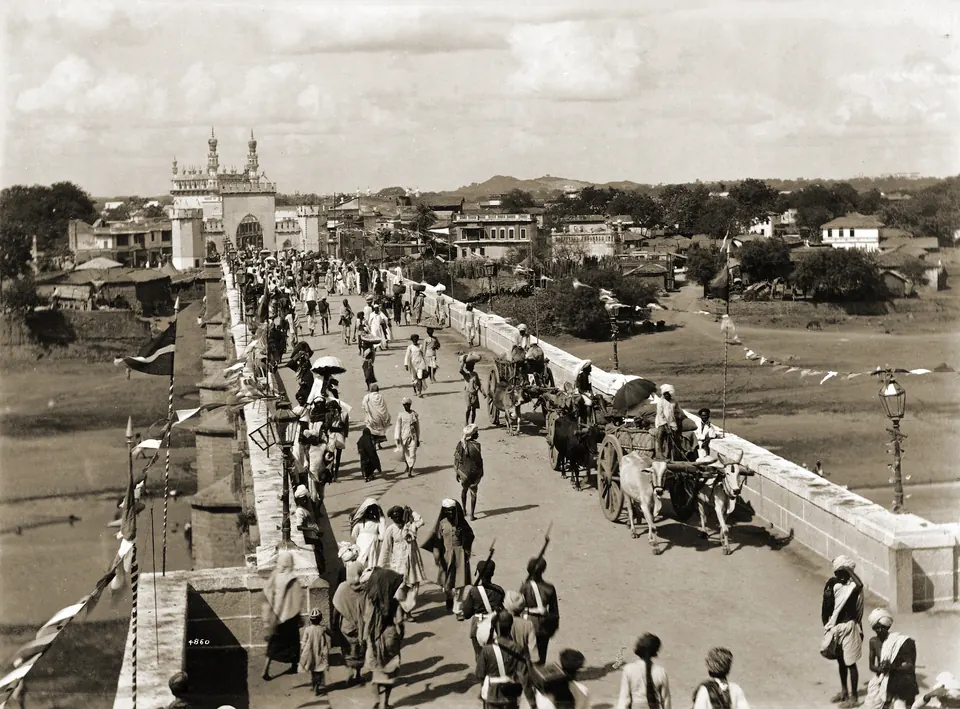
 "Entrance bridge to Hyderabad" (Lala Deen Dayal, 1880s; the British Library caption does not name the bridge)Historic photograph · 1880s
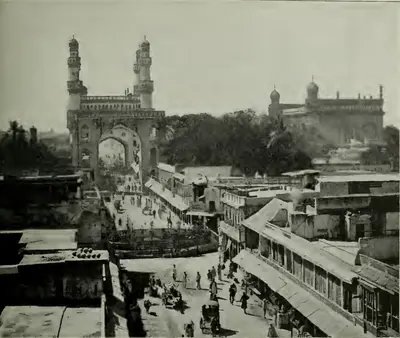 "Main Street, Hyderabad" (Gribble 1896, PDF p. 231)Historic photograph · 1896
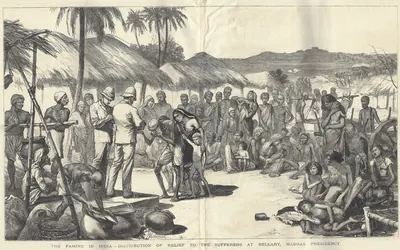 "The Famine in India—Distribution of Relief to the Sufferers at Bellary, Madras Presidency": wood engraving after Herbert Johnson in The Graphic, 20 October 1877Drawing · 1877
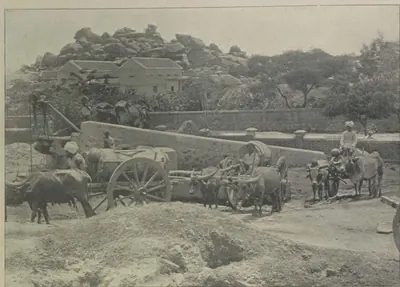 Hyderabad: "Drawing Water" (Campbell 1898, p. 212)Historic photograph · 1898
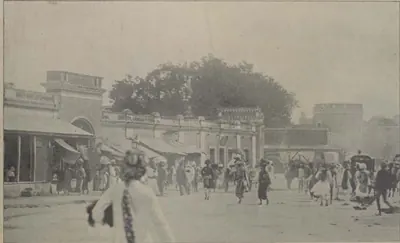 Hyderabad: "Entrance to Main Street, Hyderabad" (Campbell 1898, p. 161)Historic photograph · 1898
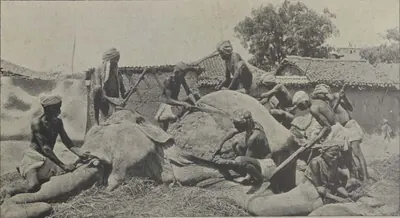 Hyderabad: "Removing a Dead Elephant" (Campbell 1898, p. 215)Historic photograph · 1898
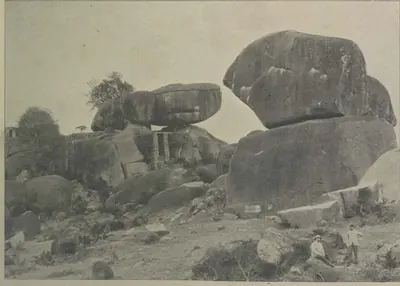 Hyderabad: "Scene near Khairatabad" (Campbell 1898, p. 212)Historic photograph · 1898
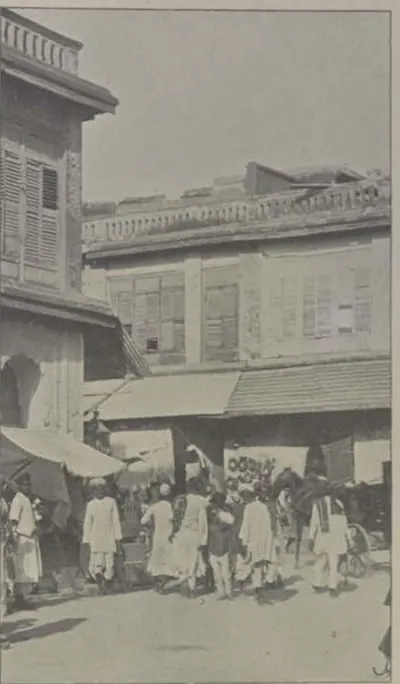 Hyderabad: "Street Scene" (Campbell 1898, p. 173)Historic photograph · 1898
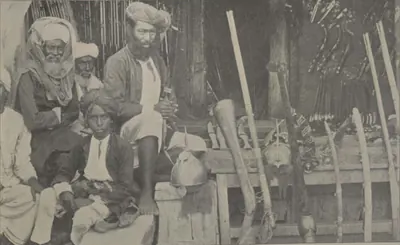 Hyderabad: "The Arms Bazaar, Hyderabad" (Campbell 1898, p. 173)Historic photograph · 1898
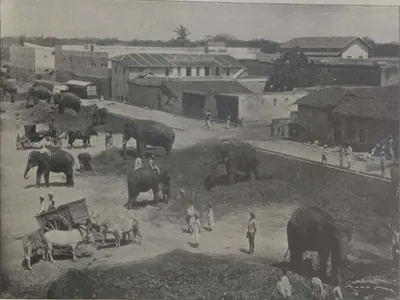 Hyderabad: "The Fil Khana" (Campbell 1898, p. 215)Historic photograph · 1898
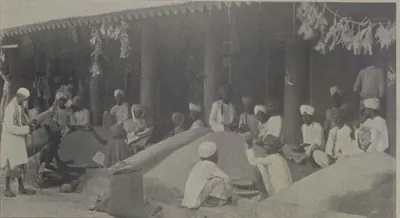 Hyderabad: "The Grain Market" (Campbell 1898, p. 161)Historic photograph · 1898
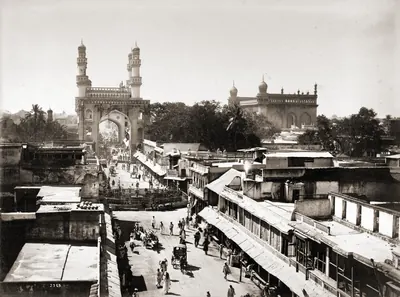 Principal street, Hyderabad, 1880sHistoric photograph · 1880s
References
Notes (0)
Sources (12)
Spotted an error on this page? Tell us
Last updated: