Amoghavarsha I
Rashtrakuta king (814–about 878), son of Govinda III, who reigned for more than sixty years and made Manyakheta (Malkhed) the capital of the dynasty. His records claim the homage of the king of Vengi and a victory over the Eastern Chalukyas at Vingavalli. Kannada inscriptions of his reign have been found in the Medak and Warangal districts of Telangana.
Amoghavarsha I reigned over the Rashtrakuta kingdom for at least sixty-two years.12 Robert Sewell wrote that he was at war with the Eastern Chalukyas of Vengi throughout his long reign.12
Family and coming to the throne
Amoghavarsha I was a son of Govinda III, and succeeded him in 814 or 815. J. F. Fleet noted that the records had not disclosed his proper name.1 Amoghavarsha, “he who rains not in vain”, was one of his titles, as were Nripatunga and Maharaja-Sarva.1 See Govinda III.
His accession was disputed.3 The records say that he recovered a kingdom which had tottered.3 They say that his cousin Karkaraja of Gujarat “vanquished the tributary Rashtrakutas” who had rebelled, and “speedily placed Amoghavarsha on his throne”.3 His son Krishna II shared in the government as heir-apparent and succeeded him.45
Vengi and Vingavalli
The Sirur inscription of 866 claims that the kings of Anga, Vanga, Magadha, Malava and Vengi worshipped Amoghavarsha.3 Fleet called the claim exaggerated for the far eastern kingdoms.3 But he raised no objection for Vengi, since “there were constant wars, with varying success on both sides”, between the two dynasties.3
Two grants of his descendant Govinda IV name a battle.67 Fleet translated the Sangli grant of 933.6 In his words, “the restraint of pleasure that had been caused by the incomparable Chalukyas” and others “was angrily allayed at Vingavalli”.6 D. R. Bhandarkar translated the Cambay plates of 930.7 In his version Amoghavarsha pleased Yama, the god of death, at Vingavalli “with unprecedented morsels of cakes (which were) the Chalukyas”.7
Fleet read both as a victory over the Eastern Chalukyas.3 He noted that the Karda grant of 972 calls Amoghavarsha “a fire of destruction to the Chalukyas”.3 The place has not been identified.3
In an earlier article Fleet had taken a short inscription at Aihole as showing a break in Amoghavarsha’s reign.4 He had called the break “attributable to a defeat at the hands of the Eastern Chalukya king”.4 By 1896 he thought the phrase meant only “reigning over the earth”, and he withdrew the suggestion.4 Other readings of the Eastern Chalukya claims of this period are set out on the page for Gunaga Vijayaditya III.8
Manyakheta
The Deoli grant of 940 and the Karda grant of 972 say that Amoghavarsha made the city of Manyakheta, the modern Malkhed.4 Fleet thought this meant that he completed the walls and forts begun under Govinda III.4 In Fleet’s view he also made the city the capital of the dynasty.4
Records in Telangana
- Mallikarjunapalli (Sadasivpet, Medak). A worn Kannada inscription dated 25 September 846, in the reign of Amoghavarsha, records gifts of land to a temple of Isvara.9 The giver was Kommana, lord of the Panuravadi country, who also made a gift to a Jain temple at Munipalle.9
- Minpur (Andole, Medak). A damaged inscription of the reign of Amoghavarsha records a gift of land to an ascetic for the performance of fasting rites.10
- Khajipet (Warangal). A broken inscription names Satyasraya Bhimarasa as a feudatory of Amoghavarsha.111213 By serving this overlord he won the five great sounds (a royal honour of five instruments) and the rank of mahasamantadhipati (chief of great feudatories).111213 The Inscriptions of Warangal District (2016) date it to 872, in the reign of Amoghavarsha I.1112 P. B. Desai (1961) took its cyclic year Nandana to be 932–33, and the king to be Amoghavarsha III.13
Religion
Fleet placed in this period a series of Digambara Jain authors who spread their faith in the Deccan.414 One of them, Jinasena, describes himself as the chief guru of Amoghavarsha I.414 A verse gives the Jain work Ratnamalika to an Amoghavarsha.414 It says that “he laid aside the sovereignty through discrimination”.414 From this Fleet concluded that in extreme old age he gave up the throne in favour of his son.414
Footnotes
-
J. F. Fleet, “Dynasties of the Kanarese Districts”, Gazetteer of the Bombay Presidency I, pt. II (1896), p. 401 (archive.org (opens in a new tab)). ↩ ↩2 ↩3 ↩4
-
Robert Sewell, The Historical Inscriptions of Southern India (1932), p. 34 (archive.org (opens in a new tab)). Paraphrased. ↩ ↩2
-
Fleet, “Dynasties of the Kanarese Districts” (1896), p. 402 (archive.org (opens in a new tab)). ↩ ↩2 ↩3 ↩4 ↩5 ↩6 ↩7 ↩8 ↩9
-
Fleet, “Dynasties of the Kanarese Districts” (1896), p. 403 and note 3 (archive.org (opens in a new tab)). ↩ ↩2 ↩3 ↩4 ↩5 ↩6 ↩7 ↩8 ↩9 ↩10 ↩11 ↩12
-
Fleet, “Dynasties of the Kanarese Districts” (1896), p. 410 (archive.org (opens in a new tab)). ↩
-
J. F. Fleet, “Sanskrit and Old-Canarese Inscriptions”: Rashtrakuta grant of Govinda-Suvarnavarsha (the Sangli grant), Indian Antiquary XII (1883), p. 253, translation (archive.org (opens in a new tab)). ↩ ↩2 ↩3
-
D. R. Bhandarkar, “Cambay Plates of Govinda IV; Saka-Samvat 852”, Epigraphia Indica VII (1903), p. 43, translation of verse 12 (archive.org (opens in a new tab)). ↩ ↩2 ↩3
-
Fleet, “Dynasties of the Kanarese Districts” (1896), p. 411 (archive.org (opens in a new tab)). ↩
-
Gajjala Vasanta Lakshmi (ed.), Epigraphia Telanganica I: Pre-Kakatiya Telangana (2023), p. 78, Rashtrakuta No. 9, summarising Inscriptions of Andhra Pradesh, Medak District (2001), pp. 1–2. Cite-only; paraphrased. ↩ ↩2
-
Epigraphia Telanganica I (2023), p. 81, No. 15. Cite-only; paraphrased. ↩
-
Epigraphia Telanganica I (2023), p. 79, No. 10, summarising Inscriptions of Warangal District (2016), pp. 1–4. Cite-only; paraphrased. ↩ ↩2 ↩3
-
Epigraphia Telanganica I (2023), p. 80, No. 14. Cite-only; paraphrased. ↩ ↩2 ↩3
-
P. B. Desai (introduction), Kannada Inscriptions of Andhra Pradesh (Andhra Pradesh Government Archaeological Series 3, 1961), p. 25, No. 71 (archive.org (opens in a new tab)). Paraphrased. ↩ ↩2 ↩3
-
Fleet, “Dynasties of the Kanarese Districts” (1896), p. 407 (archive.org (opens in a new tab)). ↩ ↩2 ↩3 ↩4 ↩5
Photos
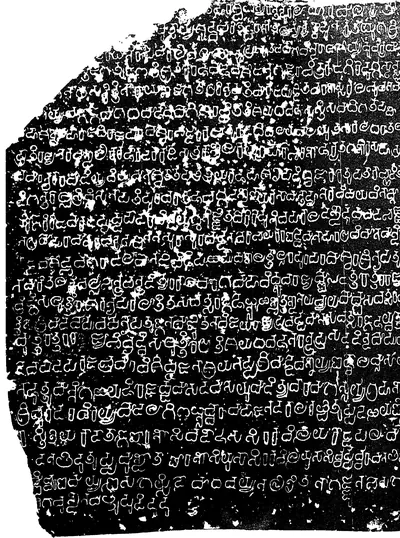 "E.—Sirur Inscription of Amoghavarsha I.—A.D. 866." (Epigraphia Indica VII, plate to face p. 206; PDF p. 253 of the archive.org scan epigraphiaindica014351mbp)Inscription rubbing · 1903
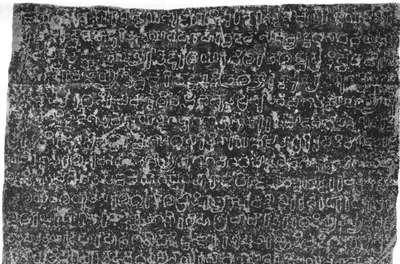 "Nilgund Inscription of Amoghavarsha I.—A.D. 866." lines 1–12 (Epigraphia Indica VI, plate with No. 11; PDF p. 137 of the archive.org scan EpigraphiaIndicaVol6)Inscription rubbing · 1901
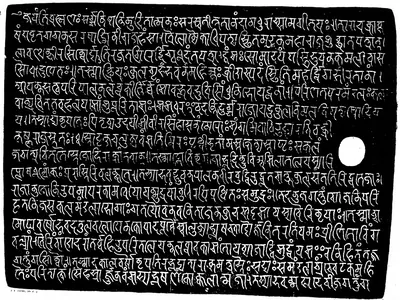 "Rashtrakuta grant of Govinda-Suvarnavarsha.—Saka 855." (the Sangli plates of Govinda IV, A.D. 933), side i (Indian Antiquary XII, plate 15 (sides I–IIa), facing p. 250, first page; PDF p. 282 of the archive.org scan in.ernet.dli.2015.176349)Inscription rubbing · 1883
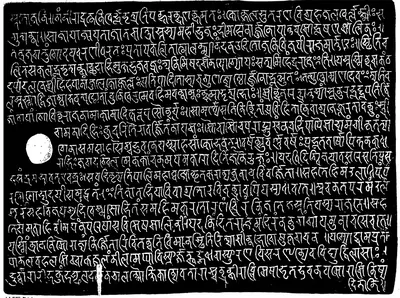 "Rashtrakuta grant of Govinda-Suvarnavarsha.—Saka 855." (the Sangli plates of Govinda IV, A.D. 933), side iia (Indian Antiquary XII, plate 15 (sides I–IIa), facing p. 250, second page; PDF p. 283 of the archive.org scan in.ernet.dli.2015.176349)Inscription rubbing · 1883
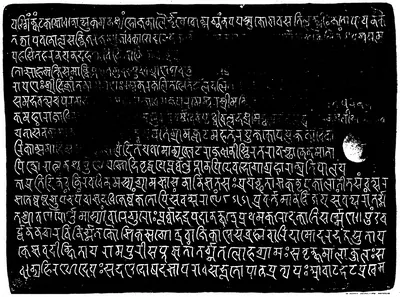 "Rashtrakuta grant of Govinda-Suvarnavarsha.—Saka 855." (the Sangli plates of Govinda IV, A.D. 933), side iib (Indian Antiquary XII, plate 16 (sides IIb and III), facing p. 251, first page; PDF p. 284 of the archive.org scan in.ernet.dli.2015.176349)Inscription rubbing · 1883
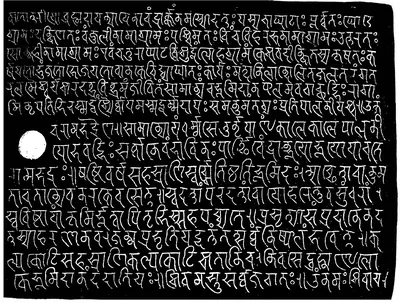 "Rashtrakuta grant of Govinda-Suvarnavarsha.—Saka 855." (the Sangli plates of Govinda IV, A.D. 933), side iii (Indian Antiquary XII, plate 16 (sides IIb and III), facing p. 251, second page; PDF p. 285 of the archive.org scan in.ernet.dli.2015.176349)Inscription rubbing · 1883
Related
Dynasties
References
Notes (0)
Sources (6)
Spotted an error on this page? Tell us
Last updated: