Hampi (Vijayanagara)
Hamlet on the Tungabhadra in the Hospet taluk of the old Bellary district, now in Karnataka. It lies among the ruins of Vijayanagara, 'the city of victory', the capital of the empire from about 1336 to 1565. The ruins cover about nine square miles of granite hills. The Muslim allies sacked the city after the battle of 1565, and the court fled to Penukonda. Hampi is outside the Telugu country. It is included here as the capital of the empire that ruled Rayalaseema and, for a time, the Telugu coast.
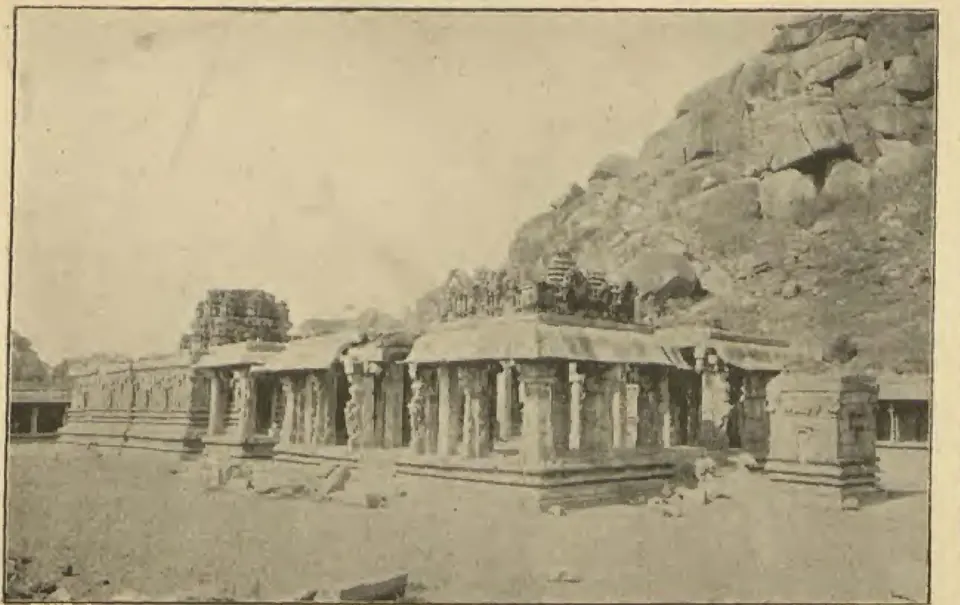
Hampi is a tiny village on the Tungabhadra river, among the ruins of Vijayanagar, the capital of the Vijayanagara empire.12 The city was founded in 1336, and it was destroyed after the battle of 1565.23 See Vijayanagara.
The Imperial Gazetteer of 1908 describes Vijayanagar as the capital of the empire of that name.12 It lay on the bank of the Tungabhadra, in the Hospet taluk of the Bellary district.12 According to the gazetteer, “The only part of it now inhabited is the tiny hamlet of Hampi”.12 The remains of the great city “are often called ‘the Hampi ruins.’”12 They cover 9 square miles, but the forts and outposts of the city took in a far larger area.12
The gazetteer calls the site “a strangely wild place to have been the birthplace and capital of an empire”.12 It is a country of granite hills and piled boulders.12 Through them run the walls, streets, palaces and temples of the city.12
According to the gazetteer, the city was founded in 1336.23 It mattered in South Indian history because it was “a stronghold of the Hindus”.23 For two and a half centuries, it “successfully opposed the southward movement of the Musalman arms”.23
After the battle of 1565, the king fled to Penukonda with 550 elephants laden with treasure.23 Then “the victorious Musalmans arrived at Vijayanagar, and for five months they employed themselves in deliberately destroying everything destructible within the city”.23 Two years later, the traveller Cesare de’ Federici found the houses standing empty.23 See Talikota and Penukonda.
The gazetteer singled out these buildings:3
- the palace enclosure, the Queen’s Bath and the Elephant Stables
- the Hazara Ramasvami temple, “supposed to have been the private place of worship of the kings”, with its carved scenes (reliefs) from the Ramayana
- the monolithic Narasimha, carved from a single rock
- the great temple of Pampapati, whose tall tower “was built by Krishna Deva, who did more than any of his line to beautify the capital”3
The head of the Brahmanical establishment (the temple’s Brahmin priests) at the Hampi temple told Robert Sewell about the tower.4 He said that Krishnadeva Raya “celebrated his accession by erecting the great tower at the entrance of the temple”.4
A. H. Longhurst wrote an illustrated guide to the buildings for visitors.5 Its preface to the second edition is dated 1925.5 It uses the photographs of the Southern Circle of the Archaeological Survey.5 See Krishnadeva Raya and Achyuta Raya.
Footnotes
-
Imperial Gazetteer of India: Madras, Vol. I (1908), p. 465 (archive.org (opens in a new tab)). ↩ ↩2 ↩3 ↩4 ↩5 ↩6 ↩7 ↩8 ↩9
-
Imperial Gazetteer of India: Madras, Vol. I (1908), p. 466 (archive.org (opens in a new tab)). ↩ ↩2 ↩3 ↩4 ↩5 ↩6 ↩7 ↩8 ↩9 ↩10 ↩11 ↩12 ↩13 ↩14 ↩15 ↩16
-
Imperial Gazetteer of India: Madras, Vol. I (1908), p. 467 (archive.org (opens in a new tab)). ↩ ↩2 ↩3 ↩4 ↩5 ↩6 ↩7 ↩8 ↩9
-
Robert Sewell, A Forgotten Empire (Vijayanagar) (1900), p. 123 (archive.org (opens in a new tab)). ↩ ↩2
-
A. H. Longhurst, Hampi Ruins Described and Illustrated, 3rd ed. (1933), preface to the second edition, pp. iii–iv (archive.org (opens in a new tab)). ↩ ↩2 ↩3
Photos
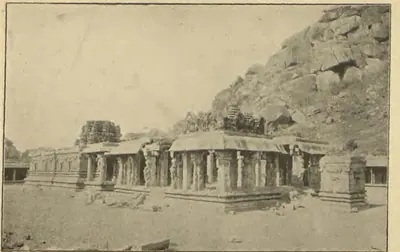 "Achyuta Raya's Temple" (Longhurst, Hampi Ruins, 3rd ed. 1933, fig. 49, p. 106 (PDF p. 120))Historic photograph · 1933
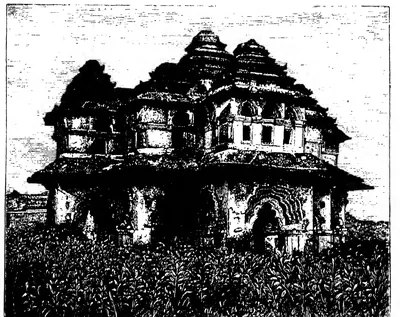 "Garden Pavilion at Vijayanagar" (Fergusson, rev. 1910, Vol. I, woodcut 243, p. 417 (PDF p. 464))Drawing · 1910
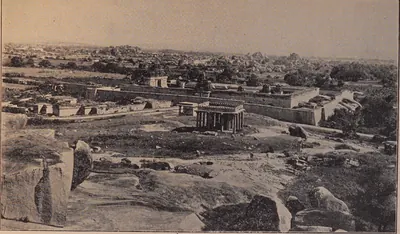 "General view of Krishnapuram showing the Krishna Temple in a high walled enclosure", Hampi (Madras Archaeological Report 1916-17, plate X (PDF p. 249))Historic photograph · 1917
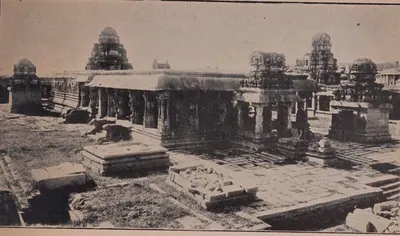 "General view of the Krishna Temple at Krishnapuram", Hampi (Madras Archaeological Report 1916-17, plate XI-a (PDF p. 251))Historic photograph · 1917
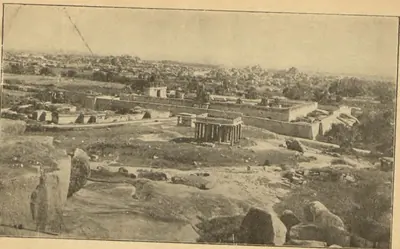 "Hampi Ruins from Hemakutam Hill" (Longhurst, Hampi Ruins, 3rd ed. 1933, fig. 1, frontispiece (PDF p. 14))Historic photograph · 1933
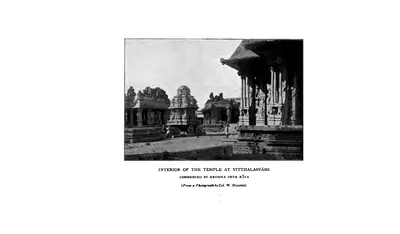 "Interior of the Temple at Vitthalasvami, commenced by Krishna Deva Raya" (from a photograph by Col. W. Hooper) (Sewell 1900, PDF p. 161)Historic photograph · 1900
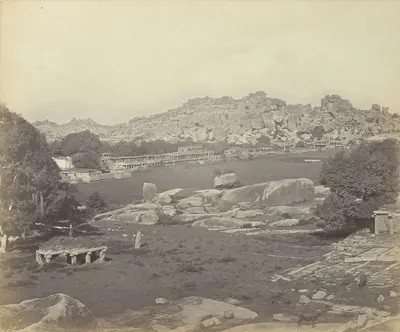 "Ruins of Vijianuggur": the market street in front of the Virupaksha temple (Hampi Bazaar), photographed by Edmund David Lyon about 1868Historic photograph · 1868
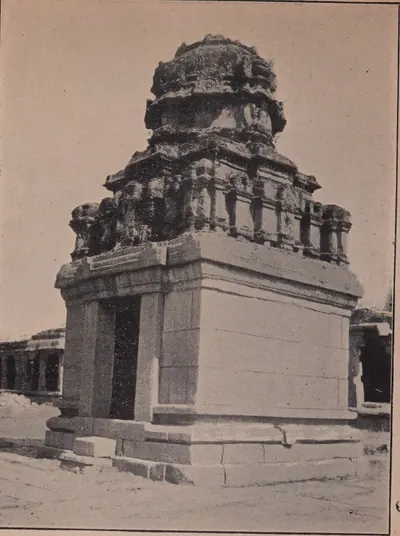 "Small attendant shrine with inscriptions at the Krishna Temple at Krishnapuram" (Madras Archaeological Report 1916-17, plate XII-b (PDF p. 253))Historic photograph · 1917
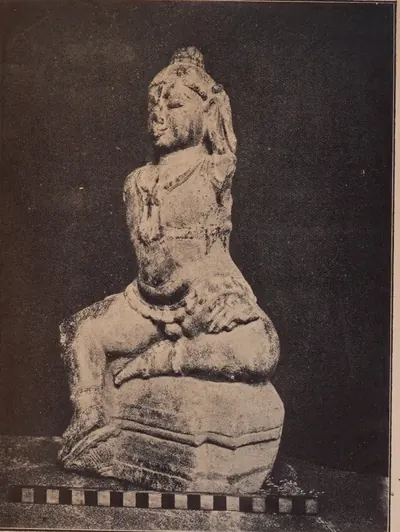 "Stone image of Balakrishna from the Krishna temple at Krishnapuram" (Madras Archaeological Report 1916-17, plate XII-a (PDF p. 253))Historic photograph · 1917
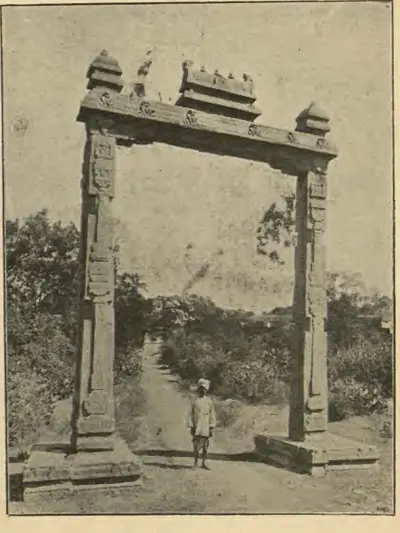 "The King's Balance" (Longhurst, Hampi Ruins, 3rd ed. 1933, fig. 13, p. 40 (PDF p. 54))Historic photograph · 1933
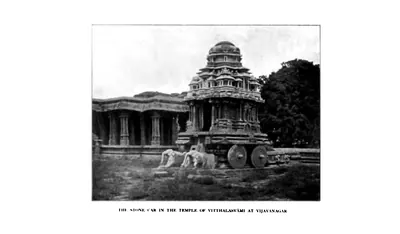 "The Stone Car in the Temple of Vitthalasvami at Vijayanagar" (Sewell 1900, PDF p. 220)Historic photograph · 1900
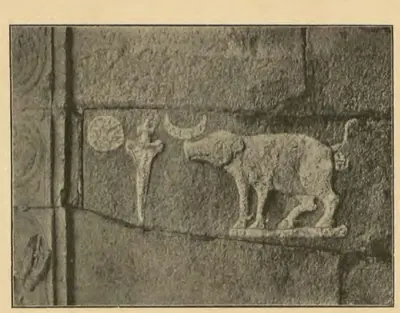 "Varaha or Boar crest of the Vijayanagar Kings" (Longhurst, Hampi Ruins, 3rd ed. 1933, fig. 5, p. 11 (PDF p. 25))Historic photograph · 1933
Show all (15)
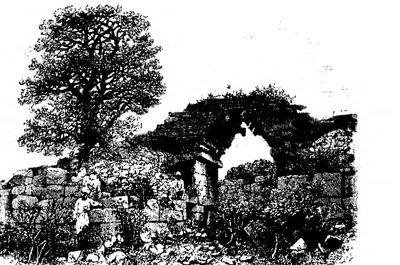 "View of City Gateway, Vijayanagar" (Fergusson, rev. 1910, Vol. I, woodcut 168, p. 311 (PDF p. 352))Drawing · 1910
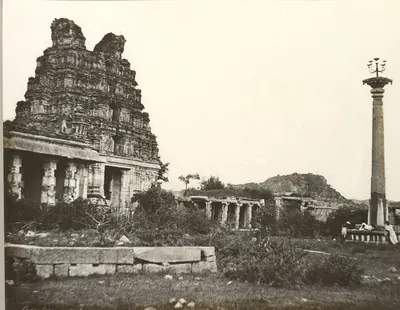 Eastern gopura and lamp column of the Vitthala temple, Hampi, photographed by Alexander Greenlaw in 1856Historic photograph · 1856
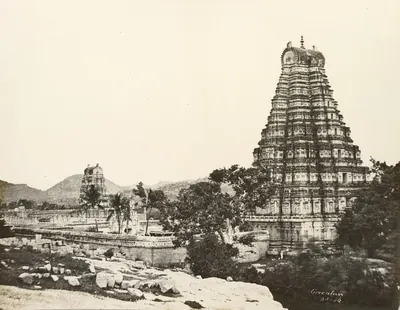 Virupaksha temple complex, Hampi, photographed by Alexander Greenlaw in 1856Historic photograph · 1856
References
Notes (0)
Sources (3)
Spotted an error on this page? Tell us
Last updated: