Panugallu (Panagal)
Village on the eastern edge of Nalgonda town in Telangana. It was one of the capitals of the Kandur Choda chiefs, who held the Kandurunadu country under the Western Chalukya kings of Kalyani and later under the Kakatiyas. Its inscriptions include grants of the chief Gokarna Choda (1122) and of his mother Mailamba (1124). P. V. Parabrahma Sastry noted an old temple of the Chalukya period there.
P. V. Parabrahma Sastry described Panugallu as the eastern suburb of Nalgonda town.1 He noted there an old temple of the Chalukya period and several inscriptions of the Choda chiefs of Kandur.1 These chiefs, the Kandur Chodas, had Kodur and Panugallu as their capitals.1 They ruled the Kandurunadu country, in the present Mahbubnagar and Nalgonda districts, from about 1060 to 1160.1
Parabrahma Sastry read the Ollala inscription as saying that Bhima I, of a branch of the Choda family, became ruler of Panugallu.12 Bhima I’s grandson Choda Bhima II obtained the Kandurunadu country from the Western Chalukya king Vikramaditya VI.12 An unpublished inscription at Panugallu is dated in Chalukya-Vikrama year 15 (1091).12 It records grants to a Brahman who carried Bhima II’s ashes to the Ganga.12 See Tondaya II.
Kumara Tailapa and the Kakatiyas
A damaged Kannada inscription at Panugallu of Vikramaditya VI’s reign describes a mahamandalesvara (great feudatory lord).3 He received his office from the king’s son, Prince Tailapadeva.3 Parabrahma Sastry argued that this prince, Kumara Tailapa, divided his appanage (lands given to a prince) between two Choda brothers, giving the Panugallu district to Gokarna. In his account the Kakatiya Prola II later drove the Chalukya general Govindaraja out of the Panugallu kingdom.45 In his account, Prola then gave it back to Gokarna’s son Udaya Choda.45
Rudradeva’s inscription of 1163 says that Prola captured Govindaraja and released him.6 It says that Prola then gave Govindaraja’s kingdom to king Udaya.6 See Udaya Choda II.
Inscriptions of the Kandur Chodas
Two Telugu inscriptions of the family at Panugallu were published in Part II of P. Sreenivasachar’s Corpus of Inscriptions in the Telingana Districts (1940). In the first, the mahamandalesvara Kanduri Gokarna Choda grants the lordships of two villages to a minister’s son-in-law and his son. The editor dated it to Friday, 10 March 1122.78 See the Panugallu inscription of Gokarna Choda.
The second is of Saka 1046 (1124; Saka is an Indian way of counting years). In it Mailamba, mother of the princes Udayaditya, Bhima and Gokarna, gives an agrahara (village for Brahmins) called Choda-Bhima-Narayana-pura to 108 Brahmans. She gives it for the welfare of her son Bhima.910 Its Telugu passages list dues on goods brought into the town.910 See the Panugallu inscription of Mailamba.
According to Parabrahma Sastry, the Kakatiya Rudradeva built a new town outside Warangal.11 He named one of its quarters Panugantivada after Panugallu, one of the towns he had plundered.11
Footnotes
-
P. V. Parabrahma Sastry, The Kakatiyas of Warangal (1978), p. 64. ↩ ↩2 ↩3 ↩4 ↩5 ↩6 ↩7 ↩8
-
Parabrahma Sastry, The Kakatiyas of Warangal (1978), p. 65. ↩ ↩2 ↩3 ↩4
-
P. B. Desai, introduction to P. Sreenivasachar, Kannada Inscriptions of Andhra Pradesh (Andhra Pradesh Government Archaeological Series 3, 1961), p. 20, No. 53 (archive.org (opens in a new tab)). Paraphrased. ↩ ↩2
-
Parabrahma Sastry, The Kakatiyas of Warangal (1978), p. 66. ↩ ↩2
-
Parabrahma Sastry, The Kakatiyas of Warangal (1978), p. 80. ↩ ↩2
-
J. F. Fleet, “Sanskrit and Old-Canarese Inscriptions, No. CXVIII”, Indian Antiquary XI (1882), p. 17 (archive.org (opens in a new tab)). ↩ ↩2
-
P. Sreenivasachar (ed.), A Corpus of Inscriptions in the Telingana Districts of H.E.H. the Nizam’s Dominions, Part II (1940), pp. 96–97, No. 32 (archive.org (opens in a new tab)). Paraphrased. ↩
-
Sreenivasachar, Corpus, Part II (1940), appendix on chronology, pp. 180–181 (archive.org (opens in a new tab)). Paraphrased. ↩
-
Sreenivasachar, Corpus, Part II (1940), pp. 105–108, No. 36 (archive.org (opens in a new tab)). Paraphrased. ↩ ↩2
-
Sreenivasachar, Corpus, Part II (1940), p. 109 (archive.org (opens in a new tab)). Paraphrased. ↩ ↩2
-
Parabrahma Sastry, The Kakatiyas of Warangal (1978), p. 101. ↩ ↩2
Photos
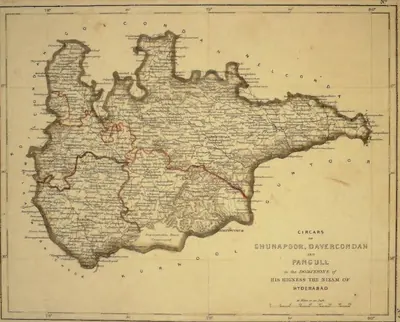 "Circars of Chunapoor, Davercondah and Pangull, in the Dominions of His Highness the Nizam of Hyderabad" (map No. 3, atlas presented to the Nizam, 1865); Davercondah is Devarakonda and Pangull Panagal (identifications ours)Map · 1865
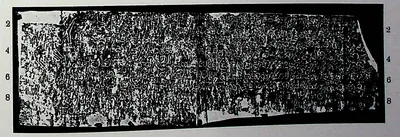 Panugal inscription of Gokarna Choda (A Corpus of Inscriptions in the Telingana Districts, Part II, Plate 32 (PDF p. 284))Inscription rubbing · 1940
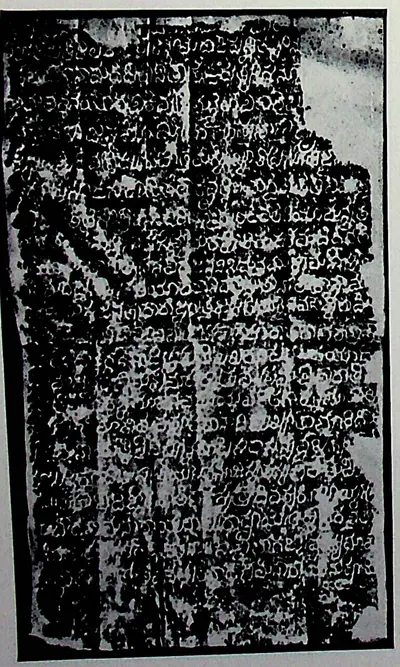 Panugal inscription of Mailamba, side I (A Corpus of Inscriptions in the Telingana Districts, Part II, Plate 35 (PDF p. 290))Inscription rubbing · 1940
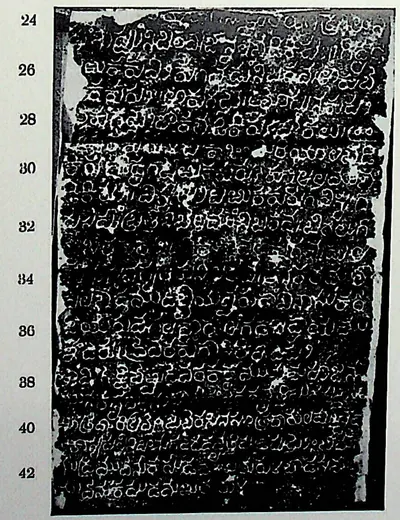 Panugal inscription of Mailamba, side II (A Corpus of Inscriptions in the Telingana Districts, Part II, Plate 35 (PDF p. 290))Inscription rubbing · 1940
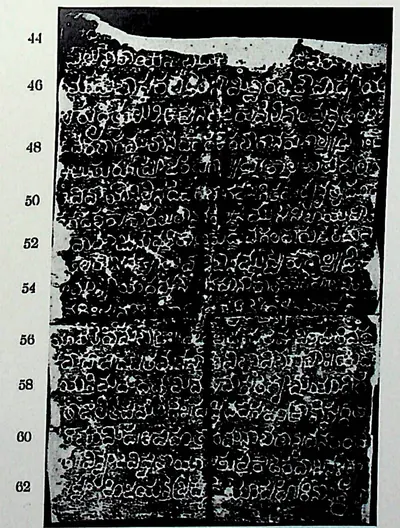 Panugal inscription of Mailamba, side III (A Corpus of Inscriptions in the Telingana Districts, Part II, Plate 35 (PDF p. 290))Inscription rubbing · 1940
References
Notes (0)
Sources (4)
Spotted an error on this page? Tell us
Last updated: