Abul Hasan Tana Shah
Abul Hasan, called Tana Shah, was the last Qutb Shahi sultan of Golconda (1672–1687). He was a kinsman and son-in-law of Abdullah Qutb Shah. He left the government to the Brahmin brothers Madanna and Akkanna, who allied the kingdom with the Marathas. Aurangzeb made this a charge against him and took Hyderabad in 1685. In 1687 Aurangzeb besieged Golconda for eight months, until a gate was opened by treachery. Abul Hasan died a state prisoner at Daulatabad.
Abul Hasan was the eighth and last sultan of the Qutb Shahi dynasty of Golconda. He was not a son of the previous king, Abdullah Qutb Shah, but a relative who became his son-in-law.12 His reign ended with the Mughal conquest of Golconda in 1687.3
Coming to the throne
The sources describe his relationship to Abdullah differently. Tavernier travelled to Golconda in 1642, 1645 and 1652, and he calls Abul Hasan “a cousin of the King”.451 Gribble calls Abdullah his uncle, and the Imperial Gazetteer calls Abul Hasan Abdullah’s nephew.3
Jadunath Sarkar, writing in 1930, says only that he was “descended on his father’s side from the Qutb-Shahi family”.6 V. Ball noted that the Dutch writer Havart made him a lineal descendant of Ibrahim, the second king of the dynasty in Havart’s counting.7 All agree that he married one of Abdullah’s three daughters.12
According to Tavernier, the princess had first been promised to a Sayyid from Mecca.1 The commander of the army and six other nobles persuaded the king to break off the match, and she was given to Abul Hasan instead.1 Tavernier adds that Abul Hasan had been known as a debauchee and had reformed after the marriage.1 Bilgrami gives a different reason for the change of bridegroom: the opposition of Mir Ahmad, who had married another of Abdullah’s daughters.2
Sarkar tells the story from a Persian history, the Qutb-numa.6 According to it, the bridegroom chosen at the last moment had spent sixteen years as a disciple of the saint Sayyid Raju Qattal.6 The court shunned him for his way of life.6 On the wedding day the palace agents fetched him from the hermitage.6 They bathed him, dressed him in the robes made for the rejected suitor and married him to the princess.6
Abdullah died in 1672 without a son.2 Sarkar gives the date as 21 April 1672.8 He says that Abdullah’s eldest son-in-law, Sayyid Ahmad, claimed the throne.8 Ahmad’s wife armed her slave-girls and stood within the palace sword in hand.8 In the end Sayyid Muzaffar, a general of Persian descent, overpowered him with the help of the harem officers.8
Bilgrami says Abul Hasan was placed on the throne with the support of the courtiers Madanna, Akanna, Sayyid Muzaffar and Musa Khan.2 His rival Mir Ahmad was kept under watch until his death in 1674.2 The Imperial Gazetteer dates Abdullah’s death and Abul Hasan’s accession to 1674.3
Bilgrami explains the nickname Tana Shah in two ways.9 It may refer to the king’s love of music.9 Or it may come from a Telugu word for “child”, which he applied to the king’s “childish fancies”.9 Sarkar, citing the Persian Chahar Gulshan, says he “was rightly called Tana Shah or ‘the dainty king’”.10 Sha Rocco, in 1929, calls him “the fastidious prince”.11
The Kistna district manual of 1883 found him still remembered in the Krishna country.12 He was “generally spoken of under the name of Tanésha, whatever that may mean”.12 None of these writers cites a source of the king’s own time for the name.
Madanna and Akanna
Abul Hasan first made Sayyid Muzaffar his chief minister.13 According to Bilgrami, Muzaffar soon fell from favour and his deputy, Madanna, took his place.13 Sarkar says the king himself “bought over Madanna, the Brahman factotum of Muzaffar”.14 About 1673 he gave Madanna the wazir-ship (the post of chief minister) “with the title of Surya Prakash Rao”.14 Madanna’s brother Akkanna became commander-in-chief.14
Under Madanna, Golconda allied itself with the Marathas.15 In 1677 Shivaji was given “a more than royal welcome” at Hyderabad.15 He was promised a yearly subsidy of one lakh of huns (gold coins).15
Gribble describes the two chief ministers of the reign, Madanna and Akanna, as Hindus.16 He says that their employment was one of the charges Aurangzeb brought against the king.16 Gribble quotes Khafi Khan’s version of a letter from Aurangzeb.17 It accused Abul Hasan of placing “the reins of authority and Government in the hands of vile tyrannical infidels”.17 It also accused him of sending money to the Maratha ruler Sambhaji.17 These were the charges of the conqueror, and they are quoted here as such. Sarkar adds that the king left his royal duties to Madanna.18
In Sarkar’s words, the king “shut himself up in his palace with a host of concubines and dancing-girls”.18 But Sarkar also says that he supported skilled craftsmen in his capital.18 He adds that “the king’s own skill in music was of no mean order”.18
The Telugu devotee Kancherla Gopanna, remembered as Ramadas, is placed in this reign by the Kistna district manual and by Sarkar.1920 They make him a nephew of Madanna and a revenue officer at Bhadrachalam.1920 He was imprisoned for spending the king’s revenue on the Rama temple.1920 The Godavari district gazetteer instead dates him about 1725.21
The king travelled to the coast at least once. The editor of the diaries of Streynsham Master, the English agent at Madras, gives the dates as December 1678 and January 1679.22 He writes that in those months “Abu’l Hassan Shah, King of Golconda, visited Masulipatam, Narsapur and the adjacent towns”.22 See Machilipatnam.
Aurangzeb’s pressure began with envoys. Haig and Sarkar describe the mission of Mirza Muhammad.2324 The stated purpose of the mission was to demand two great diamonds.2324 By the emperor’s private orders, he was also to provoke the king into defiance.2324 The envoy objected to the king calling himself a king in his own country.2324 Abul Hasan replied, in Haig’s rendering, “It is you who are mistaken, for if I be not called a king, how can Alamgir be called the king of kings?”23
The Mughal campaigns
While one Mughal army attacked Bijapur, Aurangzeb sent another under his son Prince Muhammad Muazzam against Hyderabad.25 An intercepted letter had shown that Abul Hasan meant to send forty thousand men to help Bijapur.25 Sarkar dates the prince’s marching orders, given after that letter, to 28 June 1685.25
The Golconda commander went over to the Mughals.26 Abul Hasan left the city for the fortress of Golconda.26 According to Gribble, he did this against the advice of his ministers, who wanted him to fall back on Warangal.26 Hyderabad was plundered, first by its own rabble and then by the Mughal troops.26
Sarkar dates the Mughal entry into the city to about 8 October 1685.2728 He says that Madanna had advised the king to go to Warangal or some other distant fort rather than shut himself up in Golconda.2728
A peace was agreed in which the king was to pay an indemnity (a war payment) and dismiss his Hindu ministers.29 According to Gribble, a party at Golconda attacked Madanna and Akanna as soon as these terms were accepted.29 They caught the brothers on their way home from court, killed them and sent their heads to the Mughal camp.29
Sarkar dates the murder to early March 1686.30 He names among the plotters Shaikh Minhaj and two widows of Abdullah Qutb Shah.30 Khafi Khan says the plot was laid “without the knowledge of Abu-l Hasan”.31 But a Mughal court history says the king himself cut off Madanna’s head and sent it to the Mughal prince.32
After Bijapur fell, Aurangzeb came in person.33 Sarkar says he arrived within two miles of Golconda on 28 January 1687.33 Gribble’s account, based on Khafi Khan, describes a siege of more than eight months.34
The Mughals filled the moat with bags of earth.34 The defenders countered their mines, and the garrison made repeated sorties.34 One night attack failed when a dog raised the alarm.34 Most of the nobles went over to the emperor.34
During the siege Aurangzeb proclaimed the annexation of the kingdom and appointed his own revenue officers.35 He posted a censor of morals at Hyderabad with orders to demolish temples.35
The fort finally fell when one commander, Abdullah Khan Pani, opened a gate at night.36 Sarkar gives his dates in the Old Style.36 He names the man as an Afghan called Sardar Khan and dates the surrender to the early morning of 21 September 1687.36 Another commander, Abdur Razzak Lari, fought on alone at the gate and was found with some seventy wounds.37
Captivity and death
Gribble summarises Khafi Khan’s account of the king’s last hours in Golconda.38 Abul Hasan said farewell to his household, took his seat in the audience hall and received the Mughal commander calmly.38 He was taken to Prince Azam and then to Aurangzeb.38 Aurangzeb sent him to the fortress of Daulatabad as a state prisoner with an allowance.38
Khafi Khan’s own words appear in the translation edited by Elliot and Dowson.39 He says that “with perfect self-control he received them with courtesy, and spoke to them with warmth and elegance”.39 Brought before Prince Azam, Abul Hasan took off his necklace of pearls “and presented it to the Prince in a most graceful way”.39
Sarkar gives his allowance at Daulatabad as Rs. 50,000 a year.40 Gribble judged that “whatever may have been the faults of Abu-l Hassan’s life”, he “met his misfortunes in a manner worthy of a king”.41
The sources differ on his death:
- The Imperial Gazetteer says Abul Hasan was sent first to Bidar and then to Daulatabad, and that he died there in 1704.3
- Bilgrami gives 1699 (AH 1111) and says he was buried at Khuldabad, in the graveyard of the shrine of Sayyid Raju Qattal.42
Bilgrami also records that the king had spent fourteen years as a disciple of Sayyid Shah Raju Husaini II.42
Buildings
Bilgrami names the Char Mahal and the Gosha Mahal as the only buildings Abul Hasan added to his predecessors’ works.43 The Imperial Gazetteer describes the Gosha Mahal, a mile north of the city, as a palace with a large cistern and pleasure grounds.44 The building of the Mecca Masjid began under Sultan Muhammad.45 It continued under Abdullah and Abul Hasan and was completed by Aurangzeb.45
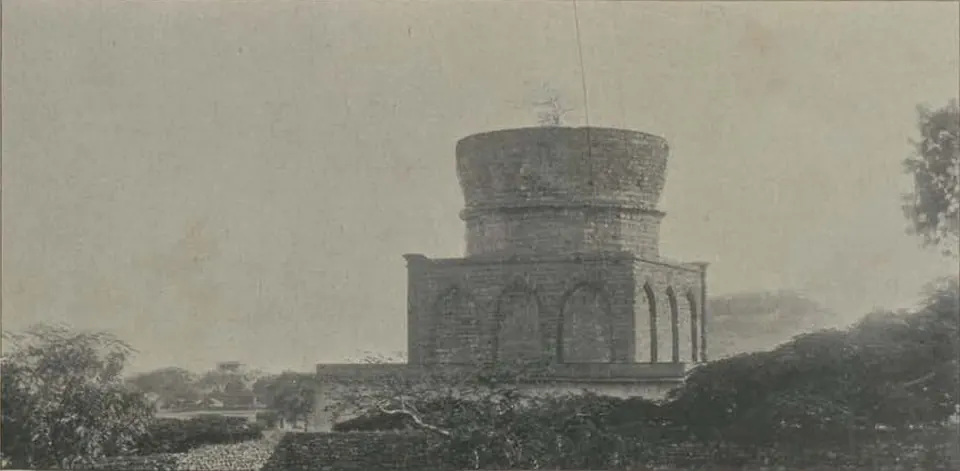
A large unfinished domed tomb stands outside the enclosure of the Qutb Shahi tombs, and it is popularly called Tana Shah’s tomb.46 Bilgrami says Abul Hasan began it in his lifetime but could never be buried there.46 It holds the grave of his rival Mir Ahmad (Mirza Nizamuddin Ahmad), who died in 1674.46
Footnotes
-
Jean-Baptiste Tavernier, tr. V. Ball, Travels in India, Vol. I (1889), pp. 170–171 (archive.org (opens in a new tab)). ↩ ↩2 ↩3 ↩4 ↩5 ↩6
-
Syed Ali Asgar Bilgrami, Landmarks of the Deccan (1927), p. 202 (archive.org (opens in a new tab)). ↩ ↩2 ↩3 ↩4 ↩5 ↩6
-
Imperial Gazetteer of India: Hyderabad State (1909), p. 14 (archive.org (opens in a new tab)); J. D. B. Gribble, A History of the Deccan, Vol. I (1896), p. 299 (archive.org (opens in a new tab)). ↩ ↩2 ↩3 ↩4
-
Tavernier, Travels in India, Vol. I (1889), p. 142 (archive.org (opens in a new tab)). ↩
-
Sha Rocco, Golconda and the Qutb Shahs (1929), p. 19 (archive.org (opens in a new tab)). ↩
-
Jadunath Sarkar, History of Aurangzib, Vol. IV (2nd ed., 1930), pp. 396–398 (archive.org (opens in a new tab)). ↩ ↩2 ↩3 ↩4 ↩5 ↩6
-
Tavernier, Travels in India, Vol. I (1889), p. 170 note (archive.org (opens in a new tab)). ↩
-
Sarkar, History of Aurangzib, Vol. IV (1930), pp. 398–399 (archive.org (opens in a new tab)). ↩ ↩2 ↩3 ↩4
-
Bilgrami, Landmarks (1927), p. 181, note (archive.org (opens in a new tab)). ↩ ↩2 ↩3
-
Sarkar, History of Aurangzib, Vol. IV (1930), p. 404 (archive.org (opens in a new tab)). ↩
-
Sha Rocco, Golconda and the Qutb Shahs (1929), p. 30 (archive.org (opens in a new tab)). ↩
-
Gordon Mackenzie, A Manual of the Kistna District (1883), p. 36 (archive.org (opens in a new tab)). ↩ ↩2
-
Bilgrami, Landmarks (1927), pp. 77, 202–203 (archive.org (opens in a new tab)). ↩ ↩2
-
Sarkar, History of Aurangzib, Vol. IV (1930), p. 399 (archive.org (opens in a new tab)). ↩ ↩2 ↩3
-
Sarkar, History of Aurangzib, Vol. IV (1930), p. 401 (archive.org (opens in a new tab)). ↩ ↩2 ↩3
-
Gribble, History of the Deccan (1896), p. 299 (archive.org (opens in a new tab)). ↩ ↩2
-
Gribble, History of the Deccan (1896), p. 303 (archive.org (opens in a new tab)). ↩ ↩2 ↩3
-
Sarkar, History of Aurangzib, Vol. IV (1930), pp. 403–404 (archive.org (opens in a new tab)). ↩ ↩2 ↩3 ↩4
-
Gordon Mackenzie, A Manual of the Kistna District (1883), p. 37 (archive.org (opens in a new tab)). ↩ ↩2 ↩3
-
Sarkar, History of Aurangzib, Vol. IV (1930), p. 421 (archive.org (opens in a new tab)). ↩ ↩2 ↩3
-
F. R. Hemingway, Madras District Gazetteers: Godavari, Vol. I (1907), p. 261 (archive.org (opens in a new tab)). ↩
-
R. C. Temple (ed.), The Diaries of Streynsham Master, 1675–1680, Vol. I (1911), introduction, p. 81 (archive.org (opens in a new tab)). ↩ ↩2
-
T. W. Haig, Historic Landmarks of the Deccan (1907), pp. 184–185 (archive.org (opens in a new tab)). ↩ ↩2 ↩3 ↩4 ↩5
-
Sarkar, History of Aurangzib, Vol. IV (1930), pp. 402–403 (archive.org (opens in a new tab)). ↩ ↩2 ↩3 ↩4
-
Sarkar, History of Aurangzib, Vol. IV (1930), pp. 407–408 (archive.org (opens in a new tab)). ↩ ↩2 ↩3
-
Gribble, History of the Deccan (1896), pp. 299–302 (archive.org (opens in a new tab)). ↩ ↩2 ↩3 ↩4
-
Sarkar, History of Aurangzib, Vol. IV (1930), p. 415 (archive.org (opens in a new tab)). ↩ ↩2
-
Sarkar, History of Aurangzib, Vol. IV (1930), pp. 412–413 (archive.org (opens in a new tab)). ↩ ↩2
-
Gribble, History of the Deccan (1896), p. 302 (archive.org (opens in a new tab)). ↩ ↩2 ↩3
-
Sarkar, History of Aurangzib, Vol. IV (1930), p. 417 (archive.org (opens in a new tab)). ↩ ↩2
-
Khafi Khan, Muntakhab-ul-Lubab, in H. M. Elliot and John Dowson (eds.), The History of India as Told by Its Own Historians, Vol. VII (1877), p. 321 (archive.org (opens in a new tab)). ↩
-
Sarkar, History of Aurangzib, Vol. IV (1930), p. 420, appendix (archive.org (opens in a new tab)). ↩
-
Sarkar, History of Aurangzib, Vol. IV (1930), p. 423 (archive.org (opens in a new tab)). ↩ ↩2
-
Gribble, History of the Deccan (1896), pp. 304–307 (archive.org (opens in a new tab)). ↩ ↩2 ↩3 ↩4 ↩5
-
Sarkar, History of Aurangzib, Vol. IV (1930), pp. 450–451 (archive.org (opens in a new tab)). ↩ ↩2
-
Sarkar, History of Aurangzib, Vol. IV (1930), pp. 451–452 (archive.org (opens in a new tab)). ↩ ↩2 ↩3
-
Gribble, History of the Deccan (1896), pp. 305, 307–309 (archive.org (opens in a new tab)). ↩
-
Gribble, History of the Deccan (1896), pp. 308–309 (archive.org (opens in a new tab)). ↩ ↩2 ↩3 ↩4
-
Khafi Khan, in Elliot and Dowson, History of India, Vol. VII (1877), pp. 333–334 (archive.org (opens in a new tab)). ↩ ↩2 ↩3
-
Sarkar, History of Aurangzib, Vol. IV (1930), p. 454 (archive.org (opens in a new tab)). ↩
-
Gribble, History of the Deccan (1896), p. 309 (archive.org (opens in a new tab)). ↩
-
Bilgrami, Landmarks (1927), pp. 182, 203 (archive.org (opens in a new tab)). ↩ ↩2
-
Bilgrami, Landmarks (1927), p. 203 (archive.org (opens in a new tab)). ↩
-
Imperial Gazetteer: Hyderabad (1909), p. 116 (archive.org (opens in a new tab)). ↩
-
Bilgrami, Landmarks (1927), p. 40 (archive.org (opens in a new tab)); Imperial Gazetteer: Hyderabad (1909), p. 116 (archive.org (opens in a new tab)). ↩ ↩2
-
Bilgrami, Landmarks (1927), pp. 180–182 (archive.org (opens in a new tab)). ↩ ↩2 ↩3
Photos
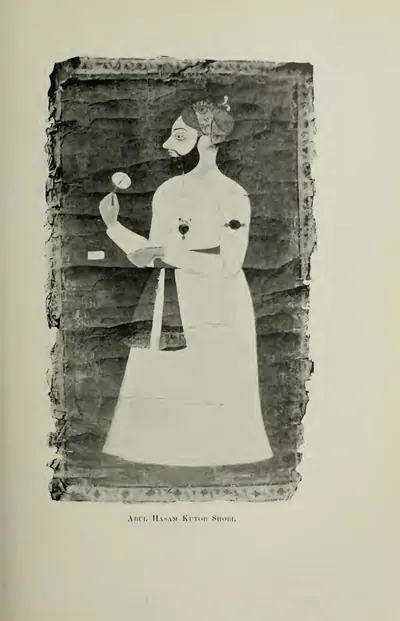 "Abul Hasan Kutub Shah" (Gribble 1896, PDF p. 291)Book plate · 1896
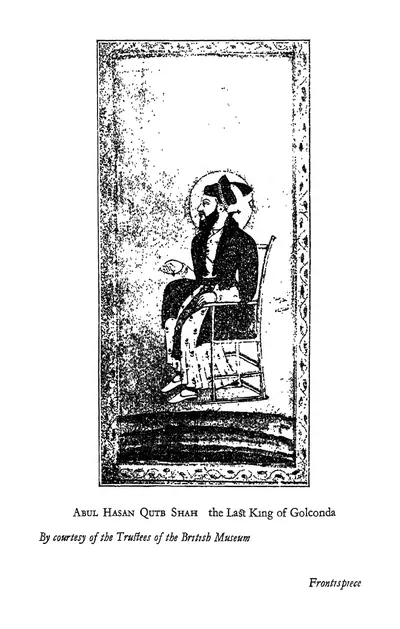 Abul Hasan Qutb Shah: the last King of Golconda (frontispiece) (Rocco 1929)Drawing · 1929
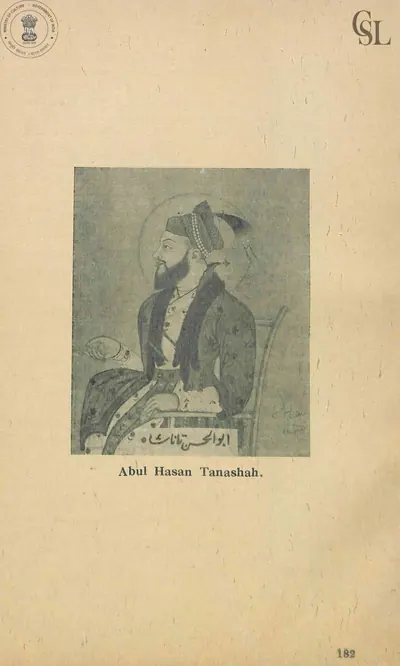 Abul Hasan Tanashah (portrait reproduced by Bilgrami) (Bilgrami 1927, p. 182)Drawing · 1927
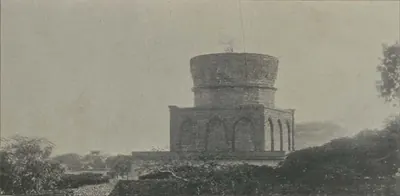 Golconda: "Unfinished Tomb of Abu-l-Hassan" (Campbell 1898, p. 251)Historic photograph · 1898
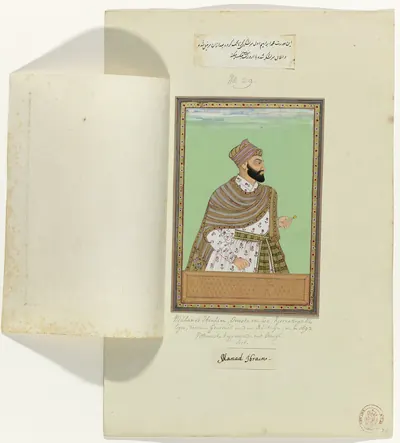 Muhammad Ibrahim (later Mahabat Khan): Deccani portrait, c. 1686, Rijksmuseum (RP-T-00-3186-29); Dutch title: "Portrait of Muhammad Ibrahim; first he served as commander of the Karnatak; then he became commander of the cavalry, and now as commander he wages war against Aurangzeb"Other · c. 1686
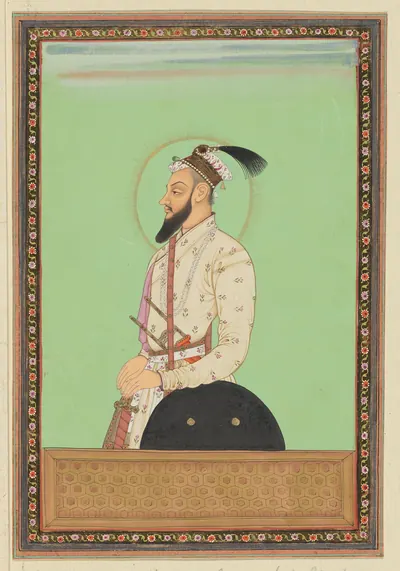 Shah Alam (Muhammad Muazzam, later the emperor Bahadur Shah): Deccani portrait, c. 1686, Rijksmuseum (RP-T-00-3186-11); Dutch title: "Portrait of Shah Alam, son of Aurangzeb born after Sultanji; he was first governor (subagar) of the Deccan; after marching against Sambaji, the son of Sivaji, he has now turned against Sultan Abu'l-Hasan and wages war with him"Other · c. 1686
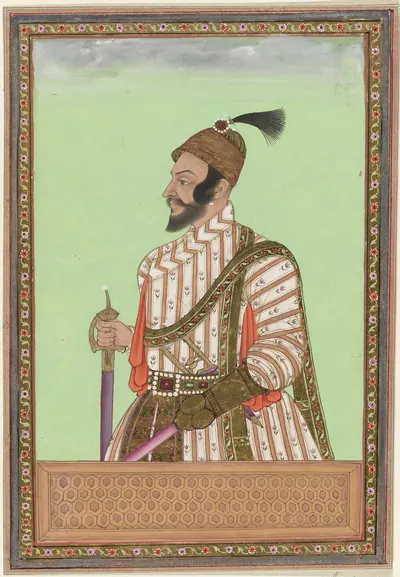 Shivaji: Deccani portrait, c. 1675–85, folio 46 of the Witsen album, Rijksmuseum (RP-T-00-3186-46); the Dutch inscription names him "Siwagii, Vorst in Decam" and links his son Sambhaji with Abul Hasan, king of GolcondaOther · c. 1675–85
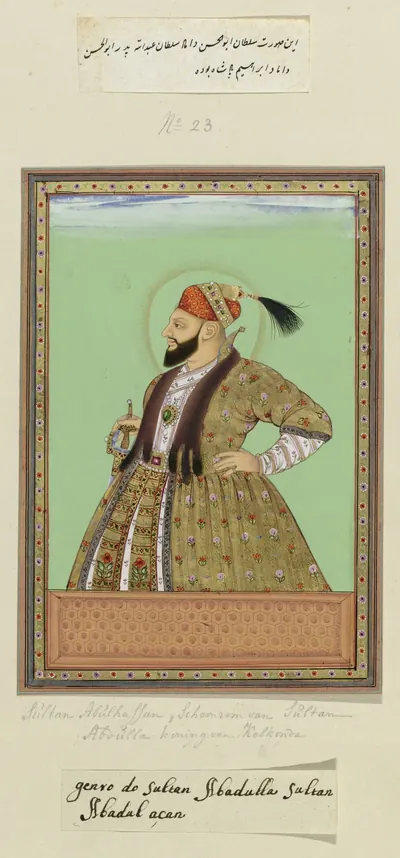 Sultan Abul Hasan: Deccani portrait, c. 1686, from an album in the Rijksmuseum (RP-T-00-3186-23); Dutch title: "Portrait of Sultan Abul Hasan, the son-in-law of Sultan Abdullah; the father of Abul Hasan was the son-in-law of Ibrahim Padshah"Other · c. 1686
Related
Dynasties
References
Notes (0)
Sources (11)
Spotted an error on this page? Tell us
Last updated: