Aurangzeb (Alamgir)
Sixth Mughal emperor (1658–1707). As his father's viceroy of the Deccan, he made Golconda pay its unpaid tribute. With Mir Jumla's help he besieged Abdullah Qutb Shah in Golconda in 1656, and won the handover of Ramgir and the Karnatak. As emperor he took Golconda in 1687 after an eight months' siege. He made the kingdom the Mughal province (subah) of Haidarabad and stayed near the fort until January 1688 to settle it. This page covers only his part in the history of the Telugu country.
Aurangzeb, who took the title Alamgir as emperor, ruled the Mughal empire from 1658 to 1707.12 For the Telugu country he matters in two ways.12 As a prince he first made Golconda feel the weight of Mughal overlordship.12 As emperor he ended the Qutb Shahi kingdom and made it a Mughal province.12 His wider reign is beyond the scope of this site; see the Mughals in the Telugu country.
Viceroy of the Deccan
Aurangzeb took leave of his father, Shah Jahan, at Daulatabad on 14 July 1636 to govern the Deccan.34 This was three months after Abdullah Qutb Shah had accepted the emperor as his overlord.34
He came back as viceroy in 1653.51 Sarkar writes that from then on he “had frequent cause to quarrel with the king of Golkonda”.51 The tribute of two lakhs of hun (gold coins) “was always in arrears”.51 He demanded that part of Golconda’s land be set aside to pay it.51 He also pressed the Mughal claim to the change in the exchange value of the hun since 1636.51
In January 1656 he took up the cause of Abdullah’s minister Mir Jumla.67 He sent his son Muhammad Sultan in a quick march on Hyderabad and followed with the main army.67 Sarkar translates his secret orders to the prince.67 The prince was to surround the king’s palace and if possible “lighten his neck of the burden of his head”.67
He besieged Abdullah in Golconda and urged his father to order the kingdom taken over.8 He wrote that “Golkonda is a spacious kingdom, well-cultivated, rich in mines of diamond”.8 But Dara Shukoh and the Golconda envoy persuaded Shah Jahan to order peace in return for a war payment.89 Aurangzeb ended the siege on 30 March 1656.89
He arranged the marriage of Muhammad Sultan to the king’s daughter.91011 He also won the handover of Ramgir, which brought the Mughal province of Telingana closer to the Karnatak.91011 And he persuaded his father to treat Mir Jumla’s conquests in the Karnatak as imperial land.91011 See Golconda Fort.
The conquest of Golconda
As emperor, Aurangzeb left Golconda alone for nearly thirty years.1213 Sarkar lists the complaints that built up in that time.1213 They ran from the unpaid tribute to the king’s help for Bijapur and his welcome of Shivaji at Hyderabad in 1677.1213 Sarkar says that “in the eyes of Aurangzib his worst offence was his fraternizing with infidels”.1213 Above all this meant his use of the Brahmin ministers Madanna and Akkanna.1213
Khafi Khan says that before the war Aurangzeb sent an envoy to demand two great diamonds.1415 In private he told the envoy that he did not want the stones.1415 He wanted him to find out the truth of the reports he had heard.1415
Bijapur fell in 1686, and then he marched on Golconda.16 Khafi Khan quotes his letter to Abul Hasan.16 It charged him with “placing the reins of authority and government in the hands of vile tyrannical infidels”.16 It also charged him with sending money to the Maratha king Sambhaji.16
The historian says that during the siege Aurangzeb himself, “after observing the rite of purification, sewed the seams of the first cotton bag to be filled with earth and thrown into the moat”.17
In July 1687 he declared the kingdom part of his empire and appointed his own officers throughout it.218 The Friday sermon was read in his name.218 A censor of morals was posted at Hyderabad with orders to pull down temples and build a mosque.218
The fort fell on 21 September 1687.19202122 Khafi Khan and Sarkar say that Aurangzeb received the captive king politely and sent him to Daulatabad.19202122 Manucci tells instead how he had the prisoner beaten for refusing to account for his treasure.19202122
Settling the province
Aurangzeb stayed near Golconda until 25 January 1688 “in order to settle the administration of the conquered country”.23 Sarkar says he at first kept the Qutb Shahi officers at their posts.2425 Then, in January 1688, he replaced them with his own men.2425
Bilgrami says that the city was renamed Dar-ul-jihad after the conquest.262728 The Mecca Masjid, begun under the Qutb Shahis, was finished under Aurangzeb in AH 1104 (1692–93; AH is the Islamic way of counting years).262728 Its entrance gate and sundial belong to his reign.262728
The Imperial Gazetteer of Hyderabad gives him three mosques in the Karimnagar district.29 They are at Kalesar and Sonipet in the Mahadeopur taluk, and at Rajgopalpet in the Siddipet taluk.29 Coins in his name were struck at Golconda, Hyderabad and Machilipatnam (then Masulipatam).3031
In Rayalaseema, Thomas Munro concluded that Aurangzeb “appears to have adopted the Kamil which he found established”.32 (The Kamil was the standard revenue assessment.) He entered it in his grants, with a cut for waste land.32
The Anantapur gazetteer gives an example of his dealings with the poligars (local chiefs).33 One family’s tribute was cut to 11,200 pagodas.33 In return it had to keep 1,200 foot soldiers and 150 horse for his service.33
On the coast, his officers seized the English factories (trading posts) at Visakhapatnam (then Vizagapatam) and Machilipatnam in 1689, during his war with the East India Company.34 James Grant wrote for the Company a century later.35 He thought Aurangzeb “too busily employed in conquering the larger provinces of the Deccan, and curbing the upstart Marhattah power” to make the coastal districts as productive as they should have been.35
Footnotes
-
Sarkar, Aurangzib I–II (1912), p. 118 (archive.org (opens in a new tab)). ↩ ↩2 ↩3 ↩4 ↩5 ↩6 ↩7 ↩8 ↩9
-
Sarkar, Aurangzib IV (1930), p. 450 (archive.org (opens in a new tab)). ↩ ↩2 ↩3 ↩4 ↩5 ↩6 ↩7
-
Jadunath Sarkar, History of Aurangzib, Vols. I–II (1912), p. 16 (archive.org (opens in a new tab)). ↩ ↩2
-
Sarkar, History of Aurangzib, Vols. I–II (1912), p. 19 (archive.org (opens in a new tab)). ↩ ↩2
-
Sarkar, Aurangzib I–II (1912), p. 117 (archive.org (opens in a new tab)). ↩ ↩2 ↩3 ↩4 ↩5
-
Sarkar, Aurangzib I–II (1912), p. 127 (archive.org (opens in a new tab)). ↩ ↩2 ↩3 ↩4
-
Sarkar, Aurangzib I–II (1912), p. 128 (archive.org (opens in a new tab)). ↩ ↩2 ↩3 ↩4
-
Sarkar, Aurangzib I–II (1912), p. 131 (archive.org (opens in a new tab)). ↩ ↩2 ↩3 ↩4
-
Sarkar, Aurangzib I–II (1912), p. 133 (archive.org (opens in a new tab)). ↩ ↩2 ↩3 ↩4 ↩5
-
Sarkar, Aurangzib I–II (1912), p. 136 (archive.org (opens in a new tab)). ↩ ↩2 ↩3
-
Sarkar, Aurangzib I–II (1912), p. 137 (archive.org (opens in a new tab)). ↩ ↩2 ↩3
-
Jadunath Sarkar, History of Aurangzib, Vol. IV (2nd ed., 1930), p. 405 (archive.org (opens in a new tab)). ↩ ↩2 ↩3 ↩4 ↩5
-
Sarkar, Aurangzib IV (1930), pp. 406–407 (archive.org (opens in a new tab)). ↩ ↩2 ↩3 ↩4 ↩5
-
Khafi Khan, Muntakhabu-l Lubab, in H. M. Elliot and John Dowson (eds.), The History of India as Told by Its Own Historians, Vol. VII (1877), p. 315 (archive.org (opens in a new tab)). ↩ ↩2 ↩3
-
Khafi Khan, in Elliot and Dowson, History of India, Vol. VII (1877), p. 316 (archive.org (opens in a new tab)). ↩ ↩2 ↩3
-
Khafi Khan, in Elliot and Dowson, History of India, Vol. VII (1877), p. 325 (archive.org (opens in a new tab)). ↩ ↩2 ↩3 ↩4
-
Khafi Khan, in Elliot and Dowson, History of India, Vol. VII (1877), p. 328 (archive.org (opens in a new tab)). ↩
-
Sarkar, Aurangzib IV (1930), p. 451 (archive.org (opens in a new tab)). ↩ ↩2 ↩3
-
Khafi Khan, in Elliot and Dowson, History of India, Vol. VII (1877), pp. 333–334 (archive.org (opens in a new tab)). ↩ ↩2 ↩3
-
Sarkar, Aurangzib IV (1930), p. 454 (archive.org (opens in a new tab)). ↩ ↩2 ↩3
-
Niccolao Manucci, tr. William Irvine, Storia do Mogor, Vol. II (1907), p. 307 (archive.org (opens in a new tab)). ↩ ↩2 ↩3
-
Manucci, Storia do Mogor, Vol. II (1907), p. 308 (archive.org (opens in a new tab)). ↩ ↩2 ↩3
-
Jadunath Sarkar, History of Aurangzib, Vol. V (1924), p. 5 (archive.org (opens in a new tab)). ↩
-
Sarkar, Aurangzib V (1924), p. 56 (archive.org (opens in a new tab)). ↩ ↩2
-
Sarkar, Aurangzib V (1924), p. 57 (archive.org (opens in a new tab)). ↩ ↩2
-
Syed Ali Asgar Bilgrami, Landmarks of the Deccan (1927), p. 17 (archive.org (opens in a new tab)). ↩ ↩2 ↩3
-
Bilgrami, Landmarks (1927), p. 40 (archive.org (opens in a new tab)). ↩ ↩2 ↩3
-
Bilgrami, Landmarks (1927), p. 41 (archive.org (opens in a new tab)). ↩ ↩2 ↩3
-
Imperial Gazetteer of India: Hyderabad State (1909), p. 177 (archive.org (opens in a new tab)). ↩ ↩2
-
Stanley Lane-Poole, The Coins of the Moghul Emperors of Hindustan in the British Museum (1892), p. xxxi (archive.org (opens in a new tab)). ↩
-
Lane-Poole, Coins of the Moghul Emperors (1892), p. lvii (archive.org (opens in a new tab)). ↩
-
Thomas Munro, quoted in W. Francis, Madras District Gazetteers: Anantapur (1905), p. 103 (archive.org (opens in a new tab)). ↩ ↩2
-
Francis, Anantapur (1905), p. 144 (archive.org (opens in a new tab)). ↩ ↩2 ↩3
-
Sarkar, Aurangzib V (1924), p. 333 (archive.org (opens in a new tab)). ↩
-
James Grant, “Political Survey of the Northern Circars”, in W. K. Firminger (ed.), The Fifth Report from the Select Committee … on the Affairs of the East India Company, Vol. III (1918), p. 11 (archive.org (opens in a new tab)). ↩ ↩2
Photos
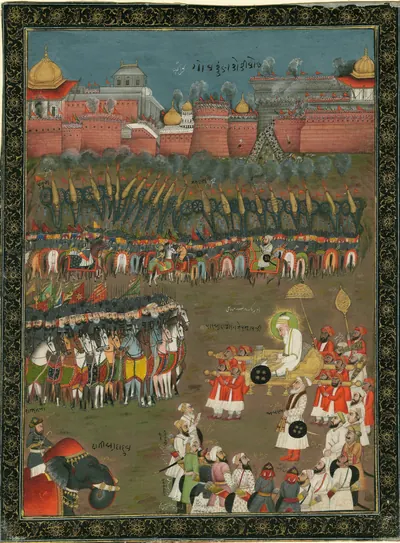 "Emperor Aurangzebe at the siege of Golconda, 1687": Indian gouache painting of the mid- to late 18th century, about a century after the event (Anne S. K. Brown Military Collection, Brown University)Other · c. 1750-1790
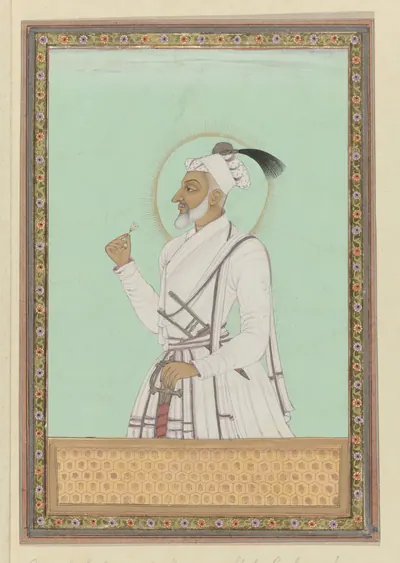 Aurangzeb: Deccani portrait, c. 1686, from an album in the Rijksmuseum (RP-T-00-3186-6); Dutch title: "Portrait of Aurangzeb, youngest son of Shah Jahan, who in his father's time ruled the province of the Deccan, and after his father's death rules all Delhi, having killed all three of his brothers"Other · c. 1686
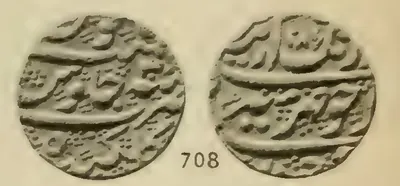 Gold mohur of Aurangzeb struck at Golkondah (Golconda), AH 1086, obverse and reverse (Lane-Poole, British Museum catalogue 1892, No. 708, pl. XVIII)Coin · 1892
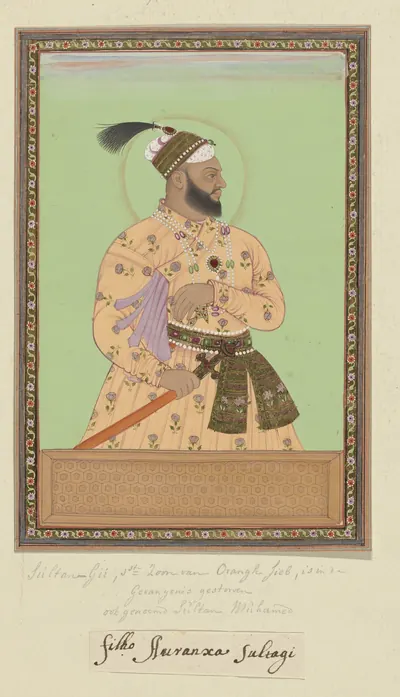 Muhammad Sultan ("Sultanji"): Deccani portrait, c. 1686, Rijksmuseum (RP-T-00-3186-10); Dutch title: "Portrait of Sultanji, the eldest son of Aurangzeb, the son-in-law of Sultan Abdullah; Aurangzeb imprisoned him and he also died in that captivity"Other · c. 1686
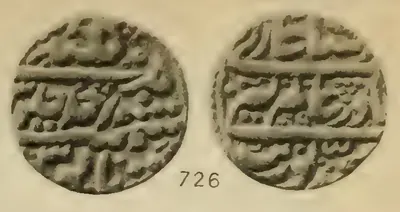 Silver rupee of Aurangzeb struck at Golkondah (Golconda), AH 1069, regnal year 1, obverse and reverse (Lane-Poole 1892, No. 726, pl. XIX)Coin · 1892
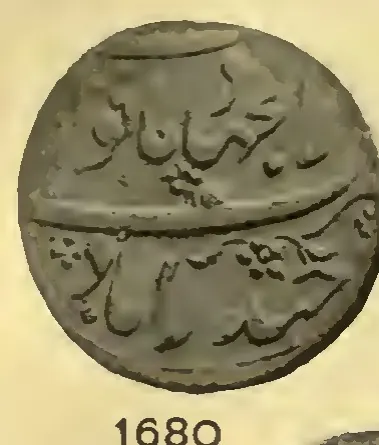 Silver rupee of Aurangzeb struck at Haidarabad "Daru-l-jihad", AH 1099 (Whitehead, Panjab Museum catalogue 1914, No. 1680, pl. XI)Coin · 1914
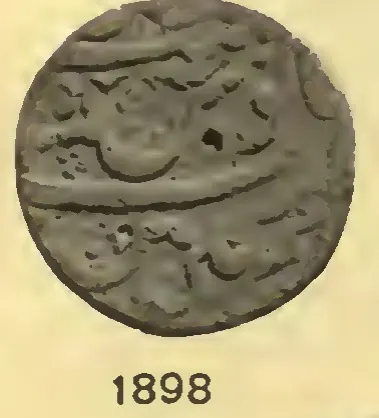 Silver rupee of Aurangzeb struck at Machhlipatan (Machilipatnam), AH 1118, regnal year 51 (Whitehead 1914, No. 1898, pl. XI)Coin · 1914
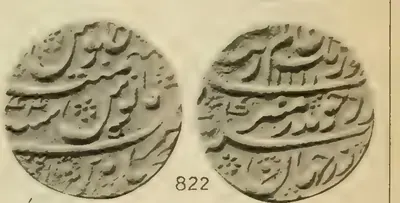 Silver rupee of Aurangzeb struck at Masulipatan (Machilipatnam), regnal year 44, obverse and reverse (Lane-Poole 1892, No. 822, pl. XX)Coin · 1892
References
Notes (0)
Sources (10)
Spotted an error on this page? Tell us
Last updated: