Warangal
Orugallu, the fortified Kakatiya capital, founded beside Hanamkonda in the late twelfth century. Delhi armies besieged it three times and captured it in the 1320s.
Name
Warangal grew up around a single great rock in the middle of the fort. Its Telugu name, Orugallu or Orukkal, and its Sanskrit names, Ekashila and Ekopala, all refer to this “one rock”.12 Hirananda Sastri thought the form Warangal was a corruption that came in through the early Muslim historians of India.1 Amir Khusrau and Barani wrote it as Arangal.34
Kakatiya capital
The Kakatiyas first ruled from Anumakonda (Hanamkonda), about 5 km away. P. V. Parabrahma Sastry dates the new fortified site at Orugallu to the reign of Rudradeva in the late twelfth century. Ganapatideva completed it and moved the capital there.56 An inscription of Ganapatideva’s general Jaya says that Rudradeva settled the people of conquered towns around Orugallu. Parabrahma Sastry pointed to Warangal quarters still named after those towns, such as Panugantivada after Panugallu.7
The Imperial Gazetteer of 1909 says that the town was founded in the twelfth century by the Kakatiya king it calls Proda Raja.8 It states that Ganapati began the stone wall, and that Rudramadevi finished it and added an outer mud wall.8
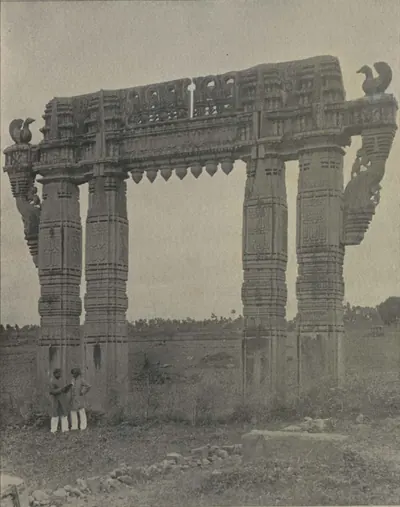
At its height the city took in Hanamkonda, Mathwada and Karimabad as well as Warangal proper.9 A Kakatiya inscription calls its market Mathiya.10 This market survives as Mattewada, the commercial centre of the modern town.10 The fort and its central temple of Svayambhu, the dynasty’s family god, are described on the Warangal Fort page.6
Sieges and after
Armies from Delhi besieged Orugallu in 1309–10 and again in 1318. In the 1320s Ulugh Khan, the future Sultan Muhammad bin Tughluq, captured it and renamed it Sultanpur.3114 Barani records that a Hindu revolt under Kanya Naik later retook the city.12
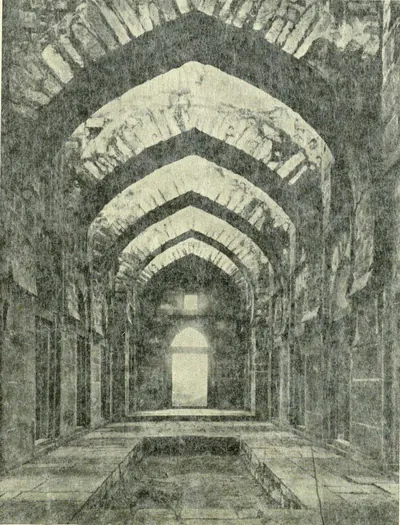
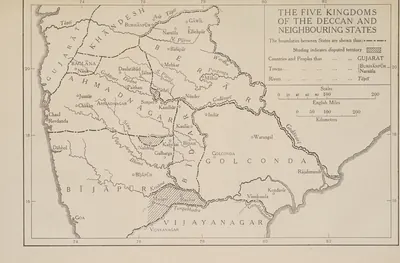
The Imperial Gazetteer states that the first Bahmani king made the Raja of Warangal pay tribute.13 It says that Bahmani troops captured the city in 1422.13 It later passed to the Qutb Shahis of Golconda.13 Shitab Khan, a governor who made himself master of Warangal around 1500, left a hall and an inscription in the fort.14
In 1901 Warangal village had 4,741 inhabitants.8 Hanamkonda, about 4 miles to the north-west, was then the headquarters of the district.815
Footnotes
-
Hirananda Sastri, Shitab Khan of Warangal (1932), p. 1 (archive.org (opens in a new tab)). ↩ ↩2
-
J. F. Fleet, Sanskrit and Old-Canarese Inscriptions, No. CXVIII, Indian Antiquary XI (1882), p. 12, citing A. C. Burnell (archive.org (opens in a new tab)). ↩
-
H. M. Elliot and John Dowson, The History of India as Told by Its Own Historians, vol. III (1871), p. 80 (archive.org (opens in a new tab)). ↩ ↩2
-
Elliot and Dowson, History of India, vol. III (1871), p. 233 (archive.org (opens in a new tab)). ↩ ↩2
-
P. V. Parabrahma Sastry, The Kakatiyas of Warangal (1978), p. 116. ↩
-
Parabrahma Sastry, The Kakatiyas of Warangal (1978), p. 172. ↩ ↩2
-
Parabrahma Sastry, The Kakatiyas of Warangal (1978), p. 101. ↩
-
Imperial Gazetteer of India, Provincial Series: Hyderabad State (1909), p. 173 (archive.org (opens in a new tab)). ↩ ↩2 ↩3 ↩4
-
Imperial Gazetteer: Hyderabad State (1909), p. 174 (archive.org (opens in a new tab)). ↩
-
Parabrahma Sastry, The Kakatiyas of Warangal (1978), p. 252. ↩ ↩2
-
Elliot and Dowson, History of India, vol. III (1871), pp. 558–561 (archive.org (opens in a new tab)). ↩
-
Elliot and Dowson, History of India, vol. III (1871), p. 245 (archive.org (opens in a new tab)). ↩
-
Imperial Gazetteer: Hyderabad State (1909), p. 164 (archive.org (opens in a new tab)). ↩ ↩2 ↩3
-
Sastri, Shitab Khan of Warangal (1932), p. 2 (archive.org (opens in a new tab)). ↩
-
Imperial Gazetteer: Hyderabad State (1909), p. 172 (archive.org (opens in a new tab)). ↩
Photos
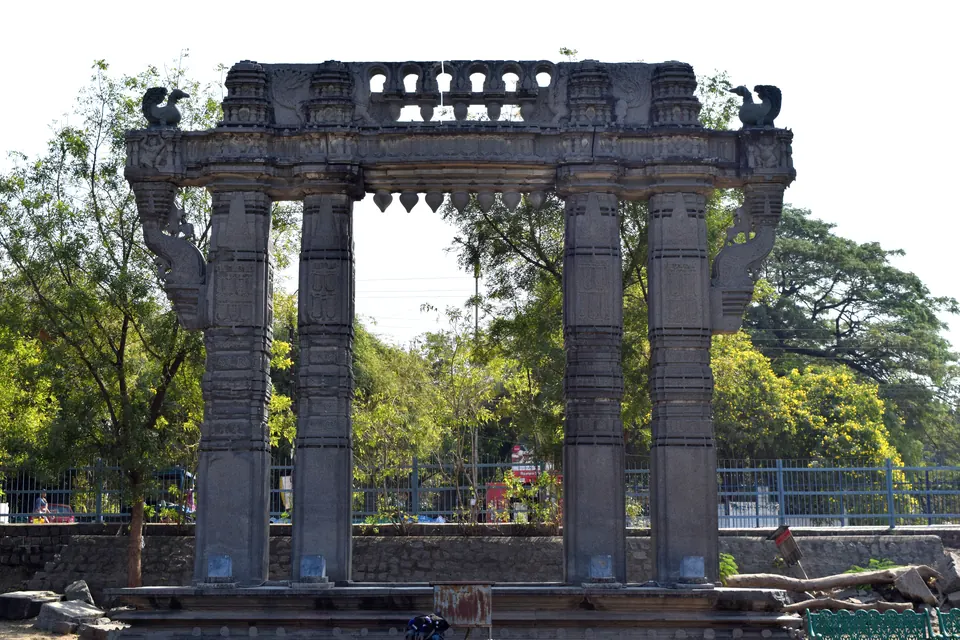
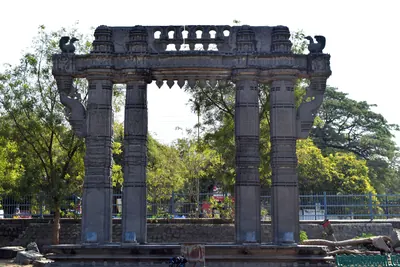 Kakatiya Kala Thoranam, Warangal FortPhotograph · 2018
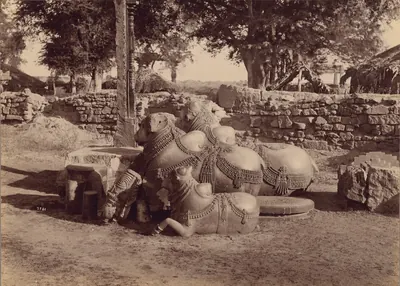 "Bulls or Nadias with Ornamental Carvings, Side View, Warangal", by Lala Deen Dayal, 1887Historic photograph · 1887
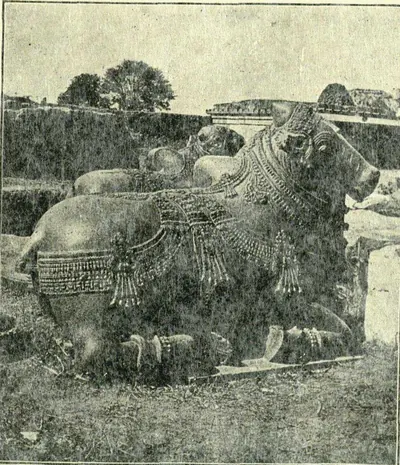 "Carved Stone Bulls in front of the Sambhuni-gudi Temple" (Sastri 1932, Pl. I (b))Book plate · 1932
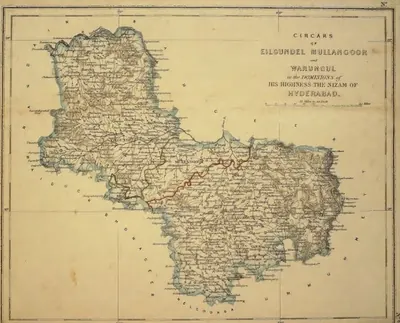 "Circars of Eilgundel, Mullangoor and Warungul, in the Dominions of His Highness the Nizam of Hyderabad" (map No. 8, atlas presented to the Nizam, 1865); Warungul is Warangal and Eilgundel Elgandal in Karimnagar district (identifications ours)Map · 1865
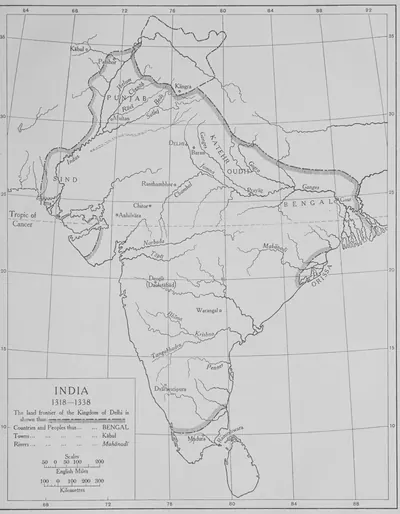 "India 1318–1338": the land frontier of the Kingdom of Delhi (The Cambridge History of India, Vol. III, 1928, Map 3, PDF p. 185 of the archive.org scan cambridgehistory03wols)Map · 1928
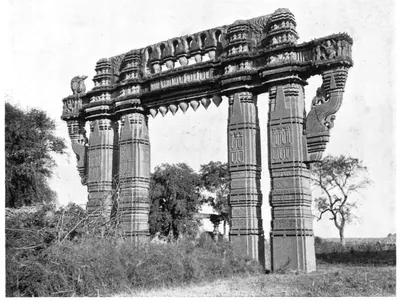 "Kirti Stambha or Toran, Warangal" (F. B. and W. H. Workman, Through Town and Jungle, 1904, p. 131 (PDF leaf 156 of scan ldpd_7460476_000))Historic photograph · 1904
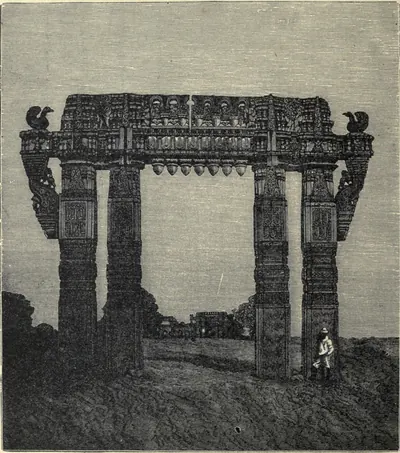 "Kirtti Stambha at Orangal. (From a Photograph.)" (Fergusson, History of Indian and Eastern Architecture, revised ed. 1910, vol. I, woodcut 253, p. 434 (PDF leaf 498 of scan historyofindiane01ferguoft))Drawing · 1910
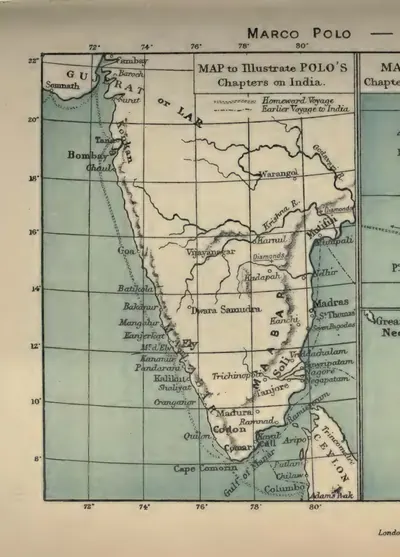 "Map to illustrate Polo's chapters on India" (Marco Polo, Book III) (Yule & Cordier 1903, to face p. 312 (PDF p. 363, lower part))Map · 1903
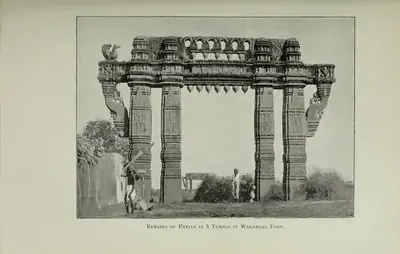 "Remains of Entrance to Temple in Warangal Fort" (Gribble 1896, PDF p. 109)Historic photograph · 1896
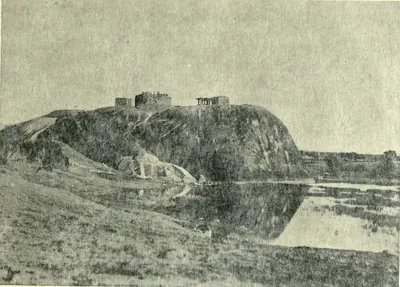 "Rock of the Warangal Fort" (Sastri 1932, Pl. I (a))Book plate · 1932
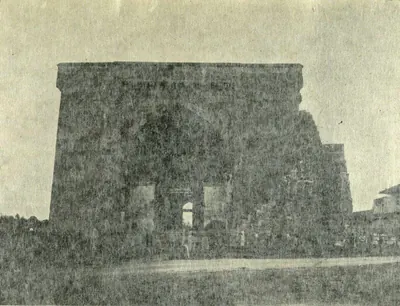 "Shitab Khan's Hall: Front View" (Sastri 1932, Pl. II (a))Book plate · 1932
 "Shitab Khan's Hall: Interior" (Sastri 1932, Pl. II (b))Book plate · 1932
Show all (49)
 "The Five Kingdoms of the Deccan and Neighbouring States", with Golconda holding Telingana from Warangal to Rajahmundry and Kondavir (The Cambridge History of India, Vol. III (1928), Map 6)Map · 1928
 "Warangal inscription at Khan Saheb Gardens", face I (Sreenivasachar, Corpus of Inscriptions in the Telingana Districts II, Plate 19 (PDF p. 258))Inscription rubbing · 1940
 "Warangal inscription at Khan Saheb Gardens", face II (Sreenivasachar, Corpus of Inscriptions in the Telingana Districts II, Plate 19 (PDF p. 258))Inscription rubbing · 1940
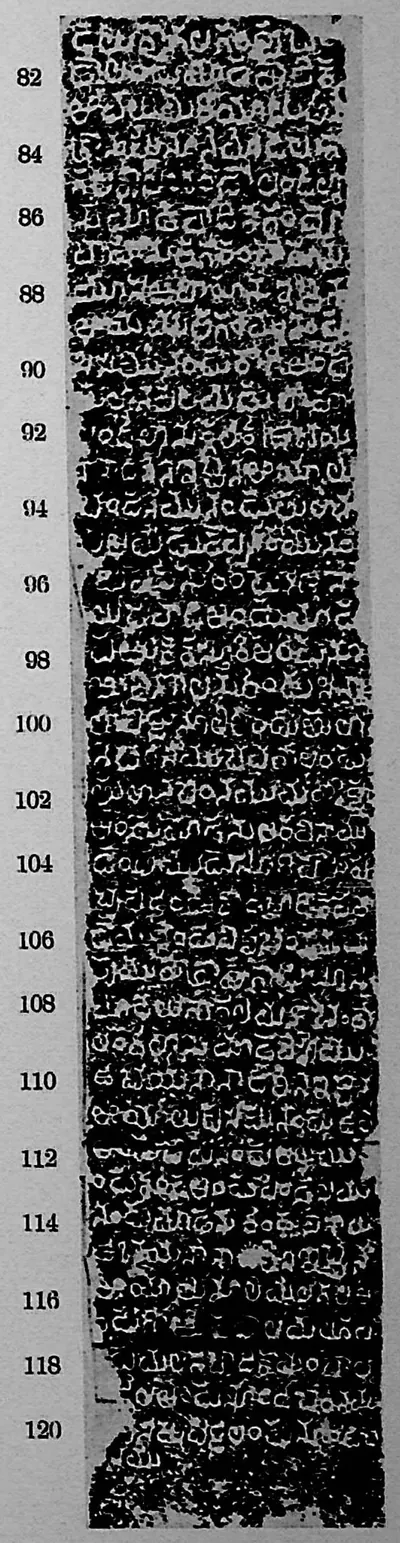 "Warangal inscription at Khan Saheb Gardens", face III (Sreenivasachar, Corpus of Inscriptions in the Telingana Districts II, Plate 19 (PDF p. 258))Inscription rubbing · 1940
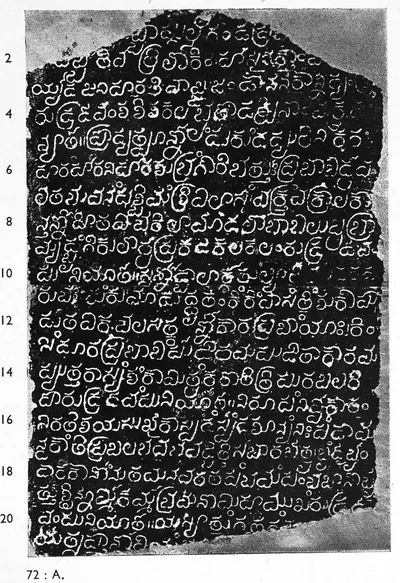 "Warangal inscription of Kakati Rudra-deva", face I (Sreenivasachar, Corpus of Inscriptions in the Telingana Districts III, Plate 1 (PDF p. 191))Inscription rubbing · 1956
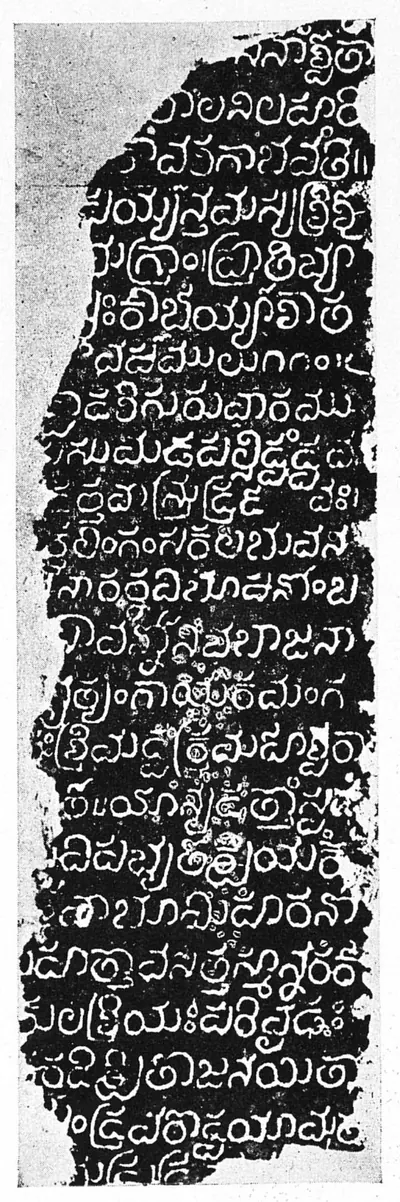 "Warangal inscription of Kakati Rudra-deva", face II (Sreenivasachar, Corpus of Inscriptions in the Telingana Districts III, Plate 1 (PDF p. 191))Inscription rubbing · 1956
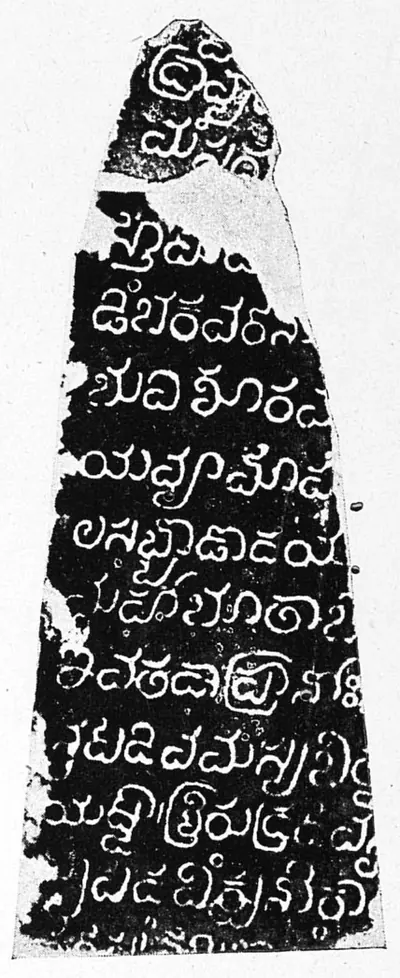 "Warangal inscription of Kakati Rudra-deva", face III (Sreenivasachar, Corpus of Inscriptions in the Telingana Districts III, Plate 1 (PDF p. 191))Inscription rubbing · 1956
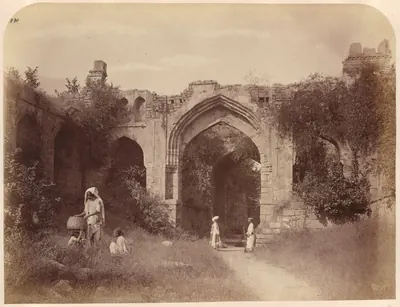 "West (entrance?), Warangal Fort", 1850-1886Historic photograph · c. 1850-1886
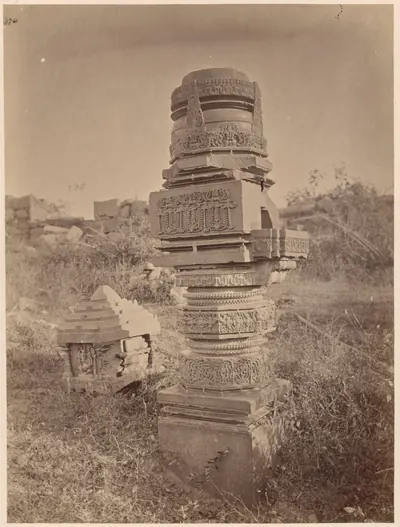 A carved pillar standing alone among ruins at Warangal, 1850-1886Historic photograph · c. 1850-1886
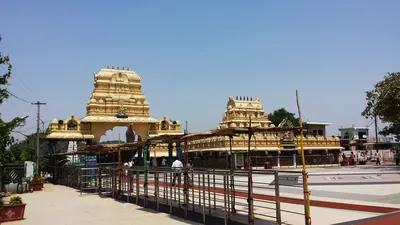 Bhadrakali temple, WarangalPhotograph · 2015
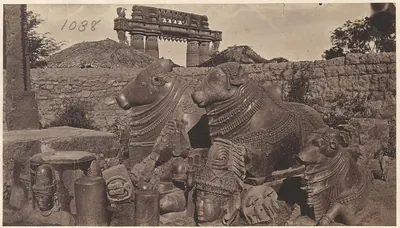 Carved stone bulls at Warangal Fort, 1850-1886Historic photograph · c. 1850-1886
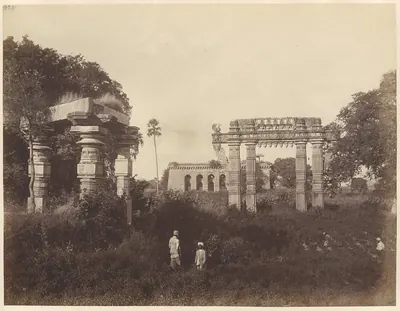 Gateway and temple ruins, Warangal, 1870sHistoric photograph · 1870s
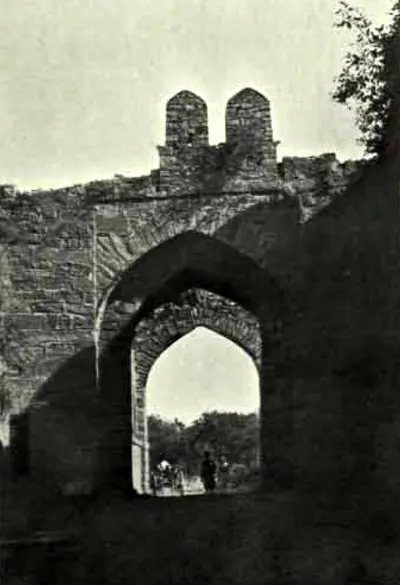 Gateway, Warangal Fort (Hyderabad Arch. Report 1925-26, Pl. XVII (b))Historic photograph · 1928
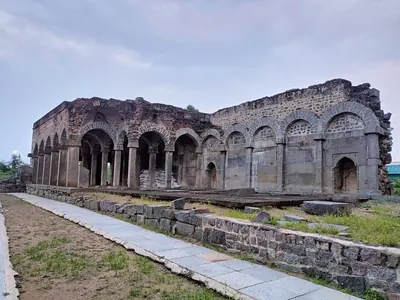 Konda Masjid, Warangal FortPhotograph · 2024
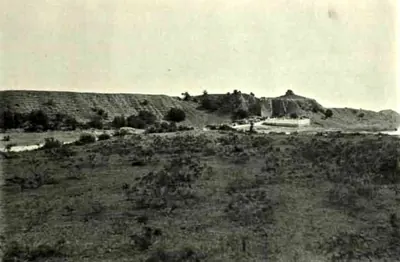 Mud Walls, Warangal Fort (Hyderabad Arch. Report 1925-26, Pl. XVII (a))Historic photograph · 1928
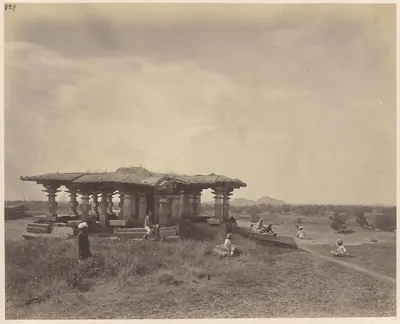 Pillared pavilion in Warangal Fort, 1850-1886Historic photograph · c. 1850-1886
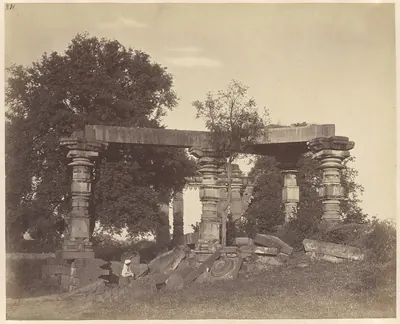 Pillared ruin at Warangal Fort, 1850-1886Historic photograph · c. 1850-1886
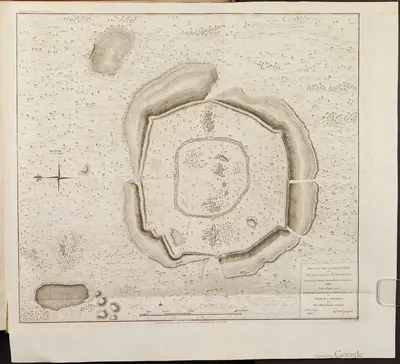 Plan of the Fort of Warangal, 1793Map · 1793
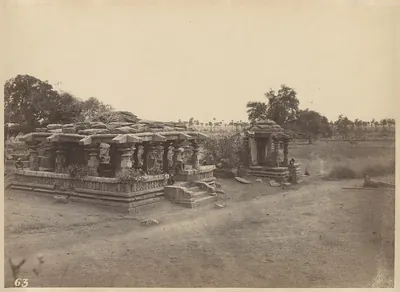 Ruined temple in Warangal Fort, 1850-1886Historic photograph · c. 1850-1886
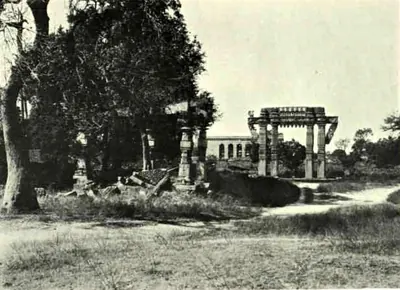 Ruins of the Old Temple, Warangal Fort (Hyderabad Arch. Report 1925-26, Pl. XVI (a))Historic photograph · 1928
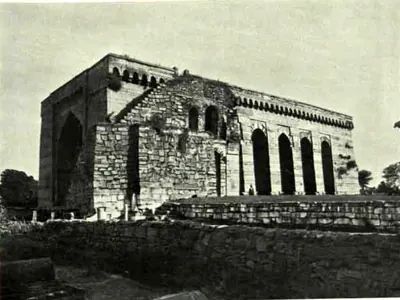 Shitab Khan's Hall: view from N.-W., Warangal Fort (Hyderabad Arch. Report 1925-26, Pl. XV (b))Historic photograph · 1928
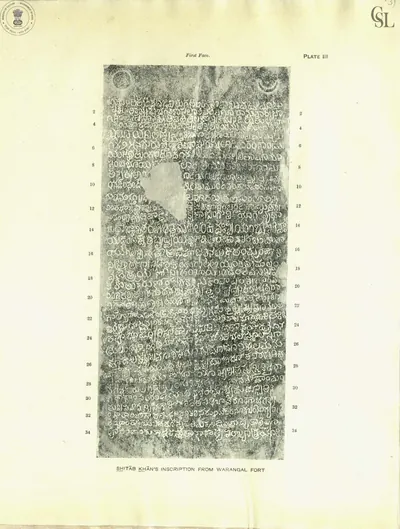 Shitab Khan's inscription from Warangal Fort: first face (Sastri 1932, Pl. III)Inscription rubbing · 1932
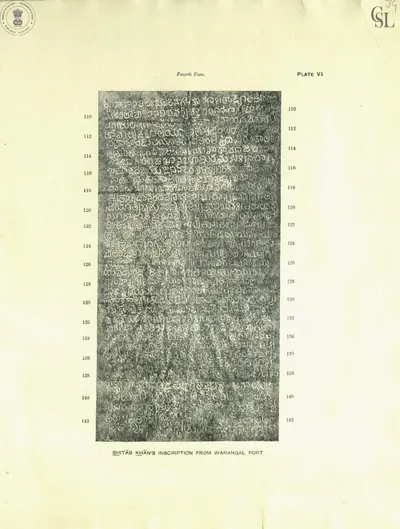 Shitab Khan's inscription from Warangal Fort: fourth face (Sastri 1932, Pl. VI)Inscription rubbing · 1932
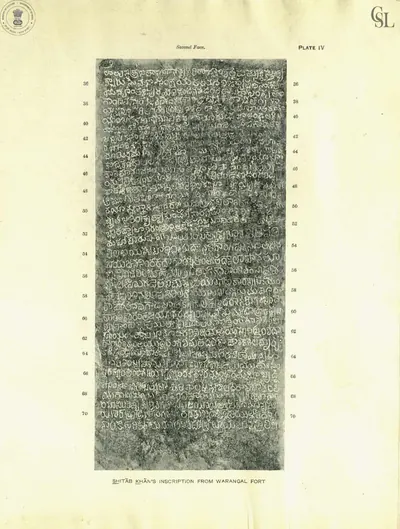 Shitab Khan's inscription from Warangal Fort: second face (Sastri 1932, Pl. IV)Inscription rubbing · 1932
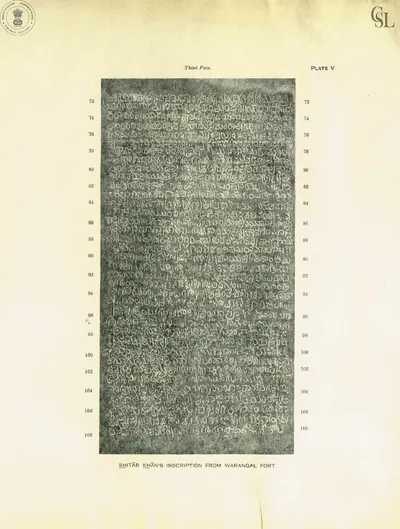 Shitab Khan's inscription from Warangal Fort: third face (Sastri 1932, Pl. V)Inscription rubbing · 1932
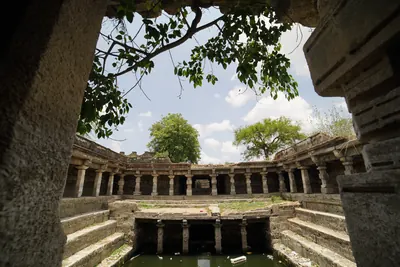 Stepwell at Shivanagar, WarangalPhotograph · 2016
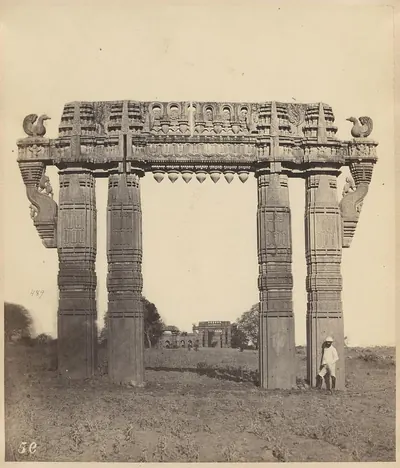 Stone gateway (torana), Warangal Fort, 1850-1886Historic photograph · c. 1850-1886
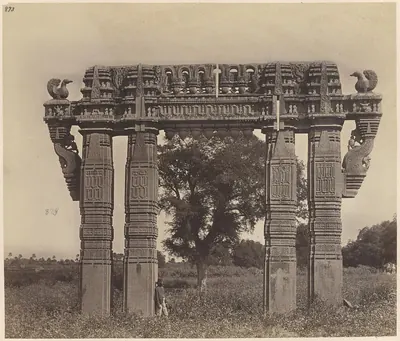 Stone gateway with trees behind, Warangal Fort, 1850-1886Historic photograph · c. 1850-1886
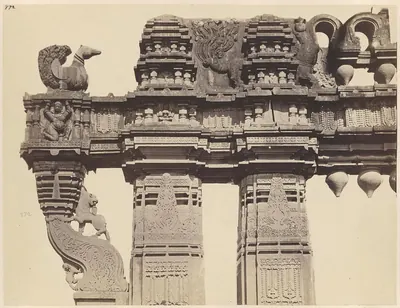 Top of a stone gateway, Warangal Fort, 1850-1886Historic photograph · c. 1850-1886
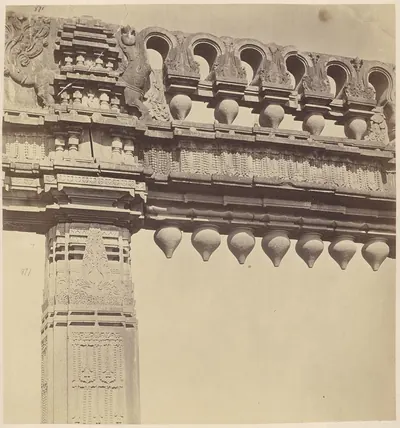 Upper part of a stone gateway, Warangal Fort, 1850-1886Historic photograph · c. 1850-1886
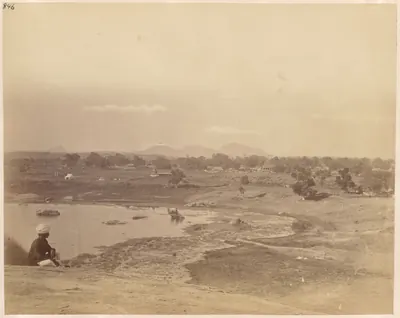 View from a hill in Warangal Fort over water and fields, 1850-1886Historic photograph · c. 1850-1886
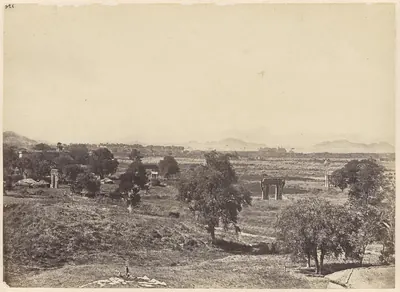 View from a hill in Warangal Fort, 1850-1886Historic photograph · c. 1850-1886
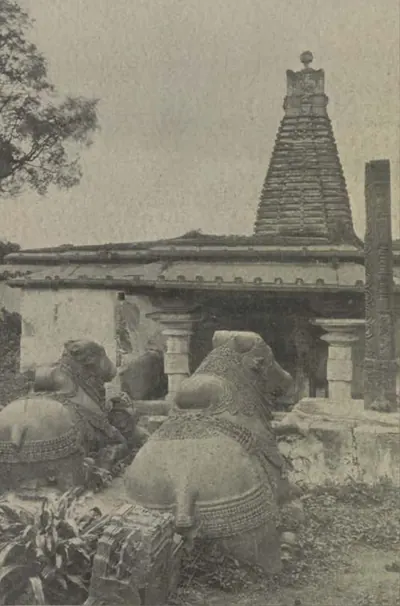 Warangal: "Half-buried Temple, Warangal" (Campbell 1898, p. 479)Historic photograph · 1898
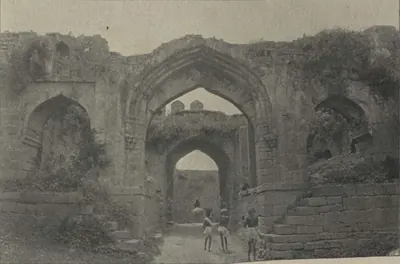 Warangal: "Hyderabad Gate, Warangal" (Campbell 1898, p. 476)Historic photograph · 1898
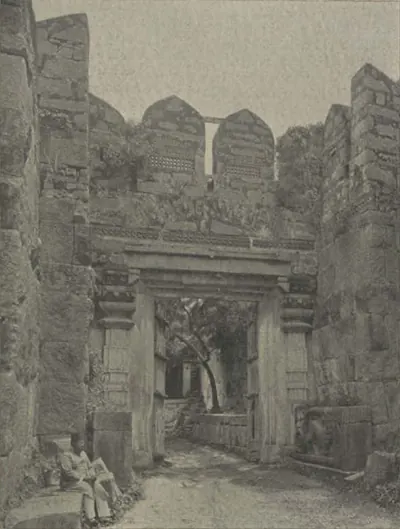 Warangal: "Inner Western Gate, Warangal Fort" (Campbell 1898, p. 478)Historic photograph · 1898
 Warangal: "The Gate of Victory, Warangal" (Campbell 1898, p. 477)Historic photograph · 1898
 Warangal: "The Subadar's Residence, Warangal" (Campbell 1898, p. 494)Historic photograph · 1898
Related
Dynasties

Kakatiyas
c. 1163–1323 CE
Dynasty of Anumakonda (Hanamkonda) and Orugallu (Warangal). The Kakatiyas were Rashtrakuta and then Western Chalukya feudatories from the tenth century. They declared their sovereignty under Rudradeva in 1163, and under Ganapatideva they ruled the Telugu country from Telangana to the coast. Rudramadevi reigned as king under the name Rudradeva, and her grandson Prataparudra fell to the Delhi Sultanate in the 1320s. Their rule rested on allied chiefs, nayaka commanders holding land for military service, and village assemblies. It is remembered for its tanks, its temples, the Motupalli sea-trade edict and its court literature.
Musunuri Nayakas
c. 1325–1368 CE
A family of Telugu military chiefs (nayakas) who led the recovery of the Telugu country from the Delhi Sultanate after the fall of Warangal in 1323. Prolaya Nayaka, from his hill capital at Rekapalli on the Godavari, freed the coast and gave back the Brahmin villages seized by the Delhi officers. His cousin Kapaya Nayaka took Warangal in the later 1330s and ruled as 'lord of the Andhra country'. He helped the founders of the Bahmani kingdom against Delhi, then lost Kaulas and Golconda to the Bahmanis, giving up the turquoise throne in 1365. He was overthrown by the Recherla Velamas in about 1368.
Shitab Khan of Warangal
c. 1504–1516 CE
Short-lived Telugu principality of the chief Shitab Khan, or Sitapati, between the fall of the Bahmani power and the rise of Golconda. He was a former officer of the Bahmanis. By his pillar inscription, he took Warangal fort from the Muslims on 21 January 1504. He held it with Khammam, Bellamkonda and other hill forts, and restored the Kakatiya family goddess and a Krishna image to their temples. The Kistna manual thought him a vassal of the Gajapatis of Orissa, with whose prince he fought at Palanchinur. Sultan Quli Qutb Shah of Golconda took his forts. The sources date the conquest of Warangal anywhere from 1512 to 1525.
People
Rudradeva
c. 1158–1195 CE
Kakatiya ruler (c. 1158–1195) who defeated the rival chiefs of Telangana. He proclaimed his family's independence in the Thousand Pillar Temple inscription of 1163, and began the fortified capital at Orugallu (Warangal).
Mahadeva
c. 1195–1199 CE
Kakatiya king (r. c. 1195–1199), younger brother of Rudradeva and father of Ganapatideva. He was killed in a night battle while attacking the capital of the Yadava (Seuna) kings.
Recherla Rudra
c. 1195–1213 CE
General of the Kakatiya kings Rudradeva, Mahadeva and Ganapatideva, of the Recherla family. He held the kingdom together after Mahadeva's death at Devagiri, and he drove out the Mudigonda chief Nagati. In 1213 he founded the Rudreshvara (Ramappa) temple and its lake at Palampet.
Ganapatideva
c. 1199–1262 CE
Kakatiya king (r. 1199–c. 1262) whose sixty-year reign carried Kakatiya power from Telangana to the coast and the far south. He moved the capital to Orugallu (Warangal). His reign produced the Motupalli sea-trade edict and the Ramappa and Ganapesvaram temples.
Rudramadevi
c. 1262–1289 CE
Daughter and successor of the Kakatiya king Ganapatideva. She ruled from Orugallu (Warangal) under the masculine title Rudradeva Maharaja from about 1260. She faced rebels, the Yadavas, the Eastern Gangas and the revolt of the Kayastha Ambadeva, and died in 1289 according to the Chandupatla inscription (1294–95 in older accounts). Henry Yule and E. Hultzsch identified her with the just and beloved queen praised, without a name, by Marco Polo.
Induluri Annaya
c. 1289–1323 CE
Brahman minister and general of the Induluri family, son-in-law of Queen Rudramadevi and a chief minister (mahapradhana) of Prataparudra. In 1291 he led the Kakatiya army that won back Tripurantakam from the Kayastha chief Ambadeva. He later governed the Vengi country.
Prataparudra
c. 1289–1323 CE
Last Kakatiya king (r. 1289–c. 1323; 1295–1323 in older accounts) and grandson of Rudramadevi. He crushed the Kayastha revolt, reorganised the nayankara military system, and paid tribute to Delhi after the sieges of 1310 and 1318. He was captured when Ulugh Khan took Warangal in the 1320s. Later warrior families remembered him as the king who raised them to rank.
Vidyanatha
c. 1289–1323 CE
Court poet of the last Kakatiya king Prataparudra. He wrote the Prataparudriya (Prataparudra-yashobhushana), a Sanskrit book on the theory of poetry whose example verses all praise the king. Its model play, the Prataparudra-kalyana, is one of the few literary sources from the time for the Kakatiya court.
Malik Kafur
c. 1309–1313 CE
Slave general of Sultan Ala-ud-din Khalji, called Malik Naib. He besieged Warangal in 1309–10 and forced the Kakatiya king Prataparudra to give up his treasure and pay yearly tribute. Then he crossed the Telugu country on his way to the far south, and he collected its tribute from Devagiri. This page covers only his part in the history of the Telugu country.
Malik Maqbul (Khan-i Jahan)
c. 1323–1370 CE
Telugu noble of Warangal, called Kattu before his conversion, who entered the service of Muhammad bin Tughluq after the fall of the Kakatiyas. He governed the province of Telingana until Kanya Naik's revolt drove him out. He rose to be chief minister of Sultan Firuz Tughluq with the title Khan-i Jahan.
Muhammad bin Tughluq
1325–1351 CE
Sultan of Delhi (1325–1351). As Prince Ulugh Khan he besieged Warangal twice in the early 1320s, captured the Kakatiya king Prataparudra and renamed the city Sultanpur. As sultan he held Telingana as a province until a Telugu rising, after his visit of 1335, took Warangal from his governor. This page covers only his part in the history of the Telugu country.
Kapaya Nayaka
c. 1336–1368 CE
Musunuri chief (fl. c. 1336–1368), cousin and successor of Prolaya Nayaka. He took Warangal from the Delhi governors and ruled as 'lord of the Andhra country'. He is identified with the Kanya Naik of Barani and the Krishna Naik of Ferishta. He helped the founders of the Bahmani kingdom, then lost Kaulas and Golconda to them. He was overthrown by the Recherla Velamas in about 1368.
Ala-ud-din Hasan Bahman Shah
1347–1358 CE
Officer of the Delhi sultanate who led the Deccan revolt against Muhammad bin Tughluq, with help from the ruler of Warangal. In 1347 he founded the Bahmani sultanate at Gulbarga. He took Kaulas from Warangal and made western Telangana a province of his kingdom.
Bukka I (Vijayanagara)
c. 1355–1377 CE
Second ruler of Vijayanagara, brother and successor of Harihara I, who turned the frontier kingdom into an empire. He fought the Bahmani sultans Muhammad Shah I and Mujahid for the Raichur doab. His son Kumara Kampana destroyed the sultanate of Madura, and his inscriptions boast of driving the Andhras into the hills towards Udayagiri. His minister built the tank of Bukkarayasamudram in the Anantapur country in 1364. Sewell dated his reign 1343–1379 in 1900 and 1355–1377 in 1932.
Muhammad Shah I
1358–1375 CE
Second Bahmani sultan (1358–1375), son of the founder. He organised the court, the army and the four provinces, struck the dynasty's own gold coin, and fought the first great wars with Warangal and Vijayanagara. In Ferishta's account the ruler of Warangal ceded Golconda to him and gave up a jewelled throne, the Takht-i-Feroza or turquoise throne. The Burhan-i Ma'asir tells of the Telingana war in a single sentence.
Anapota Nayaka (Recherla)
c. 1361–1384 CE
Recherla Velama chief (r. c. 1361–1384), son of Singama Nayaka. He fortified Rachakonda in 1365 and overthrew the Musunuri chief Kapaya Nayaka about 1368. By July 1369 he ruled Warangal, Bhongir and Rachakonda. With his brother Mada of Devarakonda he made the Recherla family the leading power of Telangana.
Ahmad Shah I
1422–1435 CE
Ninth Bahmani sultan (1422–1435), called Wali, 'the Saint'. He took the throne from his brother Firuz and defeated Vijayanagara. In 1424 or 1425 he took Warangal, killing its raja, and the Velama rayas of Devarakonda and Rachakonda then paid him tribute. He moved the capital from Gulbarga to Bidar. He had to march into Telangana again to put down the chiefs who rose while he fought Gujarat and Malwa.
Kapilendra (Kapilesvara)
c. 1434–1470 CE
Founder of the Suryavamsi Gajapati dynasty of Orissa, who took the throne of the last Eastern Ganga king in 1434–35 and reigned until about 1470. He conquered the Reddi kingdoms of Rajahmundry and Kondavidu, and governed them through his nephew Raghudeva and his kinsman Ganadeva. He relieved Devarakonda from the Bahmanis in 1459, and his son Hamvira and Raghudeva took Warangal in 1460. His records credit him with conquests down the coast to the Kaveri.
Humayun Shah
1458–1461 CE
Eleventh Bahmani sultan (1458–1461), remembered as Zalim, 'the Cruel'. In Telangana he put down the revolt of his cousin Sikandar Khan, who claimed the province. He sent an army against the Velama fort of Devarakonda, which was routed by its defenders and an Orissan relief force in 1459. He camped at Warangal, left Mahmud Gawan to hold Telangana, and returned to Bidar to take a savage revenge on a rising there.
Hamvira (Hambira)
c. 1459–1478 CE
Son of the Gajapati king Kapilendra and the leading general of his conquests in the Telugu and Tamil countries. He captured the fort of Warangal on 2 February 1460 and made the Chiruvroli grant on the Krishna in 1461. In 1464 his son Dakshina-Kapilesvara governed Kondavidu and the forts of the south. Ferishta writes of an 'Ambur Ray' who took the Orissan throne with Bahmani help after Kapilendra's death. This man has been identified with Hamvira, but the succession is disputed.
Muhammad Shah III
1463–1482 CE
Bahmani sultan (1463–1482) who came to the throne as a boy. He brought Rajahmundry, Kondapalli and the Krishna–Godavari coast under Bahmani rule, and spent three years settling Telangana. In 1481 he had his great minister Mahmud Gawan executed because of a forged letter, a deed the sources blame for the break-up of the kingdom.
Mahmud Shah Bahmani
1482–1518 CE
Fourteenth Bahmani sultan (1482–1518). He came to the throne at twelve and spent his reign as the puppet of his ministers, while the governors became kings. Telangana stayed loyal longest. He campaigned at Warangal in 1486 and gave the province to Sultan Quli Qutb-ul-Mulk in the 1490s. Bahmani mosques of his reign stand at Rachakonda (1484) and Golconda (1518), the latter still naming him as sovereign.
Shitab Khan (Sitapati) of Warangal
c. 1504–1516 CE
A Telugu chief of humble birth who held Warangal, Khammam and Bellamkonda in the early sixteenth century. Hirananda Sastri identified him with an officer who had fled the Bahmani Sultan Humayun Shah about 1461, and with the Sitapati of the Golconda chronicle. His pillar inscription in Warangal fort records that he took the fort from the Muslims on 21 January 1504. He put back the images of Krishna and of the Kakatiya family goddess. He supported Telugu poets and called himself king of the Bhogi family. Sultan Quli Qutb Shah of Golconda defeated him. He took shelter with the Gajapati prince at Kondapalli and fought on the losing side at Palanchinur. The Kistna manual thought he was a vassal of Orissa.
Aliya Rama Raya
1542–1565 CE
Chief of the Aravidu family and son-in-law (aliya) of Krishnadeva Raya. After Achyuta Raya's death, he and his brothers Tirumala and Venkatadri overthrew the regent Salakam Timma. He placed Sadasiva on the throne in 1542 and ruled the empire in his name until 1565. His family's lands lay around Kurnool, Adoni and Gooty, and his governors held Kondavidu. He played the Deccan sultans against each other until they joined against him. He was captured and beheaded in the battle of January 1565.
Abul Hasan Tana Shah
c. 1672–1699 CE
Abul Hasan, called Tana Shah, was the last Qutb Shahi sultan of Golconda (1672–1687). He was a kinsman and son-in-law of Abdullah Qutb Shah. He left the government to the Brahmin brothers Madanna and Akkanna, who allied the kingdom with the Marathas. Aurangzeb made this a charge against him and took Hyderabad in 1685. In 1687 Aurangzeb besieged Golconda for eight months, until a gate was opened by treachery. Abul Hasan died a state prisoner at Daulatabad.
Sarvaya Papadu (Pap Rai)
c. 1708 CE
Telangana rebel of the early eighteenth century, a toddy-drawer by caste, whom the Mughal historian Khafi Khan calls Pap Rai. From forts at Shahpur in the Bhongir country and at a second stronghold, he plundered the roads and killed Mughal officers. In 1708 he sacked Warangal. He was betrayed, captured and executed, and his head was sent to the emperor's court. Telangana tradition remembers him as Sarvaya Papadu, a Goundla hero who robbed the rich, fed the poor and held Golconda for three hours.
Komaragiri Narayana Rao
1915–1978 CE
Hyderabad State Congress worker from Khammam (1915–1978). He worked in the Andhra Mahasabha from 1930, joined the State Congress in 1938, and was jailed at Warangal for nine months in the Quit India movement of 1942–43. He later worked for land reform and the Bhoodan movement and wrote books in Telugu and English on Hyderabad.
Devulapalli Venkateswara Rao
1917–1984 CE
Communist leader of Nalgonda district (1917–1984) and historian of the Telangana armed struggle. Expelled from Osmania University in the Vandemataram strike, he joined the Communist Party in 1939, led its Nalgonda district committee and joined its state secretariat in March 1948. He sat in the Lok Sabha from 1957 to 1962, later led a revolutionary communist group, and spent long years underground and in jail. His Telugu history of the struggle was published in 1988, after his death.
Madanna
before 1686 CE
Telugu Brahmin who became chief minister (wazir) of Abul Hasan, the last Qutb Shahi sultan of Golconda, about 1673, with the title Surya Prakash Rao. With his brother Akkanna he ran the kingdom for some twelve years. He allied it with the Marathas against the Mughals and kept an office at Bezwada. Aurangzeb made the employment of the two Brahmin brothers a charge against the king. They were murdered at Golconda in March 1686.
Mahmud Gawan
before 1481 CE
Persian merchant who became chief minister of the Bahmani sultanate (c. 1461–1481). He was regent for two boy kings, fought in Telangana and on the west coast, reorganised the provinces and the army, and founded a great college at Bidar. Muhammad Shah III had him executed on a forged charge of treason in 1481.
Malik Hasan Bahri
before 1486 CE
Bahmani noble, born a Brahman and brought up as a Muslim. As Nizam-ul-Mulk he took Rajahmundry and Kondapalli or Kondavidu for Muhammad Shah III in about 1471, and governed all of Telingana. He resented its division by Mahmud Gawan and led the plot that had the minister executed in 1481. He then ruled the kingdom as Malik Naib until he was killed in 1486 after a campaign at Warangal. His son Ahmad founded the Nizam Shahi kingdom of Ahmadnagar.
Palkuriki Somanatha
Telugu Shaiva poet from Palakurthi near Warangal. He wrote the Basava Purana and the Panditaradhya Charitra in the dvipada metre, the founding works of Telugu Virashaiva literature. Historians disagree over whether he lived in the late twelfth century or under Prataparudra, the last Kakatiya king.
Sultan Quli Qutb-ul-Mulk
before 1543 CE
Persian-born officer of the Bahmani sultanate who governed Telingana from Golconda. He conquered much of Telangana and the Krishna–Godavari coast, and founded the Qutb Shahi dynasty. He was assassinated in 1543. According to the Golconda chronicle, he was killed at prayer in the mosque of Golconda fort. According to Ferishta, a slave killed him while he was examining jewels.
Vinukonda Vallabharaya
Telugu poet of the 15th century, governor of Vinukonda under the Vijayanagara king Devaraya II, named as the author of the Kridabhiramamu, a lively tour of the streets of Warangal told as a play. His family served the Vijayanagara kings from Bukka I onward as ministers, generals and keepers of the royal jewels. P. T. Raju and K. Sitaramaiya give the Kridabhiramamu to Srinatha instead.
Monuments
Shitab Khan's hall, Warangal
c. 1504 CE
Tall roofless stone hall in Warangal fort, near the western gateway of the old central temple. It is named after the chief Shitab Khan, who held Warangal from 1504. The Hyderabad Archaeological Department conserved it in 1925–26. It compared the hall with the Hindola Mahal at Mandu and thought it built about the turn of the fifteenth and sixteenth centuries. The hall is 86 feet by 24, with cross arches 28 feet high that once carried a flat vault, sloping walls, a cistern in the floor and a tall arched entrance on the north.
Warangal Fort
The fortified Kakatiya capital of Orugallu, a round city ringed by an earthen wall and a stone wall with moats. Its central Svayambhu temple survives as four carved stone gateways. The fort held out against Delhi armies from 1310 and finally fell to them in the 1320s.
Inscriptions
Warangal fort inscription of Rudradeva
c. 1183 CE
A broken Sanskrit inscription of Saka 1105 (1183–84) found inside Warangal fort. It records King Rudradeva's gift of the village of Modapalli and repeats verses of his Thousand Pillar Temple inscription. A short Telugu record of his brother Mahadeva comes from the same fort.
Warangal toll inscription of Ganapatideva
1228 CE
A damaged Telugu pillar inscription of July 1228 near the entrance to Warangal fort. It lists the dues that native and foreign merchants paid to the god Virabhadreshvara on dozens of goods, from areca nuts and salt to camphor, musk, silk and pearls. It is the fullest early record of trade and units of measure in the Kakatiya capital.
Warangal inscriptions of Hamvira and Raghudeva (1460)
1460 CE
Two short records on gateways of the Warangal fort. Both are dated Saturday, the tenth of the bright half of Magha in the year Pramathin, 2 February 1460. They record the capture of the fort from the Bahmanis by two princes of the Gajapati house of Orissa. One was Hamvira (Ambira-deva), son of Kapilendra. The other was his cousin Raghudeva, governor of Rajahmundry, who says that he spared the lives of the Bahmani commander and his men.
Warangal pillar inscription of Shitab Khan (1504)
1504 CE
A Sanskrit verse inscription, with two lines of Telugu prose, on a four-faced red sandstone pillar in front of the Sambhuni-gudi in Warangal fort. In 143 lines and 36 verses it records that the chief Chittapa Khan (Shitab Khan, or Sitapati) of the Bhogi family took Warangal from the Muslims. This happened on Sunday, the fifth day of the bright half of Magha, Saka 1425, which Hirananda Sastri reckoned as 21 January 1504. The record gives his ancestors, wives and sons, and says that he restored the images of Krishna and of the Kakatiya family goddess. It was composed by Madhava, son of Annarya, and edited by Sastri in 1932.
References
Notes (0)
Sources (5)
Spotted an error on this page? Tell us
Last updated: