Somesvara I
Western Chalukya king, called Trailokyamalla and Ahavamalla, who reigned from about 1042 to 1068 and made Kalyana (Kalyani) his capital. Records of his reign are found at Alampur, Bodhan and Kolanupaka in Telangana, and the early Kakatiya chiefs Beta I and Prola I served him. His wars with the Cholas reached the Vengi country. Chola inscriptions claim that his army sent to Vengi was destroyed and his sons beaten at Kudalasangamam. He drowned himself in the Tungabhadra in 1068.
Somesvara I was a king of the Western Chalukyas, whose records are dated from 1044 to 1068.1 Records of his reign are found at Bodhan, Alampur and Kolanupaka in Telangana.234 His wars with the Cholas reached the Vengi country.5
Coming to the throne, and the capital
Somesvara I was the son of Jayasimha II, and had the double biruda (title of honour) Trailokyamalla-Ahavamalla.1 J. F. Fleet counted some forty records of his reign, dated from October–November 1044 to March–April 1068.1 His queens included Bachaladevi, the mother of his sons Somesvara II, Vikramaditya VI and Jayasimha III.1
Fleet credited Somesvara I with making Kalyana, the modern Kalyani, the capital of the Western Chalukyas.6 The poet Bilhana says that Somesvara “made the town”.67 This means that he either founded it or developed it into the capital.67 The earliest mention of the place that Fleet could trace is a record of 1053, which calls it the nelevidu or capital.67
Kalyana remained the capital of his successors and of the Kalachuris after them.8 See Kalyani.
Records in the Telugu country
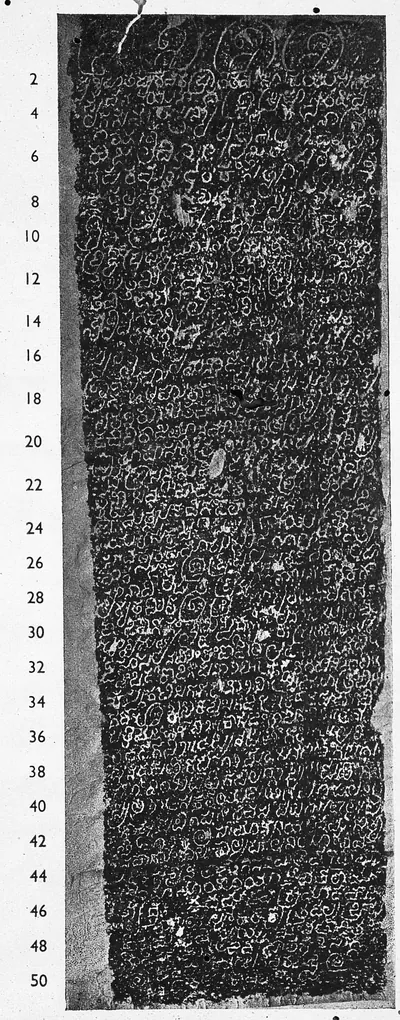
Records of his reign are found in the Telangana districts. At Bodhan, in the Nizamabad district, an inscription of 29 May 1056 records the work of the king’s officer Jogapayya.2 He renovated the temple of Indranarayana in the town of Bodana.2 The Rashtrakuta king Indravallabha had built this temple, and it had since fallen into ruin.2 Jogapayya set up an image of Vishnu and a Garuda pillar there, and made gifts for its services.2
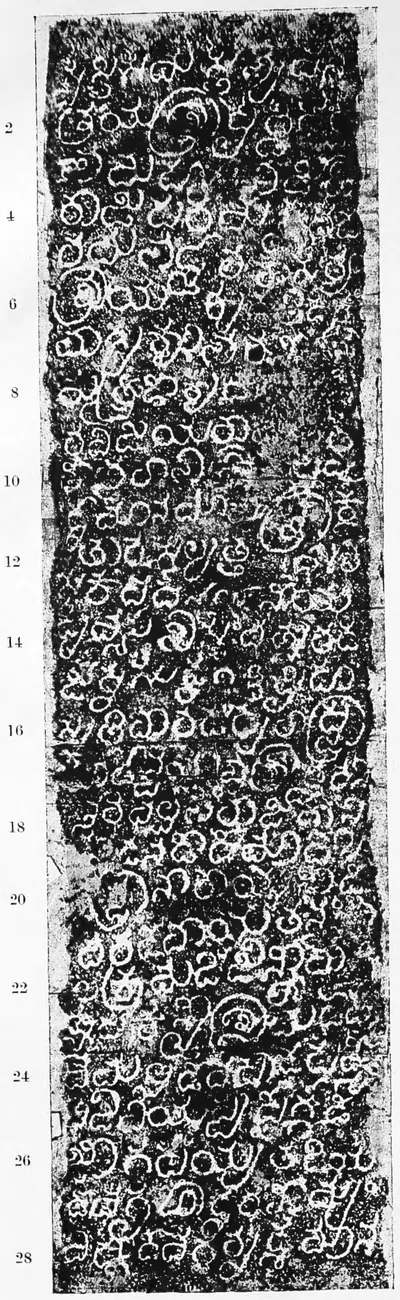
At Alampur, on the Tungabhadra, inscriptions in the temple of Brahmesvara refer to his reign in 1051, 1057, 1060 and 1067.391011 The record of 1060 refers to the king ruling from Kalyana.391011 The last names his feudatory, the mahamandalesvara (great provincial lord) Chiddaya Choda-Maharaja, governing the Ayaje three-hundred district.391011
Robert Sewell cited an inscription of October 1067 at Kulpak (Kolanupaka), the ancient Kollipaka, which shows Somesvara I as sovereign there.4 See Bodhan and Kolanupaka.
The early Kakatiya chiefs were his feudatories. P. V. Parabrahma Sastry dated the last record of Beta I to 1051, and the first of his son Prola I to 1053.12 He noted that Prola obtained the Anumakonda district (vishaya) from King Trailokyamalla as a permanent fief (land held in return for service).12
Wars with the Cholas and Vengi
The long war with the Cholas continued in his reign. The Chola records claim a victory over him at Koppam.7 But a Western Chalukya inscription of 1071 says that the Chola king eventually “yielded his head” to Somesvara I in battle.7 The same inscription says that this Chola had burned Jain temples in the Belvola country.7 Bilhana claims that Somesvara stormed the Chola capital, Kanchi.7
The struggle reached Vengi. Sewell found that relations between the two Chalukya houses were friendly for a time.13 An inscription at Draksharama, in Eastern Chalukya territory, records a gift made in 1055–56 by the daughter of one of Somesvara I’s ministers.13
His eldest son, Somesvara II, was governing districts in the Dharwar country in 1053.6 He was given the title “lord of Vengi, the best of towns”.6 Fleet found that his fourth son, Vishnuvardhana-Vijayaditya, governing the Nolambavadi province in 1064 and 1066, had the title “lord of the province of Vengi”.14 Fleet suggested that the young prince’s mother may have been an Eastern Chalukya princess.14
Chola inscriptions of Virarajendra, as Sewell summarised them, say that Somesvara sent an army into the Vengi country, and that it was defeated.5 They say that his sons Vikramaditya and Jayasimha were driven across the Tungabhadra and completely beaten in a battle at Kudalasangamam.5 Sewell added that “we do not even know why Somesvara I should have sent an expedition to Vengi”.5
The Chola records go on to say that Somesvara challenged Virarajendra to meet him again at the same place, but never appeared.4 See the Eastern Chalukyas and Vijayaditya VII.
Where Kudalasangamam was is disputed. Fleet, in 1896, placed it at the junction of the Tungabhadra and the Krishna.15 Sewell reported that Fleet later held it to be near Khidrapur in the Belgaum district, where the Krishna has two confluences (places where rivers meet).5 Sewell also reported another theory, which placed it at the confluence of the Tunga and the Bhadra.5 He noted that S. Krishnaswami Aiyangar suggested the junction of the Krishna and the Tungabhadra in the Kurnool district.5
Death
According to Bilhana, as Fleet summarised him, Somesvara was attacked by a deadly fever for which no remedies could be found.16 He went to the Tungabhadra and there, reciting his confession of the Shaiva faith, drowned himself in the sacred river.16 Sewell dated his death to 30 March 1068 and placed it at Kuruvatti.17
His eldest son, Somesvara II, succeeded him.1615 The second son, Vikramaditya VI, took the throne from his brother in 1076.1615
Footnotes
-
Fleet, “Dynasties of the Kanarese Districts” (1896), p. 438 (archive.org (opens in a new tab)). ↩ ↩2 ↩3 ↩4
-
P. B. Desai, introduction to P. Sreenivasachar, Kannada Inscriptions of Andhra Pradesh (Andhra Pradesh Government Archaeological Series 3, 1961), p. 20, No. 54 (archive.org (opens in a new tab)). Paraphrased. ↩ ↩2 ↩3 ↩4 ↩5
-
Desai, Kannada Inscriptions of Andhra Pradesh (1961), p. 32, No. 83 (archive.org (opens in a new tab)). Paraphrased. ↩ ↩2 ↩3 ↩4
-
Sewell, Historical Inscriptions (1932), p. 81 (archive.org (opens in a new tab)). Paraphrased. ↩ ↩2 ↩3
-
Sewell, Historical Inscriptions (1932), p. 79 and note 1 (archive.org (opens in a new tab)). Paraphrased except for the sentence quoted. ↩ ↩2 ↩3 ↩4 ↩5 ↩6 ↩7
-
Fleet, “Dynasties of the Kanarese Districts” (1896), p. 440 and note 3 (archive.org (opens in a new tab)). ↩ ↩2 ↩3 ↩4 ↩5 ↩6
-
Fleet, “Dynasties of the Kanarese Districts” (1896), p. 441 (archive.org (opens in a new tab)). ↩ ↩2 ↩3 ↩4 ↩5 ↩6 ↩7
-
J. F. Fleet, “Dynasties of the Kanarese Districts”, Gazetteer of the Bombay Presidency I, pt. II (1896), p. 428 (archive.org (opens in a new tab)). ↩
-
Desai, Kannada Inscriptions of Andhra Pradesh (1961), p. 33, Nos. 83–84 (archive.org (opens in a new tab)). Paraphrased. ↩ ↩2 ↩3
-
Desai, Kannada Inscriptions of Andhra Pradesh (1961), p. 35, Nos. 91–92 (archive.org (opens in a new tab)). Paraphrased. ↩ ↩2 ↩3
-
Desai, Kannada Inscriptions of Andhra Pradesh (1961), p. 40, No. 114 (archive.org (opens in a new tab)). Paraphrased. ↩ ↩2 ↩3
-
P. V. Parabrahma Sastry, The Kakatiyas of Warangal (1978), p. 45. ↩ ↩2
-
Robert Sewell, The Historical Inscriptions of Southern India (1932), p. 75 (archive.org (opens in a new tab)). Paraphrased. ↩ ↩2
-
Fleet, “Dynasties of the Kanarese Districts” (1896), p. 454 and note 5 (archive.org (opens in a new tab)). ↩ ↩2
-
Fleet, “Dynasties of the Kanarese Districts” (1896), p. 445 and note 1 (archive.org (opens in a new tab)). ↩ ↩2 ↩3
-
Fleet, “Dynasties of the Kanarese Districts” (1896), p. 442 (archive.org (opens in a new tab)). ↩ ↩2 ↩3 ↩4
-
Sewell, Historical Inscriptions (1932), p. 82 (archive.org (opens in a new tab)). Paraphrased. ↩
Photos
References
Notes (0)
Sources (4)
Spotted an error on this page? Tell us
Last updated: