Schools, colleges and universities, 1800–1956
How modern schooling grew in the Telugu lands, side by side in the Madras districts (Coastal Andhra and Rayalaseema) and in the Nizam's Hyderabad State (Telangana). It follows the growth of pupils district by district, the first colleges, schools for girls, Dalit and Muslim children, the slow rise of Telugu as a medium of teaching, technical and medical schools, and the two universities of Hyderabad (1918) and Andhra (1926).
Download
Between about 1850 and 1956, schools run or helped by the government spread across the Telugu lands, and the first colleges and universities were founded.12 The Madras districts (Coastal Andhra and Rayalaseema) followed the Madras Presidency’s system and the University of Madras.13 The Nizam’s Hyderabad State (Telangana) built its own system, which taught in Urdu above the primary stage.24 This page picks up where Schools and learning leaves off, after the village pyal schools and the first mission schools.
About the sources. Most figures here come from the yearly Report on Public Instruction of the Madras Presidency and the five-yearly reviews called Progress of Education in India.56 For colleges, the page uses the Godavari gazetteer of 1907, a history of mission colleges (1929) and the Andhra University’s register for 1939–40.789 The register is cited, not quoted. For Hyderabad it uses the Imperial Gazetteer (1909), A. Claude Campbell’s book of 1898 and the Osmania University’s own reports.21011
The two systems take shape
In 1854 the directors of the East India Company sent their despatch (letter of orders) on education.1 It started grants-in-aid, government money for private schools that accepted inspection.1 Madras then set up a Department of Education, with a Director of Public Instruction and inspectors.3 Much of the growth after this came from old village schools joining the new system, as a committee found in 1884.12
In Hyderabad, state education began in 1854 with a school called the Dar-ul-ulum.2 In 1875 five deputy inspectors took school work away from the revenue officials.13 About 1880 the Chadarghat high school became a college of the Madras University.13 The gazetteer says it was later called the Nizam College.13
More and more pupils
The Madras reports counted pupils district by district.5 The table below gives the pupils in schools known to the department in three years.51415 Each district is named as the reports name it. A dash means the report gives no separate figure for that district in that year.51415
| District | 1870–71 | 1890–91 | 1937–38 |
|---|---|---|---|
| Vizagapatam (Visakhapatnam) | 3,096 | 24,142 | 182,099 |
| Godavari | 4,713 | 32,255 | East 151,819; West 109,127 |
| Kistna (Krishna) | 2,646 | 36,735 | 120,868 |
| Guntur | – | – | 172,172 |
| Nellore | 5,225 | 21,836 | 87,241 |
| Cuddapah (Kadapa) | 3,568 | 14,329 | 61,936 |
| Kurnool | 2,664 | 10,275 | 72,058 |
| Bellary | 4,274 | 18,911 | 52,244 |
| Anantapur | – | 8,024 | 54,359 |
| Chittoor | – | – | 71,966 |
The early figures are small partly because the department then knew of fewer schools.12 The 1937–38 figures leave out the hill tracts (the Agency) of Vizagapatam and East Godavari, which the report counts separately.15
Some districts stayed far behind.14 In 1890–91 Anantapur, Cuddapah and Vizagapatam had the lowest share of their people at school in the whole Presidency.14 In Vizagapatam only one person in 116 was a pupil.14 In 1911–12 Vizagapatam still had the lowest share of boys of school age at school, 21.0 in every hundred.16
The first colleges
Most early colleges grew out of high schools.78 The Government college at Rajahmundry began as a district school in 1853.7 Its first college class of four students formed early in 1873.17 It became a first-grade college in 1877.18 A first-grade college taught up to the B.A. degree, and a second-grade college only up to the First Arts (F.A.) examination.1918
At Machilipatnam, the missionary Robert Noble opened a school in November 1843.8 It grew into the Noble College, which joined the Madras University as a college in 1864.8
Rajas and district officials helped to found others.2021 The Maharaja of Vizianagaram opened a college class at his school in 1877, and raised it to the B.A. in 1883.20 The Pithapuram Raja’s College at Kakinada began as an English and vernacular school in 1852 and opened its first college class in January 1884.2122
By 1939–40 the Andhra University had 23 colleges, including six first-grade colleges and eight oriental (Sanskrit) colleges.9 Its other colleges included the Andhra Christian College at Guntur, the Hindu College at Machilipatnam and the Mrs. A. V. N. College at Visakhapatnam.9 Others were the Venkatagiri Raja’s College at Nellore and the Government Training College at Rajahmundry.9
Girls at school
Girls came to school far more slowly than boys.14 In 1890–91 only 3.2 in every hundred girls of school age in the Presidency were at school, against 21.1 boys.14 The Telugu districts ranged from 4.9 in Kistna and 4.0 in Godavari down to 1.3 in Vizagapatam and Cuddapah.14 By 1937–38 the numbers had grown, but the gap remained.15 That year the Kistna district had 45,989 girls at school, against 74,879 boys.15 Bellary had 11,908 girls, against 40,336 boys.15
In 1939–40 two of the Andhra University’s colleges admitted only women.9 Both were Sanskrit colleges: the Sree Sarada Niketanam at Guntur and the Andhra Yuvathi Samaskrita Kalasala at Rajahmundry.9 The Pithapuram Raja’s College at Kakinada kept a separate hostel for girls.23
Schools for Dalit and Muslim children
The Madras reports called Dalit children “Panchamas” and, later, Adi-Andhras and Adi-Dravidas.2425 In 1893–94 the schools meant mainly for them rose from 1,437 to 1,805.24 The Kistna district had over 400 such schools, and Nellore over 250.26 Godavari, Kurnool and Cuddapah had over 100 each.26 Even so, the Director wrote that for every 10,000 of the population only 630 Panchama boys and 94 Panchama girls were at school.26
By 1928–29 there were 275,266 Adi-Dravida and Adi-Andhra pupils in the public schools of the Presidency.25 Some schools were held in places such as agraharams (Brahmin streets) and chavadis (village halls), from which these children were shut out.25 That year 122 of them moved to places open to them.25 At Kakinada, the Pithapuram Raja’s College helped to run a hostel for Adi-Andhra boys, the Rammohun Students’ Home.23
In 1890–91 the Director found that few Muslim children were at school in the Ceded Districts (Rayalaseema), Kistna, Nellore and Kurnool.27 Cuddapah, Kurnool and Kistna each had a Muslim inspecting schoolmaster to help.27 In 1929–30, 196 students studied at the two Arabic colleges of the Presidency, at Vellore and Kurnool.28 In Hyderabad the picture was different.10 In the 1890s Muslims were only 9.7 per cent of the people of the state.10 Yet 18,279 Muslim boys and 2,163 Muslim girls were at school, against 27,016 Hindu boys and 947 Hindu girls.10
Telugu as a language of teaching
For a long time, high schools and colleges in Madras taught through English.29 In 1925 the Madras government allowed the local languages to be used in the three highest forms (classes) of secondary schools.30 At first very few pupils took up the offer.31 The number of Madras high schools that taught their subjects in the local language rose from 102 in 1932 to 184 in 1937.29 The Andhra University’s College of Arts taught Telugu language and literature up to the Honours degree from 1931.32
In Hyderabad State, primary schools taught in the mother tongue, but secondary schools and the university taught in Urdu.433 A committee of 1936 thought this was a reasonable and cheap compromise.4 It also noted the cost of running parallel Urdu and local-language classes in primary schools.4 Osmania University kept research scholarships for Telugu, Marathi and Kannada.34 From June 1949, Telugu, Hindi, Marathi and Kannada became the medium in classes 5, 6 and 7.35
Technical and medical schools
The Madras government opened a medical college at Visakhapatnam in July 1923, at the request of the people of the Telugu districts.3637 In the 1920s there was also a School of Engineering at Visakhapatnam, kept on from year to year.38 By 1948 a new engineering college had opened at Kakinada, run by the Madras government and affiliated to the Andhra University.39 Polytechnics opened at Kakinada and Vuyyur in 1946.4041
Hyderabad had a medical school much earlier.42 The Hyderabad Medical School was founded in 1846.42 It taught first in Urdu, and in English from 1884.42 A small engineering school opened at Warangal and moved to Hyderabad in 1896.43 An industrial school opened at Warangal in 1890.43 Osmania University opened its own medical college in 1927, and colleges of engineering and teacher training in 1929.44
Two universities
The Osmania University was set up by a charter in 1918.33 Its first college opened in Hyderabad in August 1919.45 It called itself the first attempt in India to give university teaching through an Indian language, Urdu, with English as a compulsory second language.11 Intermediate colleges followed in Hyderabad city, at Warangal and at Aurangabad.46 Classes for women were added at the Zenana School in Nampally.46 In 1936 a Hyderabad committee asked for the Madras University’s control over the state’s schools to end.47 See Osmania University.
In Madras, the Senate of the university wanted a separate university for the Andhras.6 The Andhra University Act was passed in January 1926 and came into force that April.648 It covered twelve districts, from Ganjam in the north to Chittoor in the south.48 Its headquarters were first placed at Vijayawada (then Bezwada).48 In 1928–29 the Madras Legislative Council moved them to Visakhapatnam.49 See Andhra University.
Towards 1956
By March 1950 Hyderabad State had 9,027 government and recognised institutions.50 Primary education there had been free since 1922.51 Andhra State was formed from the Telugu districts of Madras in 1953.52 In 1954–55 the Sri Venkateswara University was started at Tirupati.53 In 1956 the Andhra government reported about 18,000 primary schools and 600 high schools in the state.54
Where the sources disagree
The sources tell the origin of the Nizam College differently:
- The Imperial Gazetteer (1909) says the Chadarghat high school became a college about 1880, and was “now called the Nizam College”.13
- Campbell (1898) says the Nizam College was formed in 1888, when the old Hyderabad College was joined with the Madrasa-i-Aliya.55
They also differ on dates for two colleges. Satthianadhan says the Maharaja’s College at Vizianagaram opened its first college class in 1877.20 The Andhra University register says it became a second-grade college in 1879.56 The register says the Pithapuram Raja’s College was revived in 1862.57 The Godavari gazetteer says it closed for a time in 1862 and reopened on 28 October 1863.21
Footnotes
-
S. Satthianadhan, History of Education in the Madras Presidency (1894), p. 42 (archive.org (opens in a new tab)). ↩ ↩2 ↩3 ↩4
-
Imperial Gazetteer of India, Provincial Series: Hyderabad State (1909), p. 73 (archive.org (opens in a new tab)). ↩ ↩2 ↩3 ↩4
-
Imperial Gazetteer of India, Provincial Series: Madras, Vol. I (1908), p. 118 (archive.org (opens in a new tab)). ↩ ↩2
-
Report of the Sub-Committee (1936), p. 7 (archive.org (opens in a new tab)). Paraphrased. ↩ ↩2 ↩3 ↩4
-
Report on Public Instruction in the Madras Presidency for 1870–71 (1871), pp. 6–7, table of schools and pupils by district, total pupils column (archive.org (opens in a new tab)). ↩ ↩2 ↩3 ↩4
-
Progress of Education in India, 1922–27 (Ninth Quinquennial Review), Vol. I, p. 58 (archive.org (opens in a new tab)). ↩ ↩2 ↩3
-
F. R. Hemingway, Madras District Gazetteers: Godavari, Vol. I (1907), p. 154 (archive.org (opens in a new tab)). ↩ ↩2 ↩3
-
Rajah B. Manikam, Missionary Collegiate Education in the Presidency of Madras (1929), p. 82 (archive.org (opens in a new tab)). ↩ ↩2 ↩3 ↩4
-
Andhra University: The Annual Register 1939–40 (1939), p. 302, list of colleges (archive.org (opens in a new tab)). Cite-only; paraphrased. ↩ ↩2 ↩3 ↩4 ↩5 ↩6
-
A. Claude Campbell, Glimpses of the Nizam’s Dominions (1898), p. 64 (archive.org (opens in a new tab)). ↩ ↩2 ↩3 ↩4
-
Osmania University, Hyderabad Deccan, 1930–31 (1931), p. 1 (archive.org (opens in a new tab)). ↩ ↩2
-
Indian Education Commission, Report by the Madras Provincial Committee (1884), p. 71 (archive.org (opens in a new tab)). ↩ ↩2
-
Imperial Gazetteer: Hyderabad State (1909), p. 74 (archive.org (opens in a new tab)). ↩ ↩2 ↩3 ↩4
-
Report on Public Instruction in the Madras Presidency for 1890–91 (1891), p. 6, tables of scholars by district and of boys and girls at school (archive.org (opens in a new tab)). ↩ ↩2 ↩3 ↩4 ↩5 ↩6 ↩7 ↩8
-
Report on Public Instruction in the Madras Presidency, 1937–38, Vol. II, Supplemental statistics, p. 4, table 2, scholars by district (archive.org (opens in a new tab)). ↩ ↩2 ↩3 ↩4 ↩5 ↩6
-
Report on Public Instruction in the Madras Presidency for 1911–12 (1912), p. 4, in the bound volume of reports for 1910–11 to 1915 (archive.org (opens in a new tab)). ↩
-
Report on Public Instruction in the Madras Presidency for 1872–73, p. 29 (archive.org (opens in a new tab)). ↩
-
Hemingway, Godavari (1907), p. 155 (archive.org (opens in a new tab)). ↩ ↩2
-
Satthianadhan, History of Education (1894), p. 147 (archive.org (opens in a new tab)). ↩
-
Satthianadhan, History of Education (1894), p. 211 (archive.org (opens in a new tab)). ↩ ↩2 ↩3
-
Hemingway, Godavari (1907), p. 157 (archive.org (opens in a new tab)). ↩ ↩2 ↩3
-
Hemingway, Godavari (1907), p. 158 (archive.org (opens in a new tab)). ↩
-
Andhra University: The Annual Register 1939–40, p. 339 (archive.org (opens in a new tab)). Cite-only; paraphrased. ↩ ↩2
-
Report on Public Instruction in the Madras Presidency for 1893–94, p. 69 (archive.org (opens in a new tab)). ↩ ↩2
-
Report on Public Instruction for 1928–29, Vol. I, p. 27 (archive.org (opens in a new tab)). ↩ ↩2 ↩3 ↩4
-
Report on Public Instruction for 1893–94, p. 70 (archive.org (opens in a new tab)). ↩ ↩2 ↩3
-
Report on Public Instruction for 1890–91 (1891), p. 93 (archive.org (opens in a new tab)). ↩ ↩2
-
Report on Public Instruction in the Madras Presidency for 1929–30, p. 30, in the same bound volume (archive.org (opens in a new tab)). ↩
-
Progress of Education in India, 1932–37, Vol. I, p. 98 (archive.org (opens in a new tab)). ↩ ↩2
-
Progress of Education in India, 1922–27, Vol. I, p. 100 (archive.org (opens in a new tab)). ↩
-
Progress of Education in India, 1922–27, Vol. I, p. 101 (archive.org (opens in a new tab)). ↩
-
Progress of Education in India, 1932–37 (Eleventh Quinquennial Review), Vol. I, p. 61 (archive.org (opens in a new tab)). ↩
-
Census of India 1931, Vol. XXIII: H.E.H. the Nizam’s Dominions, Part I: Report (1933), p. 216, “The Osmania University” by H. A. Ansari, Registrar (archive.org (opens in a new tab)). ↩ ↩2
-
Osmania University, 1930–31 (1931), p. 6 (archive.org (opens in a new tab)). ↩
-
Report on the Administration of the Hyderabad State (1950), p. 138 (archive.org (opens in a new tab)). Paraphrased. ↩
-
Andhra University: The Annual Register 1939–40, p. 332 (archive.org (opens in a new tab)). Cite-only; paraphrased. ↩
-
Progress of Education in India, 1922–27, Vol. I, p. 191 (archive.org (opens in a new tab)). ↩
-
Progress of Education in India, 1922–27, Vol. I, p. 195 (archive.org (opens in a new tab)). ↩
-
Facilities for Technical Education in India (1948), p. 8 (archive.org (opens in a new tab)). Paraphrased. ↩
-
Facilities for Technical Education in India (1948), p. 51 (archive.org (opens in a new tab)). Paraphrased. ↩
-
Facilities for Technical Education in India (1948), p. 52 (archive.org (opens in a new tab)). Paraphrased. ↩
-
Imperial Gazetteer: Hyderabad State (1909), p. 79 (archive.org (opens in a new tab)). ↩ ↩2 ↩3
-
Imperial Gazetteer: Hyderabad State (1909), p. 77 (archive.org (opens in a new tab)). ↩ ↩2
-
Osmania University, 1930–31 (1931), p. 2 (archive.org (opens in a new tab)). ↩
-
Osmania University Calendar, 1335–1336 Fasli (1928–29), Introduction, p. 29 (archive.org (opens in a new tab)). ↩
-
Osmania University Calendar, 1928–29, Introduction, p. 30 (archive.org (opens in a new tab)). ↩ ↩2
-
Committee for the Reorganisation of Education in the Hyderabad State: Report of the Sub-Committee (1936), p. 3 (archive.org (opens in a new tab)). Paraphrased. ↩
-
Progress of Education in India, 1922–27, Vol. I, p. 59 (archive.org (opens in a new tab)). ↩ ↩2 ↩3
-
Report on Public Instruction in the Madras Presidency for 1928–29, Vol. I, p. 10 (archive.org (opens in a new tab)). ↩
-
Report on the Administration of the Hyderabad State (1950), p. 135 (archive.org (opens in a new tab)). Paraphrased. ↩
-
Report on the Administration of the Hyderabad State (1950), p. 136 (archive.org (opens in a new tab)). Paraphrased. ↩
-
The Andhra State Act, 1953 (Act No. 30 of 1953), Parliament of India. ↩
-
Andhra Legislative Assembly Debates, Vol. II, No. 5 (2 March 1956), p. 386, the Government’s statement on the budget (archive.org (opens in a new tab)). Paraphrased. ↩
-
Andhra Legislative Assembly Debates, Vol. II, No. 5 (2 March 1956), p. 393 (archive.org (opens in a new tab)). Paraphrased. ↩
-
Campbell, Glimpses of the Nizam’s Dominions (1898), p. 90, life of W. A. Home (archive.org (opens in a new tab)). ↩
-
Andhra University: The Annual Register 1939–40, p. 361 (archive.org (opens in a new tab)). Cite-only; paraphrased. ↩
-
Andhra University: The Annual Register 1939–40, p. 336 (archive.org (opens in a new tab)). Cite-only; paraphrased. ↩
Related
People
Institutions
Noble College, Machilipatnam
1843 CE
The Church Missionary Society's college at Machilipatnam, the oldest college in the Telugu country. It grew from a school that the missionary Robert Noble opened on 21 November 1843 with two boys. It became a second-grade college of the Madras University in 1864 and a first-grade college in 1892, and joined the new Andhra University in 1926.
Andhra Christian College, Guntur
1848 CE
The American Lutheran mission's college at Guntur. Its first English school opened in 1848, closed in 1863 when the American Civil War cut its funds, and reopened in 1874 under Dr. L. L. Uhl. It became a second-grade college in 1885 and a first-grade college in 1926, and took the name Andhra Christian College in 1927. In 1929 it had more students than any other college of the Andhra University.
Pithapuram Raja's College, Kakinada
1852 CE
A college at Kakinada that began in 1852 as an English and vernacular school founded by the Collector and his sheristadar. The Raja of Pithapuram, one of its first pupils, endowed it; it opened its first college class in January 1884 and took the Raja's name. The Maharaja of Pithapuram became its sole owner in 1926–27 and raised it to a first-grade college.
Government Arts College, Rajahmundry
1853 CE
The Madras government's college for the Northern Circars. It opened in 1853 as a district (zilla) school, was made a provincial school in 1868, started its first college class in 1873 and became a first-grade college teaching up to the B.A. in 1877. In 1907 it was one of only three government first-grade colleges in the Presidency; in 1939–40 it was a first-grade college of the Andhra University.
Dar-ul-ulum, Hyderabad
1854 CE
The first state school of Hyderabad, founded in the city in 1854. It trained the state's first schoolmasters, was later split into branch schools, and grew into an Oriental College that sent students to the Oriental examinations of the Punjab University. In 1898 its college had 55 students and its school 317. By the 1920s an Osmania High School carried its name.
Hindu College, Machilipatnam
1856 CE
A Hindu college at Machilipatnam. The Andhra University register says Sir Seshaiah Sastri founded it on 1 January 1856 as the Hindu Anglo-Vernacular School, for Hindu families who wanted a good education for their sons without missionary pressure. It became a high school in 1863, a second-grade college in July 1928 and a first-grade college in July 1934.
Maharaja's College, Vizianagaram
1857 CE
The college of the Maharajas of Vizianagaram. The Andhra University register says a Maharaja of Vizianagaram, whom it calls Sir Viziaramaraj, founded the school in 1857 and made it a high school in 1868. It opened its first college class in 1877 (1879 in the register) and taught up to the B.A. from 1883. For decades the Vizianagaram estate paid for it, and in 1885 it was the only first-grade college of the Vizagapatam district.
Mrs. A. V. N. College, Visakhapatnam
1860 CE
A college at Visakhapatnam. It began in 1860 as an Anglo-Vernacular School founded by the Inspector of Schools, the Collector, the Maharaja of Vizianagaram and a local gentleman, and became the Hindu College when it was raised to a second-grade college. A bequest of one lakh of rupees from A. V. Narasinga Rao (1892) turned it, from 1 April 1899, into the Mrs. A. V. Narasinga Rao College.
Venkatagiri Raja's College, Nellore
1875 CE
A college at Nellore, founded as a school in 1875 by S. Narayanaswami Chetty, Dewan of the Venkatagiri estate. The Maharaja of Venkatagiri saved it in 1886 and it took his name in 1895. His son raised it to a college, opened in July 1920; in 1939–40 it was a second-grade college of the Andhra University with 337 Intermediate students.
Government Training College, Rajahmundry
1883 CE
A college for training Telugu teachers at Rajahmundry. It began in 1883 as a district board normal school, became a college in February 1894 and trained graduates for the L.T. (Licentiate in Teaching) from 1904. Its graduate class was moved to Saidapet near Madras in 1911, but a separate Teachers' College for the Telugu districts reopened at Rajahmundry on 2 July 1917.
Nizam College
c. 1888 CE
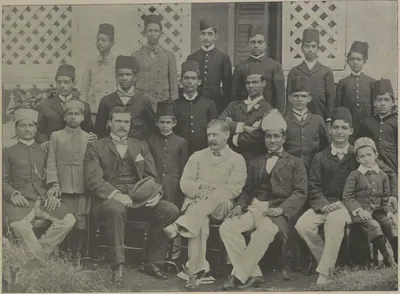
The English-medium college of Hyderabad city, affiliated to the University of Madras. The Imperial Gazetteer traces it to the Chadarghat high school, which became a college about 1880; Campbell says the Nizam College was formed in 1888 by joining the old Hyderabad College with the Madrasa-i-Aliya. In 1936 a committee proposed linking it to Osmania University.
Osmania University
1918 CE
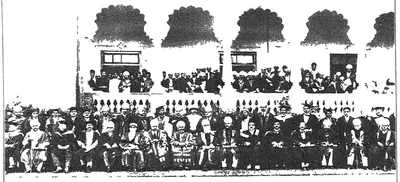
The university of Hyderabad State, ordered by the seventh Nizam in April 1917 and set up by a charter in 1918. It taught in Urdu, with English as a compulsory language. Its first college opened in 1919; colleges of law, medicine, engineering and teacher training, intermediate colleges at Warangal and Aurangabad and a college for women followed by 1930.
Medical College, Visakhapatnam
1923 CE
A medical college for the Telugu districts. The Madras government opened it at Visakhapatnam in July 1923, at the request of the people of the Telugu districts, in the old hospital buildings. It taught for the M.B.B.S. of the Andhra University, gave preference to students from the Telugu districts, and by 1939–40 had 391 students and a hospital of more than 300 beds.
Andhra University
1926 CE
The university of the Telugu districts of the Madras Presidency, created by an Act of January 1926 that came into force that April. Its headquarters, first placed at Vijayawada (then Bezwada), moved to Visakhapatnam in 1928–29. It opened its own colleges of arts (1931) and of science and technology (1932) at Waltair, and by 1939–40 had 23 colleges.
Madrasa-i-Aliya
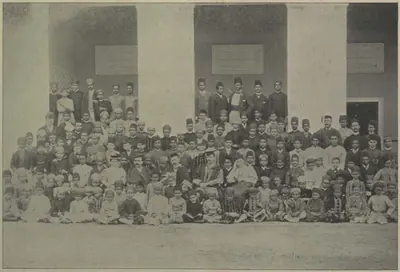
A school in Hyderabad city for the sons of the nobility. It began as a private school with English teachers for the sons and relatives of the minister Sir Salar Jang, and in the 1870s became a public school for the higher classes. It had 19 pupils in 1879 and about 200 by the 1900s, and was attached to the Nizam College.
Themes
References
Notes (0)
Sources (25)
Spotted an error on this page? Tell us
Last updated: