Health, disease and medicine, 1800–1970
How the Telugu lands met the great epidemics of the modern age and built hospitals to fight them, side by side in the Madras districts (Coastal Andhra and Rayalaseema) and the Nizam's Hyderabad State (Telangana). It covers the older Ayurvedic and Unani healers, cholera, smallpox, plague, the influenza of 1918 and malaria, vaccination, the first hospitals and medical schools, mission hospitals, women doctors and midwives, and public health after 1947.
Download
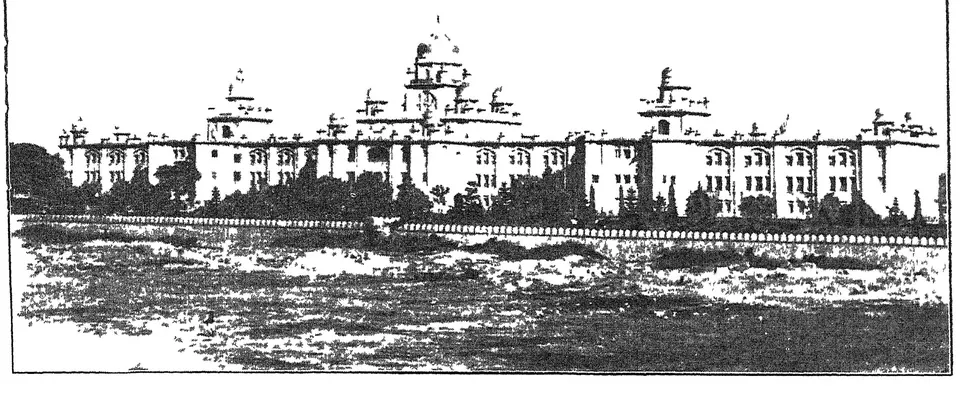
In the nineteenth and early twentieth centuries, epidemics of cholera, smallpox, plague and influenza killed hundreds of thousands of people in the Telugu lands.123 Over the same years the governments of the Madras Presidency and of the Nizam’s Hyderabad State opened hospitals, trained doctors and began vaccination.456 This page tells how sickness and medicine changed in both regions, from the old village healers to the primary health centres of the 1960s.78
About the sources. Most of this page rests on the district gazetteers of Godavari (1907), Anantapur (1905) and Nellore (1942), the Imperial Gazetteer of Hyderabad (1909) and the census reports of 1921.9101142 For Hyderabad it also uses the Nizam’s administration reports and John Law’s Modern Hyderabad (1914).121314 Their figures are official counts, and the registration of deaths was often incomplete.1015
Older ways of healing
According to the Anantapur district gazetteer of 1970, illness was treated before British rule by vaids and hakims.7 These were healers trained in Ayurveda (the old Indian system of medicine) and Unani (the Greek-Arab system brought by Muslim physicians).7 Each village had its own Ayurvedic physician for common illnesses, but little was done to prevent disease.7
These older systems did not die out. In 1937–38 the Nizam approved Rs. 1,50,615 to reorganise the Unani Department of Hyderabad State.16 Part of the money modernised the main Unani hospital near the Charminar, the Sadar Unani Shafakhana Nizamia.16 The same year the government set up an Ayurvedic Section, with Rs. 35,000 a year.16
In the Madras districts, local bodies paid for both kinds of medicine. In the 1930s the Nellore municipality kept two Ayurvedic dispensaries and one Unani dispensary.17 The local boards of the district had 23 hospitals and dispensaries of modern medicine, and had recently opened 18 Ayurvedic dispensaries as well.17
The first hospitals
The first modern hospitals were small. The Government Headquarters Hospital at Nellore was started in 1844 and rebuilt in 1850 with gifts from the public and a government grant.618 It had only 14 beds for men and 6 for women, and the Raja of Venkatagiri gave Rs. 150 towards its upkeep.18 By 1920 it had grown to 52 beds, and the government took it over that year.18
Other district towns followed. The hospital at Kakinada (then Cocanada) was founded in 1856, and by 1907 it had 32 beds for men and 14 for women.19 At Gooty, the Munro Memorial Hospital began as a dispensary in the verandah of a rest-house, and moved to its own building in 1869.10
In Hyderabad the first medical institution was the Hyderabad Medical School, founded in 1846.4 Figures are only available from 1884–85, when the state had 6 hospitals in the city and 48 dispensaries (small clinics) in the districts.4 The dispensaries rose to 84 by 1901, and to 150 by 1937.420 In 1901 they treated 636,044 out-patients.4
Cholera
Cholera travelled with people along the roads, and by water. The Godavari gazetteer says it was always present in the delta, where people drank from the irrigation channels.91 In 1892, 13,600 people died of it in the Godavari district.1 In 1878, 1879 and 1889 the deaths were between nine and ten thousand.1
Moving workers carried the disease too. In Nellore, cholera usually came with labourers from other districts who arrived for transplanting the rice.21 Gudur, with its railway junction, was usually where the epidemics began.21 The district had five epidemics between 1927–28 and 1935–36, with 1,758 deaths on average each time.21
Smallpox and vaccination
Smallpox was nearly as deadly. In 1878 over 18,000 people died of it in the Godavari district, and in 1884 over 11,300.1 After a bad epidemic in 1900, vaccination was made compulsory in Rajahmundry, Kakinada and several smaller towns.1
In Hyderabad, vaccination began in 1884–85 with 48 vaccinators.5 That year 44,062 people were vaccinated successfully, and in 1891, 76,880.5 The number fell to 37,880 in 1901, because many vaccinators were sent to famine and plague duty.5
Nellore made vaccination compulsory for everyone in 1925.21 In 1935–36, 158,430 people there were vaccinated.21 Hyderabad State passed a compulsory Vaccination Act in the same year.22 The 1931 census wrote that smallpox had since lost much of its terror there.22
Smallpox still returned. In 1949 an epidemic in Hyderabad State caused 14,609 cases and 3,825 deaths, so the government vaccinated over 22 lakh people.1523
Plague
Plague reached Rayalaseema from the Bombay side in 1898.10 It came from Hubli to Guntakal and spread to Gooty and Hindupur.10 Many villagers did not want plague sheds, where the sick were kept apart, near their homes. In October 1898 a crowd that objected to such sheds murdered the Tahsildar (taluk officer) of Hindupur.10
Hyderabad suffered far worse. John Law writes that 1912 was the worst plague year since the disease entered the state.14 That year it reached Hyderabad city for the first time, and 27,367 of the 30,632 people who caught it died.14 It came back again and again:
- in 1916–17 plague killed over 50,000 people in the state, more than 15,000 of them in the city2
- in 1919–20 it killed over 21,000, including over 6,000 in the city2
- between 1911 and 1920 it killed 194,325 people in all, and cholera 42,2462
The influenza of 1918
The influenza that swept the world in 1918 was the deadliest epidemic of all. The Madras Sanitary Commissioner put the deaths in the Presidency in the second half of 1918 at about 600,000.3 The 1921 census measured its force by how much the death rate from fever rose that year.3 In each of these districts it more than doubled:3
| District | Rise in the death rate from fever, 1918 (per cent) |
|---|---|
| Vizagapatam (Visakhapatnam) | 116.6 |
| Kistna (Krishna) | 121.3 |
| Guntur | 105.0 |
| Cuddapah (Kadapa) | 246.9 |
| Kurnool | 245.5 |
| Bellary | 1,328.5 |
| Anantapur | 1,410.0 |
Bellary and Anantapur suffered worst.3 Bellary had nearly 55,000 more deaths from fever than usual, Anantapur about 41,000 and Vizagapatam nearly 47,000.3 In Nellore too, influenza caused the high death rate from fever that year.24
In Hyderabad the epidemic came on top of a famine. On 27 October 1918, 464 people died of it in the city in a single day.2 The census says that it carried off at least 350,000 people in the state, over 2 per cent of the population of 1911.2 The next year malaria killed over 80,000 more.2
Malaria
Malaria was worst in the hill tracts and in some upland and coastal areas. In 1869–70 the Sanitary Commissioner studied the Godavari district.9 He found that the irrigated delta had little malaria, while the upland taluks next to the hill tracts had much more.9 In Nellore the coast near Sriharikota and the western hills were the worst areas.11
Treatment with quinine and work against mosquitoes in the Udayagiri and Kanigiri taluks from 1930 to 1934 lowered the disease there.11 In one village the share of people with enlarged spleens fell from 77 per cent in 1932 to 42 per cent in 1936.21
Hospitals in Hyderabad city
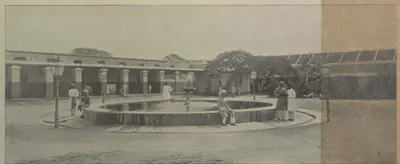
According to John Law, writing in 1914, Hyderabad State had 91 government hospitals and dispensaries.25 Only two in the city were large: the Afzalganj Hospital and the Victoria Zenana Hospital (zenana, for women only).25 The Victoria hospital kept strict purdah (seclusion of women).25 In 1912 it treated 10,808 out-patients and 1,516 in-patients, mostly mothers giving birth.25
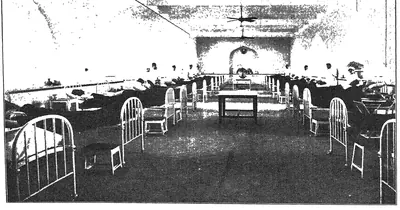
Law visited the Afzalganj Hospital in October 1913.26 He found crowded wards, a bad smell, dirty blankets and overworked nurses.26 He thought mixed hospitals were unpopular because no woman in purdah could enter a hospital where men were also treated.27 The large Osmania General Hospital was completed in the city in 1924–25.28
By the late 1930s Hyderabad was also fighting tuberculosis. A tuberculosis hospital was being built in 1937–38, and land had been bought for a sanatorium on the Anantagiri hills, fifty miles from the city.29 By 1949–50 the Osmania Sanatorium at Vikarabad and a tuberculosis hospital at Irranuma treated the disease.30 Lepers were treated at the Victoria Hospital at Dichpally, run by a mission, and at a government colony at Narayanpet.23
Mission hospitals
Christian missions opened some of the first hospitals for women. In the early 1900s the American Lutheran Mission at Rajahmundry ran a dispensary for women and children, treating about 3,000 cases a year.19 The Canadian Baptist Mission ran a home for lepers at Ramachandrapuram, founded in 1899.19
At Nellore the American Baptist Mission Hospital served women and children.31 In 1922 the mission wrote that its first three women medical students, Y. Nandama, T. H. Kanthama and Minnie Rangiah, had to go to North India to study.31 By the late 1930s the hospital had 110 beds, run by two American and two Indian women doctors.17 It received no regular grant from the government.17
Women doctors and midwives
Women doctors were few at first. In 1909 Hyderabad State had 12 lady doctors, with two at Aurangabad and one each at Gulbarga, Raichur and Warangal.4 By 1937–38 the state employed 4 women civil surgeons at the Victoria Zenana Hospital, besides 12 women assistant surgeons and 23 sub-assistant surgeons.13 Women doctors were posted to the Osmania Hospital and the 15 district headquarters hospitals.13
Trained midwives slowly replaced untrained ones. In the 1930s Nellore had a municipal hospital for women and children with 45 beds and a woman doctor.17 A local health association paid two trained midwives to care for poor and Scheduled Caste mothers.17 Between 1951 and 1961 the Guntur district trained 265 dais (village midwives).8
Medical schools
The Hyderabad Medical School taught in Urdu at first and in English from 1884.4 It trained doctors for the state’s medical service.4 It later became a college of the Osmania University.20 Nellore had a medical school at its hospital for nearly a quarter of a century.18
The Madras government opened a medical college at Visakhapatnam in July 1923, at the request of the people of the Telugu districts.32 It began in the old hospital buildings.32
Public health after independence
In the Madras districts, public health had grown step by step. A Sanitary Commissioner took charge of public health in 1869.33 A law of 1899 made the registration of births and deaths compulsory, at first only in towns and some villages.33106 A District Health Scheme of 1922 placed health officers in each district, and the Public Health Act of 1939 gave them legal powers.33
In Hyderabad State, a report of 1950 admitted that the counting of births and deaths was still “primitive”.15 It added 8 maternity and child welfare centres to the 17 already working, and a team of the World Health Organization began BCG vaccination against tuberculosis.30
After Andhra Pradesh was formed in 1956, its Public Health Department ran national programmes against malaria and smallpox.33 It also ran feeding and family planning programmes.33 By the early 1960s the Guntur district had 26 primary health centres, which gave treatment, care for mothers and control of infectious diseases in each block (group of villages).8
Where the sources disagree
The sources count Hyderabad’s hospitals differently for the same years:
- John Law (1914) says the state had 91 government hospitals and dispensaries.25
- The administration report for 1912–13 counts 95 hospitals and dispensaries. Of these the state kept 80, and the rest were run by other departments, local boards or private bodies.12
They also give different years for the start of the health scheme in the Madras districts:
- The Guntur census handbook of 1965 says the District Health Scheme began in 1922.33
- The Nellore gazetteer of 1942 dates the Health Scheme to 1923, when prevention of disease passed to a separate Public Health Department in April 1923.2117
Footnotes
-
Hemingway, Godavari (1907), p. 150 (archive.org (opens in a new tab)). ↩ ↩2 ↩3 ↩4 ↩5 ↩6
-
Census of India, 1921, Vol. XXI: Hyderabad State, Part I, Report (1923), p. 6 (archive.org (opens in a new tab)). ↩ ↩2 ↩3 ↩4 ↩5 ↩6 ↩7 ↩8
-
Census of India, 1921, Vol. XIII: Madras, Part I, Report (1922), p. 14 (archive.org (opens in a new tab)). ↩ ↩2 ↩3 ↩4 ↩5 ↩6
-
Imperial Gazetteer of India, Provincial Series: Hyderabad State (1909), p. 79 (archive.org (opens in a new tab)). ↩ ↩2 ↩3 ↩4 ↩5 ↩6 ↩7 ↩8 ↩9
-
Imperial Gazetteer: Hyderabad State (1909), p. 80 (archive.org (opens in a new tab)). ↩ ↩2 ↩3 ↩4
-
Johns, Nellore District Gazetteer (1942), p. 207 (archive.org (opens in a new tab)). Paraphrased. ↩ ↩2 ↩3
-
Andhra Pradesh District Gazetteers: Anantapur (revised edition, 1970), p. 713 (archive.org (opens in a new tab)). Cite-only; paraphrased. ↩ ↩2 ↩3 ↩4
-
Chandra Sekhar, District Census Handbook, Guntur (1965), p. xxv (censusindia.gov.in (opens in a new tab)). Paraphrased. ↩ ↩2 ↩3
-
F. R. Hemingway, Madras District Gazetteers: Godavari, Vol. I (1907), p. 149 (archive.org (opens in a new tab)). ↩ ↩2 ↩3 ↩4
-
W. Francis, Madras District Gazetteers: Anantapur (1905), p. 97 (archive.org (opens in a new tab)). ↩ ↩2 ↩3 ↩4 ↩5 ↩6 ↩7
-
W. E. Johns, Gazetteer of the Nellore District, brought up to 1938, Vol. A (1942), p. 204 (archive.org (opens in a new tab)). Paraphrased. ↩ ↩2 ↩3
-
Report on the Administration of H.H. the Nizam’s Dominions for the Year 1322 Fasli (1912–13) (1915), p. 58 (archive.org (opens in a new tab)). ↩ ↩2
-
Report on the Administration of H.E.H. the Nizam’s Dominions, 1347 Fasli (1940), p. 147 (archive.org (opens in a new tab)). Paraphrased. ↩ ↩2 ↩3
-
John Law, Modern Hyderabad (Deccan) (1914), p. 102 (archive.org (opens in a new tab)). ↩ ↩2 ↩3
-
Report on the Administration of the Hyderabad State (1950), p. 95 (archive.org (opens in a new tab)). Paraphrased. ↩ ↩2 ↩3
-
Report on the Administration of H.E.H. the Nizam’s Dominions, 1347 Fasli (1940), p. 157 (archive.org (opens in a new tab)). Paraphrased. ↩ ↩2 ↩3
-
Johns, Nellore District Gazetteer (1942), p. 209 (archive.org (opens in a new tab)). Paraphrased. ↩ ↩2 ↩3 ↩4 ↩5 ↩6 ↩7
-
Johns, Nellore District Gazetteer (1942), p. 208 (archive.org (opens in a new tab)). Paraphrased. ↩ ↩2 ↩3 ↩4
-
Hemingway, Godavari (1907), p. 151 (archive.org (opens in a new tab)). ↩ ↩2 ↩3
-
H.E.H. the Nizam’s Government: Statistical Year Book 1347 Fasli (1938) (1941), p. 481 (archive.org (opens in a new tab)). Paraphrased. ↩ ↩2
-
Johns, Nellore District Gazetteer (1942), p. 205 (archive.org (opens in a new tab)). Paraphrased. ↩ ↩2 ↩3 ↩4 ↩5 ↩6 ↩7
-
Census of India 1931, Vol. XXIII: H.E.H. the Nizam’s Dominions, Part I: Report (1933), p. 32 (archive.org (opens in a new tab)). ↩ ↩2
-
Report on the Administration of the Hyderabad State (1950), p. 96 (archive.org (opens in a new tab)). Paraphrased. ↩ ↩2
-
Johns, Nellore District Gazetteer (1942), p. 206 (archive.org (opens in a new tab)). Paraphrased. ↩
-
Law, Modern Hyderabad (1914), p. 103 (archive.org (opens in a new tab)). ↩ ↩2 ↩3 ↩4 ↩5
-
Law, Modern Hyderabad (1914), p. 106 (archive.org (opens in a new tab)). ↩ ↩2
-
Law, Modern Hyderabad (1914), p. 105 (archive.org (opens in a new tab)). ↩
-
Report on the Administration of H.E.H. the Nizam’s Dominions, 1924–25 (1926), p. vii (archive.org (opens in a new tab)). ↩
-
Report on the Administration of H.E.H. the Nizam’s Dominions for the Year 1347 Fasli (1937–38) (1940), p. 140 (archive.org (opens in a new tab)). Paraphrased. ↩
-
Report on the Administration of the Hyderabad State (1950), p. 97 (archive.org (opens in a new tab)). Paraphrased. ↩ ↩2
-
The Nellore Station and Field of the American Baptist Telugu Mission, South India (1922), unnumbered page facing the photograph of the mission’s first women medical students (archive.org (opens in a new tab)). ↩ ↩2
-
Andhra University: The Annual Register 1939–40 (1939), p. 332 (archive.org (opens in a new tab)). Cite-only; paraphrased. ↩ ↩2
-
A. Chandra Sekhar, Census of India 1961, Andhra Pradesh: District Census Handbook, Guntur District (1965), p. xxiv (censusindia.gov.in (opens in a new tab)). Paraphrased. ↩ ↩2 ↩3 ↩4 ↩5 ↩6
Photos
 "Osmania General Hospital, one of the best equipped in India" (Mudiraj, Pictorial Hyderabad, 1929, p. 16)Historic photograph · 1929
 "Surgical Ward No. 1 from the east of Osmania General Hospital" (Mudiraj, Pictorial Hyderabad, 1929)Historic photograph · 1929
 Hyderabad: "Afzul Gunj General Hospital" (Campbell 1898, p. 216)Historic photograph · 1898
References
Notes (0)
Sources (17)
Spotted an error on this page? Tell us
Last updated: