Chalukya-Bhima II
Eastern Chalukya king of Vengi (about 934–945), called Rajabhima, a son of Vijayaditya IV. He ended the civil war that followed the death of his half-brother Amma I by driving out Yuddhamalla II. His grants list a long series of enemies he overcame, among them an army of the Rashtrakuta Govinda IV and Nolamba and Ganga princes of the Mysore country. He was the father of the kings Amma II and Danarnava.
Chalukya-Bhima II, known in the grants also as Rajabhima, ruled Vengi for twelve years after driving out Yuddhamalla II.12 J. F. Fleet dated his reign from March 934 to December 945, and Robert Sewell 934–945.12 He restored the senior line of the Eastern Chalukyas after nine years of civil war, and his sons held the throne after him.34
Family and names
Chalukya-Bhima II was the son of Vijayaditya IV and his queen Melamba.56 One of his own grants describes him only as “the son of Melamba and Vijayaditya”.56 Chalukya-Bhima II was a younger brother of Amma I; two later grants call him a half-brother (dvaimatura).3
Lokamahadevi was the queen of Chalukya-Bhima II.3 She is named in six later grants.3 Amma II was the son of Chalukya-Bhima II and Lokamahadevi.7 A grant of Amma II says that “just as Kumara to Mahesvara from Uma, Amma-raja was born to him from Lokamahadevi”.7 Danarnava was an elder son of Chalukya-Bhima II by another queen.89
The grants call him Bhima, Chalukya-Bhima or Raja-Bhima.310 Like the other kings of the line he had a second name, Vishnuvardhana (VII in Fleet’s numbering).310 He also had the surnames Ganda-Mahendra and, in one grant, Kareyilladata.310 Fleet explained this last as the Kannada for “he in whom there is no spot or blemish”, the same as the Sanskrit Akalanka.10
He took the full imperial titles Maharajadhiraja, Paramesvara and Paramabhattaraka.3 He called himself a devout worshipper of Siva (paramamahesvara).3 Sewell numbered him Chalukya-Bhima III, counting the Bhima who reigned for eight months in 926–927 as Bhima II.2
Winning the throne
Bhima II gained the succession by expelling Yuddhamalla II and, according to one grant, by resisting some other claimants as well.3 A grant of his son Amma II, translated by E. Hultzsch, says that Bhima, “having conquered and expelled from the country this haughty one”, “enjoyed for twelve years the earth”.7 It calls him the younger brother of king Amma, and says that Bhima resembled Arjuna.7 It compares the other heirs to stars “absorbed in the rays of the sun”.7
The Maliyapundi grant says that Rajabhima restored order by slaying Rajamartanda.11 He also banished Kanthika-Vijayaditya (Beta, the son of Amma I) and Yuddhamalla, and killed many other rebels.11
His enemies
The Kaluchumbarru grant of Amma II names the enemies Bhima overcame:412
- Rajamayya, Dhalaga, Tatabikki, Bijja and Ayyapa412
- an army sent by the Rashtrakuta king Govinda412
- Lovabikki, the ruler of the Cholas412
- Yuddhamalla “with his arrays of elephants”412
Fleet, who edited the grant in 1903, identified Govinda with the Rashtrakuta Govinda IV, for whom dates run from 918 to 933–34.1210 He thought Ayyapa was very possibly the Nolamba prince Ayyapadeva of the Mysore country.1210 The Western Ganga prince Ereyappa lent this prince troops to fight a certain Viramahendra.1210 If so, Fleet thought, Viramahendra was a form of Bhima’s surname Gandamahendra.1210
He identified Bijja with Dantivarman, also called Bijja, apparently of Banavasi.1210 He could not place Lovabikki, Dhalaga or Tatabikki.1210 Fleet’s account of the Rashtrakutas likewise records that Bhima destroyed a great army sent against him by Govinda IV.13
Sewell drew these together as a reign spent in constant warfare. Bhima had to deal with Yuddhamalla’s supporters at home, and with Govinda IV to the west.14 He also faced the Nolamba Ayyappa-Nanniga, the Ganga Ereyappa and the Banavasi chief Bijja.14
Sewell cited a record of Ereyappa at Begur near Bangalore, which calls Bhima by the names Vira-Mahendra and Gandamahendra.14 It says that Bhima attacked the Nolamba country, and mentions a battle at Tumbepadi before 938.14
N. Venkataramanayya, writing in 1953, identified the Bijja of these records differently. He took him to be Bijayita, a chief of the Chalukyas of Mudigonda, whose lands lay between Vengi and Vemulavada. The Vemulavada king Arikesari II sheltered Bijayita from the Rashtrakuta Govinda IV. In Venkataramanayya’s view, Govinda’s army, sent against Bhima, overran Bijayita’s country on its way.1516
Rajamartanda has been read in two ways. Hultzsch, editing the Kolavennu plates of Bhima II in 1890, took it to be a surname of the king, and Fleet followed him. In 1908 Hultzsch withdrew this.11 The Maliyapundi grant shows that Rajamartanda was a separate person, one of the claimants Bhima killed.11 Hultzsch suggested that he might be the Rajamayya of the Kaluchumbarru grant.11
Grants and government
Fleet knew three grants of the reign:4
- the Pigunavaram plates, giving the village of Diggubarru4
- a grant from Machilipatnam (then Masulipatam) of a field at Akulamannandu in the Gudravara district4
- the Kolavennu plates, giving Kodhatalli in the Kanderuvadi district at the request of a prince Vajjaya of the Panara family, who had helped to protect Bhima’s kingdom4
F. Kielhorn, who edited the Akulamannandu grant in 1899, noted that its donee (receiver), the Vedic scholar Viddamayya, was also the donee of the Pigunavaram grant.5
V. Rangacharya, writing in 1960, read the Mangallu grant and the records of Amma II as praising Bhima. In his reading they call Bhima the purifier of the east, and the one who drove out the darkness of the Rashtrakuta troops. He inferred from Amma II’s records that Bhima made the kingdom secure by removing the enemies of peace, by his kindness to the defeated and by moderate taxation.9
Footnotes
-
J. F. Fleet, “The Chronology of the Eastern Chalukya Kings”, Indian Antiquary XX (1891), p. 12, list of kings (archive.org (opens in a new tab)). ↩ ↩2
-
Sewell and Aiyangar, Historical Inscriptions of Southern India (1932), p. 337 (archive.org (opens in a new tab)). ↩ ↩2 ↩3
-
Fleet, “Chronology of the Eastern Chalukya Kings” (1891), p. 269 (archive.org (opens in a new tab)). ↩ ↩2 ↩3 ↩4 ↩5 ↩6 ↩7 ↩8 ↩9 ↩10
-
Fleet, “Chronology of the Eastern Chalukya Kings” (1891), p. 270 (archive.org (opens in a new tab)). ↩ ↩2 ↩3 ↩4 ↩5 ↩6 ↩7 ↩8 ↩9 ↩10
-
F. Kielhorn, “Six Eastern Chalukya Copper-plate Inscriptions”, grant of Chalukya-Bhima II, Epigraphia Indica V (1898–99), p. 135 (archive.org (opens in a new tab)). ↩ ↩2 ↩3
-
E. Hultzsch, South-Indian Inscriptions, Vol. I (1890), p. 32, pedigree of the Eastern Chalukya dynasty (archive.org (opens in a new tab)). ↩ ↩2
-
Hultzsch, South-Indian Inscriptions, Vol. I (1890), No. 38, translation, p. 49 (archive.org (opens in a new tab)). ↩ ↩2 ↩3 ↩4 ↩5
-
Fleet, “Chronology of the Eastern Chalukya Kings” (1891), p. 272 (archive.org (opens in a new tab)). ↩
-
V. Rangacharya, “Mangallu Grant of Amma II”, Epigraphia Indica XXXI (1955–56, publ. 1960), p. 39 (archive.org (opens in a new tab)). ↩ ↩2
-
Fleet, “Kaluchumbarru Grant” (1903), p. 182 (archive.org (opens in a new tab)). ↩ ↩2 ↩3 ↩4 ↩5 ↩6 ↩7 ↩8 ↩9 ↩10
-
E. Hultzsch, “Maliyapundi Grant of Ammaraja II”, Epigraphia Indica IX (1907–08), p. 49 (archive.org (opens in a new tab)). ↩ ↩2 ↩3 ↩4 ↩5
-
J. F. Fleet, “Kaluchumbarru Grant of Vijayaditya-Amma II”, Epigraphia Indica VII (1902–03), p. 181 (archive.org (opens in a new tab)). ↩ ↩2 ↩3 ↩4 ↩5 ↩6 ↩7 ↩8 ↩9 ↩10 ↩11
-
J. F. Fleet, “Dynasties of the Kanarese Districts”, Gazetteer of the Bombay Presidency, Vol. I, Part II (1896), p. 417 (archive.org (opens in a new tab)). ↩
-
Robert Sewell and S. Krishnaswami Aiyangar, The Historical Inscriptions of Southern India (1932), p. 45 (archive.org (opens in a new tab)). ↩ ↩2 ↩3 ↩4
-
N. Venkataramanayya, The Chalukyas of L(V)emulavada (1953), pp. 34–35 (archive.org (opens in a new tab)). Paraphrased. ↩
-
Venkataramanayya, Chalukyas of L(V)emulavada (1953), p. 37, note 55 (archive.org (opens in a new tab)). Paraphrased. ↩
Photos
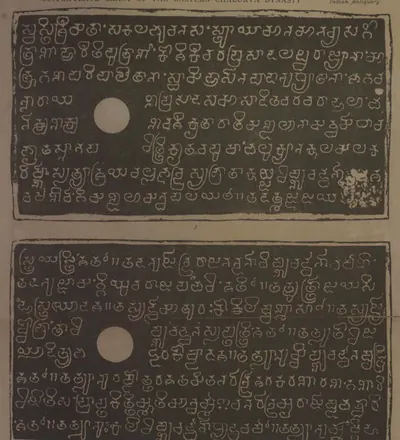 "Copper-plate grant of the Eastern Chalukya dynasty" (Diggubarru grant of Bhima II), plates i and ii a (Indian Antiquary XIII, plates at pp. 214-215 (PDF p. 247))Inscription rubbing · 1884
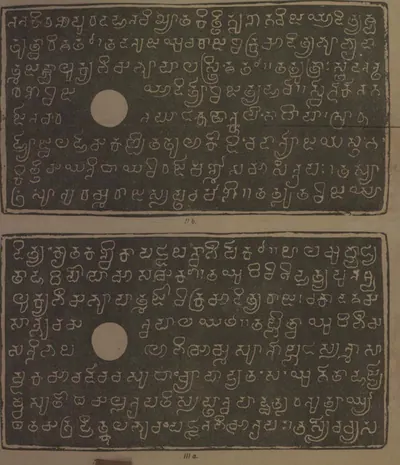 "Copper-plate grant of the Eastern Chalukya dynasty" (Diggubarru grant of Bhima II), plates ii b and iii a (Indian Antiquary XIII, plates at pp. 214-215 (PDF p. 248))Inscription rubbing · 1884
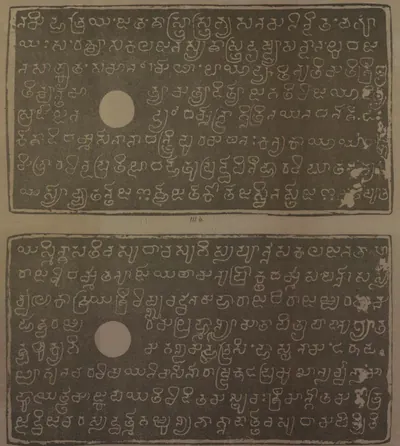 "Copper-plate grant of the Eastern Chalukya dynasty" (Diggubarru grant of Bhima II), plates iii b and iv a (Indian Antiquary XIII, plates at pp. 214-215 (PDF p. 249))Inscription rubbing · 1884
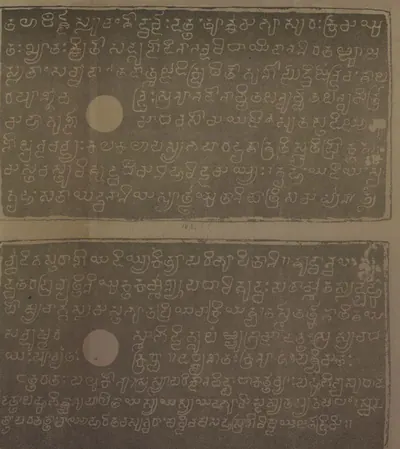 "Copper-plate grant of the Eastern Chalukya dynasty" (Diggubarru grant of Bhima II), plates iv b and v (Indian Antiquary XIII, plates at pp. 214-215 (PDF p. 250))Inscription rubbing · 1884
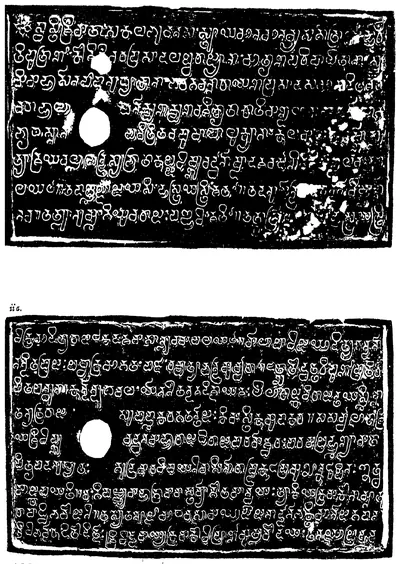 "E.—Masulipatam (?) Plates of Chalukya-Bhima II.", plates i and ii a (Epigraphia Indica V, plate between pp. 136 and 137 (PDF p. 190))Inscription rubbing · 1899
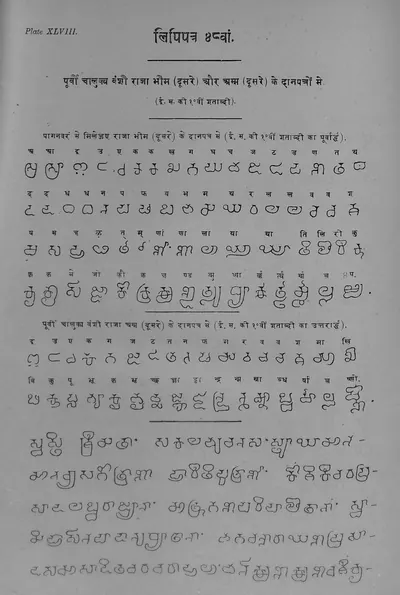 Alphabet table from the grants of the Eastern Chalukya kings Bhima II and Amma II, 10th century CE (Pagunavaram grant of Bhima II) (Ojha, Bharatiya Prachin Lipimala, 1918, Plate 48)Book plate · 1918
Related
Dynasties

References
Notes (0)
Sources (9)
Spotted an error on this page? Tell us
Last updated: