Gokarna Choda I (Kandur)
Gokarna Choda I was a chief of the Kandur Chodas in southern Telangana in the early 12th century. He was a son of Tondaya II and Mailamba, and in P. V. Parabrahma Sastry's account he held the Panugallu district under the Western Chalukya prince Kumara Tailapa. He stayed loyal to the Chalukya king Somesvara III, but was killed about 1128. The Kakatiya inscription of 1163 describes his death as that of a serpent seized by the mongoose Bhima, his brother. His son Udaya Choda II later got back the family's lands with Kakatiya help.
Download
Gokarna Choda I was a chief of the Kandur Chodas, a family of Telugu Choda chiefs in the Nalgonda and Mahbubnagar country of southern Telangana.1 He held the district of Panugallu in the 1120s, under the Western Chalukyas of Kalyani.1 He matters because his death in a family quarrel opened the way for the Kakatiyas, who later restored his son.23
Family
In 1124 Mailamba, the widow of Tondaya II, gave an agrahara (village for Brahmans) at Panugallu.4 Her inscription names her three sons: Udayaditya, Bhima and Gokarna.4 See the Panugallu inscription of Mailamba. P. V. Parabrahma Sastry’s family table makes Gokarna the youngest, after Udaya Choda I and Bhima Choda III.5 It makes Udaya Choda II his son.5
Lord of Panugallu
Parabrahma Sastry thought that the Kandur country was the estate of the Chalukya prince Kumara Tailapa.1 In his account, the prince divided it between the brothers.1 He gave Kandur to Bhima, and the Panugallu district to Gokarna.1
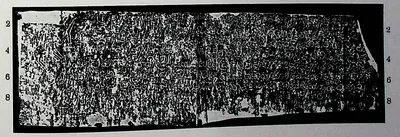
A short Telugu inscription at Panugallu shows Gokarna as ruler there.6 At a solar eclipse, the mahamandalesvara (great provincial lord) Kanduri Gokarna Choda washed the feet of Gavaliya Bhimana-peggada, a minister’s son-in-law.67 He gave him the lordship of the village of Maduvulu, and gave Bhimana’s son the lordship of Addaluru.67 The editor worked out the date as Friday, 10 March 1122.8 See the Panugallu inscription of Gokarna Choda.
Loyal to the Chalukya king
The Chalukya king Vikramaditya VI died in 1126.1 Parabrahma Sastry wrote that Bhima and his followers then turned against the new king, Somesvara III, because their records stop naming him.1 Gokarna stayed loyal.1 His record at Anamala is dated in the first year of Somesvara III, 1127.1
A second record at Anamala, of 1128, names no king.2 In it one Sridevi Tondaya Choda gives the lordship of the Chagaku seventy villages to a new officer, in place of Gokarna’s man.2 Parabrahma Sastry took this Tondaya to be probably a son of Gokarna’s eldest brother Udaya.2
Death
No record of Gokarna is known after 1128, so Parabrahma Sastry placed his death in that year.2 The Kakatiya inscription of 1163, in J. F. Fleet’s translation, compares his death to that of a house-mouse caught by a young cat.9 It calls him “the serpent named Gokarna”, “of low birth”, who “died instantly when he was seized by the terrible mungoose Bhima”.9 See the Thousand Pillar Temple inscription.
Parabrahma Sastry argued that Kumara Tailapa then gave parts of Panugallu to Sridevi Tondaya and to the Chalukya general Govindaraja.3 Gokarna’s son Udaya Choda II, robbed of his father and his lands, may have appealed to the king.3 In this account, the king sent the Kakatiya Prola II, who drove out both men and restored Udaya about 1131.3
Where the sources disagree
- Who killed whom? The 1163 inscription calls Bhima the mongoose that seized Gokarna.9 It also calls Bhima “the slayer of the best of brothers while he was engaged in eating”.9 Parabrahma Sastry wrote that Gokarna died because he would not join the rebel alliance.10 V. Yashoda Devi thought that the brother killed at the meal was more likely the eldest, Udayaditya, and not Gokarna.11
Footnotes
-
P. V. Parabrahma Sastry, The Kakatiyas of Warangal (1978), p. 66. ↩ ↩2 ↩3 ↩4 ↩5 ↩6 ↩7 ↩8 ↩9
-
Parabrahma Sastry, The Kakatiyas of Warangal (1978), p. 67. ↩ ↩2 ↩3 ↩4 ↩5
-
Parabrahma Sastry, The Kakatiyas of Warangal (1978), p. 80. ↩ ↩2 ↩3 ↩4
-
Sreenivasachar, Corpus, Part II (1940), pp. 105–108, No. 36 (archive.org (opens in a new tab)). Paraphrased. ↩ ↩2
-
Parabrahma Sastry, The Kakatiyas of Warangal (1978), pp. 68–69, family table of the Kandur Chodas. ↩ ↩2
-
P. Sreenivasachar (ed.), A Corpus of Inscriptions in the Telingana Districts of H.E.H. the Nizam’s Dominions, Part II (1940), p. 96, No. 32 (archive.org (opens in a new tab)). Paraphrased. ↩ ↩2 ↩3
-
Sreenivasachar, Corpus, Part II (1940), p. 97 (archive.org (opens in a new tab)). Paraphrased. ↩ ↩2
-
Sreenivasachar, Corpus, Part II (1940), appendix on chronology, pp. 180–181 (archive.org (opens in a new tab)). Paraphrased. ↩
-
J. F. Fleet, “Sanskrit and Old-Canarese Inscriptions, No. CXVIII”, Indian Antiquary XI (1882), p. 18 and note 24 (archive.org (opens in a new tab)). ↩ ↩2 ↩3 ↩4
-
Parabrahma Sastry, The Kakatiyas of Warangal (1978), p. 79. ↩
-
V. Yashoda Devi, The History of Andhra Country, 1000 A.D.–1500 A.D. (1993), p. 507 (archive.org (opens in a new tab)). Cite-only; paraphrased. ↩
Photos
References
Notes (0)
Sources (4)
Spotted an error on this page? Tell us
Last updated: