Asoka
Third Maurya emperor (3rd century BCE). His edicts at Erragudi and Rajula-Mandagiri in Kurnool district are among the oldest written records found in Andhra Pradesh. His Kalinga war reached the coast north of the Godavari, and his Rock Edict XIII names the Andhras.
Asoka was the third emperor of the Maurya dynasty of Magadha, in the 3rd century BCE. In his inscriptions he calls himself Devanampiya, “Beloved of the Gods”, and Piyadasi (Priyadarsin).123 Of the edicts known before 1928, only the one at Maski in Raichur district gave his personal name.123
Copies of his edicts at Erragudi and Rajula-Mandagiri in Kurnool district are among the earliest written records found in the region.456 D. R. Sahni, who examined the Erragudi edicts in 1929, saw them as further proof that Asoka ruled part of southern India.456
Coming to the throne, and dates
According to Robert Sewell’s outline of South Indian history (1932), Asoka’s father Bindusara died in 273 or 268 BCE, and Sewell preferred 268.7 A struggle among Bindusara’s sons followed, which Asoka, a younger son, won.7 He was crowned only in 264 BCE, four years after his father’s death.7
Vincent Smith accepted the four-year delay but saw no independent evidence of a struggle.38 He noted that the edicts show Asoka’s brothers and sisters still alive in the middle of his reign.38
Scholars give different dates for Asoka:
- Sewell put Asoka’s death at about 226 BCE,9 which he notes was L. D. Barnett’s date.9 Smith preferred 232 BCE, and the Cambridge History of India 237 or 236 BCE.9
- Smith dated the accession to 273 BCE and the coronation to 269 BCE.10
- E. Hultzsch placed the coronation in 264 BCE.11
- The Imperial Gazetteer of Hyderabad State (1909) gives 272–231 BCE, and D. C. Sircar (1959) about 272–232 BCE.124
Buddhist tradition held that Asoka had served as viceroy at Ujjayini under his father.133 Smith accepted this, and also the tradition that he had governed Taxila.133
Kalinga
In Rock Edict XIII Asoka recorded that he conquered Kalinga, the kingdom of the eastern coast, eight years after his coronation.14 In Sircar’s translation of the Erragudi copy, 150,000 people were carried off, 100,000 were killed, and many times that number died.14
The edict describes the king’s repentance, and his special grief at the suffering of Brahmanas, Sramanas and householders. The edict says that since the conquest he had given himself to dhamma (Sanskrit dharma), his moral teaching.14 Sewell and Hultzsch dated the war to 256 BCE, Smith to 261 BCE.71516
Kalinga reached south to the Godavari. Smith and the Godavari gazetteer both describe it as the coast between the Mahanadi and the Godavari.1617 The Imperial Gazetteer thought the whole of Visakhapatnam (then Vizagapatam) district had probably been part of the Kalinga that Asoka conquered.18
After the war Asoka issued two special edicts for the new province.1920 They are cut at Dhauli and at Jaugada in Ganjam.1920 In 1908 the Imperial Gazetteer called Jaugada’s the only Asokan edicts in the Madras Presidency.1920
The second of them is addressed to the officers at Samapa.21 It tells them that the king wants the unconquered peoples of the border to “learn that the king is to them like a father”.21 He promised to keep officers in all provinces for this purpose.21
The edicts in Kurnool district
At the end of 1928 A. Ghose of the Geological Survey of India was searching for minerals when he found inscribed boulders near Erragudi, about eight miles north-west of Gooty.422 They carry Asoka’s full series of fourteen Rock Edicts and a version of his Minor Rock Edicts I and II.422 Sircar thought the Minor Rock Edicts were carved first and were the earliest of all Asoka’s proclamations.422
A second, damaged copy of the Minor Rock Edicts was found in 1953 at Rajula-Mandagiri, near Pattikonda.5 See Erragudi edicts and Rajula-Mandagiri inscription.
The two sets at Erragudi did not arrive together. The Minor Rock Edicts keep the sound r, like the versions in Mysore.2324 The Rock Edicts change it to l, as in the eastern dialect of Magadha.2324 Sircar concluded that the texts were received separately, on different occasions.2324
Some lines of the Minor Rock Edicts run from right to left.23 Sircar suggested that the engraver came from north-western India and was used to Kharoshthi, a script written in that direction.23 The scribe of the Mysore copies, Chapada, signed his name in Kharoshthi.25 Hultzsch took this as a sign that Chapada had been sent from the north-west.25
The Minor Rock Edicts
In Minor Rock Edict I, Asoka says he has been a lay follower (upasaka) of the Buddha for more than two and a half years.261 For the first year he had not been zealous. But for more than a year he had been closely linked with the Buddhist order and very energetic. Even the poor, he says, can reach heaven by effort.261
The proclamation says that it was issued after he had been on tour for 256 days.1 Hultzsch argued that these were Asoka’s first religious proclamations, issued about the thirteenth year of his reign.27
Minor Rock Edict II tells the officers to have the Rajjuka (district governor) teach the people of the countryside and the Rashtrikas.128 They were to obey their parents and elders, be kind to living beings, and speak the truth. Elephant-riders, scribes, charioteers and Brahmana teachers were to teach these duties to their pupils.128
Sircar took the order to be addressed to the high officers (mahamatras) at Suvarnagiri, the seat of the southern province.12930 Sahni noted that the Erragudi copy leaves out the opening address from Suvarnagiri found in Mysore.12930 He thought the Telugu districts had been governed directly from Pataliputra.12930
The fourteen Rock Edicts
The fourteen Rock Edicts at Erragudi match Asoka’s other copies of them. They show what the people of the Kurnool country were told.
In Sircar’s translation of the Erragudi text:
- I forbids animal sacrifice and most popular festive gatherings.31 It reports that the royal kitchen now killed only two birds and one animal a day.31
- II records medical treatment for men and animals, and the planting of medicinal herbs, roots and fruits.3132 It also records trees and wells along the roads, in the empire and in the lands of the Chodas, Pandyas and others beyond it.3132
- III, issued twelve years after the coronation, sends the Rajjuka and Pradesika on tours every five years to preach dhamma.32
- IV says the beating of drums had become the proclamation of dhamma.33
- V announces the new dhamma-mahamatras, created thirteen years after the coronation. They were to work among all religious sects and among prisoners, giving money to those with families and releasing the aged.3435
- VI orders that the king be told of public business at any hour and in any place.36
- VII wishes that all religious sects may live everywhere.35
- VIII describes Asoka’s visit to Sambodhi (Bodh Gaya) ten years after his coronation.3738 It also describes his tours for dhamma in place of pleasure tours and hunting.3738
- IX criticises the small ceremonies performed at illness, weddings and births, especially by women.39 It recommends the “ceremony of dhamma” instead.39
- X says the king desires fame only for his people’s obedience to dhamma.38
- XI praises the “gift of dhamma”, including courtesy to slaves and servants.40
- XII asks the sects to honour one another and to restrain their speech.41 It names officers in charge of women and of the royal cattle and pastures.41
- XIII tells of the Kalinga war and warns the forest peoples.1442 It lists the peoples, the Andhras among them, who follow the king’s dhamma.1442
- XIV explains that the edicts were written in short, medium and long forms, and that some passages were repeated.4340
The Andhras and the southern provinces
Rock Edict XIII names the Andhras. In Sircar’s translation they are listed with the Yavanas, Kambojas, Bhojas and others.42 These are the peoples within Asoka’s own lands who follow his instructions in dhamma.42
Hultzsch read the same passage as “here in the king’s territory”.44 He identified the Andhras with the Telugu people of the east coast and with the dynasty that later ruled much of the Deccan.44 Other writers read the passage differently:
- Smith took the Andhras to be under imperial control but outside the settled provinces.45 He counted them among the peoples to whom missionaries were sent.45
- Rapson thought they accepted Maurya overlordship but kept some independence.46 In his view, unlike the Kalingas, they were never conquered.46
- Sewell took them to be rulers whom Asoka recognised as sovereign in their own lands.7
- The Godavari gazetteer said Asoka claimed to have subdued them.1747 The Imperial Gazetteer article on Godavari district says they were conquered in 260 BCE.1747
Asoka’s Rock Edict II names a people called the Satiyaputra or Satikaputra. Before the Kurnool edicts were found, James Burgess took the name to mean the Telugu country.48 Sircar’s translation counts the Satikaputra among the territories bordering the empire, with the Chodas and Pandyas.31
Before 1928, Asoka’s rule in the south was known from edicts at Jaugada in Ganjam and in northern Mysore. From these the Imperial Gazetteer of the Madras Presidency (1908) concluded that “perhaps” the northern half of the Presidency had been Mauryan territory about 250 BCE.49
The Hyderabad gazetteer of 1909 held that Asoka’s lands included Berar and much of the north-western and eastern parts of Hyderabad State.12 The Mysore edicts show that a royal prince governed the southernmost province from Suvarnagiri.509 They also show that Isila was one of its districts.509
Asoka and Buddhism in the Andhra country
Smith read Rock Edict XIII as a record of missions sent to the Andhras and other border peoples.45 The Sri Lankan chronicles give a separate list of missionaries. It includes missions to Mahishamandala (Mysore) and Vanavasi (North Kanara), but none to the Andhra country.51
Buddhist inscriptions in a script close to Asoka’s survive in the Krishna valley. G. Bühler judged that the relic-casket inscriptions from Bhattiprolu could not be later than about 200 BCE.52 At Amaravati, Burgess found a fragment in letters of the Mauryan type.53 He dated the first stupa (relic mound) to about 200 BCE.53 Neither record names Asoka.
In the 7th century CE the Chinese pilgrim Xuanzang (Hiuen Tsang) saw a stupa said to have been built by Asoka, south of the capital of Kalinga.5455 R. Subrahmanyam, who excavated Salihundam in Srikakulam district, tentatively identified it with the stupa there.5455
Later Buddhist artists of the Krishna valley remembered Asoka in legend.56 A relief from Nagarjunakonda appears to show the story of his previous birth.56 In it a child named Jaya put a handful of sand into the Buddha’s begging bowl.56 According to the legend the Buddha foretold that Jaya would be reborn as the emperor Asoka.56
After Asoka
According to Sewell, the empire broke up after Asoka’s death. His grandsons Dasaratha and Samprati ruled the eastern and western provinces.9 The last Maurya king, Brihadratha, was killed by his commander-in-chief Pushyamitra in about 184 BCE.9
In the Telugu country the Satavahanas, whom the Puranas call Andhras, rose to power in the period that followed.46 Their dates are discussed under the Satavahanas.46
Footnotes
-
Sircar, “Erragudi Edicts of Asoka” (1959), p. 9 and nn. 6–7 (archive.org (opens in a new tab)). ↩ ↩2 ↩3 ↩4 ↩5 ↩6 ↩7 ↩8 ↩9 ↩10
-
E. Hultzsch, Corpus Inscriptionum Indicarum, Vol. I: Inscriptions of Asoka (1925), p. xxvi (archive.org (opens in a new tab)). ↩ ↩2
-
Vincent A. Smith, Asoka, the Buddhist Emperor of India, 3rd ed. (1920), pp. 19–20 (archive.org (opens in a new tab)). ↩ ↩2 ↩3 ↩4 ↩5 ↩6
-
D. C. Sircar, “Erragudi Edicts of Asoka”, Epigraphia Indica XXXII (1959), p. 1 (archive.org (opens in a new tab)). ↩ ↩2 ↩3 ↩4 ↩5 ↩6
-
D. C. Sircar, “Rajula-Mandagiri Inscription of Asoka”, Epigraphia Indica XXXI (1960), pp. 211–212 (archive.org (opens in a new tab)). ↩ ↩2 ↩3
-
D. R. Sahni, “The Yerragudi Rock Edicts of Asoka”, Annual Report of the Archaeological Survey of India 1928–29 (1933), p. 161 (archive.org (opens in a new tab)). ↩ ↩2
-
Robert Sewell, The Historical Inscriptions of Southern India (1932), p. 6 (archive.org (opens in a new tab)). ↩ ↩2 ↩3 ↩4 ↩5
-
Hultzsch, Inscriptions of Asoka (1925), p. xl (archive.org (opens in a new tab)). ↩ ↩2
-
Sewell, Historical Inscriptions of Southern India (1932), p. 7 and n. 2 (archive.org (opens in a new tab)). ↩ ↩2 ↩3 ↩4 ↩5 ↩6 ↩7
-
Smith, Asoka (1920), pp. 73–74 (archive.org (opens in a new tab)). ↩
-
Hultzsch, Inscriptions of Asoka (1925), p. xxxv (archive.org (opens in a new tab)). ↩
-
Imperial Gazetteer of India, Provincial Series: Hyderabad State (1909), p. 10 (archive.org (opens in a new tab)). ↩ ↩2
-
Hultzsch, Inscriptions of Asoka (1925), p. xxxvii (archive.org (opens in a new tab)). ↩ ↩2
-
Sircar, “Erragudi Edicts of Asoka” (1959), p. 23 (archive.org (opens in a new tab)). ↩ ↩2 ↩3 ↩4 ↩5
-
Hultzsch, Inscriptions of Asoka (1925), p. xxxvi (archive.org (opens in a new tab)). ↩
-
Smith, Asoka (1920), p. 24 (archive.org (opens in a new tab)). ↩ ↩2
-
F. R. Hemingway, Madras District Gazetteers: Godavari, Vol. I (1907), p. 17 (archive.org (opens in a new tab)). ↩ ↩2 ↩3
-
Imperial Gazetteer: Madras, Vol. I (1908), p. 233 (archive.org (opens in a new tab)). ↩
-
Smith, Asoka (1920), p. 25 (archive.org (opens in a new tab)). ↩ ↩2 ↩3
-
Imperial Gazetteer: Madras, Vol. I (1908), p. 224 (archive.org (opens in a new tab)). ↩ ↩2 ↩3
-
Hultzsch, Inscriptions of Asoka (1925), pp. 117–118, second separate edict at Jaugada (archive.org (opens in a new tab)). ↩ ↩2 ↩3
-
Sircar, “Erragudi Edicts of Asoka” (1959), p. 3 (archive.org (opens in a new tab)). ↩ ↩2 ↩3
-
Sircar, “Erragudi Edicts of Asoka” (1959), p. 4 (archive.org (opens in a new tab)). ↩ ↩2 ↩3 ↩4 ↩5
-
Sircar, “Erragudi Edicts of Asoka” (1959), p. 5 (archive.org (opens in a new tab)). ↩ ↩2 ↩3
-
Hultzsch, Inscriptions of Asoka (1925), p. xlii (archive.org (opens in a new tab)). ↩ ↩2
-
Sircar, “Erragudi Edicts of Asoka” (1959), p. 8 (archive.org (opens in a new tab)). ↩ ↩2
-
Hultzsch, Inscriptions of Asoka (1925), pp. xliv–xlv, xlvii (archive.org (opens in a new tab)). ↩
-
Sircar, “Erragudi Edicts of Asoka” (1959), p. 10 (archive.org (opens in a new tab)). ↩ ↩2
-
Sahni, “The Yerragudi Rock Edicts of Asoka” (1933), p. 164 (archive.org (opens in a new tab)). ↩ ↩2 ↩3
-
Sahni, “The Yerragudi Rock Edicts of Asoka” (1933), p. 167 (archive.org (opens in a new tab)). ↩ ↩2 ↩3
-
Sircar, “Erragudi Edicts of Asoka” (1959), p. 11 (archive.org (opens in a new tab)). ↩ ↩2 ↩3 ↩4 ↩5
-
Sircar, “Erragudi Edicts of Asoka” (1959), p. 12 (archive.org (opens in a new tab)). ↩ ↩2 ↩3
-
Sircar, “Erragudi Edicts of Asoka” (1959), pp. 18–19 (archive.org (opens in a new tab)). ↩
-
Sircar, “Erragudi Edicts of Asoka” (1959), p. 16 (archive.org (opens in a new tab)). ↩
-
Sircar, “Erragudi Edicts of Asoka” (1959), p. 17 (archive.org (opens in a new tab)). ↩ ↩2
-
Sircar, “Erragudi Edicts of Asoka” (1959), p. 13 (archive.org (opens in a new tab)). ↩
-
Sircar, “Erragudi Edicts of Asoka” (1959), p. 19 (archive.org (opens in a new tab)). ↩ ↩2
-
Sircar, “Erragudi Edicts of Asoka” (1959), p. 20 (archive.org (opens in a new tab)). ↩ ↩2 ↩3
-
Sircar, “Erragudi Edicts of Asoka” (1959), pp. 27–28 (archive.org (opens in a new tab)). ↩ ↩2
-
Sircar, “Erragudi Edicts of Asoka” (1959), p. 15 (archive.org (opens in a new tab)). ↩ ↩2
-
Sircar, “Erragudi Edicts of Asoka” (1959), p. 26 (archive.org (opens in a new tab)). ↩ ↩2
-
Sircar, “Erragudi Edicts of Asoka” (1959), p. 24 (archive.org (opens in a new tab)). ↩ ↩2 ↩3 ↩4
-
Sircar, “Erragudi Edicts of Asoka” (1959), p. 14 (archive.org (opens in a new tab)). ↩
-
Hultzsch, Inscriptions of Asoka (1925), p. xxxix (archive.org (opens in a new tab)). ↩ ↩2
-
Smith, Asoka (1920), p. 42 (archive.org (opens in a new tab)). ↩ ↩2 ↩3
-
E. J. Rapson, Catalogue of the Coins of the Andhra Dynasty (1908), p. xvi and notes 1–3 (archive.org (opens in a new tab)). ↩ ↩2 ↩3 ↩4
-
Imperial Gazetteer: Madras, Vol. I (1908), p. 271 (archive.org (opens in a new tab)). ↩ ↩2
-
James Burgess, The Buddhist Stupas of Amaravati and Jaggayyapeta (1887), p. 3 (archive.org (opens in a new tab)). ↩
-
Imperial Gazetteer of India, Provincial Series: Madras, Vol. I (1908), p. 15 (archive.org (opens in a new tab)). ↩
-
Hultzsch, Inscriptions of Asoka (1925), p. xxxviii (archive.org (opens in a new tab)). ↩ ↩2
-
Smith, Asoka (1920), p. 44 (archive.org (opens in a new tab)). ↩
-
G. Bühler, “The Bhattiprolu Inscriptions”, Epigraphia Indica II (1894), p. 325 (archive.org (opens in a new tab)). ↩
-
Burgess, Amaravati and Jaggayyapeta (1887), p. 101 (archive.org (opens in a new tab)). ↩ ↩2
-
R. Subrahmanyam, Salihundam: A Buddhist Site in Andhra Pradesh (1964), p. 13 (archive.org (opens in a new tab)). ↩ ↩2
-
Subrahmanyam, Salihundam (1964), p. 14 (archive.org (opens in a new tab)). ↩ ↩2
-
A. H. Longhurst, The Buddhist Antiquities of Nagarjunakonda (1938), pp. 37–38 and Pl. XXXV (b) (archive.org (opens in a new tab)). ↩ ↩2 ↩3 ↩4
Photos
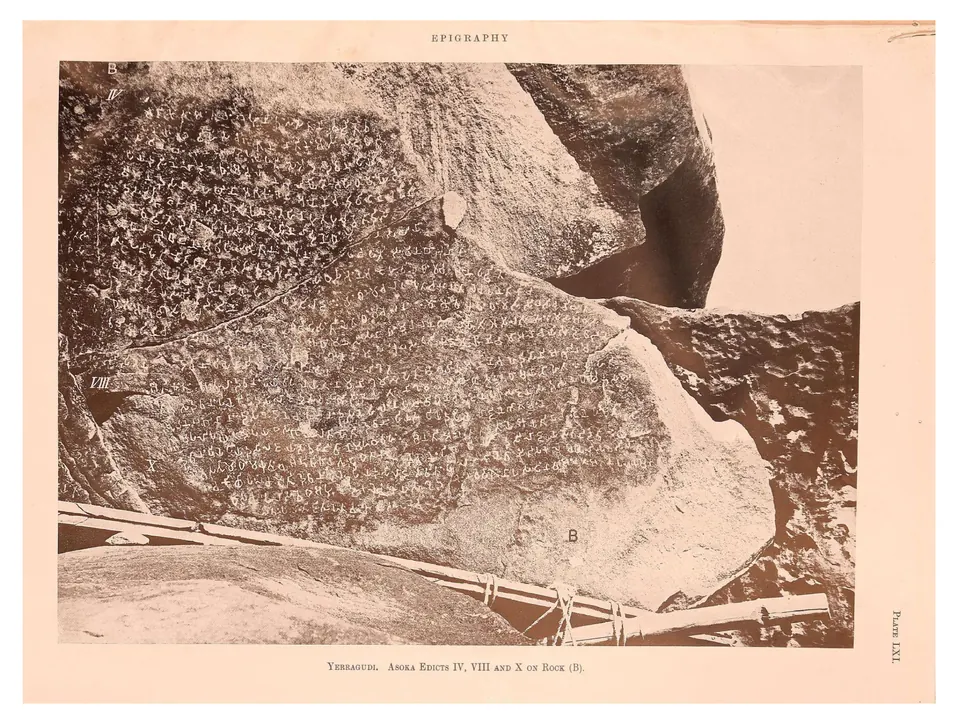
 Erragudi: "Yerragudi. Asoka Edicts IV, VIII and X on Rock B" (ASI Annual Report 1928-29, Pl. LXI)Historic photograph · 1933
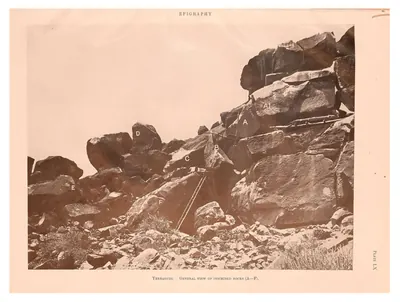 Erragudi: "Yerragudi. General view of inscribed rocks (A-F)" (ASI Annual Report 1928-29, Pl. LX)Historic photograph · 1933
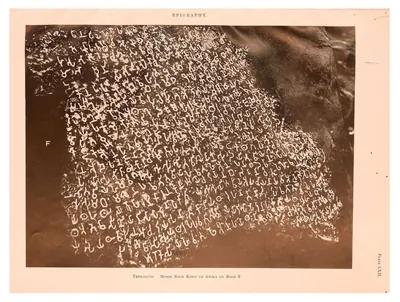 Erragudi: "Yerragudi. Minor Rock Edict of Asoka on Rock F" (ASI Annual Report 1928-29, Pl. LXII)Historic photograph · 1933
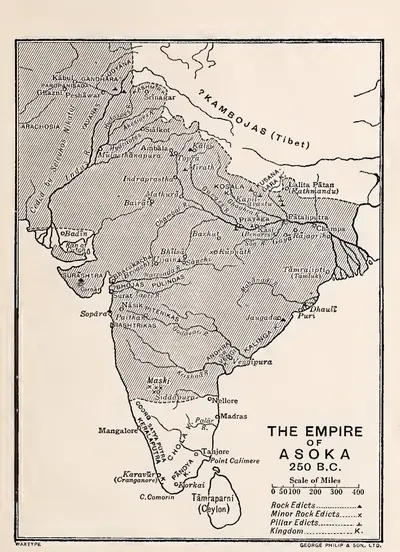 The Empire of Asoka, 250 B.C. (Smith 1920, map at end)Map · 1920
Related
Dynasties
References
Notes (0)
Sources (14)
Spotted an error on this page? Tell us
Last updated: