The Nayaka kingdoms of the South
The Nayaka kingdoms of Madurai, Thanjavur and Gingee in the Tamil country, Keladi in Karnataka, the palegars, and the Nayak kings of Kandy in Sri Lanka. Their history belongs to the peoples of Tamil Nadu, Karnataka and Sri Lanka. This page briefly describes each and its links with the Telugu country: service under Vijayanagara, Telugu families, and Telugu writing at the courts.
Download
From the 16th to the 18th century, families of nayakas (military chiefs) ruled large parts of South India.12 The best known held Madurai (then Madura), Thanjavur (then Tanjore) and Gingee (Senji) in the Tamil country, and Keladi in Karnataka.34 From 1739 to 1815, kings related to queens from Madurai also ruled Kandy in Sri Lanka (then Ceylon).56 The history of these kingdoms belongs to the peoples of Tamil Nadu, Karnataka and Sri Lanka. This page gives each one in brief, and the links that the sources draw with the Telugu country.78
About the sources. The chronicles of these kingdoms were written down long after the events. R. Sathyanatha Aiyar (1924) wrote that they reflect local tradition and “must be utilized with much caution”.9 Dates often differ from book to book; the main differences are listed at the end. The sources call the same families Telugu, Tamil or “Malabar” in different places, and this page gives each source’s own word.510 For the empire itself, see Vijayanagara.
What a nayaka was
The Portuguese Fernao Nuniz, writing about 1536, said that “the kingdom of Bisnaga is divided between more than two hundred captains”.11 For each captain, the king set the number of troops he must keep and the revenue he must pay, according to his lands.11 The Telugu sources call such chiefs amaranayakas.12 An inscription of 1565 says that Visvanatha of Madurai held a country in the far south as an amaranayakam (military fief) from the regent Rama Raya.13
J. H. Nelson (1868) explained that Nayakkan is the Tamil form of the Telugu titles Nayadu and Nayani.14 The Madura gazetteer of 1906 says that after about 1404, most of the chiefs who ran the Madurai country “bore Telugu names and titles (such as Nayakkan)”.15 It took them to be men appointed by the Vijayanagara kings.15
Burton Stein (1989) counts five kingdoms that grew out of this system: Ikkeri and Mysore in Karnataka, and Madurai, Thanjavur and Gingee in the Tamil country.13 In his view, local families ruled the two Karnataka kingdoms, while Telugus ruled the three in the Tamil country.13 He wrote that the three Tamil kingdoms were founded by sons of Vijayanagara commanders.3 For Mysore, see Mysore under Haidar Ali and Tipu Sultan.
The Nayakas of Madurai
The chronicles tell the story of the founding this way. Krishnadeva Raya sent his officer Nagama Nayaka south to help the Pandya king against a Chola king.1617 Nagama defeated the Chola but then kept the country for himself.1617 His own son, Visvanatha, offered to march against him.1817 Visvanatha defeated his father, won him a pardon, and was made ruler of the south.1817 The year is disputed: see “Where the sources disagree” below.
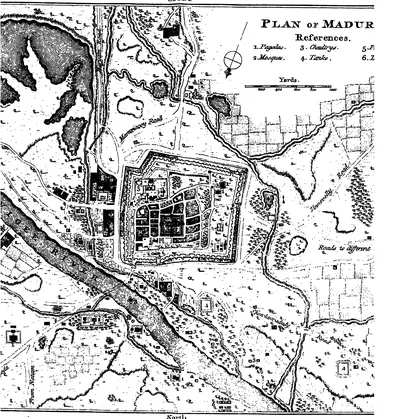
Visvanatha rebuilt the Madurai fort with 72 bastions.1819 His minister Ariyanatha (Arya Nayaka Mudali) is remembered as the founder of the palegar system.19 Visvanatha took Tiruchirappalli (then Trichinopoly) in exchange for the fort of Vallam, and made the pilgrim roads to Srirangam safe.2021 The gazetteer gives his death as 1563.21
Tirumala Nayaka ruled from 1623 to 1659.222 The gazetteer calls him “the most powerful and the best known of his dynasty”.2 Early in his reign he stopped paying tribute to the Vijayanagara king.23 When King Sriranga marched south, Tirumala asked the Sultan of Golconda to attack the empire from the north.23 In the end Bijapur took Gingee, and Tirumala agreed to pay Bijapur a yearly tribute.24
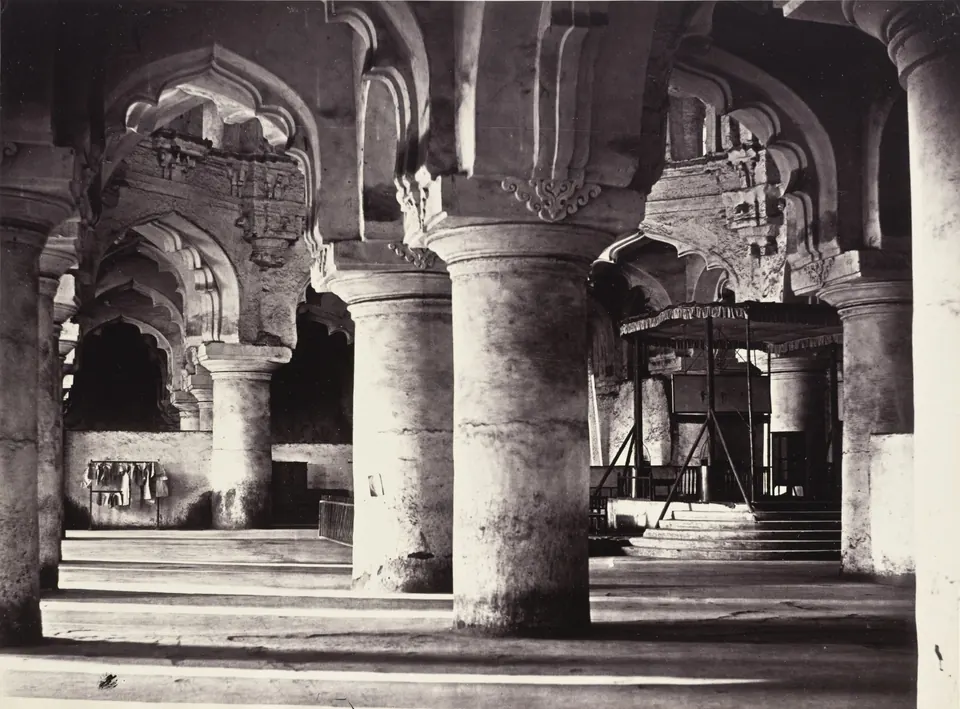
In Madurai, Tirumala built a great palace that still bears his name.25 The Teppakulam (raft tank) is also his work.25 His grandson Chokkanatha (1662–1682) conquered Thanjavur and ended its Nayaka line.2627 Wars with Mysore and the Marathas followed.28
In 1689 Queen Mangammal became regent for her baby grandson.2930 The gazetteer says she is “still widely remembered” as a builder of roads, avenues, temples, tanks and choultries (rest-houses).30 Sathyanatha Aiyar wrote that she kept the kingdom alive by bowing to the power of the Mughals.2931
Her grandson, Vijaya Ranga Chokkanatha, died in 1731.32 His widow Minakshi then ruled for a boy she had adopted.3233 Chanda Sahib, son-in-law of the Nawab of Arcot, came to Tiruchirappalli in 1736 and took control of the kingdom.3334 He imprisoned Minakshi in her palace, and she took poison.34 Sathyanatha Aiyar calls her death the “practical extinction” of Nayak rule in Madurai.3435 The Madura gazetteer sums up that the dynasty held the country “for nearly two centuries”.36
Telugu at the Madurai court
Sathyanatha Aiyar wrote that the Nayaks encouraged Telugu as well as Sanskrit and Tamil.37 He quotes H. Krishna Sastri, who named Tirumala, Muddu Alagadri and Vijaya Ranga Chokkanatha as “patrons of Telugu Literature”.37 His list of inscriptions includes many in Telugu.38 Among them are grants of Queen Mangammal of 1691 and 1692.38
Chenchiah and Bhujanga Rao (1928) placed the “full bloom” of Telugu writing in the south at Vijaya Ranga Chokkanatha’s court.39 Nelson recorded Visvanatha’s full title as “Maha Raja Manya Raja Sri Visvanatha Nayani Ayyalu Garu”.40 He found that the later Nayakas used the same form of title.40
The Nayakas of Thanjavur
Sevvappa Nayaka founded the Nayaka line of Thanjavur in the 16th century.4142 The chronicle called the Tanjavuri Andhra Rajula Charitra says that he married the younger sister of the queen of Achyutaraya.41 It says the Chola country was given to him as her dowry.41 Henry Heras (1927) dated this to about 1541.41
The Tanjore gazetteer of 1906 thought the dowry story unlikely.42 It dated Sevvappa’s reign from about 1549 to 1572.42 He built the Sevappaneri reservoir, which fed the Sivaganga tank in the Thanjavur fort.4243
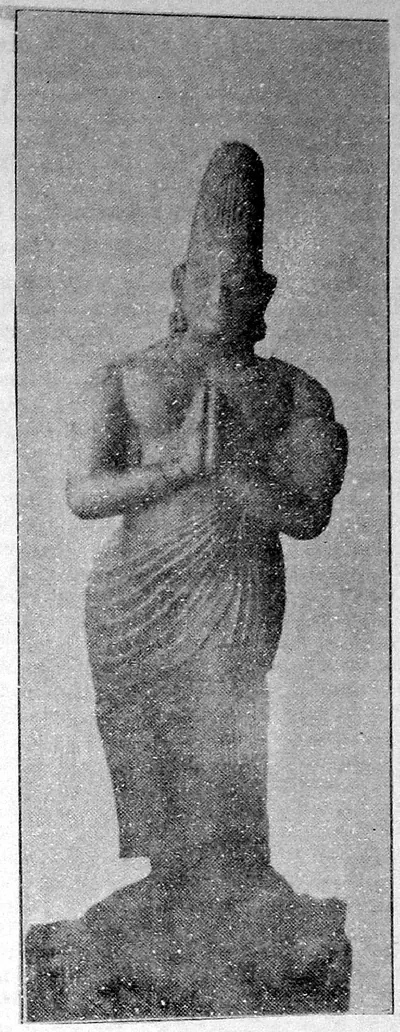
His son Achyutappa Nayaka ruled from 1572 to 1614.44 His minister was Govinda Dikshita, “a name still well known to Hindus”.44 About 1614 Achyutappa made his son Raghunatha king and retired to Srirangam.44
Raghunatha’s son Vijayaraghava was the last Nayaka of Thanjavur.45 He refused to give a daughter in marriage to Chokkanatha of Madurai.4546 Madurai’s army then stormed Thanjavur, and Vijayaraghava died fighting, about 1673.454748
A young son of the last Nayaka escaped and asked Bijapur for help.47 Bijapur sent its Maratha general Venkaji (Ekoji), who drove out Madurai’s governor.47 In 1674 Venkaji took the throne for himself, and began the Maratha line of Thanjavur.47 See the Marathas.
Telugu writing at the Thanjavur court
The Tanjore gazetteer says the Nayakas “were patrons of literature”.47 Chenchiah and Bhujanga Rao called the Telugu writing of the southern courts the “Southern school”.4950 In their account, its “first-fruits” were gathered at Raghunatha’s court.7 The king himself wrote the Valmiki Charitra in prose.7 There Chemakura Venkatakavi wrote the Sarangadhara and the Vijaya Vilasa.7
Raghunatha’s minister Govinda Dikshita listed his works in Sanskrit and Telugu.51 Among them was a yakshaganam (sung village drama) on the marriage of Rukmini and Krishna.51 Vijayaraghava wrote a Telugu play in praise of his father, the Raghunathabhyudayamu.52
Chenchiah and Bhujanga Rao noted that the southern school wrote more plays in one century than the northern school had in eight.53 They thought prose and plays suited Telugu families who had lived in the Tamil country for three or four generations.5453 The Tanjore gazetteer adds that the Telugu Nayakas brought many of their own people with them.8 In its time, about one person in thirty in the Thanjavur district spoke Telugu.8
The Nayakas of Gingee (Senji)
Gingee is a hill fortress in the old South Arcot district.23 Heras admitted that “we do not possess very good information” about how its Nayaka line began.55 He thought that Tubaki Krishnappa Nayaka started it after Krishnadeva Raya’s conquest of the Tamil country.56 In his account, Krishnappa ruled until 1521 and built much of the fortress, such as the walls on Rajagiri hill and the Kalyana Mahal.56
A Surappa Nayaka of Gingee made a gift of land in 1550 for the merit of King Sadasiva.57 The Sanskrit poet Ratnakheta Srinivasa Dikshita lived at his court.57
About 1640 King Sriranga marched against Gingee.45 Tirumala of Madurai brought in Golconda against him.4523 About 1644 Golconda attacked Gingee, and in the end Bijapur took it.4524 The Tanjore gazetteer says the Bijapur kings were “established at Gingee since about 1644”.47
Stein counts Gingee among the three Tamil kingdoms that he says Telugus ruled.13 The older sources used here do not describe Telugu writing at the Gingee court.5657
Keladi and Ikkeri (Karnataka)
The Nayakas of Keladi, later of Ikkeri and Bednur, ruled from the Shimoga country of Mysore.5859 Their family chronicle says their ancestors were gaudas (village headmen) of a few villages near Keladi.57 Heras thought Krishnadeva Raya made Chaudappa of Keladi a governor.60 He wrote that the Nayakship grew under Chaudappa’s son Sadasiva Nayaka, in the time of Rama Raya.4
Stein dated the start of the line before 1500.3 He says it ended in 1763, when Haidar Ali deposed the last ruler.3 The Imperial Gazetteer of 1908 calls the Lingayat faith the state religion of the Keladi kingdom from 1550 to 1763.61 When Golconda took Chandragiri, the last Vijayanagara king, Sriranga, fled to Sivappa Nayaka of Bednur.58 See Chandragiri.
The sources used here do not link the Keladi family with the Telugu country.571 Stein counted Keladi among the Karnataka kingdoms ruled by local families.13
The palegars
Palaiyakarans, or palegars (poligars to the British), held palaiyams, lands held for military service.6263 Heras explains that the title means “a holder of an armed camp”.62 For their place in the empire, see Vijayanagara.
In the Madurai country
The chronicles say that Visvanatha and Ariyanatha divided the Madurai country into 72 palaiyams.6462 Each holder guarded one of the 72 bastions of the Madurai fort.6465 He kept the peace in his lands and kept troops ready for the Nayaka.63 Sathyanatha Aiyar says a palegar paid one-third of his land income as tribute and spent another third on troops.66
Some palegars were old local chiefs, and others came from the north.6419 The Madura gazetteer says some were “Telugu leaders of the detachments” that came with Visvanatha from Vijayanagara.19 Nelson thought the old Tamil chiefs looked on the newcomers with jealousy.65 He says the ancestors of the palegar of Virupakshi and of the palegar Bodi Nayakkan once lived at a place he calls “Guti”.63 Both families, in his account, fled south from Muslim rule.63
The gazetteer gives other family stories. According to one of the Mackenzie manuscripts, the founder of the Palani family came from Ahobilam.67 Many palegars took the title Nayakkan, which is why so many places in the district end in “-nayakkanur”.21 Their followers brought the gods of the Deccan, such as Ahobilam, to the Madurai country.21
In the gazetteer’s time, 14 per cent of the people of the Madurai district spoke Telugu.68 It was the home speech of at least a fifth of the people in four taluks: Dindigul, Kodaikanal, Palani and Periyakulam.68 The gazetteer says these people largely descend from the followers of the palegar chiefs who came from the Deccan in the 16th century.68
In the Karnataka country
After the defeat of Vijayanagara at Talikota, several chiefs of the Mysore country slowly made themselves independent.58 Among them were the Nayakas of Keladi, Basavapatna and Chitradurga (then Chitaldroog).58 The Imperial Gazetteer says the Bedas (Naiks) of Mysore have a Kannada and a Telugu section, and that many Mysore palegars came from this community.6970
The same gazetteer gives Telugu links for some of these chiefs. Jagadeva Raya of Channapatna was “of a Telugu Banajiga family”.71 He was rewarded with lands in Mysore for defending Penukonda in 1577.5871 The founder of Nayakanhatti came with his cattle “from near Srisailam in Kurnool District”, and Vijayanagara recognised him as a palegar.72
The Nayak kings of Kandy (Sri Lanka)
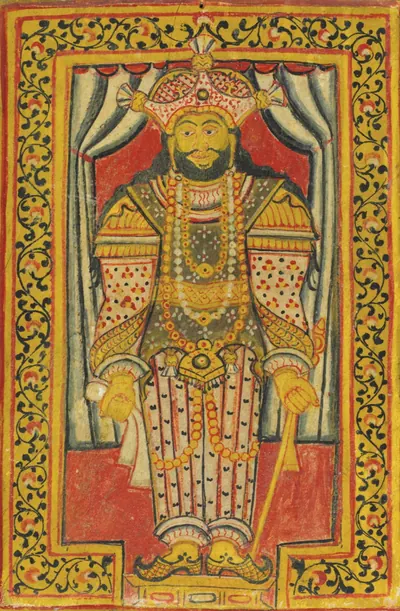
The kings of Kandy, the hill kingdom of Sri Lanka, married princesses from Madurai.7374 King Narendra Singha, called Koondasala, died without a son, and the old Sinhalese royal line ended with him.755 The chiefs chose the brother of his queen, who reigned as Sri Vijaya Raja Singha.573
Tennent’s table of the kings gives four of this line:76
- Sri Vijaya Raja Singha, from 1739
- Kirti Sri Raja Singha, his brother-in-law, from 1747
- Rajadhi Raja Singha, from 1781
- Sri Vikrama Raja Singha, a nephew, from 1798 until he was deposed in 181576
Charles Pridham (1849) explains how they were chosen.77 Each of the last four kings was elected by the chiefs, and each was a close relative of the Hindu queen of the king before him.77 The queens’ relatives, called Nayakaras, lived in a “Malabar Street” in Kandy.77 The chiefs were jealous of one another, so they often preferred a Nayakara to one of themselves.78
These kings supported the Buddhism of their subjects.7980 Donald Obeyesekere (1911) says Sri Vijaya Raja Singha gave his attention “almost entirely” to the national religion.79 Pridham says Kirti Sri brought priests from Siam to revive Buddhism.80
Rajadhi Raja Singha died in 1798 without children.81 The leading minister, Pilame Talawe, chose an 18-year-old relative of a queen, who took the name Sri Vikrama Raja Singha.81 Pilame Talawe later told a British official of his hatred for “the Malabar regal dynasty”.82
Britain declared war on Kandy in January 1815.83 British troops entered Kandy on 14 February, and the king was captured.83 He was sent to Vellore in South India, where he died on 30 January 1832.6
On 2 March 1815 the Kandyan chiefs and the British governor agreed the Kandyan Convention.846 It called the king “the Malabar ruler” and declared him deposed.8485 It ended “all claim and title of the Malabar race” to the kingdom, and barred his male relatives from the Kandyan provinces.85 The kingdom passed to the British Crown, and the Buddhist religion was declared “inviolable”.8586
James Emerson Tennent (1860) noted that the British called this line “Malabars”, a general name.5 He added that they were “not of the Tamil race” but “Telugus, of the royal family of Madura”.5 Peter Courtenay’s history, translated in 1913, calls the same family “the Tamil dynasty of the Nayaka Kings of Madura”.10
Where the sources disagree
- When the Madurai line began. Nelson dated Visvanatha’s rule from 1559, and the Madura gazetteer of 1906 followed him.8717 Sathyanatha Aiyar (1924) argued for about 1529, before Krishnadeva Raya died.88 He noted that Caldwell had suggested 1520, and Wilks 1532.89
- When the Thanjavur line began. Heras put the founding about 1541, when Sevvappa received the Chola country as a dowry.41 The Tanjore gazetteer doubted the dowry story and began Sevvappa’s reign about 1549.42
- Mangammal’s regency. The Madura gazetteer has it last from 1689 to about 1704.3090 Sathyanatha Aiyar gives 1689 to 1706.29
- Minakshi’s death. Sathyanatha Aiyar followed S. C. Hill in dating it to 1736.34 He noted that V. Rangachari put it in 1737.34
- Governors or kings? The Madura gazetteer says the Madurai Nayakas never took royal titles, and were content to be lieutenants of Vijayanagara.17 Stein argues that the Tamil Nayakas proclaimed themselves kings and were anointed, and that older histories dated their independence too late.3
- Who the Kandy kings were. Tennent called them Telugus of the royal family of Madurai.5 Courtenay called them a Tamil dynasty of the Nayaka kings of Madurai.10 The Kandyan Convention calls them “the Malabar race”.85
- When the Kandy line began. Tennent dates Koondasala’s death and Sri Vijaya Raja Singha’s accession to 1739.576 Obeyesekere dates it to 1742, and Sri Vijaya’s death to 1748.7991
Footnotes
-
Burton Stein, Vijayanagara (The New Cambridge History of India, I.2, 1989), p. 131 (archive.org (opens in a new tab)). Cite-only; paraphrased. ↩ ↩2 ↩3 ↩4 ↩5 ↩6
-
Francis, Madura District Gazetteer (1906), p. 44 (archive.org (opens in a new tab)). ↩ ↩2 ↩3
-
Stein, Vijayanagara (1989), p. 132 (archive.org (opens in a new tab)). Cite-only; paraphrased. ↩ ↩2 ↩3 ↩4 ↩5 ↩6 ↩7 ↩8 ↩9
-
Heras, The Aravidu Dynasty, Vol. I (1927), p. 179 (archive.org (opens in a new tab)). ↩ ↩2
-
Tennent, Ceylon, Vol. II (1860), p. 61 and note 2 (archive.org (opens in a new tab)). ↩ ↩2 ↩3 ↩4 ↩5 ↩6 ↩7 ↩8
-
Tennent, Ceylon, Vol. II (1860), p. 90 and note 1 (archive.org (opens in a new tab)). ↩ ↩2 ↩3
-
Chenchiah and Bhujanga Rao (1928), p. 91 (archive.org (opens in a new tab)). ↩ ↩2 ↩3 ↩4
-
Hemingway, Tanjore District Gazetteer (1906), p. 55 (archive.org (opens in a new tab)). ↩ ↩2 ↩3
-
R. Sathyanatha Aiyar, History of the Nayaks of Madura, ed. S. Krishnaswami Aiyangar (1924), p. 23 (archive.org (opens in a new tab)). ↩
-
M. G. Francis, History of Ceylon: An Abridged Translation of Professor Peter Courtenay’s Work (1913), p. 511 (archive.org (opens in a new tab)). ↩ ↩2 ↩3
-
Fernao Nuniz, in Robert Sewell, A Forgotten Empire (Vijayanagar) (1900), p. 389 (archive.org (opens in a new tab)). ↩ ↩2
-
S. Krishnaswami Aiyangar (ed.), Sources of Vijayanagar History (1919), p. 112, extract 38, the Rayavachakamu (archive.org (opens in a new tab)). ↩
-
Sathyanatha Aiyar, History of the Nayaks of Madura (1924), p. 31 (archive.org (opens in a new tab)). ↩
-
J. H. Nelson, The Madura Country: A Manual, Part III, The Political History of the Madura Country (1868; reprint 1989), p. 83 (archive.org (opens in a new tab)). ↩
-
W. Francis, Madras District Gazetteers: Madura, Vol. I (1906), p. 39 (archive.org (opens in a new tab)). ↩ ↩2
-
Sathyanatha Aiyar, History of the Nayaks of Madura (1924), p. 35 (archive.org (opens in a new tab)). ↩ ↩2
-
Francis, Madura District Gazetteer (1906), p. 41 (archive.org (opens in a new tab)). ↩ ↩2 ↩3 ↩4 ↩5 ↩6
-
Sathyanatha Aiyar, History of the Nayaks of Madura (1924), p. 36 (archive.org (opens in a new tab)). ↩ ↩2 ↩3
-
Francis, Madura District Gazetteer (1906), p. 42 (archive.org (opens in a new tab)). ↩ ↩2 ↩3 ↩4
-
Sathyanatha Aiyar, History of the Nayaks of Madura (1924), p. 37 (archive.org (opens in a new tab)). ↩
-
Francis, Madura District Gazetteer (1906), p. 43 (archive.org (opens in a new tab)). ↩ ↩2 ↩3 ↩4
-
Sathyanatha Aiyar, History of the Nayaks of Madura (1924), p. 81 (archive.org (opens in a new tab)). ↩
-
Francis, Madura District Gazetteer (1906), p. 45 (archive.org (opens in a new tab)). ↩ ↩2 ↩3 ↩4
-
Francis, Madura District Gazetteer (1906), p. 46 (archive.org (opens in a new tab)). ↩ ↩2
-
Francis, Madura District Gazetteer (1906), p. 49 (archive.org (opens in a new tab)). ↩ ↩2
-
Francis, Madura District Gazetteer (1906), p. 50 (archive.org (opens in a new tab)). ↩
-
Francis, Madura District Gazetteer (1906), p. 51 (archive.org (opens in a new tab)). ↩
-
Francis, Madura District Gazetteer (1906), p. 52 (archive.org (opens in a new tab)). ↩
-
Sathyanatha Aiyar, History of the Nayaks of Madura (1924), p. 154 (archive.org (opens in a new tab)). ↩ ↩2 ↩3
-
Francis, Madura District Gazetteer (1906), p. 54 (archive.org (opens in a new tab)). ↩ ↩2 ↩3
-
Sathyanatha Aiyar, History of the Nayaks of Madura (1924), p. 155 (archive.org (opens in a new tab)). ↩
-
Francis, Madura District Gazetteer (1906), p. 56 (archive.org (opens in a new tab)). ↩ ↩2
-
Sathyanatha Aiyar, History of the Nayaks of Madura (1924), p. 175 (archive.org (opens in a new tab)). ↩ ↩2
-
Sathyanatha Aiyar, History of the Nayaks of Madura (1924), p. 176 and note 5 (archive.org (opens in a new tab)). ↩ ↩2 ↩3 ↩4 ↩5
-
Sathyanatha Aiyar, History of the Nayaks of Madura (1924), p. 177 (archive.org (opens in a new tab)). ↩
-
Francis, Madura District Gazetteer (1906), p. 40 (archive.org (opens in a new tab)). ↩
-
Sathyanatha Aiyar, History of the Nayaks of Madura (1924), p. 194 (archive.org (opens in a new tab)). ↩ ↩2
-
Sathyanatha Aiyar, History of the Nayaks of Madura (1924), p. 279, Appendix D, Nos. 197–198 (archive.org (opens in a new tab)). ↩ ↩2
-
Chenchiah and Bhujanga Rao (1928), p. 92 (archive.org (opens in a new tab)). ↩
-
Nelson, The Madura Country, Part III (1868), p. 101 (archive.org (opens in a new tab)). ↩ ↩2
-
Heras, The Aravidu Dynasty, Vol. I (1927), p. 173 (archive.org (opens in a new tab)). ↩ ↩2 ↩3 ↩4 ↩5
-
F. R. Hemingway, Madras District Gazetteers: Tanjore, Vol. I (1906), p. 38 (archive.org (opens in a new tab)). ↩ ↩2 ↩3 ↩4 ↩5
-
Heras, The Aravidu Dynasty, Vol. I (1927), p. 174 (archive.org (opens in a new tab)). ↩
-
Hemingway, Tanjore District Gazetteer (1906), p. 39 (archive.org (opens in a new tab)). ↩ ↩2 ↩3
-
Hemingway, Tanjore District Gazetteer (1906), p. 40 (archive.org (opens in a new tab)). ↩ ↩2 ↩3 ↩4 ↩5 ↩6
-
Krishnaswami Aiyangar, Sources of Vijayanagar History (1919), p. 324, extract 98, the Tanjavuri Andhra Rajula Charitra (archive.org (opens in a new tab)). ↩
-
Hemingway, Tanjore District Gazetteer (1906), p. 41 (archive.org (opens in a new tab)). ↩ ↩2 ↩3 ↩4 ↩5 ↩6
-
Krishnaswami Aiyangar, Sources of Vijayanagar History (1919), p. 325 (archive.org (opens in a new tab)). ↩
-
P. Chenchiah and Raja M. Bhujanga Rao, A History of Telugu Literature (1928), pp. 26–27 (archive.org (opens in a new tab)). ↩
-
Chenchiah and Bhujanga Rao (1928), p. 86 (archive.org (opens in a new tab)). ↩
-
Krishnaswami Aiyangar, Sources of Vijayanagar History (1919), p. 267, extract 88, the Sahitya Sudha of Govinda Dikshita (archive.org (opens in a new tab)). ↩ ↩2
-
Krishnaswami Aiyangar, Sources of Vijayanagar History (1919), p. 254, extract 85, the Raghunathabhyudayamu of Vijayaraghava Nayaka (archive.org (opens in a new tab)). ↩
-
Chenchiah and Bhujanga Rao (1928), p. 94 (archive.org (opens in a new tab)). ↩ ↩2
-
Chenchiah and Bhujanga Rao (1928), p. 93 (archive.org (opens in a new tab)). ↩
-
Heras, The Aravidu Dynasty, Vol. I (1927), p. 175 (archive.org (opens in a new tab)). ↩
-
Heras, The Aravidu Dynasty, Vol. I (1927), p. 176 (archive.org (opens in a new tab)). ↩ ↩2 ↩3
-
Heras, The Aravidu Dynasty, Vol. I (1927), p. 177 (archive.org (opens in a new tab)). ↩ ↩2 ↩3 ↩4 ↩5
-
Imperial Gazetteer of India, Provincial Series: Mysore and Coorg (1908), p. 17 (archive.org (opens in a new tab)). ↩ ↩2 ↩3 ↩4 ↩5
-
Heras, The Aravidu Dynasty, Vol. I (1927), p. 180 (archive.org (opens in a new tab)). ↩
-
Heras, The Aravidu Dynasty, Vol. I (1927), p. 178 (archive.org (opens in a new tab)). ↩
-
Imperial Gazetteer: Mysore and Coorg (1908), p. 47 (archive.org (opens in a new tab)). ↩
-
H. Heras, The Aravidu Dynasty of Vijayanagara, Vol. I (1927), p. 135 (archive.org (opens in a new tab)). ↩ ↩2 ↩3
-
Nelson, The Madura Country, Part III (1868), p. 99 (archive.org (opens in a new tab)). ↩ ↩2 ↩3 ↩4
-
Sathyanatha Aiyar, History of the Nayaks of Madura (1924), p. 41 (archive.org (opens in a new tab)). ↩ ↩2 ↩3
-
Nelson, The Madura Country, Part III (1868), p. 98 (archive.org (opens in a new tab)). ↩ ↩2
-
Sathyanatha Aiyar, History of the Nayaks of Madura (1924), p. 42 (archive.org (opens in a new tab)). ↩
-
Francis, Madura District Gazetteer (1906), p. 307, “Palni” (archive.org (opens in a new tab)). ↩
-
Francis, Madura District Gazetteer (1906), p. 73 (archive.org (opens in a new tab)). ↩ ↩2 ↩3
-
Imperial Gazetteer: Mysore and Coorg (1908), p. 40 (archive.org (opens in a new tab)). ↩
-
Imperial Gazetteer: Mysore and Coorg (1908), p. 41 (archive.org (opens in a new tab)). ↩
-
Imperial Gazetteer: Mysore and Coorg (1908), p. 140, “Channapatna Town” (archive.org (opens in a new tab)). ↩ ↩2
-
Imperial Gazetteer: Mysore and Coorg (1908), p. 271, “Nayakanhatti” (archive.org (opens in a new tab)). ↩
-
George Turnour, An Epitome of the History of Ceylon (1836), p. 53, table of the kings (archive.org (opens in a new tab)). ↩ ↩2
-
Donald Obeyesekere, Outlines of Ceylon History (1911), p. 272 (archive.org (opens in a new tab)). ↩
-
Charles Pridham, An Historical, Political and Statistical Account of Ceylon and its Dependencies, Vol. I (1849), p. 131 (archive.org (opens in a new tab)). ↩
-
James Emerson Tennent, Ceylon: An Account of the Island, 5th ed., Vol. II (1860), p. 13, table of the royal family (archive.org (opens in a new tab)). ↩ ↩2 ↩3
-
Pridham, Account of Ceylon, Vol. I (1849), p. 338 (archive.org (opens in a new tab)). ↩ ↩2 ↩3
-
Pridham, Account of Ceylon, Vol. I (1849), p. 339 (archive.org (opens in a new tab)). ↩
-
Obeyesekere, Outlines of Ceylon History (1911), p. 274 (archive.org (opens in a new tab)). ↩ ↩2 ↩3
-
Pridham, Account of Ceylon, Vol. I (1849), p. 134 (archive.org (opens in a new tab)). ↩ ↩2
-
Pridham, Account of Ceylon, Vol. I (1849), p. 147 (archive.org (opens in a new tab)). ↩ ↩2
-
Pridham, Account of Ceylon, Vol. I (1849), p. 148 (archive.org (opens in a new tab)). ↩
-
Tennent, Ceylon, Vol. II (1860), p. 89 and note 4 (archive.org (opens in a new tab)). ↩ ↩2
-
Proclamation of the convention of 2 March 1815, in L. de Bussche, Letters on Ceylon, particularly relative to the Kingdom of Kandy (1817), Appendix II, p. 149 (archive.org (opens in a new tab)). ↩ ↩2
-
De Bussche, Letters on Ceylon (1817), Appendix II, p. 150 (archive.org (opens in a new tab)). ↩ ↩2 ↩3 ↩4
-
De Bussche, Letters on Ceylon (1817), Appendix II, p. 151 (archive.org (opens in a new tab)). ↩
-
Sathyanatha Aiyar, History of the Nayaks of Madura (1924), p. 28 (archive.org (opens in a new tab)). ↩
-
Sathyanatha Aiyar, History of the Nayaks of Madura (1924), p. 33 (archive.org (opens in a new tab)). ↩
-
Sathyanatha Aiyar, History of the Nayaks of Madura (1924), p. 29 (archive.org (opens in a new tab)). ↩
-
Francis, Madura District Gazetteer (1906), p. 55 (archive.org (opens in a new tab)). ↩
-
Obeyesekere, Outlines of Ceylon History (1911), p. 275 (archive.org (opens in a new tab)). ↩
Photos
 Inside Tirumala Nayaka's palace, Madurai, then used as a court of session, photographed by Linnaeus Tripe in 1858Historic photograph · 1858
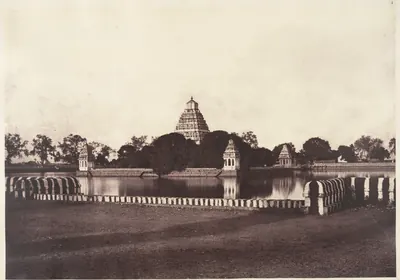 The Teppakulam (raft tank), Madurai, photographed by Linnaeus Tripe in 1858Historic photograph · 1858
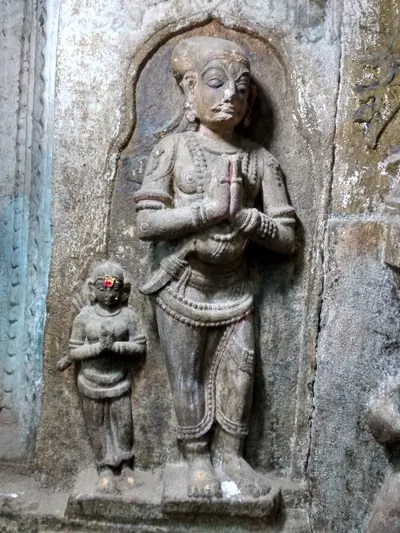 Relief statue in the Pudu Mandapam, Madurai, which the photographer identifies as Tirumala NayakaPhotograph · 2016
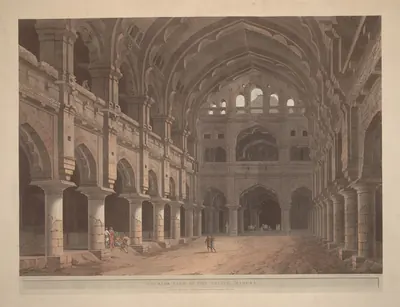 "Interior View of the Palace, Madura": Tirumala Nayaka's palace in a 1798 print by Thomas DaniellOther · 1798
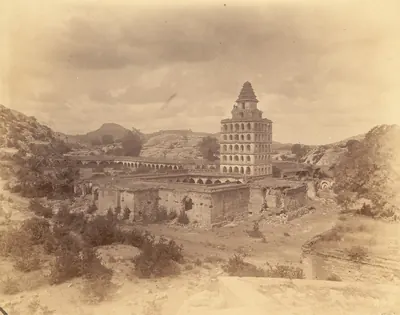 The Kalyana Mahal at Gingee, photographed by the Archaeological Survey of India in 1894Historic photograph · 1894
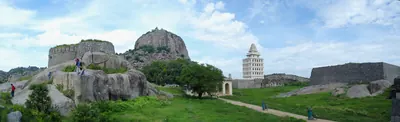 Gingee fort, with the Rajagiri citadel on the hill and the Kalyana Mahal towerPhotograph · 2007
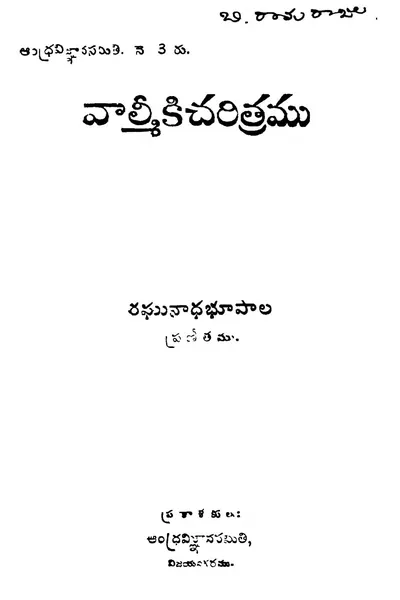 Title page of Raghunatha Nayaka's Valmiki Charitramu, printed in 1919Other · 1919
 Portrait of Sri Vikrama Raja Singha, the last king of Kandy, a 19th-century painting on woodOther · 19th century
 "Stone statue of Govinda-Dikshita at Pattisvaram, Tanjore District" (Annual Report on South-Indian Epigraphy 1926-27, frontispiece)Historic photograph · 1928
 "Plan of Madura in 1757": Madurai, the old Nayaka capital, about twenty years after Nayaka rule ended, with its walls, moat, temple and palace (Madura District Gazetteer, 1906, PDF p. 289)Plan · 1906
References
Notes (0)
Sources (16)
Spotted an error on this page? Tell us
Last updated: