Ibrahim Qutb Shah
Fourth Qutb Shahi sultan of Golconda (1550–1580), a younger son of Sultan Quli. He spent seven years as an exile at Vijayanagara under Rama Raya. He came back to take the throne with the help of the Telugu foot soldiers who held the forts. He joined the alliance that destroyed Vijayanagara at Talikota in 1565, and he conquered Rajahmundry, the northern coast and Kondavidu. Telugu poets dedicated works to him and to his officers, and Telugu records call him Ibharama. A Sanskrit copper-plate grant from Nellore calls him Malikibharama.
Ibrahim Qutb Shah was the fourth sultan of the Qutb Shahi dynasty of Golconda.12 He was the youngest of the six sons of Sultan Quli.12 The Golconda chronicle translated by John Briggs dates his birth to the month of Shawwal, AH 936 (June 1530; AH is the Islamic way of counting years).12
In the thirty years of his reign he gave the kingdom the shape it kept until the Mughal conquest.34 He rebuilt Golconda fort in stone and joined the alliance that broke Vijayanagara in 1565.34 He pushed his frontier along the coast to the north of Rajahmundry, and south across the Krishna to Kondavidu.34
Exile at Vijayanagara
In 1543 his brother Jamshid had their father murdered and blinded the heir.56 Ibrahim was then commanding the fort of Devarakonda.56 Jamshid sent orders for his arrest, and the prince fled to Kasim Barid of Bidar, who marched on Golconda for him.56 When Barid tried to seize his elephants and property, Ibrahim left him and went to Vijayanagara.56
Ferishta tells the story more briefly.7 Jamshid’s cruelty drove both his brothers to Bidar.7 There Haidar Khan died, and Ibrahim went on to Vijayanagara.7
The chronicle says that at Vijayanagara he was “received according to his rank, and treated with the utmost respect and attention”.8 He had a few companions, among them a Sayyid, an Abyssinian and “Kanajee a bramin”.8
Ferishta adds that Rama Raya gave him an estate taken from Ambar Khan, an Abyssinian officer in Rama Raya’s own pay.910 The officer challenged Ibrahim in the streets of the city.910 The prince killed him, and then his brother in a duel.910 See Aliya Rama Raya.
The return to Golconda
Jamshid died early in AH 957 (1550), and the nobles crowned his young son, Subhan Quli.1112 The regent Saif Khan Ain-ul-Mulk made enemies at court, and the nobles wrote secretly to Ibrahim.1112
According to the chronicle, Rama Raya at first refused to let him go.1112 Then he offered his brother Venkatadri with ten thousand horse and twenty thousand foot soldiers.1112 Ibrahim’s companions advised him to refuse a force that might “usurp the government” for Rama Raya.1112 So he left without any Hindu troops.1112
The Naigwaris, the Hindu foot soldiers who guarded the Qutb Shahi forts, decided the matter.1213 The garrison of Kovilkonda handed its fort to him.1213 The Naigwaris of Golconda freed their imprisoned leader Jagadeva Rao, killed the young king’s chief supporters and locked up Subhan Quli.1213
Ibrahim was crowned on Monday, 12 Rajab AH 957, which the chronicle converts as 27 July 1550.14 The Kistna district manual of 1883 explains Naigwari as the Telugu Nayakvadu.15 It says that “the Hindu Minister Jagadéva Rao, supported by all the Hindu soldiery, declared for Prince Ibrahim”.15
Ferishta tells the accession differently.1016 In his account the infant king was two years old, not seven.1016 It was the chief minister, Mustafa Khan, who invited Ibrahim.1016 Ibrahim rewarded him with the office of Mir Jumla (chief minister), and later gave him his own sister in marriage.1016
Jagadeva Rao and the Naigwaris
Jagadeva Rao became chief minister.17 The chronicle says he soon planned to put Ibrahim’s brother Daulat Khan, “who, it was well known, was an idiot”, on the throne.17 The Muslim nobles complained to the king of “the power of these two Hindoos”, Jagadeva Rao and his deputy.17 They complained “the more especially as all the garrisons in the kingdom were composed of the Naigwaries, who looked up to Jugdew Row as their chief”.17
The deputy was put to death.1819 Jagadeva Rao fled to Berar and later to Vijayanagara, and from there he led raids against Golconda.1819 Bilgrami dates his attack on Elgandal to 1556.20
The armies of Bijapur and Vijayanagara camped within a day’s march of Golconda.213 Then the Naigwaris of Pangal, Kovilkonda and Ganpura handed their forts to Rama Raya.213 Ibrahim bought peace by letting him keep Ganpura and Pangal.213 He knew that his capital “was incapable of defence”, so he rebuilt the fort of Golconda “with stone and mortar”.213
The Naigwaris plotted to seize the forts and the treasury while the king was out hunting.322 The plot failed, and every one of the mutineers was put to death.322 The chronicle says the king “resolved, by degrees, to reduce the power of the Naigwaries”.322 Briggs’s note on these passages explains that under the Muslim governments “the infantry of their army was chiefly composed of Hindoos”.17
Talikota
Haig, writing in 1907, saw the “mainspring” of Qutb Shahi foreign policy in the balance of power.23 The king of Golconda would support an ally “up to a certain point”.23 But he changed sides when one neighbour seemed about to crush another.23
The chronicle shows Ibrahim doing this in the wars of the 1550s and early 1560s.2419 First he joined Ahmadnagar against Bijapur, and then Rama Raya and Bijapur against Ahmadnagar.2419 In AH 971 (1563–64), at the siege of Kalyani, he married Bibi Jamali, a daughter of Husain Nizam Shah of Ahmadnagar.2526
The chronicle credits Ibrahim with proposing the alliance of Ahmadnagar, Bijapur and Golconda against Rama Raya.27 It says his minister Mustafa Khan arranged it.27 Haig gives the lead to Ali Adil Shah of Bijapur.28
The allies met Rama Raya near Talikota on Friday, 20 Jumada II AH 972, which the chronicle converts as 25 January 1565.29 Rama Raya was killed and Vijayanagara sacked.29 See Talikota. The districts Rama Raya had taken from Golconda were won back after the victory.30
The conquest of the coast
Before and after Talikota, Ibrahim’s general Rifat Khan Lari, called Malik Naib, fought the chiefs of the Godavari country.3132 Twelve months after the battle he besieged Rajahmundry.3132 After four months its defenders, Vidyadhara and Sitapati, agreed terms through “Yelloo Pundit, one of the Hindoo accountants in the Mahomedan army”.3132 The chronicle dates the surrender to AH 979 (1571–72) by a chronogram (a phrase whose letters give the date): “The temple of the infidels has fallen into our hands”.3132
Hirananda Sastri quotes a Telugu local record (kaifiyat) that gives a different date.33 It gives the fifth day of the bright half of Ashadha in Saka 1495 (1573; Saka is an Indian way of counting years).33 It keeps a Telugu verse that, in Sastri’s translation, ends: “Rajahmundry was the city of Lanka, Ibharama was Rama, Shitab Khan, the enemy (Ravana) was driven away … and Ibharama began to rule”.33
The armies then went north to Kasimkota and the hill country.3234 The raja of the northern country agreed to pay thirty thousand huns (gold coins) a year and forty elephants.3234 Bilgrami dates the annexation of the Kasimkota country to AH 982 (1574).35
South of the Krishna, the chiefs who held the Guntur country for Vijayanagara stopped paying tribute.3637 Ibrahim’s generals took Kacherlakota, Cumbum and Bellamkonda.3637 Kondavidu fell in Safar AH 987 (April 1579), when elephants forced one side of its gate.3637 Kapuri Timmaraja, a son-in-law of Rama Raya, was taken prisoner.3637
The Kistna manual adds that “the whole country as far as the coast was added to Ibrahim Qutb Shah’s dominions so that the Hindu rule in the Kistna District now came to an end”.38 See Kondavidu.
S. Krishnaswami Aiyangar summed up an inscription at Ahobilam.39 It records that “Vibhuramuvaru (Ibrahim Kutb Mulk, the Sultan of Golkonda)” invaded the Vijayanagara country with the Hande chiefs.39 He held the district round Ahobilam for five or six years.39
Telugu poets
Two Telugu poems of his reign survive with dedications to the Golconda court.40 Addanki Gangadhara’s Tapatisamvaranopakhyanamu is dedicated to Ibrahim himself.40 In Krishnaswami Aiyangar’s summary, it praises him for taking Kovilkonda, Pangal, Khammam, Medak and Kondapalli.40 It also praises him for forcing “the chief Chitaph Khan to cross the Godavari”.40 It names his general Haidar Khan as the man who took Kondapalli.40
Ponnikanti Telaganarya’s Yayaticharitramu is a poem in pure Telugu.41 It is dedicated to Amin Khan, “General of Ibharam (Ibrahim Kutb Shah)”, and praises Amin Khan’s brothers as servants of the king.41
P. Chenchiah and Raja M. Bhujanga Rao wrote a history of Telugu literature in 1928.4243 They called these the only Telugu kavyas (long poems) dedicated to a Muslim ruler.4243 They dated the Yayaticharitramu to 1578.4243 Their account of Ibrahim’s life makes him a refugee at the court of Krishnadeva Raya, which does not agree with the chronicles.426
The poets used a Telugu form of his name, Ibharam.41 Alan Butterworth edited a Nellore copper-plate grant of the Aravidu kings in 1905.44 It is in Sanskrit verse.45 He explained the name Malikibharama in it as “the Sanskritized form of Malik Ibrahim”.44 The kaifiyat verse calls him Ibharama, and the Ahobilam record Vibhuramu.3339
Government and buildings
The chronicle praises “the excellence of his police administration”.4 It says that an old woman could carry a tray of gold from Golconda to Bengal or Bijapur “without fear of molestation”.4 It lists his works:4
- the walls of Golconda
- the Ibrahim gardens
- an almshouse dedicated to the twelve Imams
- the tank at Ibrahimpatnam
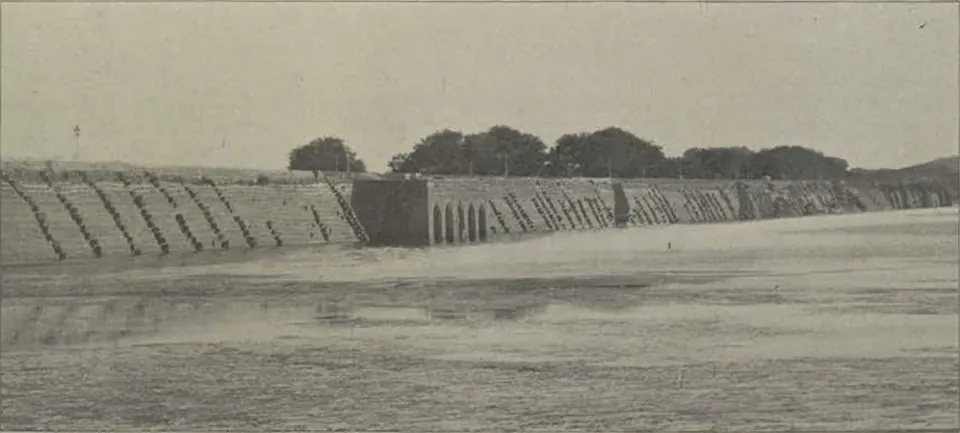
- the Husain Sagar
- the dam at Budwel
- the Kala Chabutra at Golconda4
The Imperial Gazetteer dates the Husain Sagar to about 1575 and credits him with the fort of Kovilkonda.4647 Late in his reign the government was in the hands of Murahari Rao.48 The chronicle calls him “a Marratta bramin”, the second person in the state.48
Death and family
Ibrahim died on Thursday, 21 Rabi II AH 988 (2 June 1580), in the thirty-first year of his reign.49 He was buried in the Langar gardens at Golconda.49
The chronicle tells a story that he fell ill at the sight of gold and silver idols that Murahari Rao had looted from a temple near Adoni.48 Briggs noted that Hindus took the death for the vengeance of the gods, and Muslims for the power of the idols.48 Ferishta gives AH 989 and a reign of thirty-two years.50
The chronicle says that Ibrahim had thirty children.49 It lists six sons who grew up: Abdul Qadir, Husain Quli, Muhammad Quli, Abdul Fateh, Muhammad Khudabanda and Muhammad Amin.49
His eldest son Abdul Qadir died a prisoner in the fort of Devarakonda, and Ferishta says Ibrahim had him poisoned.5051 Years later a man who falsely claimed to be Abdul Qadir raised a rebellion against Muhammad Quli.5051 His third son Muhammad Quli followed him on the throne.5253 His youngest son Muhammad Amin was the father of the sixth sultan, Muhammad Qutb Shah.5253
Footnotes
-
Golconda chronicle, in Muhammad Qasim Ferishta, tr. John Briggs, History of the Rise of the Mahomedan Power in India, Vol. III (1829), p. 371 (archive.org (opens in a new tab)). ↩ ↩2 ↩3
-
Briggs, Rise of the Mahomedan Power, Vol. III (1829), p. 378 (archive.org (opens in a new tab)). ↩ ↩2 ↩3
-
Briggs, Rise of the Mahomedan Power, Vol. III (1829), p. 409 (archive.org (opens in a new tab)). ↩ ↩2 ↩3 ↩4 ↩5 ↩6 ↩7 ↩8 ↩9 ↩10
-
Briggs, Rise of the Mahomedan Power, Vol. III (1829), p. 446 (archive.org (opens in a new tab)). ↩ ↩2 ↩3 ↩4 ↩5 ↩6 ↩7
-
Briggs, Rise of the Mahomedan Power, Vol. III (1829), p. 379 (archive.org (opens in a new tab)). ↩ ↩2 ↩3 ↩4
-
Briggs, Rise of the Mahomedan Power, Vol. III (1829), p. 380 (archive.org (opens in a new tab)). ↩ ↩2 ↩3 ↩4 ↩5
-
Ferishta, tr. Briggs, Rise of the Mahomedan Power, Vol. III (1829), p. 327 (archive.org (opens in a new tab)). ↩ ↩2 ↩3
-
Briggs, Rise of the Mahomedan Power, Vol. III (1829), p. 381 (archive.org (opens in a new tab)). ↩ ↩2
-
Ferishta, tr. Briggs, Rise of the Mahomedan Power, Vol. III (1829), p. 328 (archive.org (opens in a new tab)). ↩ ↩2 ↩3
-
Ferishta, tr. Briggs, Rise of the Mahomedan Power, Vol. III (1829), p. 329 (archive.org (opens in a new tab)). ↩ ↩2 ↩3 ↩4 ↩5 ↩6 ↩7
-
Briggs, Rise of the Mahomedan Power, Vol. III (1829), p. 391 (archive.org (opens in a new tab)). ↩ ↩2 ↩3 ↩4 ↩5 ↩6
-
Briggs, Rise of the Mahomedan Power, Vol. III (1829), p. 392 (archive.org (opens in a new tab)). ↩ ↩2 ↩3 ↩4 ↩5 ↩6 ↩7 ↩8 ↩9
-
Briggs, Rise of the Mahomedan Power, Vol. III (1829), p. 393 (archive.org (opens in a new tab)). ↩ ↩2 ↩3
-
Briggs, Rise of the Mahomedan Power, Vol. III (1829), p. 394 (archive.org (opens in a new tab)). ↩
-
Gordon Mackenzie, A Manual of the Kistna District (1883), p. 29 and notes (archive.org (opens in a new tab)). ↩ ↩2
-
Briggs, Rise of the Mahomedan Power, Vol. III (1829), p. 390 (archive.org (opens in a new tab)). ↩ ↩2 ↩3 ↩4
-
Briggs, Rise of the Mahomedan Power, Vol. III (1829), p. 399 and note (archive.org (opens in a new tab)). ↩ ↩2 ↩3 ↩4 ↩5
-
Briggs, Rise of the Mahomedan Power, Vol. III (1829), pp. 400–401 (archive.org (opens in a new tab)). ↩ ↩2
-
Briggs, Rise of the Mahomedan Power, Vol. III (1829), pp. 402–403 (archive.org (opens in a new tab)). ↩ ↩2 ↩3 ↩4
-
Syed Ali Asgar Bilgrami, Landmarks of the Deccan (1927), p. 197 (archive.org (opens in a new tab)). ↩
-
Briggs, Rise of the Mahomedan Power, Vol. III (1829), p. 408 (archive.org (opens in a new tab)). ↩ ↩2 ↩3 ↩4
-
Briggs, Rise of the Mahomedan Power, Vol. III (1829), pp. 410–411 (archive.org (opens in a new tab)). ↩ ↩2 ↩3
-
T. W. Haig, Historic Landmarks of the Deccan (1907), pp. 14–15 (archive.org (opens in a new tab)). ↩ ↩2 ↩3
-
Briggs, Rise of the Mahomedan Power, Vol. III (1829), pp. 396–397 (archive.org (opens in a new tab)). ↩ ↩2
-
Ferishta, tr. Briggs, Rise of the Mahomedan Power, Vol. III (1829), pp. 330–331 (archive.org (opens in a new tab)). ↩
-
Briggs, Rise of the Mahomedan Power, Vol. III (1829), p. 406 (archive.org (opens in a new tab)). ↩
-
Briggs, Rise of the Mahomedan Power, Vol. III (1829), p. 413 (archive.org (opens in a new tab)). ↩ ↩2
-
Haig, Historic Landmarks of the Deccan (1907), pp. 16–17 (archive.org (opens in a new tab)). ↩
-
Briggs, Rise of the Mahomedan Power, Vol. III (1829), p. 414 (archive.org (opens in a new tab)). ↩ ↩2
-
Briggs, Rise of the Mahomedan Power, Vol. III (1829), p. 415 (archive.org (opens in a new tab)). ↩
-
Briggs, Rise of the Mahomedan Power, Vol. III (1829), pp. 421–422 (archive.org (opens in a new tab)). ↩ ↩2 ↩3 ↩4
-
Briggs, Rise of the Mahomedan Power, Vol. III (1829), pp. 423–424 (archive.org (opens in a new tab)). ↩ ↩2 ↩3 ↩4 ↩5 ↩6
-
Hirananda Sastri, Shitab Khan of Warangal (1932), pp. 8–9 (archive.org (opens in a new tab)). ↩ ↩2 ↩3 ↩4
-
Briggs, Rise of the Mahomedan Power, Vol. III (1829), pp. 425–426 (archive.org (opens in a new tab)). ↩ ↩2
-
Bilgrami, Landmarks of the Deccan (1927), p. 199 (archive.org (opens in a new tab)). ↩
-
Briggs, Rise of the Mahomedan Power, Vol. III (1829), pp. 435–437 (archive.org (opens in a new tab)). ↩ ↩2 ↩3 ↩4
-
Briggs, Rise of the Mahomedan Power, Vol. III (1829), p. 438 (archive.org (opens in a new tab)). ↩ ↩2 ↩3 ↩4
-
Mackenzie, Kistna District (1883), p. 31 (archive.org (opens in a new tab)). ↩
-
S. Krishnaswami Aiyangar (ed.), Sources of Vijayanagar History (1919), p. 233 (archive.org (opens in a new tab)). ↩ ↩2 ↩3 ↩4
-
Krishnaswami Aiyangar, Sources of Vijayanagar History (1919), p. 238, extract 76, the Tapatisamvaranamu (archive.org (opens in a new tab)). ↩ ↩2 ↩3 ↩4 ↩5
-
Krishnaswami Aiyangar, Sources of Vijayanagar History (1919), p. 236, extract 75, the Yayaticharitramu (archive.org (opens in a new tab)). ↩ ↩2 ↩3
-
P. Chenchiah and Raja M. Bhujanga Rao, A History of Telugu Literature (1928), p. 84 (archive.org (opens in a new tab)). ↩ ↩2 ↩3 ↩4
-
Chenchiah and Bhujanga Rao, A History of Telugu Literature (1928), p. 89 (archive.org (opens in a new tab)). ↩ ↩2 ↩3
-
Alan Butterworth and V. Venugopaul Chetty, A Collection of the Inscriptions on Copper-Plates and Stones in the Nellore District, Part I (1905), p. 32 and note (archive.org (opens in a new tab)). ↩ ↩2
-
Butterworth and Chetty, Nellore District Inscriptions, Part I (1905), p. 25 (archive.org (opens in a new tab)). ↩
-
Imperial Gazetteer of India: Hyderabad State (1909), p. 118 (archive.org (opens in a new tab)). ↩
-
Imperial Gazetteer: Hyderabad (1909), p. 143 (archive.org (opens in a new tab)). ↩
-
Briggs, Rise of the Mahomedan Power, Vol. III (1829), p. 444 and note (archive.org (opens in a new tab)). ↩ ↩2 ↩3 ↩4
-
Briggs, Rise of the Mahomedan Power, Vol. III (1829), p. 445 (archive.org (opens in a new tab)). ↩ ↩2 ↩3 ↩4
-
Ferishta, tr. Briggs, Rise of the Mahomedan Power, Vol. III (1829), p. 332 (archive.org (opens in a new tab)). ↩ ↩2 ↩3
-
Briggs, Rise of the Mahomedan Power, Vol. III (1829), pp. 461–463 (archive.org (opens in a new tab)). ↩ ↩2
-
Briggs, Rise of the Mahomedan Power, Vol. III (1829), p. 447 (archive.org (opens in a new tab)). ↩ ↩2
-
Bilgrami, Landmarks of the Deccan (1927), pp. 200–201 (archive.org (opens in a new tab)). ↩ ↩2
Photos
 Hyderabad: "Hussain Sagar Bund" (Campbell 1898, p. 198)Historic photograph · 1898
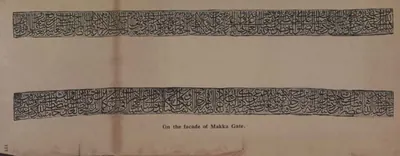 Inscription on the facade of Makka Gate, Golconda (Bilgrami 1927, p. 121)Inscription rubbing · 1927
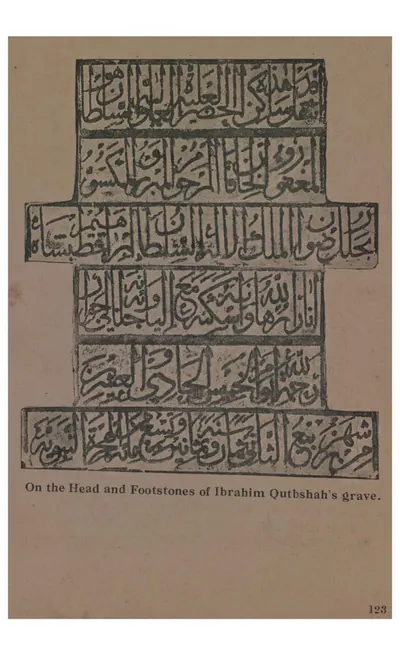 Inscriptions on the head and footstones of Ibrahim Qutbshah's grave, Golconda (Bilgrami 1927, p. 123)Inscription rubbing · 1927
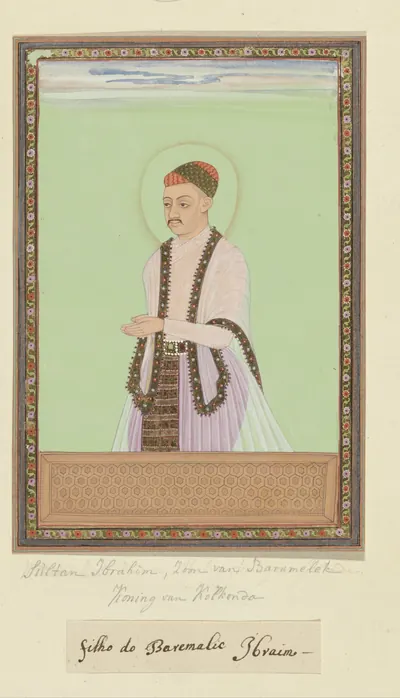 Sultan Ibrahim: Deccani portrait, c. 1686, from an album in the Rijksmuseum (RP-T-00-3186-19B); Dutch title: "Portrait of Sultan Ibrahim, son of Bara Malik, ruled Golconda after his father"Other · c. 1686
Related
Dynasties
References
Notes (0)
Sources (10)
Spotted an error on this page? Tell us
Last updated: