Musunuri Nayakas
A family of Telugu military chiefs (nayakas) who led the recovery of the Telugu country from the Delhi Sultanate after the fall of Warangal in 1323. Prolaya Nayaka, from his hill capital at Rekapalli on the Godavari, freed the coast and gave back the Brahmin villages seized by the Delhi officers. His cousin Kapaya Nayaka took Warangal in the later 1330s and ruled as 'lord of the Andhra country'. He helped the founders of the Bahmani kingdom against Delhi, then lost Kaulas and Golconda to the Bahmanis, giving up the turquoise throne in 1365. He was overthrown by the Recherla Velamas in about 1368.
Swipe sideways to see the whole chart; tap a bar for details.
Each bar is a ruling power in its region; time runs left to right. Dashed = approximate dates. Select a bar for details.
Show as a list
Kakatiyas 1163–1323 CE
- Telangana
- Kakatiyas (c. 1163–1323 CE)
- Coastal Andhra
- Eastern Gangas of Kalinga (c. 537–1434 CE) · Haihayas of Kona and Palnadu (c. 1073–1364 CE) · Kotas of Dharanikota (c. 1100–1276 CE) · Telugu Chodas of Pottapi and Nellore (c. 1106–1316 CE) · Cholas of Tanjore (c. 1135–1264 CE) · Kakatiyas (c. 1185–1323 CE) · Pandyas (c. 1260–1264 CE)
- Rayalaseema
- Cholas of Tanjore (c. 985–1268 CE) · Pandyas (1285–1293 CE) · Telugu Chodas of Pottapi and Nellore (c. 1120–1268 CE) · Hoysalas (c. 1178–1342 CE) · Kakatiyas (c. 1250–1323 CE)
Nayakas, Reddis & Bahmanis 1323–1518 CE
- Telangana
- Musunuri Nayakas (c. 1336–1368 CE) · Delhi Sultanate (Tughluqs) (c. 1323–1336 CE) · Bahmani Sultanate (c. 1347–1518 CE) · Recherla Velamas (Padmanayakas) (c. 1361–1475 CE)
- Coastal Andhra
- Eastern Gangas of Kalinga (c. 537–1434 CE) · Haihayas of Kona and Palnadu (c. 1073–1364 CE) · Reddis of Rajahmundry (c. 1386–1448 CE) · Delhi Sultanate (Tughluqs) (c. 1323–1326 CE) · Vijayanagara Empire (c. 1350–1579 CE) · Reddis of Kondaveedu (c. 1325–1424 CE) · Musunuri Nayakas (c. 1325–1346 CE)
- Rayalaseema
- Vijayanagara Empire (c. 1336–1646 CE) · Reddis of Kondaveedu (c. 1346–1386 CE) · Hoysalas (c. 1178–1342 CE)
Vijayanagara & the Qutb Shahis 1336–1687 CE
- Telangana
- Musunuri Nayakas (c. 1336–1368 CE) · Bahmani Sultanate (c. 1347–1518 CE) · Recherla Velamas (Padmanayakas) (c. 1361–1475 CE)
- Coastal Andhra
- Eastern Gangas of Kalinga (c. 537–1434 CE) · Haihayas of Kona and Palnadu (c. 1073–1364 CE) · Reddis of Rajahmundry (c. 1386–1448 CE) · Vijayanagara Empire (c. 1350–1579 CE) · Reddis of Kondaveedu (c. 1325–1424 CE) · Musunuri Nayakas (c. 1325–1346 CE)
- Rayalaseema
- Vijayanagara Empire (c. 1336–1646 CE) · Reddis of Kondaveedu (c. 1346–1386 CE) · Hoysalas (c. 1178–1342 CE)
Kingdoms and empires
Kakatiyas
Open page- Telangana: c. 1052–1162 CE (c. 110 years)
Partial: feudatory chiefs of Anumakonda (Hanamkonda) under the Chalukyas of Kalyani. Prola I received the Anumakonda district as a permanent fief from Someshvara I (record of 1053); Prola II's last record as a subordinate is of 1149; Rudradeva subdued the other Telangana chiefs c. 1157–62 (Parabrahma Sastry). Earlier members served the Rashtrakutas (Mangallu grant, c. 956) according to Parabrahma Sastry, a link rejected by Venkataramanayya and Somasekhara Sarma (1960).
- Telangana: c. 1163–1323 CE (c. 160 years)
Sovereign from Rudradeva's Anumakonda inscription of January 1163; capital moved to Orugallu (Warangal) under Ganapatideva. Warangal taken by Ulugh Khan in 1323 (Parabrahma Sastry, after Isami); Barani and the Imperial Gazetteer give 1321.
- Coastal Andhra: c. 1185–1323 CE (c. 138 years)
Rudradeva subdued the Kotas of Dharanikota and the Kondapadumatis (Tripurantakam grant 1185); Ganapatideva annexed Divi (1203) and Velanadu (records from 1209; Jaya governor 1213) and held the coast from the Godavari to the Penna; Kakatiya records at Draksharama from 1212, but the Eastern Gangas held the region north of the Godavari c. 1230–33 and again c. 1262–78; the Telugu Chodas of Nellore were allies; Nellore was lost to the Pandyas c. 1263 and recovered under Prataparudra.
- Rayalaseema: c. 1250–1323 CE (c. 73 years)
Through the Kayastha chiefs (Gangaya Sahini, bahattara-niyogadhipati c. 1250, capital Valluru in Cuddapah); Ambadeva independent c. 1272–1291, until Prataparudra's armies retook Tripurantakam (between 13 June and 11 August 1291) and the Kayastha lands within about eight years.
Rulers (11)
Capitals
Monuments (16)
Inscriptions (36)
- Kazipet Dargah pillar inscription
- Matedu inscription of Vemabola Malle-nayaka
- Gudur pillar inscriptions of the Viriyala family
- Thousand Pillar Temple inscription of Rudradeva
- Karimnagar inscription of Gangadhara
- Warangal fort inscription of Rudradeva
… and 30 more
- Pillalamarri inscription of Recherla Nami-reddi
- Kondaparti inscription of Malyala Chaunda
- Inugurti pillar inscription of Natavadi Rudra
- Bayyaram tank inscription of Mailama
- Chebrolu inscription of Jaya
- Palampet pillar inscription of Recherla Rudra
- Ganapavaram inscription of Devapala
- Warangal toll inscription of Ganapatideva
- Ganapesvaram inscription of Jaya
- Upparapalli pillar inscription of Kataya
- Motupalli pillar inscription of Ganapatideva
- Pakhal lake inscription of Jagadala Mummadi
- Rayaparti fragment of Saka 1169
- Ekamranatha temple inscription of Ganapati
- Nayanapalle inscription of Ganapatideva
- Durgi inscription of Gangaya-sahini
- Sarngapuram plates of Sarngadhara
- Bothpur tank inscription of Malyala Gunda
- Garavapadu plates of Ganapatideva
- Malkapuram pillar inscription of Rudramadevi
- Kotagiri plates of Viryala Sura
- Kolanupaka inscription of Rudramadevi's reign
- Chandupatla inscription
- Panugallu inscription of Immadi Mallikarjuna-nayaka
- Tripurantakam inscription of Ambadeva
- Raichur fort inscription of Gona Vithala
- Mellacheruvu inscription of Prataparudra's reign
- Srirangam inscription of Prataparudra
- Dharmasagar inscription of the minister Malla
- Hanamkonda inscription of Gangadhara
Sources (7)
Kingdoms and empires
Musunuri Nayakas
Open page- Coastal Andhra: c. 1325–1346 CE (c. 21 years)
Prolaya Nayaka recovered the coast from Delhi in 1325-26 and ruled from Rekapalli on the Godavari (Vilasa grant, about 1330); latest dated Musunuri records on the coast are Kapaya's Guraja grant (February 1346) and his Ganapesvaram inscription (1346-47). Partial: the Reddis of Addanki and the Korukonda chiefs held parts of the coast as Kapaya's kinsmen and subordinates
- Telangana: c. 1336–1368 CE (c. 32 years)
Kapaya Nayaka took Warangal about 1336-37 (Ferishta: 1343-44) and ruled as "lord of the Andhra country" (Pillalamarri inscription, 1357); ceded Kaulas and then Golconda (1364-65) to the Bahmanis; overthrown by the Recherla chief Anapota about 1368 (Kapaya named in the Akkalapundi grant of 1368; Anapota ruling Orugallu in July 1369)
Rulers
Capitals
Inscriptions
Sources (9)
Sultanates
Delhi Sultanate (Tughluqs)
Open page- Telangana: c. 1323–1336 CE (c. 13 years)
Province of Tilang after Ulugh Khan (Muhammad bin Tughluq) took Warangal and renamed it Sultanpur (1321 by Barani's date for the campaign, 1323 in Haig and the editors of the Vilasa grant). Earlier Khalji campaigns (1303, 1309-10, 1318) ended in failure or tribute and are not drawn. Lost to a Hindu rising under Kanya Naik (Kapaya Nayaka) soon after the cholera of 1335 (Barani), about 1336-37 (modern historians) or in 1343-44 (Ferishta)
- Coastal Andhra: c. 1323–1326 CE (c. 3 years)
Brief hold on the Godavari delta and the coast: mosque at Rajahmundry built in 1324 by Ulugh Khan's servant Salar Ulwi; the coast retaken by Prolaya Nayaka and his allies between 1325 and 1326
Rulers
- Ala-ud-din Khalji (1296–1316 CE)
- Qutb-ud-din Mubarak Shah (1316–1320 CE)
- Ghiyas-ud-din Tughluq (1320–1325 CE)
- Muhammad bin Tughluq (1325–1351 CE)
Sources (7)
Sultanates
Bahmani Sultanate
Open page- Telangana: c. 1347–1518 CE (c. 171 years)
Western Telangana from 1347 (Kaulas taken or ceded; Bhongir taken late in Bahman Shah's reign, the province of Bidar reaching east to Bhongir); Golconda ceded under Muhammad Shah I (1362 Bilgrami; 1364-65 Haig, IG); Warangal taken in AH 828 (end of 1424 per Haig, 1422 per IG, 1425 per the Kistna Manual) and the rayas of Devarakonda and Rachakonda made tributary. Partial afterwards (Telugu chiefs regained districts under Ahmad I; Devarakonda relieved by Orissa 1459; Warangal held by the Gajapatis 1460 and by Shitab Khan from 1504). Governed for Mahmud Shah by Sultan Quli from 1495-96 until his independence (1512 per Haig; 1518 per Bilgrami, from the Golconda mosque inscription of AH 924)
- Coastal Andhra: c. 1471–1489 CE (c. 18 years)
Rajahmundry and Kondapalli (Ferishta) or Kondavidu (Haig, Burhan-i Ma'asir) taken by Malik Hasan Bahri in AH 876 (1471-72), on the invitation of a claimant to the Orissan throne (the Godavari gazetteer says Purushottama ceded the two districts); Muhammad Shah III at Rajahmundry for nearly three years after his Orissa campaign of 1478, and raided Masulipatam and Kanchi in 1481; Telingana split into the provinces of Rajahmundry and Warangal; Rajahmundry still Bahmani in 1486; the Godavari-Krishna country recovered by the Gajapati Purushottama by 1489
Rulers (18)
- Ala-ud-din Hasan Bahman Shah (1347–1358 CE)
- Muhammad Shah I (1358–1375 CE)
- Mujahid Shah (1375–1378 CE)
- Daud Shah (1378 CE)
- Muhammad Shah II (1378–1397 CE)
- Ghiyas-ud-din (1397 CE)
… and 12 more
- Shams-ud-din Daud (1397 CE)
- Firuz Shah (1397–1422 CE)
- Ahmad Shah I (1422–1435 CE)
- Ala-ud-din Ahmad Shah II (1435–1458 CE)
- Humayun Shah (1458–1461 CE)
- Nizam Shah (1461–1463 CE)
- Muhammad Shah III (1463–1482 CE)
- Mahmud Shah Bahmani (1482–1518 CE)
- Ahmad Shah (c. 1518–1521 CE)
- Ala-ud-din (c. 1521–1523 CE)
- Wali-ullah Shah (c. 1523–1525 CE)
- Kalim-ullah Shah (c. 1525–1527 CE)
Inscriptions
Sources (12)
Kingdoms and empires
Recherla Velamas (Padmanayakas)
Open page- Telangana: c. 1361–1475 CE (c. 114 years)
Anapota at Rachakonda (Rajukonda) and Mada at Devarakonda after their victories of 1361 (family chronicle); Rachakonda fortified in August 1365; Warangal, Bhongir and Rachakonda ruled by July 1369 (Inavolu inscription). The rayas of Devarakonda and Rachakonda paid tribute to Ahmad Shah Bahmani after his capture of Warangal (end of 1424); Devarakonda routed a Bahmani army with Orissan help in 1459; last dated record of the Rachakonda line 1464. End about 1475 per the list of rulers in Epigraphia Telanganica; no source dates the annexation
Rulers (7)
- Singama Nayaka (Recherla) (c. 1336–1361 CE)
- Anapota Nayaka (Recherla) (c. 1361–1384 CE)
- Mada Nayaka (Recherla) (c. 1361–1384 CE)
- Singabhupala (Recherla) (c. 1384–1399 CE)
- Peda Vedagiri (Recherla) (c. 1384–1410 CE)
- Lingama Nayaka (Recherla) (c. 1427–1475 CE)
… and 1 more
- Singama Nayaka, 'Sarvajna' (Rachakonda) (c. 1430–1475 CE)
Capitals
Monuments
Inscriptions
Sources (7)
Kingdoms and empires
Eastern Gangas of Kalinga
Open page- Coastal Andhra: c. 537–1434 CE (c. 897 years)
Partial: only the far north coast (the old Ganjam and Vizagapatam districts, now Srikakulam-Vizianagaram- Visakhapatnam), capital Kalinganagara (Mukhalingam). Earliest dated grant: Jirjingi, near Tekkali, Ganga year 39 (c. 537 on Mirashi's epoch of 498; Fleet put the early grants in the 7th century and Sewell used an epoch of 877-78; the Imperial Gazetteer, the 7th century). Later line in power from the end of the 9th century (Vizagapatam gazetteer): Vajrahasta III crowned 1038; Anantavarman Chodaganga 1078-1146, with records at Mukhalingam, Srikurmam, Simhachalam and Visakhapatnam. South of the Godavari only records and raids (Draksharama 1128-1274; Bendapudi). Ended 1434, when the minister Kapilesvara founded the Gajapati line
Rulers (15)
- Vajrahasta III (Eastern Ganga) (1038–1070 CE)
- Rajaraja I (Eastern Ganga) (1070–1078 CE)
- Anantavarman Chodaganga (c. 1078–1146 CE)
- Madhu-Kamarnava (c. 1146–1152 CE)
- Raghava (c. 1152–1166 CE)
- Rajaraja II (c. 1166–1192 CE)
… and 9 more
- Aniyanka-Bhima (c. 1192–1202 CE)
- Anangabhima III (c. 1219–1253 CE)
- Narasimha I (Eastern Ganga) (c. 1253–1256 CE)
- Bhanudeva I (c. 1256–1275 CE)
- Narasimha II (c. 1275–1306 CE)
- Bhanudeva II (c. 1306–1323 CE)
- Narasimha III (c. 1323–1346 CE)
- Bhanudeva III (c. 1346–1378 CE)
- Narasimha IV (c. 1378–1397 CE)
Capitals
Monuments
Inscriptions (8)
Sources (10)
Kingdoms and empires
Haihayas of Kona and Palnadu
Open page- Coastal Andhra: c. 1073–1364 CE (c. 291 years)
Partial. Kona chiefs of Konamandala (the Godavari delta, Amalapuram taluk), with records at Draksharama and Palakol from Saka 995 (1073) to 1364–65, dependent on the Chola–Chalukya kings and the Velanati Chodas, later on the Kakatiyas; Haihaya chiefs of the Chagi family in the Palnadu (Macherla 1111, Gurazala 1129) as feudatories of the Chalukyas of Kalyani; the Palnadu war of the ballads is undated (proposals 1080–1386).
Rulers
- Rajendra Choda I of Kona (1128 CE)
- Mummadi-Bhima II and Satya I (1135 CE)
- Bhima III (c. 1153–1168 CE)
- Mallideva of Kona (c. 1155–1207 CE)
- Ganapatideva of Kona (c. 1262–1300 CE)
- Bhima-Vallabha (1318 CE)
Inscriptions
Sources (5)
Kingdoms and empires
Reddis of Rajahmundry
Open page- Coastal Andhra: c. 1386–1448 CE (c. 62 years)
Partial: the Godavari delta and the coast north to Simhachalam, capital Rajahmundry. Kataya Vema, minister of Kumaragiri, received "the eastern country" by 1386 (Ramayya; Sewell c. 1380); after his death (c. 1414-16) Allada Reddi, then Allada's sons Allaya Vema and Virabhadra (records 1423-1437, a record of 1444). Godavari gazetteer: family in the Draksharama inscriptions until 1447; a Gajapati record of 1448 at Penugonda marks the end (Somasekhara Sarma); Kapilesvara's minister ruling at Rajahmundry in 1458
Rulers
- Kataya Vema (c. 1386–1415 CE)
- Allada Reddi (c. 1416–1420 CE)
- Allaya Vema and Virabhadra (c. 1423–1448 CE)
Capitals
Inscriptions
Sources (6)
Kingdoms and empires
Kotas of Dharanikota
Open page- Coastal Andhra: c. 1100–1276 CE (c. 176 years)
Partial (the Six-thousand country, Konnatavadi, south of the Krishna about Amaravati–Dharanikota and the Sattenapalle taluk). Line from Bhima I (c. 1100, Sewell); Keta II from about 1182; subdued by the Kakatiya Rudradeva about 1185 and thereafter Kakatiya subordinates and relatives by marriage (Ganapamba, widow of Kota Beta, ruled in the 1250s); last record of a Kota Rudra 1275–76.
Rulers
- Kota Keta II (c. 1182–1209 CE)
- Manma-Keta (Keta III) (c. 1234–1240 CE)
- Kota Beta (c. 1250–1251 CE)
- Ganapamba (c. 1251–1257 CE)
- Bhima IV (1265 CE)
Capitals
Inscriptions
Sources (5)
Kingdoms and empires
Vijayanagara Empire
Open page- Rayalaseema: c. 1336–1646 CE (c. 310 years)
Founded c. 1335-36; Bukka I held Penukonda and Gooty (records of 1352 and a Gooty rock inscription) and his minister built the Bukkarayasamudram tank near Anantapur in 1364; Cuddapah in the 14th century; Kurnool wholly annexed under Krishnadeva Raya. After Talikota (1565) the kings ruled from Penukonda, which held out against Bijapur in 1577 and Golconda in 1589; the country north of Penukonda was lost after Sriranga I's capture (c. 1579-80); Venkatapati II moved to Chandragiri c. 1592; Golconda held the Cuddapah district and took Chandragiri (Chittoor) in 1646. Bijapur and Golconda took most of the region piecemeal after 1565
- Coastal Andhra: c. 1350–1579 CE (c. 229 years)
Vijayanagara officers kept Guntur (Kondavidu, Vinukonda, Bellamkonda) and the governor of Udayagiri kept Nellore after Talikota; Golconda took Kondavidu in April 1579 (Kistna Manual) or 1580 (a Guntur record of 1592 cited by Sewell), though Sewell thinks Guntur was already under Muslim rule by 1576 and the Nellore Manual says the Muslims held Nellore from 1565.
- Telangana: c. 1563–1565 CE (c. 2 years)
To end the confederate invasion of Golconda, Ibrahim Qutb Shah let Rama Raja keep the forts of Ghanpur and Panagal (Mahbubnagar) until Talikota; Ferishta places this after the Kalyani campaign of the early 1560s, the Kistna Manual dates it to 1557.
Rulers (24)
- Harihara I (Vijayanagara) (c. 1336–1355 CE)
- Bukka I (Vijayanagara) (1355–1377 CE)
- Harihara II (1377–1404 CE)
- Bukka II (1404–1406 CE)
- Deva Raya I (1406–1422 CE)
- Vijaya (Bukka III) (1422 CE)
… and 18 more
- Deva Raya II (Vijayanagara) (1422–1446 CE)
- Mallikarjuna (1446–1465 CE)
- Virupaksha (1465–1485 CE)
- Saluva Narasimha (1485–1492 CE)
- Immadi Narasimha (1492–1505 CE)
- Narasa Nayaka (c. 1505 CE)
- Vira Narasimha (1505–1509 CE)
- Krishnadeva Raya (1509–1529 CE)
- Achyuta Raya (1529–1542 CE)
- Venkata I (1542 CE)
- Sadasiva (c. 1542–1569 CE)
- Tirumala (Aravidu) (c. 1569–1572 CE)
- Sriranga I (1572–1586 CE)
- Venkatapati II (Vijayanagara) (1586–1614 CE)
- Sriranga II (1614 CE)
- Rama Deva (1614–1630 CE)
- Pedda Venkata (1630–1642 CE)
- Sriranga III (c. 1642–1670 CE)
Monuments (7)
- Penukonda fort and Gagan Mahal
- Kalahastisvara temple, Srikalahasti
- Virabhadra temple, Lepakshi
- Chandragiri fort and Raja Mahal
- Gooty fort
- Narasimha temples, Ahobilam
… and 1 more
Inscriptions (14)
- Penukonda fort inscription (1354)
- Gooty rock inscription of Bukka I
- Bitragunta grant of Sangama II (1356)
- Bukkarayasamudram tank inscription (1364)
- Tirumala inscriptions of Krishnadeva Raya and his queens (1513–1514)
- Amaravati inscription of Krishnadeva Raya (1515)
… and 8 more
- Mangalagiri and Kaza pillar inscriptions (1515–1518)
- Simhachalam inscriptions of Krishnadeva Raya (1516–1519)
- Srikalahasti inscription of Krishnadeva Raya (1516)
- Kondavidu pillar inscription of Nadindla Gopa (1520)
- Lepakshi temple inscriptions of Achyuta Raya's reign (1533–1538)
- Kanuma grant of Sadasiva (1548)
- Penukonda inscription of Channappa Nayudu (1577)
- Ahobilam inscription of Sriranga I (1584)
Sources (20)
Kingdoms and empires
Telugu Chodas of Pottapi and Nellore
Open page- Coastal Andhra: c. 1106–1316 CE (c. 210 years)
Konidena branch in the Guntur country from 1106 to about 1150; the main line at Nellore (Vikramasimhapura) from Tammusiddhi's anointment in 1205-06, under the Cholas and then the Kakatiyas, who restored Manumasiddhi II; held Kanchi under Tikka I (1209/1223-1248/1250) and Manmasiddhi III. Last date 1316 (Sewell); the Nellore gazetteer finds no Telugu Choda record in Nellore after 1305.
- Rayalaseema: c. 1120–1268 CE (c. 148 years)
Pottapinadu (Pullampet country of Cuddapah), seat of the Madhurantaka Pottapi-Cholas under the Chola emperors: Betta 1120-21, Vimaladitya c. 1125; Pottapi remained their seat until Tikka I moved to Nellore; Manumasiddhi II recorded at Pottapi 1258-59; the country passed to the Kayastha Ambadeva after 1268.
Rulers
- Tammusiddhi (c. 1205–1209 CE)
- Tikka I (Telugu Choda of Nellore) (c. 1209–1248 CE)
- Manumasiddhi II (c. 1248–1290 CE)
- Manmasiddhi III (c. 1290–1316 CE)
Capitals
Inscriptions
Sources (5)
Kingdoms and empires
Reddis of Kondaveedu
Open page- Coastal Andhra: c. 1325–1424 CE (c. 99 years)
Capital Addanki, then (from Anavema, after 1361) Kondavidu. Coast south of the Krishna and at times the Godavari delta (Anavema's grants at Vanapalli, Nadupuru, Palivela, Draksharama 1374-81). Start: Mallavaram record of 1325 (Somasekhara Sarma); the Kistna manual says 1328, the Godavari gazetteer has the earliest record in 1344. End disputed: Vijayanagara conquest by 1424 (Somasekhara Sarma), Racha Vema killed 1428 (Kistna manual), overthrown 1427 (Sewell 1884), a Gajapati conquest c. 1420 (village chronicles). From c. 1386 the Godavari country belonged to the separate Rajahmundry kingdom
- Rayalaseema: c. 1346–1386 CE (c. 40 years)
Partial: the Srisailam plateau and the Markapur taluk (records at Tripurantakam, 1346 and 1347; Anavema's Viramantapa at Srisailam, 1378); Prolaya Vema's steps at Srisailam and Ahobilam
Rulers
Capitals
Monuments
Inscriptions (8)
Sources (8)
Kingdoms and empires
Cholas of Tanjore
Open page- Rayalaseema: c. 985–1268 CE (c. 283 years)
Rajaraja I (from 982/985) claims Nulambapadi and had the Vaidumbas of Cuddapah as feudatories. Chola inscriptions in Kurnool are dated 1108 and 1123. The east of Cuddapah (Pottapi-nadu) stayed under Chola suzerainty through the Telugu Chodas until Rajendra III's death in 1268. IG Madras has Cuddapah Chola from the 11th to the 13th century.
- Coastal Andhra: c. 999–1135 CE (c. 136 years)
Overlords of the Eastern Chalukya kings from 999; Kulottunga I's sons ruled Vengi as viceroys 1077-1118; Vengi was lost to the Western Chalukyas after Vikrama-Chola left in 1118, and his records reappear at Chebrolu (1127) and Nidubrolu (1135). Nellore stayed under Chola suzerainty into the 13th century (IG Madras)
- Coastal Andhra: c. 1135–1264 CE (c. 129 years)
Partial (Nellore). After Vengi was lost, Nellore stayed under the Cholas until their 13th-century decline: Rajaraja III is recognised there in 1237 and Rajendra III in 1253, with the Telugu Choda chiefs ruling locally as their vassals. A Tamil record at Punjulurupadu, in the Gudur country, is still dated in the 20th year of Rajendra III, Saka 1185 (1263-64).
Rulers (14)
- Rajaraja I (Chola) (985–1016 CE)
- Rajendra I (Chola) (1012–1043 CE)
- Rajadhiraja I (Chola) (1018–1052 CE)
- Rajendradeva (1052–1063 CE)
- Virarajendra (Chola) (1063–1070 CE)
- Adhirajendra (1070 CE)
… and 8 more
- Kulottunga I (1070–1118 CE)
- Vikrama-Chola (1118–1133 CE)
- Kulottunga II (Chola) (1133–1146 CE)
- Rajaraja II (Chola) (1146–1163 CE)
- Rajadhiraja II (1163–1178 CE)
- Kulottunga III (Chola) (1178–1216 CE)
- Rajaraja III (1216–1246 CE)
- Rajendra III (Chola) (1246–1267 CE)
Capitals
Inscriptions (10)
Sources (9)
Kingdoms and empires
Pandyas
Open page- Coastal Andhra: c. 1260–1264 CE (c. 4 years)
Partial (Nellore). Jatavarman Sundara Pandya I beat the Telugus at Mudugur, drove them to the Krishna and was crowned at Nellore (Aiyangar, from his records); Sewell dates the march to 1260, Parabrahma Sastry the battle to 1263. Aiyangar says the conquest was not permanent and the Nellore gazetteer says Ganapati recovered Nellore almost at once, so the span is short. A later Jatavarman Sundara Pandya, crowned at Nellore after 1276 (Nellore gazetteer), endowed a hall in the Ranganayaka temple there; no source gives the length of this second hold, so it has no span.
- Rayalaseema: 1285–1293 CE (8 years)
Partial (Nandalur, east Cuddapah). Jatavarman Sundara Pandya II has dated records at Nandalur in 1285, 1286 and 1293, six in all from 1286-1293, as Pandya power spread north after the Chola collapse.
Rulers
- Jatavarman Sundara Pandya I (c. 1251–1268 CE)
- Maravarman Kulasekhara I (1268–1311 CE)
- Jatavarman Sundara Pandya (crowned at Nellore) (c. 1276–1293 CE)
Inscriptions
Sources (5)
Kingdoms and empires
Hoysalas
Open page- Rayalaseema: c. 1178–1342 CE (c. 164 years)
Partial (south and west Anantapur: Hemavati, Madakasira, Penukonda, Gooty claim; Rayachoti taluk in the later 13th century). A record at Parigi (Hindupur taluk) of Saka 1100 (1178) shows Ballala II ruling at Dorasamudra; he took Nolambavadi, and his inscription of 1205-06 is at Hemavati. A record at Kodigepalle of 1328 shows Ballala III's minister ruling at Penugonda. Ballala III's inscriptions in Anantapur district run from 1317 through 1320 and 1323 to 1340. He was killed fighting the Sultan of Madurai on 8 September 1342.
Rulers
- Ballala II (Hoysala) (1173–1220 CE)
- Narasimha II (1220–1235 CE)
- Somesvara (1233–1254 CE)
- Narasimha III (1254–1291 CE)
- Ballala III (Hoysala) (1291–1342 CE)
- Ballala IV (Virupaksha) (1342–1343 CE)
Capitals
Sources (6)
Reigns
Each bar is one ruler’s reign; time runs left to right. c. = approximate date.
- Prolaya Nayakac. 1325–1336 CE · c. 11 yrs
- Kapaya Nayakac. 1336–1368 CE · c. 32 yrs
No record dates either chief's accession or death. Prolaya's Vilasa grant is undated; its editors placed it between 1325 and the later 1330s, probably about 1330. Kapaya's Guraja grant of February 1346 names Prolaya as his predecessor. Kapaya's capture of Warangal is dated about 1336–37 by modern historians and 1343–44 by Ferishta; his end is placed in about 1368, between the Akkalapundi grant (1368) and the Inavolu inscription of the Recherla chief Anapota (July 1369).
Family tree
The rulers and the relatives who explain the succession. Every line rests on a cited statement on a person page; the sources are listed below the tree. Select a card to open that page.
- parent and child
- marriage
- adoption
- the sources disagree (see below)
- brother or sister
- order of succession
Generation 1
- PotaEarliest known member of the Musunuri family
Generation 2
- PochaPochaya-nayaka, father of ProlayaSon of Pota
- DevaFather of KapayaSon of Pota
- KamaSon of Pota
- RajaSon of Pota
Generation 3
- 1Prolaya Nayakac. 1325–1336 CESon of Pocha
- ErapotaSon of Pocha
- 2Kapaya Nayakac. 1336–1368 CESon of DevaBrother of Sister of Kapaya
- Sister of KapayaName not recordedSister of Kapaya Nayaka
- MummadisaSon of Deva
- ImmadisaSon of Kama
- DevaSon of Kama
- AnavotaLord of Toyyeru (Toyyeti Anavota)Son of Raja
Generation 4
- Mummadi-nayaka of KorukondaManchikonda familyHusband of Daughter of Kapaya's sister
- Daughter of Kapaya's sisterName not recordedDaughter of Sister of KapayaWife of Mummadi-nayaka of Korukonda
Where the sources disagree
Brothers or cousins?
Younger brother of Prolaya (Vilasa grant)
- The Vilasa grant calls Kapaya-nayaka one of Prolaya's younger brothers. →
- Venkataramanayya and Somasekhara Sarma, "Vilasa Grant" (1957–58), p. 242 (archive.org (opens in a new tab)). Paraphrased.
First cousin, son of Pocha's brother Deva (Guraja grant)
- Kapaya was therefore the son of Deva and a first cousin of Prolaya Nayaka. →
- Venkataramanayya and Somasekhara Sarma, "Vilasa Grant" (1957–58), p. 250 (archive.org (opens in a new tab)). Paraphrased.
- N. Venkataramanayya and M. Somasekhara Sarma, "Vilasa Grant of Prolaya-nayaka", Epigraphia Indica XXXII (1957–58), p. 242 (archive.org (opens in a new tab)). Paraphrased.
Sources for every line of the tree
- Pota → Pocha, Deva, Kama and Raja (parent and child)
- The grant gives the donor's pedigree for three generations: Pota, the first of the line, had four sons, Pocha, Deva, Kama and Raja. →
- Annual Report on South-Indian Epigraphy for 1934–35 (1938), p. 74 (archive.org (opens in a new tab)). Paraphrased.
- The grant gives the donor's pedigree for three generations: Pota, the first of the line, had four sons, Pocha, Deva, Kama and Raja. →
- Pocha → Prolaya Nayaka and Erapota (parent and child)
- Pocha's sons were Prola and Erapota, Deva's were Kapa and Mummadisa, Kama's were Immadisa and Deva, and Raja's son was Anavota, lord of Toyyeru. →
- Annual Report on South-Indian Epigraphy for 1934–35 (1938), p. 74 (archive.org (opens in a new tab)). Paraphrased.
- Prolaya's father was Pochaya-nayaka, who is named in the Pentapadu grant of the Telugu Choda chief Bhaktiraja. →
- Venkataramanayya and Somasekhara Sarma, "Vilasa Grant" (1957–58), p. 253 (archive.org (opens in a new tab)). Paraphrased.
- Venkataramanayya and Somasekhara Sarma, "Vilasa Grant" (1957–58), p. 254 (archive.org (opens in a new tab)). Paraphrased.
- Pocha's sons were Prola and Erapota, Deva's were Kapa and Mummadisa, Kama's were Immadisa and Deva, and Raja's son was Anavota, lord of Toyyeru. →
- Deva → Kapaya Nayaka and Mummadisa (parent and child)
- Pocha's sons were Prola and Erapota, Deva's were Kapa and Mummadisa, Kama's were Immadisa and Deva, and Raja's son was Anavota, lord of Toyyeru. →
- Annual Report on South-Indian Epigraphy for 1934–35 (1938), p. 74 (archive.org (opens in a new tab)). Paraphrased.
- Pocha's sons were Prola and Erapota, Deva's were Kapa and Mummadisa, Kama's were Immadisa and Deva, and Raja's son was Anavota, lord of Toyyeru. →
- Kama → Immadisa and Deva (parent and child)
- Pocha's sons were Prola and Erapota, Deva's were Kapa and Mummadisa, Kama's were Immadisa and Deva, and Raja's son was Anavota, lord of Toyyeru. →
- Annual Report on South-Indian Epigraphy for 1934–35 (1938), p. 74 (archive.org (opens in a new tab)). Paraphrased.
- Pocha's sons were Prola and Erapota, Deva's were Kapa and Mummadisa, Kama's were Immadisa and Deva, and Raja's son was Anavota, lord of Toyyeru. →
- Raja → Anavota (parent and child)
- Pocha's sons were Prola and Erapota, Deva's were Kapa and Mummadisa, Kama's were Immadisa and Deva, and Raja's son was Anavota, lord of Toyyeru. →
- Annual Report on South-Indian Epigraphy for 1934–35 (1938), p. 74 (archive.org (opens in a new tab)). Paraphrased.
- Pocha's sons were Prola and Erapota, Deva's were Kapa and Mummadisa, Kama's were Immadisa and Deva, and Raja's son was Anavota, lord of Toyyeru. →
- Prolaya Nayaka · Kapaya Nayaka (brother or sister) · sources disagree
- The Vilasa grant calls Kapaya-nayaka one of Prolaya's younger brothers. →
- Venkataramanayya and Somasekhara Sarma, "Vilasa Grant" (1957–58), p. 242 (archive.org (opens in a new tab)). Paraphrased.
- The Vilasa grant calls Kapaya-nayaka one of Prolaya's younger brothers. →
- Kapaya Nayaka · Sister of Kapaya (brother or sister)
- According to the Akkalapundi grant of 1368, Kapaya-nayaka, "the famous Suratrana" (sultan) of the Andhra country, gave his sister's daughter in marriage to Mummadi-nayaka of Korukonda. →
- Rama Sastri, "Akkalapundi Grant" (1916), p. 272, translation, verse 25 (archive.org (opens in a new tab)).
- According to the Akkalapundi grant of 1368, Kapaya-nayaka, "the famous Suratrana" (sultan) of the Andhra country, gave his sister's daughter in marriage to Mummadi-nayaka of Korukonda. →
- Sister of Kapaya → Daughter of Kapaya's sister (parent and child)
- According to the Akkalapundi grant of 1368, Kapaya-nayaka, "the famous Suratrana" (sultan) of the Andhra country, gave his sister's daughter in marriage to Mummadi-nayaka of Korukonda. →
- Rama Sastri, "Akkalapundi Grant" (1916), p. 272, translation, verse 25 (archive.org (opens in a new tab)).
- According to the Akkalapundi grant of 1368, Kapaya-nayaka, "the famous Suratrana" (sultan) of the Andhra country, gave his sister's daughter in marriage to Mummadi-nayaka of Korukonda. →
- Mummadi-nayaka of Korukonda · Daughter of Kapaya's sister (marriage)
- According to the Akkalapundi grant of 1368, Kapaya-nayaka, "the famous Suratrana" (sultan) of the Andhra country, gave his sister's daughter in marriage to Mummadi-nayaka of Korukonda. →
- Rama Sastri, "Akkalapundi Grant" (1916), p. 272, translation, verse 25 (archive.org (opens in a new tab)).
- According to the Akkalapundi grant of 1368, Kapaya-nayaka, "the famous Suratrana" (sultan) of the Andhra country, gave his sister's daughter in marriage to Mummadi-nayaka of Korukonda. →
A line from one parent only means that the cited sources name no other parent.
The Musunuri Nayakas were a family of Telugu warrior chiefs.123 They led the recovery of the Telugu country from the Delhi Sultanate in the years after Warangal fell in 1323.123 Only two of them, Prolaya Nayaka and his cousin Kapaya Nayaka, are known from their own records.123
Their story was pieced together in the twentieth century from a handful of copper plates and stone inscriptions, and from the Persian histories of Delhi and the Deccan.123 The family was of the fourth caste, the Sudras.45 It bore the Telugu title nayaka (military chief), which the officers of the Kakatiya kings had held.45 The Kakatiya background and the Delhi conquest are told on the pages of the Kakatiyas and of the Delhi Sultanate in the Telugu country.
The sources
Five kinds of evidence are used:
- The Vilasa grant of Prolaya Nayaka is a Sanskrit copper-plate charter of about 1330, published only in 1957–58.67 It is the one record issued by Prolaya himself.67
- Kapaya’s Guraja grant of February 1346 gives the family’s pedigree.89
- Stone inscriptions of his reign survive at Ganapesvaram (Saka 1268, that is 1346–47; Saka is an Indian way of counting years) and at Pillalamarri, where one of his servants set up a record in 1357.710
- Copper plates of neighbouring families mention Kapaya or both chiefs. They are the Akkalapundi grant of 1368 and the Kaluvacheru grant of the Reddi queen Anitalli of 1423.112
- The Persian historians Barani, Ferishta and the author of the Burhan-i Ma’asir describe a Hindu leader of Warangal under the names Kanya Naik, Krishna Naik and Kanabayand.121314 Modern historians identify this leader with Kapaya.7
Prolaya Nayaka and the coast
The Vilasa grant gives a vivid picture of the country after the Delhi conquest.415 It says that when Prataparudra died on the way to Delhi, the land was plunged into the “darkness” of the Turushkas (Turks).415 The rich were tortured for their wealth, and Brahmins were forced to give up their rites.415 Temples were desecrated, and the villages granted to scholars were seized.415
Then Prola of the Musunuri family took up the rule of the earth.415 The grant says that he was born as a portion of the god Vishnu.415 He drove out the Yavanas (foreigners) from their forts and gave back the Brahmins’ villages.415 He made his capital at Rekapalli, on the Godavari at the foot of the Malyavanta hill.157 He left the administration to his younger brothers, among them Kapaya-nayaka.157 See Rekapalli.
The editors of the grant drew on other records of the time to show that Prolaya headed a group of allied chiefs.16 The Pentapadu grant of the Telugu Choda Bhaktiraja says that the Yavanas had seized the Andhra country.16 Then Prolaya-nayaka, son of Pochaya-nayaka, and a chief named Venga retired to a forest fort among the hills.16 Together they won the country back, destroying the Turushka horsemen in battle.16
The editors took these chiefs to have been among his allies:171819
- Prolaya Vema, the founder of the Reddi kingdom171819
- Kolani Rudradeva171819
- Anna-mantri of Bendapudi171819
- the Recherla chief Singaya-nayaka171819
In their reconstruction the coastal plain had fallen to Delhi by September 1324, when Ulugh Khan’s officer built the great mosque at Rajahmundry.1816 A Reddi record of October 1325 marks the turn of the tide.1816 A record of 1326 marks the completion of the recovery of the coast.1816 See the Reddis of Kondavidu.
Kapaya Nayaka and Warangal
According to his own grant, Kapaya Nayaka was Prolaya’s cousin.92 He succeeded Prolaya and took Warangal from the Delhi governors.92 Barani’s history of the reign of Muhammad bin Tughluq records that “a revolt broke out among the Hindus at Arangal”.12 “Kanya Naik had gathered strength in the country. Malik Makbul, the naib-wazir, fled to Dehli, and the Hindus took possession of Arangal, which was thus entirely lost.”12
Ferishta tells the story differently.13 In AH 744 (1343–44; AH is the Islamic way of counting years), he says, “Krishn Naig, the son of Luddur Dew, who lived near Wurungole”, persuaded “Bilal Dew, Raja of the Carnatic” to join a rising of the Hindus.13 Robert Sewell names the Hoysala Ballala princes as Krishna’s allies in this rising.20 With an army lent by Bilal Dew, Krishn Naig “reduced Wurungole, and compelled Imad-ool-Moolk, the governor, to retreat to Dowlutabad”.13 Modern historians read the Persian names as forms of Kapaya’s.721 They place the capture of Warangal in about 1336–37.721 See Warangal.
Kapaya’s inscriptions call him “lord of the Andhra country” and lord of the city of Anumanamgallu.1022 The Pillalamarri inscription of 1357 records that his servant Era-Potu-lemka restored the image of the god Erakesvara.1022 “Sultan Alavadin” had damaged it in the disturbances of the time.1022
A neighbouring family boasted of its link with him.1123 According to the Akkalapundi grant of 1368, Mummadi-nayaka of Korukonda married Kapaya’s sister’s daughter.1123 The grant calls Kapaya the “Sultan of the Andhra country”.1123
The Bahmanis
When the officers of the Deccan rose against Muhammad bin Tughluq, the ruler of Telingana helped them.24 Ferishta says that Zafar Khan, the future first Bahmani sultan, defeated the royal army at Bidar after “being joined by fifteen thousand infantry, sent by the Raja of Tulingana”.24
The Burhan-i Ma’asir says that soon after Bahman Shah’s accession his general Sikandar Khan wrote to “Kanabayand, who was wali of Telingana”, asking for elephants.1425 Kanabayand submitted and met him.1425 He sent two elephants and other presents to the sultan.1425
Ferishta says that Bahman Shah took Kaulas from the Raja of Warangal and made an alliance with him.2627 The raja was treated with forbearance (patience) for his earlier help.2627 He agreed to pay the tribute he had paid to Delhi.2627 See Kaulas and the Bahmanis.
Under Bahman Shah’s son Muhammad Shah I the alliance broke down. In Ferishta’s account the rajas of Vijayanagara and Telingana demanded the return of the lands taken by the late sultan.28 The Raja of Telingana sent his son Vinaik Dew with an army to recover Kaulas.28 Bahadur Khan defeated it, and forced the raja to pay a large sum and twenty-five elephants.28
Then the sultan heard that Vinaik Dew had seized horses meant for him at Velumputtun.2930 He raided the town with four thousand horse and took the prince.2930 He had him thrown from a catapult into a fire.2930 The retreat cost him most of his men.31 Gribble calls the prince Nagdeo.32 Haig names him Venayek Deva, and the town Vailampallam, his fief “on the sea coast”.33
The war ended with the loss of Golconda. Muhammad Shah sent one army against Golconda and another against Warangal, and spent nearly two years in Telingana.3435 The raja retired to the woods.3435 At last he gave three hundred elephants, two hundred horses and thirty-three lakhs of rupees.3435 He also gave up “in perpetuity the hill-fort of Golconda, with its dependencies”.3435
The sultan then signed a treaty “fixing Golconda as the boundary between his kingdom and the Raja’s possessions”.353637 The raja’s envoys presented a jewelled throne, first made as a gift for Muhammad bin Tughluq.353637 The sultan named it the Takht-i-Feroza.353637 Briggs renders the name as the “cerulean throne”, and Haig as the “turquoise throne”.353637
Haig dates the sultan’s first sitting on this throne at Gulbarga to 21 March 1365.37 The Imperial Gazetteer dates the cession of Golconda to 1364.38 See Golconda.
The end
The Recherla Velamas challenged Kapaya’s power from within Telangana.3940 V. Yashoda Devi describes a first clash in which the Recherla chief Singama Nayaka defeated Kapaya.3940 In a final war, she says, Singama’s son Anapota Nayaka marched on Warangal and defeated and killed Kapaya in a battle at Bhimavaram.3940
She dates the battle to 1368.41421143 That is between the Akkalapundi grant, in which Kapaya is still the “Sultan of the Andhra country”, and the Inavolu inscription of July 1369.41421143 In the Inavolu inscription Anapota rules Orugallu, Tribhuvanagiri and Rajukonda.41421143 The Akkalapundi grant is dated Saka 1290 (1368–69), though she gives its date as 1366.41421143
The editors of the Vilasa grant summarised the Kaluvacheru grant of 1423.2 It says that after Kapaya’s death the seventy-five nayakas who had served him went to their own towns and ruled their own countries.2 See the Recherla Velamas and the Inavolu inscription.
Evidence and disagreements
- Who freed the country. The Vilasa grant, and the Kaluvacheru grant as read by the editors of the Vilasa grant, give the credit to Prolaya.42 In 1916 K. Rama Sastri, following H. Krishna Sastri, cited a grant published in the Journal of the Telugu Academy, the Kaluvacheru grant.443 He cited it as saying that Kapaya “rescued the Andhra country from the ravages of the Muhammadans, immediately after the death of the Kakatiya king Prataparudra”.443 Barani and Ferishta name only the leader of the rising at Warangal.1213
- Prolaya and Kapaya. The Vilasa grant makes them brothers.15 The pedigree of Kapaya’s Guraja grant, followed by the editors of the Vilasa grant, makes them first cousins.92 Krishna Sastri, as cited by Rama Sastri, made them father and son.44 M. Somasekhara Sarma in 1931 thought them possibly unrelated.45
- Kapaya and the Persian names. Barani’s Kanya Naik, Ferishta’s Krishn Naig “son of Luddur Dew” and the Burhan-i Ma’asir’s Kanabayand were identified with Kapaya by Somasekhara Sarma (1931) and by the editors of the Vilasa grant.467 Haig (1928) took Krishna or Kanhayya Naik for “apparently a scion of the Kakatiyas”.47
- The capture of Warangal. Yashoda Devi dates it about 1336–37, and the editors of the Vilasa grant before 1339.217 The epigraphist’s report of 1934–35 puts it after 1335.9 Ferishta gives AH 744, 1343–44.13 In 1931 Somasekhara Sarma put it in 1345–46.48
- The Bahmani war. Briggs’s Ferishta dates the seizure of the horses to the end of AH 773 (1371), which would be after the cession of Golconda.28 Haig dates it to 1362.33 The terms also differ: thirty-three lakhs of rupees in Briggs, and 1,300,000 huns in Haig.3437
- Kapaya’s end. Yashoda Devi, after the Velama chronicle, has him killed by Anapota at Bhimavaram about 1368.4041 No public-domain source read for this page describes his death.4041
Footnotes
-
Venkataramanayya and Somasekhara Sarma, “Vilasa Grant” (1957–58), p. 249 (archive.org (opens in a new tab)). Paraphrased. ↩ ↩2 ↩3 ↩4
-
Venkataramanayya and Somasekhara Sarma, “Vilasa Grant” (1957–58), p. 250 (archive.org (opens in a new tab)). Paraphrased. ↩ ↩2 ↩3 ↩4 ↩5 ↩6 ↩7 ↩8 ↩9 ↩10 ↩11
-
M. Somasekhara Sarma, “Kapaya Nayaka”, Journal of the Andhra Historical Research Society V (1931), pp. 217–218 (archive.org (opens in a new tab)). Cite-only; paraphrased. ↩ ↩2 ↩3 ↩4 ↩5 ↩6
-
Venkataramanayya and Somasekhara Sarma, “Vilasa Grant” (1957–58), p. 241 (archive.org (opens in a new tab)). Paraphrased. ↩ ↩2 ↩3 ↩4 ↩5 ↩6 ↩7 ↩8 ↩9 ↩10
-
Somasekhara Sarma, “Kapaya Nayaka” (1931), pp. 228–229 (archive.org (opens in a new tab)). Cite-only; paraphrased. ↩ ↩2
-
N. Venkataramanayya and M. Somasekhara Sarma, “Vilasa Grant of Prolaya-nayaka”, Epigraphia Indica XXXII (1957–58), p. 239 (archive.org (opens in a new tab)). Paraphrased. ↩ ↩2
-
Venkataramanayya and Somasekhara Sarma, “Vilasa Grant” (1957–58), p. 256 (archive.org (opens in a new tab)). Paraphrased. ↩ ↩2 ↩3 ↩4 ↩5 ↩6 ↩7 ↩8 ↩9 ↩10
-
Annual Report on South-Indian Epigraphy for the Year ending 31st March 1935 (1938), p. 73, para. 52 (archive.org (opens in a new tab)). Paraphrased. ↩
-
Annual Report on South-Indian Epigraphy for 1934–35 (1938), p. 74 (archive.org (opens in a new tab)). Paraphrased. ↩ ↩2 ↩3 ↩4 ↩5
-
P. Sreenivasachar (ed.), A Corpus of Inscriptions in the Telingana Districts, Part II (1940), p. 113, No. 40 (archive.org (opens in a new tab)). Paraphrased. ↩ ↩2 ↩3 ↩4
-
K. Rama Sastri, “Akkalapundi Grant of Singaya-nayaka; Saka-Samvat 1290”, Epigraphia Indica XIII (1915–16), p. 260 (archive.org (opens in a new tab)). ↩ ↩2 ↩3 ↩4 ↩5 ↩6 ↩7 ↩8
-
H. M. Elliot and John Dowson, The History of India as Told by Its Own Historians, Vol. III (1871), p. 245, Barani’s Tarikh-i Firoz Shahi (archive.org (opens in a new tab)). ↩ ↩2 ↩3 ↩4
-
Muhammad Qasim Ferishta, tr. John Briggs, History of the Rise of the Mahomedan Power in India, Vol. I (1829), p. 427 (archive.org (opens in a new tab)). ↩ ↩2 ↩3 ↩4 ↩5 ↩6
-
J. S. King, The History of the Bahmani Dynasty, founded on the Burhan-i Ma’asir (1900), p. 9 and notes 15–17 (archive.org (opens in a new tab)). ↩ ↩2 ↩3 ↩4
-
Venkataramanayya and Somasekhara Sarma, “Vilasa Grant” (1957–58), p. 242 (archive.org (opens in a new tab)). Paraphrased. ↩ ↩2 ↩3 ↩4 ↩5 ↩6 ↩7 ↩8 ↩9 ↩10
-
Venkataramanayya and Somasekhara Sarma, “Vilasa Grant” (1957–58), p. 253 (archive.org (opens in a new tab)). Paraphrased. ↩ ↩2 ↩3 ↩4 ↩5 ↩6 ↩7
-
Venkataramanayya and Somasekhara Sarma, “Vilasa Grant” (1957–58), p. 251 (archive.org (opens in a new tab)). Paraphrased. ↩ ↩2 ↩3 ↩4 ↩5
-
Venkataramanayya and Somasekhara Sarma, “Vilasa Grant” (1957–58), p. 252 (archive.org (opens in a new tab)). Paraphrased. ↩ ↩2 ↩3 ↩4 ↩5 ↩6 ↩7 ↩8
-
Venkataramanayya and Somasekhara Sarma, “Vilasa Grant” (1957–58), p. 254 (archive.org (opens in a new tab)). Paraphrased. ↩ ↩2 ↩3 ↩4 ↩5
-
Robert Sewell, A Forgotten Empire (Vijayanagar) (1900), p. 26 (archive.org (opens in a new tab)). ↩
-
V. Yashoda Devi, After the Kakatiyas (1975), p. 49. Cite-only; paraphrased. ↩ ↩2 ↩3
-
Sreenivasachar, Corpus, Part II (1940), p. 114, No. 40, translation (archive.org (opens in a new tab)). Paraphrased. ↩ ↩2 ↩3
-
Rama Sastri, “Akkalapundi Grant” (1916), p. 272, translation, verse 25 (archive.org (opens in a new tab)). ↩ ↩2 ↩3
-
Ferishta, tr. Briggs, Rise of the Mahomedan Power, Vol. II (1829), p. 289 (archive.org (opens in a new tab)). ↩ ↩2
-
King, History of the Bahmani Dynasty (1900), p. 10 (archive.org (opens in a new tab)). ↩ ↩2 ↩3
-
Ferishta, tr. Briggs, Vol. II (1829), p. 293 (archive.org (opens in a new tab)). ↩ ↩2 ↩3
-
Ferishta, tr. Briggs, Vol. II (1829), p. 294 (archive.org (opens in a new tab)). ↩ ↩2 ↩3
-
Ferishta, tr. Briggs, Vol. II (1829), p. 301 (archive.org (opens in a new tab)). ↩ ↩2 ↩3 ↩4
-
Ferishta, tr. Briggs, Vol. II (1829), p. 302 (archive.org (opens in a new tab)). ↩ ↩2 ↩3
-
Ferishta, tr. Briggs, Vol. II (1829), p. 303 (archive.org (opens in a new tab)). ↩ ↩2 ↩3
-
Ferishta, tr. Briggs, Vol. II (1829), p. 304 (archive.org (opens in a new tab)). ↩
-
J. D. B. Gribble, A History of the Deccan, Vol. I (1896), p. 37 (archive.org (opens in a new tab)). ↩
-
Haig, Cambridge History of India, Vol. III (1928), p. 379 (archive.org (opens in a new tab)). ↩ ↩2
-
Ferishta, tr. Briggs, Vol. II (1829), p. 305 (archive.org (opens in a new tab)). ↩ ↩2 ↩3 ↩4 ↩5
-
Ferishta, tr. Briggs, Vol. II (1829), p. 306 (archive.org (opens in a new tab)). ↩ ↩2 ↩3 ↩4 ↩5 ↩6 ↩7 ↩8
-
Ferishta, tr. Briggs, Vol. II (1829), p. 307 (archive.org (opens in a new tab)). ↩ ↩2 ↩3 ↩4
-
Haig, Cambridge History of India, Vol. III (1928), p. 380 (archive.org (opens in a new tab)). ↩ ↩2 ↩3 ↩4 ↩5 ↩6
-
Imperial Gazetteer of India, Provincial Series: Hyderabad State (1909), p. 114 (archive.org (opens in a new tab)). ↩
-
Yashoda Devi, After the Kakatiyas (1975), p. 52. Cite-only; paraphrased. ↩ ↩2 ↩3
-
Yashoda Devi, After the Kakatiyas (1975), pp. 63–64. Cite-only; paraphrased. ↩ ↩2 ↩3 ↩4 ↩5
-
Yashoda Devi, After the Kakatiyas (1975), p. 65. Cite-only; paraphrased. ↩ ↩2 ↩3 ↩4 ↩5 ↩6
-
K. Rama Sastri, “Akkalapundi Grant of Singaya-nayaka; Saka-Samvat 1290”, Epigraphia Indica XIII (1915–16), p. 259 (archive.org (opens in a new tab)). ↩ ↩2 ↩3 ↩4
-
P. Sreenivasachar (ed.), A Corpus of Inscriptions in the Telingana Districts of Andhra Pradesh, Part III (1956), p. 119, No. Wg. 1 (archive.org (opens in a new tab)). Paraphrased. ↩ ↩2 ↩3 ↩4
-
Rama Sastri, “Akkalapundi Grant” (1916), p. 261 (archive.org (opens in a new tab)). ↩ ↩2 ↩3
-
Somasekhara Sarma, “Kapaya Nayaka” (1931), pp. 226–227 (archive.org (opens in a new tab)). Cite-only; paraphrased. ↩
-
Somasekhara Sarma, “Kapaya Nayaka” (1931), pp. 230–232 (archive.org (opens in a new tab)). Cite-only; paraphrased. ↩
-
Wolseley Haig (ed.), The Cambridge History of India, Vol. III (1928), p. 169 (archive.org (opens in a new tab)). ↩
-
Somasekhara Sarma, “Kapaya Nayaka” (1931), p. 228 (archive.org (opens in a new tab)). Cite-only; paraphrased. ↩
Photos
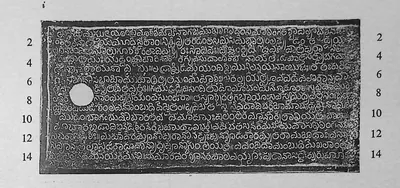 "Vilasa Grant of Prolaya-nayaka", plate i (Epigraphia Indica XXXII, plate between pp. 260 and 261, PDF p. 363 of the archive.org scan kmm-0149-epigraphia-indica-1962)Inscription rubbing · 1959
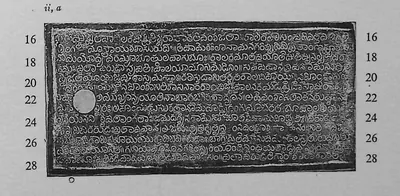 "Vilasa Grant of Prolaya-nayaka", plate ii, a (Epigraphia Indica XXXII, plate between pp. 260 and 261, PDF p. 363)Inscription rubbing · 1959
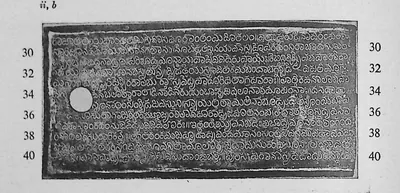 "Vilasa Grant of Prolaya-nayaka", plate ii, b (Epigraphia Indica XXXII, plate between pp. 260 and 261, PDF p. 364)Inscription rubbing · 1959
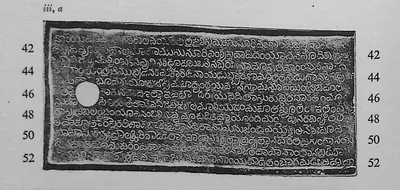 "Vilasa Grant of Prolaya-nayaka", plate iii, a (Epigraphia Indica XXXII, plate between pp. 260 and 261, PDF p. 364)Inscription rubbing · 1959
References
Notes (0)
Sources (16)
Spotted an error on this page? Tell us
Last updated: