విజయనగర సామ్రాజ్యం
సుమారు 1336లో తుంగభద్రపై హరిహర, బుక్క సోదరులు స్థాపించిన దక్షిణ భారత సామ్రాజ్యం. సంగమ, సాళువ, తుళువ, ఆరవీడు వంశాలు దానిని వరుసగా పాలించాయి. పద్నాలుగవ శతాబ్దం నుండి అది రాయలసీమను, నెల్లూరు దేశాన్ని పట్టుకుంది. తెలుగు తీరం కోసం అది రెడ్లతో, వెలమలతో, బహమనీలతో, ఒడిశా గజపతులతో పోరాడింది. శ్రీకృష్ణదేవరాయల కాలంలో అది ఉదయగిరి, కొండవీడు, కొండపల్లిలను తీసుకుని సింహాచలం వరకు నడిచింది. దాని ఆస్థానం తెలుగును ఉన్నత కవిత్వ భాషగా చేసింది. 1565 ఓటమి తర్వాత దాని రాజులు పెనుకొండ, చంద్రగిరిల నుండి పాలించారు. 1640లలో గోల్కొండ చివరి తెలుగు జిల్లాలను తీసుకునే వరకు అది కొనసాగింది.
పూర్తి చార్టు కోసం పక్కకు జరపండి; వివరాల కోసం ఏదైనా పట్టీని తాకండి.
ప్రతి పట్టీ ఒక ప్రాంతాన్ని పాలించిన శక్తి; కాలం ఎడమ నుంచి కుడికి. గీతల అంచు = సుమారు తేదీలు. వివరాల కోసం పట్టీని ఎంచుకోండి.
జాబితాగా చూపించు
కాకతీయులు క్రీ.శ. 1163–1323
- తెలంగాణ
- ముదిగొండ చాళుక్యులు (సుమారు క్రీ.శ. 890–1218) · కాకతీయులు (సుమారు క్రీ.శ. 1163–1323)
- కోస్తా ఆంధ్ర
- తూర్పు గాంగులు (సుమారు క్రీ.శ. 537–1434) · కోన, పల్నాటి హైహయులు (సుమారు క్రీ.శ. 1073–1364) · ధరణికోట కోట వంశం (సుమారు క్రీ.శ. 1100–1276) · పొత్తపి, నెల్లూరు తెలుగు చోడులు (సుమారు క్రీ.శ. 1106–1316) · తంజావూరు చోళులు (సుమారు క్రీ.శ. 1135–1264) · కాకతీయులు (సుమారు క్రీ.శ. 1185–1323) · పాండ్యులు (సుమారు క్రీ.శ. 1260–1264)
- రాయలసీమ
- తంజావూరు చోళులు (సుమారు క్రీ.శ. 985–1268) · పాండ్యులు (క్రీ.శ. 1285–1293) · పొత్తపి, నెల్లూరు తెలుగు చోడులు (సుమారు క్రీ.శ. 1120–1268) · హొయసలులు (సుమారు క్రీ.శ. 1178–1342) · కాకతీయులు (సుమారు క్రీ.శ. 1250–1323)
నాయకులు, రెడ్డి రాజులు, బహమనీలు క్రీ.శ. 1323–1518
- తెలంగాణ
- ఢిల్లీ సుల్తానులు (తుగ్లక్లు) (సుమారు క్రీ.శ. 1323–1336) · బహమనీ సుల్తానులు (సుమారు క్రీ.శ. 1347–1518) · ముసునూరి నాయకులు (సుమారు క్రీ.శ. 1336–1368) · గజపతులు (సుమారు క్రీ.శ. 1459–1461) · బీజాపూర్ ఆదిల్ షాహీలు (సుమారు క్రీ.శ. 1489–1686) · రేచర్ల వెలమలు (సుమారు క్రీ.శ. 1361–1475) · షితాబ్ ఖాన్ (సీతాపతి) (సుమారు క్రీ.శ. 1504–1516)
- కోస్తా ఆంధ్ర
- తూర్పు గాంగులు (సుమారు క్రీ.శ. 537–1434) · గజపతులు (సుమారు క్రీ.శ. 1446–1571) · కోన, పల్నాటి హైహయులు (సుమారు క్రీ.శ. 1073–1364) · రాజమహేంద్రవరం రెడ్డి రాజులు (సుమారు క్రీ.శ. 1386–1448) · బహమనీ సుల్తానులు (సుమారు క్రీ.శ. 1471–1489) · ఢిల్లీ సుల్తానులు (తుగ్లక్లు) (సుమారు క్రీ.శ. 1323–1326) · విజయనగర సామ్రాజ్యం (సుమారు క్రీ.శ. 1350–1579) · కొండవీటి రెడ్డి రాజులు (సుమారు క్రీ.శ. 1325–1424) · ముసునూరి నాయకులు (సుమారు క్రీ.శ. 1325–1346)
- రాయలసీమ
- విజయనగర సామ్రాజ్యం (సుమారు క్రీ.శ. 1336–1646) · కొండవీటి రెడ్డి రాజులు (సుమారు క్రీ.శ. 1346–1386) · హొయసలులు (సుమారు క్రీ.శ. 1178–1342)
విజయనగరం, కుతుబ్ షాహీలు క్రీ.శ. 1336–1687
- తెలంగాణ
- బహమనీ సుల్తానులు (సుమారు క్రీ.శ. 1347–1518) · విజయనగర సామ్రాజ్యం (సుమారు క్రీ.శ. 1563–1565) · ముసునూరి నాయకులు (సుమారు క్రీ.శ. 1336–1368) · గజపతులు (సుమారు క్రీ.శ. 1459–1461) · బీజాపూర్ ఆదిల్ షాహీలు (సుమారు క్రీ.శ. 1489–1686) · రేచర్ల వెలమలు (సుమారు క్రీ.శ. 1361–1475) · కుతుబ్ షాహీలు (సుమారు క్రీ.శ. 1518–1687) · షితాబ్ ఖాన్ (సీతాపతి) (సుమారు క్రీ.శ. 1504–1516)
- కోస్తా ఆంధ్ర
- తూర్పు గాంగులు (సుమారు క్రీ.శ. 537–1434) · గజపతులు (సుమారు క్రీ.శ. 1446–1571) · కోన, పల్నాటి హైహయులు (సుమారు క్రీ.శ. 1073–1364) · రాజమహేంద్రవరం రెడ్డి రాజులు (సుమారు క్రీ.శ. 1386–1448) · బహమనీ సుల్తానులు (సుమారు క్రీ.శ. 1471–1489) · కుతుబ్ షాహీలు (సుమారు క్రీ.శ. 1524–1687) · విజయనగర సామ్రాజ్యం (సుమారు క్రీ.శ. 1350–1579) · కొండవీటి రెడ్డి రాజులు (సుమారు క్రీ.శ. 1325–1424) · ముసునూరి నాయకులు (సుమారు క్రీ.శ. 1325–1346)
- రాయలసీమ
- విజయనగర సామ్రాజ్యం (సుమారు క్రీ.శ. 1336–1646) · మరాఠాలు (సుమారు క్రీ.శ. 1677–1687) · కొండవీటి రెడ్డి రాజులు (సుమారు క్రీ.శ. 1346–1386) · బీజాపూర్ ఆదిల్ షాహీలు (సుమారు క్రీ.శ. 1568–1686) · హొయసలులు (సుమారు క్రీ.శ. 1178–1342) · కుతుబ్ షాహీలు (సుమారు క్రీ.శ. 1579–1687) · మొఘల్ సామ్రాజ్యం (సుమారు క్రీ.శ. 1686–1724)
మొఘలులు, అసఫ్ జాహీలు, బ్రిటిష్ పాలన క్రీ.శ. 1687–1948
- తెలంగాణ
- మొఘల్ సామ్రాజ్యం (క్రీ.శ. 1687–1724) · అసఫ్ జాహీలు (క్రీ.శ. 1724–1948)
- కోస్తా ఆంధ్ర
- మొఘల్ సామ్రాజ్యం (క్రీ.శ. 1687–1724) · ఫ్రెంచి ఈస్ట్ ఇండియా కంపెనీ (క్రీ.శ. 1750–1759) · ఆర్కాటు నవాబులు (సుమారు క్రీ.శ. 1710–1801) · అసఫ్ జాహీలు (క్రీ.శ. 1724–1753) · ఈస్ట్ ఇండియా కంపెనీ (క్రీ.శ. 1759–1858)
- రాయలసీమ
- కర్నూలు నవాబులు (సుమారు క్రీ.శ. 1690–1839) · ఆర్కాటు నవాబులు (సుమారు క్రీ.శ. 1710–1801) · కడప నవాబులు (సుమారు క్రీ.శ. 1714–1779) · మొఘల్ సామ్రాజ్యం (సుమారు క్రీ.శ. 1686–1724) · గుత్తి మురారిరావు ఘోర్పడే (సుమారు క్రీ.శ. 1741–1776) · బనగానపల్లె సంస్థానం (సుమారు క్రీ.శ. 1724–1948) · అసఫ్ జాహీలు (సుమారు క్రీ.శ. 1724–1800) · మరాఠాలు (సుమారు క్రీ.శ. 1743–1774) · మైసూరు (హైదర్ అలీ, టిప్పు సుల్తాన్) (సుమారు క్రీ.శ. 1762–1799)
రాజ్యాలు, సామ్రాజ్యాలు
ముదిగొండ చాళుక్యులు
పేజీ తెరవండి- తెలంగాణ: సుమారు క్రీ.శ. 890–1218 (సుమారు 328 సంవత్సరాలు)
Partial: Mudigonda (Khammam), the Manchikonda district and the Koravi (Kuravi) country, later the Visuru-nadu on the Godavari; feudatories of the Eastern Chalukyas, later of the Chalukyas of Kalyani. No record of the family is dated: start from Kusumayudha I's part in Chalukya-Bhima I's coronation (892), end from Parabrahma Sastry's identification of Kusumaditya and Nagati in a record of 1218. Driven out by the Kakatiyas (Recherla Rudra; Ganapatideva).
పాలకులు (13)
- కొక్కిరాజు (సుమారు క్రీ.శ. 865–890)
- మొదటి కుసుమాయుధుడు (సుమారు క్రీ.శ. 890–915)
- బిజయితుడు (సుమారు క్రీ.శ. 915–940)
- రెండవ కుసుమాయుధుడు (సుమారు క్రీ.శ. 940–965)
- విజయాదిత్యుడు (సుమారు క్రీ.శ. 965–990)
- మూడవ కుసుమాయుధుడు (సుమారు క్రీ.శ. 990–1015)
… మరో 7
- నిజ్జియరాజు (సుమారు క్రీ.శ. 1015–1040)
- నాల్గవ కుసుమాయుధుడు (సుమారు క్రీ.శ. 1040–1065)
- బేత (సుమారు క్రీ.శ. 1065–1090)
- ఐదవ కుసుమాయుధుడు (సుమారు క్రీ.శ. 1090–1110)
- బొట్టు బేత (సుమారు క్రీ.శ. 1110–1140)
- కుసుమాదిత్యుడు (సుమారు క్రీ.శ. 1140–1165)
- నాగతి (సుమారు క్రీ.శ. 1165–1196)
రాజధానులు
శాసనాలు
ఆధారాలు (4)
సుల్తానత్లు
ఢిల్లీ సుల్తానులు (తుగ్లక్లు)
పేజీ తెరవండి- తెలంగాణ: సుమారు క్రీ.శ. 1323–1336 (సుమారు 13 సంవత్సరాలు)
Province of Tilang after Ulugh Khan (Muhammad bin Tughluq) took Warangal and renamed it Sultanpur (1321 by Barani's date for the campaign, 1323 in Haig and the editors of the Vilasa grant). Earlier Khalji campaigns (1303, 1309-10, 1318) ended in failure or tribute and are not drawn. Lost to a Hindu rising under Kanya Naik (Kapaya Nayaka) soon after the cholera of 1335 (Barani), about 1336-37 (modern historians) or in 1343-44 (Ferishta)
- కోస్తా ఆంధ్ర: సుమారు క్రీ.శ. 1323–1326 (సుమారు 3 సంవత్సరాలు)
Brief hold on the Godavari delta and the coast: mosque at Rajahmundry built in 1324 by Ulugh Khan's servant Salar Ulwi; the coast retaken by Prolaya Nayaka and his allies between 1325 and 1326
పాలకులు
- అల్లావుద్దీన్ ఖిల్జీ (క్రీ.శ. 1296–1316)
- కుతుబుద్దీన్ ముబారక్ షా (క్రీ.శ. 1316–1320)
- ఘియాసుద్దీన్ తుగ్లక్ (క్రీ.శ. 1320–1325)
- మహమ్మద్ బిన్ తుగ్లక్ (క్రీ.శ. 1325–1351)
ఆధారాలు (7)
సుల్తానత్లు
బహమనీ సుల్తానులు
పేజీ తెరవండి- తెలంగాణ: సుమారు క్రీ.శ. 1347–1518 (సుమారు 171 సంవత్సరాలు)
Western Telangana from 1347 (Kaulas taken or ceded; Bhongir taken late in Bahman Shah's reign, the province of Bidar reaching east to Bhongir); Golconda ceded under Muhammad Shah I (1362 Bilgrami; 1364-65 Haig, IG); Warangal taken in AH 828 (end of 1424 per Haig, 1422 per IG, 1425 per the Kistna Manual) and the rayas of Devarakonda and Rachakonda made tributary. Partial afterwards (Telugu chiefs regained districts under Ahmad I; Devarakonda relieved by Orissa 1459; Warangal held by the Gajapatis 1460 and by Shitab Khan from 1504). Governed for Mahmud Shah by Sultan Quli from 1495-96 until his independence (1512 per Haig; 1518 per Bilgrami, from the Golconda mosque inscription of AH 924)
- కోస్తా ఆంధ్ర: సుమారు క్రీ.శ. 1471–1489 (సుమారు 18 సంవత్సరాలు)
Rajahmundry and Kondapalli (Ferishta) or Kondavidu (Haig, Burhan-i Ma'asir) taken by Malik Hasan Bahri in AH 876 (1471-72), on the invitation of a claimant to the Orissan throne (the Godavari gazetteer says Purushottama ceded the two districts); Muhammad Shah III at Rajahmundry for nearly three years after his Orissa campaign of 1478, and raided Masulipatam and Kanchi in 1481; Telingana split into the provinces of Rajahmundry and Warangal; Rajahmundry still Bahmani in 1486; the Godavari-Krishna country recovered by the Gajapati Purushottama by 1489
పాలకులు (18)
- అల్లావుద్దీన్ హసన్ బహమన్ షా (క్రీ.శ. 1347–1358)
- మొదటి ముహమ్మద్ షా (క్రీ.శ. 1358–1375)
- ముజాహిద్ షా (క్రీ.శ. 1375–1378)
- దావూద్ షా (క్రీ.శ. 1378)
- రెండవ ముహమ్మద్ షా (క్రీ.శ. 1378–1397)
- ఘియాసుద్దీన్ (క్రీ.శ. 1397)
… మరో 12
- షంసుద్దీన్ దావూద్ (క్రీ.శ. 1397)
- ఫిరోజ్ షా (క్రీ.శ. 1397–1422)
- మొదటి అహ్మద్ షా (క్రీ.శ. 1422–1435)
- రెండవ అల్లావుద్దీన్ అహ్మద్ షా (క్రీ.శ. 1435–1458)
- హుమాయూన్ షా (క్రీ.శ. 1458–1461)
- నిజాం షా (క్రీ.శ. 1461–1463)
- మూడవ ముహమ్మద్ షా (క్రీ.శ. 1463–1482)
- మహమూద్ షా (క్రీ.శ. 1482–1518)
- అహ్మద్ షా (సుమారు క్రీ.శ. 1518–1521)
- అల్లావుద్దీన్ (సుమారు క్రీ.శ. 1521–1523)
- వలీఉల్లా షా (సుమారు క్రీ.శ. 1523–1525)
- కలీముల్లా షా (సుమారు క్రీ.శ. 1525–1527)
శాసనాలు
ఆధారాలు (12)
రాజ్యాలు, సామ్రాజ్యాలు
విజయనగర సామ్రాజ్యం
పేజీ తెరవండి- రాయలసీమ: సుమారు క్రీ.శ. 1336–1646 (సుమారు 310 సంవత్సరాలు)
Founded c. 1335-36; Bukka I held Penukonda and Gooty (records of 1352 and a Gooty rock inscription) and his minister built the Bukkarayasamudram tank near Anantapur in 1364; Cuddapah in the 14th century; Kurnool wholly annexed under Krishnadeva Raya. After Talikota (1565) the kings ruled from Penukonda, which held out against Bijapur in 1577 and Golconda in 1589; the country north of Penukonda was lost after Sriranga I's capture (c. 1579-80); Venkatapati II moved to Chandragiri c. 1592; Golconda held the Cuddapah district and took Chandragiri (Chittoor) in 1646. Bijapur and Golconda took most of the region piecemeal after 1565
- కోస్తా ఆంధ్ర: సుమారు క్రీ.శ. 1350–1579 (సుమారు 229 సంవత్సరాలు)
Vijayanagara officers kept Guntur (Kondavidu, Vinukonda, Bellamkonda) and the governor of Udayagiri kept Nellore after Talikota; Golconda took Kondavidu in April 1579 (Kistna Manual) or 1580 (a Guntur record of 1592 cited by Sewell), though Sewell thinks Guntur was already under Muslim rule by 1576 and the Nellore Manual says the Muslims held Nellore from 1565.
- తెలంగాణ: సుమారు క్రీ.శ. 1563–1565 (సుమారు 2 సంవత్సరాలు)
To end the confederate invasion of Golconda, Ibrahim Qutb Shah let Rama Raja keep the forts of Ghanpur and Panagal (Mahbubnagar) until Talikota; Ferishta places this after the Kalyani campaign of the early 1560s, the Kistna Manual dates it to 1557.
పాలకులు (24)
- మొదటి హరిహరరాయలు (సుమారు క్రీ.శ. 1336–1355)
- మొదటి బుక్కరాయలు (క్రీ.శ. 1355–1377)
- రెండవ హరిహరరాయలు (క్రీ.శ. 1377–1404)
- రెండవ బుక్కరాయలు (క్రీ.శ. 1404–1406)
- మొదటి దేవరాయలు (క్రీ.శ. 1406–1422)
- విజయరాయలు (మూడవ బుక్కరాయలు) (క్రీ.శ. 1422)
… మరో 18
- రెండవ దేవరాయలు (క్రీ.శ. 1422–1446)
- మల్లికార్జునరాయలు (క్రీ.శ. 1446–1465)
- విరూపాక్షరాయలు (క్రీ.శ. 1465–1485)
- సాళువ నరసింహరాయలు (క్రీ.శ. 1485–1492)
- ఇమ్మడి నరసింహరాయలు (క్రీ.శ. 1492–1505)
- నరస నాయకుడు (సుమారు క్రీ.శ. 1505)
- వీర నరసింహరాయలు (క్రీ.శ. 1505–1509)
- శ్రీకృష్ణదేవరాయలు (క్రీ.శ. 1509–1529)
- అచ్యుతదేవరాయలు (క్రీ.శ. 1529–1542)
- మొదటి వేంకటరాయలు (క్రీ.శ. 1542)
- సదాశివరాయలు (సుమారు క్రీ.శ. 1542–1569)
- తిరుమలదేవరాయలు (సుమారు క్రీ.శ. 1569–1572)
- మొదటి శ్రీరంగరాయలు (క్రీ.శ. 1572–1586)
- రెండవ వేంకటపతిరాయలు (క్రీ.శ. 1586–1614)
- రెండవ శ్రీరంగరాయలు (క్రీ.శ. 1614)
- రామదేవరాయలు (క్రీ.శ. 1614–1630)
- పెద్ద వేంకటరాయలు (క్రీ.శ. 1630–1642)
- మూడవ శ్రీరంగరాయలు (సుమారు క్రీ.శ. 1642–1670)
కట్టడాలు (7)
- పెనుకొండ కోట, గగన్ మహల్
- శ్రీకాళహస్తీశ్వర ఆలయం, శ్రీకాళహస్తి
- వీరభద్ర ఆలయం, లేపాక్షి
- చంద్రగిరి కోట, రాజమహల్
- గుత్తి కోట
- నరసింహ ఆలయాలు, అహోబిలం
… మరో 1
శాసనాలు (14)
- పెనుకొండ కోట శాసనం (1354)
- మొదటి బుక్కరాయల గుత్తి శిలాశాసనం
- రెండవ సంగముని బిట్రగుంట దానశాసనం (1356)
- బుక్కరాయసముద్రం చెరువు శాసనం (1364)
- కృష్ణదేవరాయలు, ఆయన రాణుల తిరుమల శాసనాలు (1513–1514)
- కృష్ణదేవరాయల అమరావతి శాసనం (1515)
… మరో 8
- మంగళగిరి, కాజ స్తంభ శాసనాలు (1515–1518)
- కృష్ణదేవరాయల సింహాచలం శాసనాలు (1516–1519)
- కృష్ణదేవరాయల శ్రీకాళహస్తి శాసనం (1516)
- నాదెండ్ల గోపన కొండవీడు స్తంభ శాసనం (1520)
- అచ్యుతరాయల కాలపు లేపాక్షి ఆలయ శాసనాలు (1533–1538)
- సదాశివరాయల కనుమ దానశాసనం (1548)
- చెన్నప్ప నాయుని పెనుకొండ శాసనం (1577)
- మొదటి శ్రీరంగరాయల అహోబిలం శాసనం (1584)
ఆధారాలు (20)
రాజ్యాలు, సామ్రాజ్యాలు
మొఘల్ సామ్రాజ్యం
పేజీ తెరవండి- రాయలసీమ: సుమారు క్రీ.శ. 1686–1724 (సుమారు 38 సంవత్సరాలు)
Kurnool passed to the emperor with the Bijapur provinces in 1686 and was later the jagir of Daud Khan Panni and his brother; Adoni (renamed Imtiyazgarh, a Mughal mint) surrendered by Masaud Khan; the uplands of the Haidarabadi Karnatak (Cuddapah, Gandikota, Gooty, Sidhout) came with Golconda in 1687; Anantapur added to the subah of Bijapur; poligars largely independent (Cuddapah gazetteer); Francis dates the Nizam's independence to 1723
- తెలంగాణ: క్రీ.శ. 1687–1724 (37 సంవత్సరాలు)
Golconda taken on 21 September 1687 and the kingdom annexed as the subah of Haidarabad, governed from Hyderabad by subahdars (Mahabat Khan, Ruhullah Khan, Jan Sipar Khan, Rustam Dil Khan, Yusuf Khan, Mubariz Khan); Kam Bakhsh held Hyderabad as a rival emperor in 1708 until his defeat on 13 January 1709; Mubariz Khan was killed by Nizam-ul-Mulk at Shakar Kheda in October 1724
- కోస్తా ఆంధ్ర: క్రీ.శ. 1687–1724 (37 సంవత్సరాలు)
Kondapalli gained by bribery in July 1687; Guntur (Murtazanagar), Kondapalli (Mustafanagar), Ellore, Rajahmundry and Chicacole formed the Northern Circars, with Masulipatam as their chief town and a Mughal mint; the Qutb Shahi assessment of 1635 was kept on Aurangzeb's records (Grant)
పాలకులు
- షాజహాన్ (క్రీ.శ. 1628–1658)
- ఔరంగజేబు (ఆలంగీర్) (క్రీ.శ. 1658–1707)
- బహదూర్ షా (షా ఆలం I) (క్రీ.శ. 1707–1712)
- జహాందార్ షా (క్రీ.శ. 1712–1713)
- ఫరూఖ్సియార్ (క్రీ.శ. 1713–1719)
- ముహమ్మద్ షా (క్రీ.శ. 1719–1748)
శాసనాలు
ఆధారాలు (14)
రాజ్యాలు, సామ్రాజ్యాలు
కాకతీయులు
పేజీ తెరవండి- తెలంగాణ: సుమారు క్రీ.శ. 1052–1162 (సుమారు 110 సంవత్సరాలు)
Partial: feudatory chiefs of Anumakonda (Hanamkonda) under the Chalukyas of Kalyani. Prola I received the Anumakonda district as a permanent fief from Someshvara I (record of 1053); Prola II's last record as a subordinate is of 1149; Rudradeva subdued the other Telangana chiefs c. 1157–62 (Parabrahma Sastry). Earlier members served the Rashtrakutas (Mangallu grant, c. 956) according to Parabrahma Sastry, a link rejected by Venkataramanayya and Somasekhara Sarma (1960).
- తెలంగాణ: సుమారు క్రీ.శ. 1163–1323 (సుమారు 160 సంవత్సరాలు)
Sovereign from Rudradeva's Anumakonda inscription of January 1163; capital moved to Orugallu (Warangal) under Ganapatideva. Warangal taken by Ulugh Khan in 1323 (Parabrahma Sastry, after Isami); Barani and the Imperial Gazetteer give 1321.
- కోస్తా ఆంధ్ర: సుమారు క్రీ.శ. 1185–1323 (సుమారు 138 సంవత్సరాలు)
Rudradeva subdued the Kotas of Dharanikota and the Kondapadumatis (Tripurantakam grant 1185); Ganapatideva annexed Divi (1203) and Velanadu (records from 1209; Jaya governor 1213) and held the coast from the Godavari to the Penna; Kakatiya records at Draksharama from 1212, but the Eastern Gangas held the region north of the Godavari c. 1230–33 and again c. 1262–78; the Telugu Chodas of Nellore were allies; Nellore was lost to the Pandyas c. 1263 and recovered under Prataparudra.
- రాయలసీమ: సుమారు క్రీ.శ. 1250–1323 (సుమారు 73 సంవత్సరాలు)
Through the Kayastha chiefs (Gangaya Sahini, bahattara-niyogadhipati c. 1250, capital Valluru in Cuddapah); Ambadeva independent c. 1272–1291, until Prataparudra's armies retook Tripurantakam (between 13 June and 11 August 1291) and the Kayastha lands within about eight years.
పాలకులు (11)
రాజధానులు
కట్టడాలు (16)
శాసనాలు (36)
- కాజీపేట దర్గా స్తంభ శాసనం
- మాటేడు శాసనం (వేమబోల మల్లెనాయకుడు)
- గూడూరు విరియాల శాసనాలు
- వేయి స్తంభాల గుడి శాసనం
- కరీంనగర్ శాసనం (మంత్రి గంగాధరుడు)
- వరంగల్ కోట శాసనం (రుద్రదేవుడు)
… మరో 30
- పిల్లలమర్రి శాసనం (రేచర్ల నామిరెడ్డి)
- కొండపర్తి శాసనం (మల్యాల చౌండ సేనాని)
- ఇనుగుర్తి స్తంభ శాసనం (నతవాడి రుద్రుడు)
- బయ్యారం చెరువు శాసనం (మైలమ)
- జాయప చేబ్రోలు శాసనం
- పాలంపేట శాసనం
- గణపవరం శాసనం (దేవపాలుడు)
- గణపతిదేవుని వరంగల్ సుంకాల శాసనం
- గణపేశ్వరం శాసనం
- ఉప్పరపల్లి స్తంభ శాసనం (కాటయ)
- మోటుపల్లి అభయ శాసనం
- పాకాల చెరువు శాసనం (జగదాళ ముమ్మడి)
- రాయపర్తి శాసన శకలం (శక 1169)
- కాంచీపురం ఏకామ్రనాథ దేవాలయంలో గణపతి శాసనం
- గణపతిదేవుని నాయనపల్లె శాసనం
- గంగయ సాహిణి దుర్గి శాసనం
- శార్ఙ్గధరుని శార్ఙ్గపురం శాసనం
- బొత్పూర్ చెరువు శాసనం (మల్యాల గుండ సేనాని)
- గణపతిదేవుని గరవపాడు శాసనం
- రుద్రమదేవి మల్కాపురం స్తంభ శాసనం
- కోటగిరి తామ్రశాసనం (విర్యాల సూరుడు)
- కొలనుపాక శాసనం (రుద్రమదేవి కాలం)
- చందుపట్ల శాసనం
- పానుగల్లు శాసనం (ఇమ్మడి మల్లికార్జున నాయకుడు)
- అంబదేవుని త్రిపురాంతకం శాసనం
- గోన విఠలుని రాయచూరు కోట శాసనం
- మేళ్లచెరువు శాసనం (ప్రతాపరుద్రుని కాలం)
- ప్రతాపరుద్రుని శ్రీరంగం శాసనం
- ధర్మసాగర్ శాసనం (మంత్రి మల్లుడు)
- హనుమకొండ శాసనం (మంత్రి గంగాధరుడు)
ఆధారాలు (7)
రాజ్యాలు, సామ్రాజ్యాలు
ముసునూరి నాయకులు
పేజీ తెరవండి- కోస్తా ఆంధ్ర: సుమారు క్రీ.శ. 1325–1346 (సుమారు 21 సంవత్సరాలు)
Prolaya Nayaka recovered the coast from Delhi in 1325-26 and ruled from Rekapalli on the Godavari (Vilasa grant, about 1330); latest dated Musunuri records on the coast are Kapaya's Guraja grant (February 1346) and his Ganapesvaram inscription (1346-47). Partial: the Reddis of Addanki and the Korukonda chiefs held parts of the coast as Kapaya's kinsmen and subordinates
- తెలంగాణ: సుమారు క్రీ.శ. 1336–1368 (సుమారు 32 సంవత్సరాలు)
Kapaya Nayaka took Warangal about 1336-37 (Ferishta: 1343-44) and ruled as "lord of the Andhra country" (Pillalamarri inscription, 1357); ceded Kaulas and then Golconda (1364-65) to the Bahmanis; overthrown by the Recherla chief Anapota about 1368 (Kapaya named in the Akkalapundi grant of 1368; Anapota ruling Orugallu in July 1369)
పాలకులు
రాజధానులు
శాసనాలు
ఆధారాలు (9)
రాజ్యాలు, సామ్రాజ్యాలు
గజపతులు
పేజీ తెరవండి- కోస్తా ఆంధ్ర: సుమారు క్రీ.శ. 1446–1571 (సుమారు 125 సంవత్సరాలు)
Kapilendra (Kapilesvara, r. 1434-35 to 1469-70) took the Reddi kingdom of Rajahmundry between 1444 and 1448 and held Kondavidu by 1454 through his kinsman Ganadeva; the Bahmanis took Rajahmundry and Kondapalli or Kondavidu in 1470-71 and Purushottama had recovered the Godavari-Krishna country and the Ongole taluk by 1489; the country south of the Krishna passed to Saluva Narasimha after 1470 and, with Udayagiri, Kondavidu and Kondapalli, to Krishnadeva Raya in 1513-16; Golconda took the Godavari-Krishna doab from about 1522 and Rajahmundry in 1571-72. The northern coast (Srikurmam, Simhachalam) stayed Gajapati throughout.
- తెలంగాణ: సుమారు క్రీ.శ. 1459–1461 (సుమారు 2 సంవత్సరాలు)
Brief: Orissan troops relieved Devarakonda from the Bahmanis in 1459, and Kapilendra's son Hamvira and nephew Raghudeva took Warangal on 2 February 1460 (two gateway inscriptions); in 1461-62 the Orissan army and the zemindars of Telangana marched on Bidar. How long Warangal was held is not recorded
- తెలంగాణ: సుమారు క్రీ.శ. 1497–1516 (సుమారు 19 సంవత్సరాలు)
Partial: the uplands of Khammam and the Kondapalli-Nelakondapalli country, held by Prataparudra until Krishnadeva Raya's campaigns (Banerji; Nizam's Archaeological Department)
పాలకులు
- కపిలేంద్రుడు (కపిలేశ్వరుడు) (సుమారు క్రీ.శ. 1434–1470)
- పురుషోత్తముడు (సుమారు క్రీ.శ. 1470–1497)
- ప్రతాపరుద్రుడు (సుమారు క్రీ.శ. 1497–1540)
- కాలువ దేవుడు (సుమారు క్రీ.శ. 1540–1541)
- కఖారువ దేవుడు (సుమారు క్రీ.శ. 1541)
శాసనాలు (8)
ఆధారాలు (10)
సుల్తానత్లు
బీజాపూర్ ఆదిల్ షాహీలు
పేజీ తెరవండి- తెలంగాణ: సుమారు క్రీ.శ. 1489–1686 (సుమారు 197 సంవత్సరాలు)
After the Bahmani break-up part of Mahbubnagar district went to Bijapur (the rest to Golconda) and stayed with it until Aurangzeb annexed Bijapur in 1686; the Raichur district article likewise passes Raichur (which then included the Alampur taluk and Gadwal) from the Bahmanis to the Adil Shahis.
- రాయలసీమ: సుమారు క్రీ.శ. 1568–1686 (సుమారు 118 సంవత్సరాలు)
Partial, the western uplands only. Adoni taken by Ali Adil Shah's general Ankus Khan in 1568 after a failed siege in 1535-37; Penukonda besieged in the 1570s (dates disputed) and taken in 1652 (Mackenzie MS); Kurnool taken from Gopala Raja early in the 17th century and governed by Abdul Wahab (d. 1618) and later deputies, Siddi Jauhar holding it as his jagir about 1660; the Bellary and Anantapur uplands held through governors and tributary poligars; Bijapur's rights there passed to Shivaji in 1677-80 (Francis); Bijapur fell to Aurangzeb on 12 September 1686, but Siddi Masud held Adoni until 1688 (Sarkar) or 1687 (Bellary gazetteer)
పాలకులు (9)
రాజధానులు
కట్టడాలు
ఆధారాలు (11)
రాజ్యాలు, సామ్రాజ్యాలు
అసఫ్ జాహీలు
పేజీ తెరవండి- తెలంగాణ: క్రీ.శ. 1724–1948 (224 సంవత్సరాలు)
Asaf Jah, viceroy of the Deccan from 1713, independent after defeating Mubariz Khan at Shakar Kheda (11 October 1724 in Irvine; 1723 in Gribble); Telangana remained the Telugu heart of the Nizam's Dominions, with the samasthans of Gadwal, Wanaparthy, Jatprole, Amarchinta and Palvancha as tributary estates. Regular districts were formed in 1865-66 and the Telugu divisions surveyed and settled by 1905; the districts were redrawn in 1905 and an Executive Council governed from November 1919. The Standstill Agreement with India was signed on 29 November 1947. Indian troops entered the state on 13 September 1948 (the Police Action); the Nizam ordered a ceasefire on 17 September, and a military governor took charge on 18 September
- కోస్తా ఆంధ్ర: క్రీ.శ. 1724–1753 (29 సంవత్సరాలు)
The Nizam's governor at Rajahmundry collected the tribute of the coastal zamindars; Masulipatam granted to the French by Muzaffar Jang in 1750 and the lands of Nizampatnam and Kondavid by Salabat Jang in 1751; the four Circars of Mustafanagar, Ellore, Rajahmundry and Chicacole assigned to the French on 4 December 1753 to pay Bussy's army
- రాయలసీమ: సుమారు క్రీ.శ. 1724–1800 (సుమారు 76 సంవత్సరాలు)
Nominal over much of the region (Kurnool and Cuddapah Nawabs, Maratha tribute, Morari Rao at Gooty, Haidar Ali from 1761); the Nizam gained Tipu Sultan's districts by the treaties of 1792 and 1799 and ceded them to the Company by the treaty of 12 October 1800 to pay the subsidiary force (the Ceded Districts)
- కోస్తా ఆంధ్ర: క్రీ.శ. 1759–1788 (29 సంవత్సరాలు)
Guntur (Murtazanagar) stayed with the Nizam's brother Basalat Jang after the French were driven out; it was excluded from the cessions of 1766 and 1768, rented by the Company in 1779 and restored, and handed over to the Company only in 1788; the Nizam's claims to the Circars' payments were bought out in 1823
పాలకులు (10)
రాజధానులు
కట్టడాలు (11)
శాసనాలు
ఆధారాలు (16)
రాజ్యాలు, సామ్రాజ్యాలు
రేచర్ల వెలమలు
పేజీ తెరవండి- తెలంగాణ: సుమారు క్రీ.శ. 1361–1475 (సుమారు 114 సంవత్సరాలు)
Anapota at Rachakonda (Rajukonda) and Mada at Devarakonda after their victories of 1361 (family chronicle); Rachakonda fortified in August 1365; Warangal, Bhongir and Rachakonda ruled by July 1369 (Inavolu inscription). The rayas of Devarakonda and Rachakonda paid tribute to Ahmad Shah Bahmani after his capture of Warangal (end of 1424); Devarakonda routed a Bahmani army with Orissan help in 1459; last dated record of the Rachakonda line 1464. End about 1475 per the list of rulers in Epigraphia Telanganica; no source dates the annexation
పాలకులు (7)
- సింగమ నాయకుడు (సుమారు క్రీ.శ. 1336–1361)
- అనపోత నాయకుడు (రాచకొండ) (సుమారు క్రీ.శ. 1361–1384)
- మాదా నాయకుడు (దేవరకొండ) (సుమారు క్రీ.శ. 1361–1384)
- సింగభూపాలుడు (రాచకొండ) (సుమారు క్రీ.శ. 1384–1399)
- పెద వేదగిరి (దేవరకొండ) (సుమారు క్రీ.శ. 1384–1410)
- లింగమ నాయకుడు (దేవరకొండ) (సుమారు క్రీ.శ. 1427–1475)
… మరో 1
- సర్వజ్ఞ సింగమ నాయకుడు (రాచకొండ) (సుమారు క్రీ.శ. 1430–1475)
రాజధానులు
కట్టడాలు
శాసనాలు
ఆధారాలు (7)
సుల్తానత్లు
కుతుబ్ షాహీలు
పేజీ తెరవండి- తెలంగాణ: సుమారు క్రీ.శ. 1518–1687 (సుమారు 169 సంవత్సరాలు)
Sultan Quli governed Telingana for the Bahmanis from 1493-95 and declared independence in 1512 (Ferishta, Haig, IG Hyderabad) or 1518 (Bilgrami, from the Golconda mosque inscription of AH 924); he took the forts of the Telugu chiefs, among them Rachakonda, Devarakonda and, from Shitab Khan, Warangal and Khammam (1519-1525 per Bilgrami). Tributary to the Mughals from 1635-36 (khutba and coins in Shah Jahan's name; two lakhs of huns a year). Hyderabad taken by the Mughals in 1656 and 1685; Golconda surrendered on 21 September 1687 (Old Style) and was annexed
- కోస్తా ఆంధ్ర: సుమారు క్రీ.శ. 1524–1687 (సుమారు 163 సంవత్సరాలు)
Sultan Quli took Kondapalli and fixed the Godavari as his frontier with Orissa (Ellore ceded) some time before his 1530 campaign, and a 1524 record shows him granting villages near Kondapalli and Bezwada; the Godavari gazetteer and IG Madras date the Krishna-Godavari doab to c. 1540 or 'before 1543', and the IG Madras Kistna article to after 1565.
- రాయలసీమ: సుమారు క్రీ.శ. 1579–1687 (సుమారు 108 సంవత్సరాలు)
Partial; the sources disagree on when Golconda's hold began. IG Madras says Kurnool and Cuddapah were overrun soon after 1565. The Kurnool Manual dates the campaigns that took Gurramkonda (1579) and Gandikota, Nandyal and Musalimadugu (c. 1590). The Cuddapah gazetteer says Golconda only turned to Cuddapah in the early 17th century and never really conquered it. Chandragiri fell to Golconda in 1646.
పాలకులు (8)
రాజధానులు
కట్టడాలు (13)
శాసనాలు (7)
- సుల్తాన్ కులీ సమాధి శాసనం (1543)
- గోల్కొండ మక్కా దర్వాజా శాసనం (1559)
- హైదరాబాద్ జామా మసీదు శాసనం
- ముహమ్మద్ కులీ కుతుబ్ షా సమాధి శాసనం (1612)
- మా సాహెబా చెరువు శాసనాలు (1625)
- గోల్కొండ మూసా బురుజు శాసనం (1666–67)
… మరో 1
ఆధారాలు (23)
రాజ్యాలు, సామ్రాజ్యాలు
షితాబ్ ఖాన్ (సీతాపతి)
పేజీ తెరవండి- తెలంగాణ: సుమారు క్రీ.శ. 1504–1516 (సుమారు 12 సంవత్సరాలు)
Partial (Warangal, Khammam and other hill forts, with Bellamkonda south of the Krishna; probably Nalgonda). A former Bahmani officer, Shitab Khan or Sitapati, took Warangal fort from the Muslims on 21 January 1504 by his pillar inscription, and held it until Sultan Quli Qutb Shah defeated him and his Gajapati allies; the Kistna manual calls him apparently a vassal of Orissa. The end is uncertain: Sastri allows him six or seven years (to 1512), the Hyderabad archaeological report of 1925-26 dates the loss of Warangal to 1513-1516, the Kistna manual places the war after 1516, and Bilgrami gives 1519-1525
పాలకులు
రాజధానులు
కట్టడాలు
శాసనాలు
ఆధారాలు (6)
రాజ్యాలు, సామ్రాజ్యాలు
తూర్పు గాంగులు
పేజీ తెరవండి- కోస్తా ఆంధ్ర: సుమారు క్రీ.శ. 537–1434 (సుమారు 897 సంవత్సరాలు)
Partial: only the far north coast (the old Ganjam and Vizagapatam districts, now Srikakulam-Vizianagaram- Visakhapatnam), capital Kalinganagara (Mukhalingam). Earliest dated grant: Jirjingi, near Tekkali, Ganga year 39 (c. 537 on Mirashi's epoch of 498; Fleet put the early grants in the 7th century and Sewell used an epoch of 877-78; the Imperial Gazetteer, the 7th century). Later line in power from the end of the 9th century (Vizagapatam gazetteer): Vajrahasta III crowned 1038; Anantavarman Chodaganga 1078-1146, with records at Mukhalingam, Srikurmam, Simhachalam and Visakhapatnam. South of the Godavari only records and raids (Draksharama 1128-1274; Bendapudi). Ended 1434, when the minister Kapilesvara founded the Gajapati line
పాలకులు (15)
- మూడవ వజ్రహస్తుడు (క్రీ.శ. 1038–1070)
- మొదటి రాజరాజు (క్రీ.శ. 1070–1078)
- అనంతవర్మ చోడగంగ (సుమారు క్రీ.శ. 1078–1146)
- మధుకామార్ణవుడు (సుమారు క్రీ.శ. 1146–1152)
- రాఘవుడు (సుమారు క్రీ.శ. 1152–1166)
- రెండవ రాజరాజు (సుమారు క్రీ.శ. 1166–1192)
… మరో 9
- అనియంకభీముడు (సుమారు క్రీ.శ. 1192–1202)
- మూడవ అనంగభీముడు (సుమారు క్రీ.శ. 1219–1253)
- మొదటి నరసింహుడు (సుమారు క్రీ.శ. 1253–1256)
- మొదటి భానుదేవుడు (సుమారు క్రీ.శ. 1256–1275)
- రెండవ నరసింహుడు (సుమారు క్రీ.శ. 1275–1306)
- రెండవ భానుదేవుడు (సుమారు క్రీ.శ. 1306–1323)
- మూడవ నరసింహుడు (సుమారు క్రీ.శ. 1323–1346)
- మూడవ భానుదేవుడు (సుమారు క్రీ.శ. 1346–1378)
- నాల్గవ నరసింహుడు (సుమారు క్రీ.శ. 1378–1397)
రాజధానులు
కట్టడాలు
శాసనాలు (8)
ఆధారాలు (10)
వలస పాలనలు
ఫ్రెంచి ఈస్ట్ ఇండియా కంపెనీ
పేజీ తెరవండి- కోస్తా ఆంధ్ర: క్రీ.శ. 1750–1759 (9 సంవత్సరాలు)
Partial at first (Masulipatam and the island of Divi, seized in July 1750 under Muzaffar Jang's grant; Nizampatnam, Narsapur and Kondavid added by Salabat Jang in 1751-52); from December 1753 the four Northern Circars of Mustafanagar (Kondapalli), Ellore, Rajahmundry and Chicacole, granted for the pay of Bussy's army and settled by Bussy in person from July 1754. Forde routed the French at Condore (Chandurti) on 9 December 1758 and stormed Masulipatam on 7-8 April 1759; by the treaty of May 1759 Salabat Jang ceded the Masulipatam country to the English and excluded the French from the Deccan
- కోస్తా ఆంధ్ర: సుమారు క్రీ.శ. 1765–1793 (సుమారు 28 సంవత్సరాలు)
Partial (Yanam only): the French factory town on the Godavari, ceded to them in 1752, reoccupied after the peace of 1763 (the restored possessions 'were not occupied before 1765'); the French possessions were also in English hands in 1778-83
- కోస్తా ఆంధ్ర: క్రీ.శ. 1817–1954 (137 సంవత్సరాలు)
Partial (Yanam only): occupied by the English from 1793 (except 1802-03) and handed back in 1817 under the treaties of 1814-15; about 2,258 acres. The Government of India took over the French Establishments, Yanam among them, from 1 November 1954 after the agreement with France of 21 October 1954
పాలకులు
- జోసెఫ్ ఫ్రాంస్వా డూప్లే (క్రీ.శ. 1750–1754)
- చార్లెస్ డి బుస్సీ (క్రీ.శ. 1754–1758)
- మార్కి డి కాన్ఫ్లాన్స్ (క్రీ.శ. 1758–1759)
రాజధానులు
ఆధారాలు (10)
రాజ్యాలు, సామ్రాజ్యాలు
కోన, పల్నాటి హైహయులు
పేజీ తెరవండి- కోస్తా ఆంధ్ర: సుమారు క్రీ.శ. 1073–1364 (సుమారు 291 సంవత్సరాలు)
Partial. Kona chiefs of Konamandala (the Godavari delta, Amalapuram taluk), with records at Draksharama and Palakol from Saka 995 (1073) to 1364–65, dependent on the Chola–Chalukya kings and the Velanati Chodas, later on the Kakatiyas; Haihaya chiefs of the Chagi family in the Palnadu (Macherla 1111, Gurazala 1129) as feudatories of the Chalukyas of Kalyani; the Palnadu war of the ballads is undated (proposals 1080–1386).
పాలకులు
- కోన రాజేంద్ర చోడుడు (క్రీ.శ. 1128)
- రెండవ ముమ్మడి భీముడు, మొదటి సత్యుడు (క్రీ.శ. 1135)
- మూడవ భీముడు (సుమారు క్రీ.శ. 1153–1168)
- మల్లిదేవుడు, రెండవ మన్మసత్యుడు (సుమారు క్రీ.శ. 1155–1207)
- కోన గణపతిదేవుడు (సుమారు క్రీ.శ. 1262–1300)
- భీమవల్లభుడు (క్రీ.శ. 1318)
శాసనాలు
ఆధారాలు (5)
రాజ్యాలు, సామ్రాజ్యాలు
రాజమహేంద్రవరం రెడ్డి రాజులు
పేజీ తెరవండి- కోస్తా ఆంధ్ర: సుమారు క్రీ.శ. 1386–1448 (సుమారు 62 సంవత్సరాలు)
Partial: the Godavari delta and the coast north to Simhachalam, capital Rajahmundry. Kataya Vema, minister of Kumaragiri, received "the eastern country" by 1386 (Ramayya; Sewell c. 1380); after his death (c. 1414-16) Allada Reddi, then Allada's sons Allaya Vema and Virabhadra (records 1423-1437, a record of 1444). Godavari gazetteer: family in the Draksharama inscriptions until 1447; a Gajapati record of 1448 at Penugonda marks the end (Somasekhara Sarma); Kapilesvara's minister ruling at Rajahmundry in 1458
పాలకులు
- కాటయ వేముడు (సుమారు క్రీ.శ. 1386–1415)
- అల్లాడ రెడ్డి (సుమారు క్రీ.శ. 1416–1420)
- అల్లయ వేముడు, వీరభద్రుడు (సుమారు క్రీ.శ. 1423–1448)
రాజధానులు
శాసనాలు
ఆధారాలు (6)
రాజ్యాలు, సామ్రాజ్యాలు
ఆర్కాటు నవాబులు
పేజీ తెరవండి- కోస్తా ఆంధ్ర: సుమారు క్రీ.శ. 1710–1801 (సుమారు 91 సంవత్సరాలు)
Partial (Nellore and Ongole, the Palnad, the jagir of Udayagiri and the tributary zamindaris of Venkatagiri and Kalahasti). Saadatullah Khan became Nawab of the Carnatic, the coast from Guntur to the Coleroon, in 1710 (Orme) or 1713 (Wilks), and his fauzdar governed Nellore; he granted the Udayagiri jagir in 1720. Under Muhammad Ali Walajah (1749-95) his brother Najib-ullah held Nellore, rebelled in 1757 and was dislodged by an English force in 1762. The revenues were assigned to the Company in 1781-85 and managed by it in 1790-92; by the treaty of 31 July 1801 Azim-ud-daula handed over the government of the Carnatic, and Nellore, Ongole and the Palnad became British
- రాయలసీమ: సుమారు క్రీ.శ. 1710–1801 (సుమారు 91 సంవత్సరాలు)
Partial (Chittoor taluks). The Nawabs at Arcot, first as deputies under the Nizam, took tribute from the Chittoor and Chendragiri poligars and the Kalahasti and Karvetnagar zamindars; Muhammad Ali gave Chittoor and Chendragiri to his brother Abdul Wahab as a jagir, and the Carnatic was handed to the Company on 31 July 1801.
పాలకులు
- సాదతుల్లా ఖాన్ (సుమారు క్రీ.శ. 1710–1732)
- దోస్త్ అలీ ఖాన్ (క్రీ.శ. 1732–1740)
- సఫ్దర్ అలీ ఖాన్ (సుమారు క్రీ.శ. 1740–1742)
- అన్వరుద్దీన్ ఖాన్ (క్రీ.శ. 1744–1749)
- ముహమ్మద్ అలీ ఖాన్ వాలాజా (క్రీ.శ. 1749–1795)
- ఉమ్దతుల్ ఉమరా (క్రీ.శ. 1795–1801)
రాజధానులు
ఆధారాలు (11)
రాజ్యాలు, సామ్రాజ్యాలు
ధరణికోట కోట వంశం
పేజీ తెరవండి- కోస్తా ఆంధ్ర: సుమారు క్రీ.శ. 1100–1276 (సుమారు 176 సంవత్సరాలు)
Partial (the Six-thousand country, Konnatavadi, south of the Krishna about Amaravati–Dharanikota and the Sattenapalle taluk). Line from Bhima I (c. 1100, Sewell); Keta II from about 1182; subdued by the Kakatiya Rudradeva about 1185 and thereafter Kakatiya subordinates and relatives by marriage (Ganapamba, widow of Kota Beta, ruled in the 1250s); last record of a Kota Rudra 1275–76.
పాలకులు
- రెండవ కేతరాజు (సుమారు క్రీ.శ. 1182–1209)
- మన్మకేత (మూడవ కేతరాజు) (సుమారు క్రీ.శ. 1234–1240)
- బేతరాజు (సుమారు క్రీ.శ. 1250–1251)
- గణపాంబ (సుమారు క్రీ.శ. 1251–1257)
- నాల్గవ భీముడు (క్రీ.శ. 1265)
రాజధానులు
శాసనాలు
ఆధారాలు (5)
వలస పాలనలు
ఈస్ట్ ఇండియా కంపెనీ
పేజీ తెరవండి- కోస్తా ఆంధ్ర: క్రీ.శ. 1759–1858 (99 సంవత్సరాలు)
Partial at first: the Masulipatam and Nizampatam Circars ceded by Salabat Jang on 14 May 1759 after Forde's defeat of the French. The emperor Shah Alam granted the five Northern Circars on 12 August 1765; by the treaties of 12 November 1766 and 23 February 1768 the Nizam ceded Kondapalli, Ellore, Rajahmundry and Chicacole for a yearly payment (capitalised in 1823), Guntur following in September 1788. Governed through renters until 1769, Chiefs and Councils at Masulipatam and Vizagapatam until 1794, then Collectors; the zamindaris were permanently settled in 1802-03. Nellore, Ongole and the Palnad came with the Carnatic from the Nawab of Arcot on 31 July 1801. Transferred to the Crown in 1858
- రాయలసీమ: క్రీ.శ. 1792–1858 (66 సంవత్సరాలు)
Partial at first: Kangundi came to the Company with the Baramahal in 1792, when it also began collecting the Kalahasti and Karvetnagar tribute for the Nawab; Punganur and Venkatagirikota (Palmaner) followed from Tipu's lands in 1799. On 12 October 1800 the Nizam ceded the territories he had gained from Mysore in 1792 and 1799, the Ceded Districts of Bellary (with Anantapur) and Cuddapah, with the tribute of the Nawab of Kurnool; Thomas Munro, Principal Collector 1800-1807, reduced the poligars and made the ryotwari settlement. The Nawab of Arcot's Chittoor and Chendragiri country came with the Carnatic in 1801, and the Kurnool Nawab's jagir was annexed in 1839. Transferred to the Crown in 1858
పాలకులు (23)
- జార్జ్ పిగట్ (క్రీ.శ. 1755–1763)
- రాబర్ట్ పాక్ (క్రీ.శ. 1763–1767)
- చార్లెస్ బూర్షియర్ (క్రీ.శ. 1767–1770)
- జోసయాస్ డు ప్రే (క్రీ.శ. 1770–1773)
- అలెగ్జాండర్ విన్చ్ (క్రీ.శ. 1773–1775)
- లార్డ్ పిగట్ (క్రీ.శ. 1775–1776)
… మరో 17
- సర్ థామస్ రంబోల్డ్ (క్రీ.శ. 1778–1780)
- లార్డ్ మెకార్ట్నీ (క్రీ.శ. 1781–1785)
- సర్ ఆర్చిబాల్డ్ కాంప్బెల్ (క్రీ.శ. 1786–1789)
- విలియం మెడోస్ (క్రీ.శ. 1790–1792)
- సర్ చార్లెస్ ఓక్లీ (క్రీ.శ. 1792–1794)
- లార్డ్ హోబార్ట్ (క్రీ.శ. 1794–1798)
- లార్డ్ క్లైవ్ (ఎడ్వర్డ్ క్లైవ్) (క్రీ.శ. 1798–1803)
- లార్డ్ విలియం బెంటింక్ (క్రీ.శ. 1803–1807)
- సర్ జార్జ్ బార్లో (క్రీ.శ. 1807–1813)
- హ్యూ ఎలియట్ (క్రీ.శ. 1814–1820)
- సర్ థామస్ మన్రో (క్రీ.శ. 1820–1827)
- స్టీఫెన్ రంబోల్డ్ లషింగ్టన్ (క్రీ.శ. 1827–1832)
- సర్ ఫ్రెడరిక్ ఆడమ్ (క్రీ.శ. 1832–1837)
- లార్డ్ ఎల్ఫిన్స్టోన్ (క్రీ.శ. 1837–1842)
- మార్క్విస్ ఆఫ్ ట్వీడేల్ (క్రీ.శ. 1842–1848)
- సర్ హెన్రీ పాటింజర్ (క్రీ.శ. 1848–1854)
- లార్డ్ హారిస్ (క్రీ.శ. 1854–1859)
రాజధానులు
కట్టడాలు
ఆధారాలు (10)
రాజ్యాలు, సామ్రాజ్యాలు
పొత్తపి, నెల్లూరు తెలుగు చోడులు
పేజీ తెరవండి- కోస్తా ఆంధ్ర: సుమారు క్రీ.శ. 1106–1316 (సుమారు 210 సంవత్సరాలు)
Konidena branch in the Guntur country from 1106 to about 1150; the main line at Nellore (Vikramasimhapura) from Tammusiddhi's anointment in 1205-06, under the Cholas and then the Kakatiyas, who restored Manumasiddhi II; held Kanchi under Tikka I (1209/1223-1248/1250) and Manmasiddhi III. Last date 1316 (Sewell); the Nellore gazetteer finds no Telugu Choda record in Nellore after 1305.
- రాయలసీమ: సుమారు క్రీ.శ. 1120–1268 (సుమారు 148 సంవత్సరాలు)
Pottapinadu (Pullampet country of Cuddapah), seat of the Madhurantaka Pottapi-Cholas under the Chola emperors: Betta 1120-21, Vimaladitya c. 1125; Pottapi remained their seat until Tikka I moved to Nellore; Manumasiddhi II recorded at Pottapi 1258-59; the country passed to the Kayastha Ambadeva after 1268.
పాలకులు
- తమ్ముసిద్ధి (సుమారు క్రీ.శ. 1205–1209)
- మొదటి తిక్క (సుమారు క్రీ.శ. 1209–1248)
- రెండవ మనుమసిద్ధి (సుమారు క్రీ.శ. 1248–1290)
- మూడవ మన్మసిద్ధి (సుమారు క్రీ.శ. 1290–1316)
రాజధానులు
శాసనాలు
ఆధారాలు (5)
రాజ్యాలు, సామ్రాజ్యాలు
కొండవీటి రెడ్డి రాజులు
పేజీ తెరవండి- కోస్తా ఆంధ్ర: సుమారు క్రీ.శ. 1325–1424 (సుమారు 99 సంవత్సరాలు)
Capital Addanki, then (from Anavema, after 1361) Kondavidu. Coast south of the Krishna and at times the Godavari delta (Anavema's grants at Vanapalli, Nadupuru, Palivela, Draksharama 1374-81). Start: Mallavaram record of 1325 (Somasekhara Sarma); the Kistna manual says 1328, the Godavari gazetteer has the earliest record in 1344. End disputed: Vijayanagara conquest by 1424 (Somasekhara Sarma), Racha Vema killed 1428 (Kistna manual), overthrown 1427 (Sewell 1884), a Gajapati conquest c. 1420 (village chronicles). From c. 1386 the Godavari country belonged to the separate Rajahmundry kingdom
- రాయలసీమ: సుమారు క్రీ.శ. 1346–1386 (సుమారు 40 సంవత్సరాలు)
Partial: the Srisailam plateau and the Markapur taluk (records at Tripurantakam, 1346 and 1347; Anavema's Viramantapa at Srisailam, 1378); Prolaya Vema's steps at Srisailam and Ahobilam
పాలకులు
రాజధానులు
కట్టడాలు
శాసనాలు (8)
ఆధారాలు (8)
రాజ్యాలు, సామ్రాజ్యాలు
తంజావూరు చోళులు
పేజీ తెరవండి- రాయలసీమ: సుమారు క్రీ.శ. 985–1268 (సుమారు 283 సంవత్సరాలు)
Rajaraja I (from 982/985) claims Nulambapadi and had the Vaidumbas of Cuddapah as feudatories. Chola inscriptions in Kurnool are dated 1108 and 1123. The east of Cuddapah (Pottapi-nadu) stayed under Chola suzerainty through the Telugu Chodas until Rajendra III's death in 1268. IG Madras has Cuddapah Chola from the 11th to the 13th century.
- కోస్తా ఆంధ్ర: సుమారు క్రీ.శ. 999–1135 (సుమారు 136 సంవత్సరాలు)
Overlords of the Eastern Chalukya kings from 999; Kulottunga I's sons ruled Vengi as viceroys 1077-1118; Vengi was lost to the Western Chalukyas after Vikrama-Chola left in 1118, and his records reappear at Chebrolu (1127) and Nidubrolu (1135). Nellore stayed under Chola suzerainty into the 13th century (IG Madras)
- కోస్తా ఆంధ్ర: సుమారు క్రీ.శ. 1135–1264 (సుమారు 129 సంవత్సరాలు)
Partial (Nellore). After Vengi was lost, Nellore stayed under the Cholas until their 13th-century decline: Rajaraja III is recognised there in 1237 and Rajendra III in 1253, with the Telugu Choda chiefs ruling locally as their vassals. A Tamil record at Punjulurupadu, in the Gudur country, is still dated in the 20th year of Rajendra III, Saka 1185 (1263-64).
పాలకులు (14)
- మొదటి రాజరాజు (క్రీ.శ. 985–1016)
- మొదటి రాజేంద్రుడు (క్రీ.శ. 1012–1043)
- మొదటి రాజాధిరాజు (క్రీ.శ. 1018–1052)
- రాజేంద్రదేవుడు (క్రీ.శ. 1052–1063)
- వీరరాజేంద్రుడు (క్రీ.శ. 1063–1070)
- అధిరాజేంద్రుడు (క్రీ.శ. 1070)
… మరో 8
- మొదటి కులోత్తుంగుడు (క్రీ.శ. 1070–1118)
- విక్రమ చోళుడు (క్రీ.శ. 1118–1133)
- రెండవ కులోత్తుంగుడు (క్రీ.శ. 1133–1146)
- రెండవ రాజరాజు (క్రీ.శ. 1146–1163)
- రెండవ రాజాధిరాజు (క్రీ.శ. 1163–1178)
- మూడవ కులోత్తుంగుడు (క్రీ.శ. 1178–1216)
- మూడవ రాజరాజు (క్రీ.శ. 1216–1246)
- మూడవ రాజేంద్రుడు (క్రీ.శ. 1246–1267)
రాజధానులు
శాసనాలు (10)
ఆధారాలు (9)
రాజ్యాలు, సామ్రాజ్యాలు
పాండ్యులు
పేజీ తెరవండి- కోస్తా ఆంధ్ర: సుమారు క్రీ.శ. 1260–1264 (సుమారు 4 సంవత్సరాలు)
Partial (Nellore). Jatavarman Sundara Pandya I beat the Telugus at Mudugur, drove them to the Krishna and was crowned at Nellore (Aiyangar, from his records); Sewell dates the march to 1260, Parabrahma Sastry the battle to 1263. Aiyangar says the conquest was not permanent and the Nellore gazetteer says Ganapati recovered Nellore almost at once, so the span is short. A later Jatavarman Sundara Pandya, crowned at Nellore after 1276 (Nellore gazetteer), endowed a hall in the Ranganayaka temple there; no source gives the length of this second hold, so it has no span.
- రాయలసీమ: క్రీ.శ. 1285–1293 (8 సంవత్సరాలు)
Partial (Nandalur, east Cuddapah). Jatavarman Sundara Pandya II has dated records at Nandalur in 1285, 1286 and 1293, six in all from 1286-1293, as Pandya power spread north after the Chola collapse.
పాలకులు
- మొదటి జటావర్మ సుందర పాండ్యుడు (సుమారు క్రీ.శ. 1251–1268)
- మొదటి మారవర్మ కులశేఖరుడు (క్రీ.శ. 1268–1311)
- జటావర్మ సుందర పాండ్యుడు (నెల్లూరులో పట్టాభిషిక్తుడు) (సుమారు క్రీ.శ. 1276–1293)
శాసనాలు
ఆధారాలు (5)
రాజ్యాలు, సామ్రాజ్యాలు
మరాఠాలు
పేజీ తెరవండి- రాయలసీమ: సుమారు క్రీ.శ. 1677–1687 (సుమారు 10 సంవత్సరాలు)
Partial (the Bellary and Anantapur uplands). Shivaji crossed the Krishna near Kurnool in March 1677, went to Srisailam and sent his army south through the Cuddapah country; Gribble says he took and garrisoned poligars' forts in the Cuddapah and Bellary districts. On his return he took Bellary fort after a 27-day siege (1677-78). In 1680 Bijapur formally ceded its rights over the country round Kopal and Bellary and the poligars paid him tribute (chauth), until Aurangzeb overthrew Maratha power in the district in 1687
- రాయలసీమ: సుమారు క్రీ.శ. 1743–1774 (సుమారు 31 సంవత్సరాలు)
Partial. The Cuddapah gazetteer says the Nizam ceded Penukonda to the Marathas in 1743 (Grant Duff and the Anantapur gazetteer give Gooty and Penukonda to Morari Rao instead). After Balwant Rao killed the Nawab of Cuddapah near Cuddapah on 24 September 1757 the Marathas held Gurramkonda and Punganur (1755 in Gribble). Gurramkonda went to Haidar Ali through Mir Sahib in 1766-67, was retaken by Trimbak Rao after a two-month siege in 1771 and confirmed to the Marathas by the treaty of 1772, and was lost with Punganur, Sira and Madhugiri to Tipu and Haidar in 1773-74
పాలకులు
- శివాజీ (క్రీ.శ. 1674–1680)
- శంభాజీ (క్రీ.శ. 1680–1689)
- రాజారాం (క్రీ.శ. 1689–1700)
- షాహు (క్రీ.శ. 1708–1749)
ఆధారాలు (11)
రాజ్యాలు, సామ్రాజ్యాలు
కర్నూలు నవాబులు
పేజీ తెరవండి- రాయలసీమ: సుమారు క్రీ.శ. 1690–1839 (సుమారు 149 సంవత్సరాలు)
Partial (Kurnool proper, the taluks of Ramallakota, Nandikotkur, Nandyal and Sirvel). The Mughals took Kurnool in 1686-88 and gave it as a jagir to the Pathan general Daud Khan Panni in the latter part of the seventeenth century (about 1698 in Burhanuddin); his kinsman Ibrahim Khan seized the fort in 1715, and his son Alif Khan acknowledged Asaf Jah in 1724. The French and Salabat Jang stormed Kurnool in March 1751 and held it for the Nizam until Ranmast (Munawwar) Khan recovered it in 1752. The Nawabs paid tribute to the Nizam and, from 1769, to Haidar Ali and Tipu Sultan; in 1800 the Nizam ceded the tribute to the Company, which fixed it in 1804 at a lakh and a quarter of Gadwal rupees, then a lakh. The last Nawab, Ghulam Rasul Khan, was deposed in 1839 and the jagir annexed
పాలకులు (8)
- దావూద్ ఖాన్ పన్నీ (సుమారు క్రీ.శ. 1690–1715)
- ఇబ్రహీం ఖాన్ (క్రీ.శ. 1715–1724)
- అలిఫ్ ఖాన్ (క్రీ.శ. 1724–1733)
- హిమ్మత్ బహదూర్ ఖాన్ (క్రీ.శ. 1733–1751)
- రణమస్త్ ఖాన్ (మునవ్వర్ ఖాన్) (క్రీ.శ. 1752–1792)
- రెండవ అలిఫ్ ఖాన్ (క్రీ.శ. 1792–1815)
… మరో 2
- రెండవ మునవ్వర్ ఖాన్ (క్రీ.శ. 1815–1823)
- గులాం రసూల్ ఖాన్ (క్రీ.శ. 1823–1839)
రాజధానులు
ఆధారాలు (6)
రాజ్యాలు, సామ్రాజ్యాలు
హొయసలులు
పేజీ తెరవండి- రాయలసీమ: సుమారు క్రీ.శ. 1178–1342 (సుమారు 164 సంవత్సరాలు)
Partial (south and west Anantapur: Hemavati, Madakasira, Penukonda, Gooty claim; Rayachoti taluk in the later 13th century). A record at Parigi (Hindupur taluk) of Saka 1100 (1178) shows Ballala II ruling at Dorasamudra; he took Nolambavadi, and his inscription of 1205-06 is at Hemavati. A record at Kodigepalle of 1328 shows Ballala III's minister ruling at Penugonda. Ballala III's inscriptions in Anantapur district run from 1317 through 1320 and 1323 to 1340. He was killed fighting the Sultan of Madurai on 8 September 1342.
పాలకులు
- రెండవ బల్లాలుడు (క్రీ.శ. 1173–1220)
- రెండవ నరసింహుడు (క్రీ.శ. 1220–1235)
- సోమేశ్వరుడు (క్రీ.శ. 1233–1254)
- మూడవ నరసింహుడు (క్రీ.శ. 1254–1291)
- మూడవ బల్లాలుడు (క్రీ.శ. 1291–1342)
- నాల్గవ బల్లాలుడు (విరూపాక్ష) (క్రీ.శ. 1342–1343)
రాజధానులు
ఆధారాలు (6)
రాజ్యాలు, సామ్రాజ్యాలు
కడప నవాబులు
పేజీ తెరవండి- రాయలసీమ: సుమారు క్రీ.శ. 1714–1779 (సుమారు 65 సంవత్సరాలు)
Partial (the Cuddapah uplands, the circars of Sidhout, Gandikota, Gurramkonda and Cumbum, with the poligar of Punganur as tributary). Pathan (Miana) Nawabs under the Mughals and the Nizams; Abdul Nabi Khan, governor from 1714, was the first to assert real control and raided the Baramahal. After the Maratha general Balwant Rao killed the Nawab Abdul Majid Khan in 1757, Gurramkonda went to the Marathas. The last Nawab, Abdul Halim Khan (from 1761), surrendered to Haidar Ali at Sidhout on 27 May 1779 (Wilks; 1778 in Gribble's local chronology and Brown, 1780 in the Cuddapah gazetteer, 1777 in Kirmani)
పాలకులు
- అబ్దుల్ నబీ ఖాన్ (సుమారు క్రీ.శ. 1714–1732)
- అబ్దుల్ మజీద్ ఖాన్ (సుమారు క్రీ.శ. 1732–1757)
- మొహసిన్ ఖాన్ (సుమారు క్రీ.శ. 1757–1761)
- అబ్దుల్ హలీం ఖాన్ (క్రీ.శ. 1761–1779)
రాజధానులు
ఆధారాలు (7)
రాజ్యాలు, సామ్రాజ్యాలు
గుత్తి మురారిరావు ఘోర్పడే
పేజీ తెరవండి- రాయలసీమ: సుమారు క్రీ.శ. 1741–1776 (సుమారు 35 సంవత్సరాలు)
Partial (Gooty, Penukonda, Madakasira, Kodikonda and Tadpatri, with tribute from the Anantapur poligars). The Maratha Morari Rao Ghorpade made the Madakasira poligar pay tribute in 1741, was recognised as chief of Gooty by the first Nizam in 1743-44 and settled there about 1746 (permanent seat 1754). Haidar Ali took Penukonda, Madakasira and Kodikonda in 1762; Morari Rao recovered some forts after the Maratha peace of 1765. Gooty fell to Haidar early in April 1776 (Wilks; 1775 in the Anantapur gazetteer), and Morari Rao died a prisoner at Kabbaldurga
పాలకులు
రాజధానులు
ఆధారాలు (5)
రాజ్యాలు, సామ్రాజ్యాలు
బనగానపల్లె సంస్థానం
పేజీ తెరవండి- రాయలసీమ: సుమారు క్రీ.శ. 1724–1948 (సుమారు 224 సంవత్సరాలు)
Partial (a nawabi enclave of about 255 square miles round Banganapalle in the Kurnool district). Muhammad Beg Khan, Mughal killedar of Banganapalle from the late seventeenth century, became a petty Nawab when Asaf Jah made himself independent, and Asaf Jah confirmed the jagir. Tipu Sultan occupied it from 1783 until the family, with the Nizam's troops, won it back at Tammadapalle in 1790. In 1800 the Nizam transferred his control to the East India Company, which took no tribute; the Madras government managed the indebted jagir from 1825 (1832 in the Imperial Gazetteer) to 1848 and restored it by the sanad of 1849. The ruler became a hereditary Nawab in 1876; the Madras government took over the administration on 23 February 1948
పాలకులు (10)
- ముహమ్మద్ బేగ్ ఖాన్ (సుమారు క్రీ.శ. 1724–1758)
- ముహమ్మద్ బేగ్ ఖాన్ లౌగ్ (రాజప్రతినిధి) (సుమారు క్రీ.శ. 1758–1766)
- ఫజల్ అలీ ఖాన్ (గుల్లి నవాబు) (సుమారు క్రీ.శ. 1766–1782)
- హుసేన్ అలీ ఖాన్ (సుమారు క్రీ.శ. 1782–1783)
- గులాం అలీ ఖాన్ (మన్సూరుద్దౌలా) (సుమారు క్రీ.శ. 1790–1821)
- రెండవ హుసేన్ అలీ ఖాన్ (సుమారు క్రీ.శ. 1821–1848)
… మరో 4
- గులాం ముహమ్మద్ అలీ ఖాన్ (క్రీ.శ. 1848–1868)
- ఫతే అలీ ఖాన్ (క్రీ.శ. 1868–1905)
- మూడవ గులాం అలీ ఖాన్ (క్రీ.శ. 1905–1922)
- ఫజ్లే అలీ ఖాన్ (క్రీ.శ. 1922–1948)
రాజధానులు
ఆధారాలు (5)
రాజ్యాలు, సామ్రాజ్యాలు
మైసూరు (హైదర్ అలీ, టిప్పు సుల్తాన్)
పేజీ తెరవండి- రాయలసీమ: సుమారు క్రీ.శ. 1762–1799 (సుమారు 37 సంవత్సరాలు)
Partial (the Anantapur, Bellary and Cuddapah uplands). Haidar Ali, master of Mysore from 1761, took Penukonda, Madakasira and Kodikonda from Morari Rao of Gooty in 1762 (some went back to Morari Rao in 1764-66). Gurramkonda came to him through Mir Sahib in 1768, was lost to the Marathas in 1771 and recovered by Tipu in 1773-74. He took Bellary in 1775 and Gooty in April 1776 (1775 in the Anantapur gazetteer), and the Nawab of Cuddapah surrendered at Sidhout on 27 May 1779 (1780 in the Cuddapah gazetteer); the Nawab of Kurnool and the poligars of the Bellary and Anantapur country paid him tribute. By the treaty of 18 March 1792 Tipu ceded the Cuddapah taluks, Gurramkonda, Bellary and the Gooty taluks of Tadpatri and Tadimarri to the Nizam; Gooty, Penukonda, Madakasira, Anantapur and the rest of Gurramkonda went to the Nizam after Tipu's death in May 1799, and the Nizam ceded both gains to the Company in 1800
పాలకులు
ఆధారాలు (7)
పాలనాకాలాలు
ప్రతి పట్టీ ఒక రాజు పాలనాకాలం; కాలం ఎడమ నుంచి కుడికి. c. = సుమారు తేదీ.
- మొదటి హరిహరరాయలుసుమారు క్రీ.శ. 1336–1355 · సుమారు 19 సం.
- మొదటి బుక్కరాయలుక్రీ.శ. 1355–1377 · 22 సం.
- రెండవ హరిహరరాయలుక్రీ.శ. 1377–1404 · 27 సం.
- రెండవ బుక్కరాయలుక్రీ.శ. 1404–1406 · 2 సం.
- మొదటి దేవరాయలుక్రీ.శ. 1406–1422 · 16 సం.
- విజయరాయలు (మూడవ బుక్కరాయలు)క్రీ.శ. 1422
- రెండవ దేవరాయలుక్రీ.శ. 1422–1446 · 24 సం.
- మల్లికార్జునరాయలుక్రీ.శ. 1446–1465 · 19 సం.
- విరూపాక్షరాయలుక్రీ.శ. 1465–1485 · 20 సం.
- సాళువ నరసింహరాయలుక్రీ.శ. 1485–1492 · 7 సం.
- ఇమ్మడి నరసింహరాయలుక్రీ.శ. 1492–1505 · 13 సం.
- నరస నాయకుడుసుమారు క్రీ.శ. 1505
- వీర నరసింహరాయలుక్రీ.శ. 1505–1509 · 4 సం.
- శ్రీకృష్ణదేవరాయలుక్రీ.శ. 1509–1529 · 20 సం.
- అచ్యుతదేవరాయలుక్రీ.శ. 1529–1542 · 13 సం.
- మొదటి వేంకటరాయలుక్రీ.శ. 1542
- సదాశివరాయలుసుమారు క్రీ.శ. 1542–1569 · సుమారు 27 సం.
- తిరుమలదేవరాయలుసుమారు క్రీ.శ. 1569–1572 · సుమారు 3 సం.
- మొదటి శ్రీరంగరాయలుక్రీ.శ. 1572–1586 · 14 సం.
- రెండవ వేంకటపతిరాయలుక్రీ.శ. 1586–1614 · 28 సం.
- రెండవ శ్రీరంగరాయలుక్రీ.శ. 1614
- రామదేవరాయలుక్రీ.శ. 1614–1630 · 16 సం.
- పెద్ద వేంకటరాయలుక్రీ.శ. 1630–1642 · 12 సం.
- మూడవ శ్రీరంగరాయలుసుమారు క్రీ.శ. 1642–1670 · సుమారు 28 సం.
సంగమ, సాళువ, తుళువ రాజులకు, 1614 తర్వాతి ఆరవీటి రాజులకు సూవెల్ (1932) ఇచ్చిన పాలనా సంవత్సరాలు; సదాశివుని ముగింపుకు, 1614 వరకు ఆరవీటి రాజులకు హెరాస్ (1927) ఇచ్చినవి. సూవెల్ (1900) మొదటి హరిహరరాయలకు 1336–1343, మొదటి బుక్కరాయలకు 1343–1379 ఇస్తాడు; సాళువ నరసింహుడు సుమారు 1490లో రాజ్యం ఆక్రమించాడంటాడు. సూవెల్ (1932) ప్రకారం తిరుమలరాయలు సుమారు 1570లో సింహాసనం ఎక్కి 1578లో మరణించాడు, మొదటి శ్రీరంగరాయలు 1578–1586 పాలించాడు; హెరాస్ ప్రకారం తిరుమలకు 1569 చివర పట్టాభిషేకం, 1572 ప్రారంభంలో మరణం. ఎస్. కృష్ణస్వామి అయ్యంగార్ (1928) నరసనాయకుని 1505లో మరణించిన రక్షకునిగా, అతని కొడుకు వీర నరసింహుని రాజ్యాపహర్తగా చెబుతాడు. సూవెల్ (1932) చివరి సంగమ రాజును మూడవ విరూపాక్షుడని, వేంకటపతిని మొదటి వేంకటపతి అని లెక్కిస్తాడు; హెరాస్ అచ్యుతుని కొడుకును మొదటి వేంకటునిగా లెక్కించడం వల్ల వేంకటపతి రెండవ వేంకటుడు. అళియ రామరాయలు 1542 నుండి 1565 వరకు సదాశివుని పేరిట పాలించినా సింహాసనం ఎక్కలేదు. 1646లో గోల్కొండ చంద్రగిరిని తీసుకున్న తర్వాత మూడవ శ్రీరంగరాయల పాలన నామమాత్రం.
వంశవృక్షం
పాలకులు, వారసత్వాన్ని వివరించే బంధువులు. ప్రతి గీత ఒక వ్యక్తి పుటలోని ఆధారసహిత వాక్యంపై ఆధారపడింది; ఆధారాలు వృక్షం కింద ఉన్నాయి. ఆ పుటను తెరవడానికి కార్డును ఎంచుకోండి.
- తల్లిదండ్రులు, సంతానం
- వివాహం
- దత్తత
- ఆధారాలు విభేదిస్తున్నాయి (కింద చూడండి)
- వారసత్వ క్రమం
తరం 1
- సంగముడువిజయనగర స్థాపకులైన ఐదుగురు సోదరుల తండ్రి
- మల్లాంబికసాళువ నరసింహరాయల తల్లిభార్య: గుండరాజు
- గుండరాజుసాళువ నరసింహరాయల తండ్రిభర్త: మల్లాంబిక
- ఈశ్వర నాయకుడుసాళువ నరసింహుని సేనాని
- బల్లాదేవిభార్య: ఆరవీటి బుక్కరాజు
- ఆరవీటి బుక్కరాజుసాళువ నరసింహుని సేనానిభర్త: బల్లాదేవి
తరం 2
- 1మొదటి హరిహరరాయలుసుమారు క్రీ.శ. 1336–1355కుమారుడు: సంగముడు
- కంపరాయలుసంగముని రెండవ కొడుకు; ఉదయగిరి, నెల్లూరు పాలకుడుకుమారుడు: సంగముడు
- గౌరిమొదటి బుక్కరాయల రాణిభార్య: మొదటి బుక్కరాయలు
- 2మొదటి బుక్కరాయలుక్రీ.శ. 1355–1377కుమారుడు: సంగముడుభర్త: గౌరిభర్త: దేపాయి
- దేపాయిమొదటి బుక్కరాయల ప్రియ రాణి (గంగాదేవి కావ్యం)భార్య: మొదటి బుక్కరాయలు
- మారపుడు, ముద్దపుడుసంగముని ఇద్దరు చిన్న కొడుకులుకుమారులు: సంగముడు
- 10సాళువ నరసింహరాయలుక్రీ.శ. 1485–1492కుమారుడు: గుండరాజు మరియు మల్లాంబిక
- తిప్పాంబనరసుని రాణి; వీర నరసింహుని తల్లిభార్య: నరస నాయకుడు
- 12నరస నాయకుడుసుమారు క్రీ.శ. 1505కుమారుడు: ఈశ్వర నాయకుడుభర్త: తిప్పాంబభర్త: నాగాంబ (నాగలాదేవి)భర్త: ఓబాంబ
- నాగాంబ (నాగలాదేవి)నరసుని రాణి; కృష్ణదేవరాయల తల్లిభార్య: నరస నాయకుడు
- ఓబాంబనరసుని రాణి; అచ్యుతుని తల్లిభార్య: నరస నాయకుడు
- లక్కమాంబభార్య: రామరాజు
- రామరాజుకర్నూలు, ఆదోని విజేతకుమారుడు: ఆరవీటి బుక్కరాజు మరియు బల్లాదేవిభర్త: లక్కమాంబ
తరం 3
- రెండవ సంగముడు1356 నెల్లూరు శాసనదాతకుమారుడు: కంపరాయలు
- 3రెండవ హరిహరరాయలుక్రీ.శ. 1377–1404కుమారుడు: మొదటి బుక్కరాయలు మరియు గౌరి
- కుమార కంపనుడుమొదటి బుక్కరాయల కొడుకు; మధుర సుల్తానుల విజేతకుమారుడు: మొదటి బుక్కరాయలు మరియు దేపాయి
- సాళువ నరసింహుని పెద్ద కొడుకుసింహాసనం ఎక్కి హత్యకు గురయ్యాడు (నూనిజ్)కుమారుడు: సాళువ నరసింహరాయలు
- 11ఇమ్మడి నరసింహరాయలుక్రీ.శ. 1492–1505కుమారుడు: సాళువ నరసింహరాయలు
- 13వీర నరసింహరాయలుక్రీ.శ. 1505–1509కుమారుడు: నరస నాయకుడు మరియు తిప్పాంబ
- రంగరాయలుఅచ్యుతుని తమ్ముడు; సదాశివుని తండ్రికుమారుడు: నరస నాయకుడు మరియు ఓబాంబ
- తిరుమలదేవికృష్ణదేవరాయల రాణిభార్య: శ్రీకృష్ణదేవరాయలు
- 14శ్రీకృష్ణదేవరాయలుక్రీ.శ. 1509–1529భర్త: తిరుమలదేవిభర్త: చిన్నాదేవిభర్త: జగన్మోహిని (తుక్క)
- చిన్నాదేవికృష్ణదేవరాయల రాణిభార్య: శ్రీకృష్ణదేవరాయలు
- జగన్మోహిని (తుక్క)గజపతి ప్రతాపరుద్రుని కుమార్తెభార్య: శ్రీకృష్ణదేవరాయలు
- వరదాంబఅచ్యుతుని రాణి; సలకం తిరుమలల సోదరిభార్య: అచ్యుతదేవరాయలు
- 15అచ్యుతదేవరాయలుక్రీ.శ. 1529–1542భర్త: వరదాంబ
- తిమ్మరాజు, కొండరాజుఓక్, ఆదోని పాలకులుకుమారులు: రామరాజు మరియు లక్కమాంబ
- తిమ్మాంబసూవెల్ (1932) తిరుమలాంబ అంటాడుభార్య: శ్రీరంగరాజు
- శ్రీరంగరాజురామరాయలు, తిరుమలరాయలు, వేంకటాద్రుల తండ్రికుమారుడు: రామరాజు మరియు లక్కమాంబభర్త: తిమ్మాంబ
తరం 4
- 5మొదటి దేవరాయలుక్రీ.శ. 1406–1422కుమారుడు: రెండవ హరిహరరాయలు
- 17సదాశివరాయలుసుమారు క్రీ.శ. 1542–1569కుమారుడు: రంగరాయలు
- తిరుమలాంబకృష్ణదేవరాయల కుమార్తె; అళియ రామరాయల భార్యకుమార్తె: శ్రీకృష్ణదేవరాయలుభార్య: అళియ రామరాయలు
- తిరుమలరాయలుకృష్ణదేవరాయల కొడుకు; సుమారు 1525లో బాల్యంలోనే మరణంకుమారుడు: శ్రీకృష్ణదేవరాయలు
- వెంగళాంబకృష్ణదేవరాయల కుమార్తె; తిరుమలరాయల భార్యకుమార్తె: శ్రీకృష్ణదేవరాయలు మరియు చిన్నాదేవిభార్య: తిరుమలదేవరాయలు
- 16మొదటి వేంకటరాయలుక్రీ.శ. 1542కుమారుడు: అచ్యుతదేవరాయలు మరియు వరదాంబ
- కోనరాజు, తిమ్మరాజురామరాయల అన్నలుకుమారులు: శ్రీరంగరాజు మరియు తిమ్మాంబ
- అళియ రామరాయలుకుమారుడు: శ్రీరంగరాజు మరియు తిమ్మాంబభర్త: తిరుమలాంబ
- 18తిరుమలదేవరాయలుసుమారు క్రీ.శ. 1569–1572కుమారుడు: శ్రీరంగరాజు మరియు తిమ్మాంబభర్త: వెంగళాంబ
- వేంకటాద్రిరామరాయల తమ్ముడు, సేనానికుమారుడు: శ్రీరంగరాజు మరియు తిమ్మాంబ
తరం 5
- 6విజయరాయలు (మూడవ బుక్కరాయలు)క్రీ.శ. 1422కుమారుడు: మొదటి దేవరాయలు
- కృష్ణప్ప, పెద్ద తిమ్మరాజుతిరుమలాంబ ద్వారా రామరాయల కొడుకులుకుమారులు: అళియ రామరాయలు మరియు తిరుమలాంబ
- రఘునాథుడుతిరుమలరాయల పెద్ద కొడుకుకుమారుడు: తిరుమలదేవరాయలు మరియు వెంగళాంబ
- 19మొదటి శ్రీరంగరాయలుక్రీ.శ. 1572–1586కుమారుడు: తిరుమలదేవరాయలు మరియు వెంగళాంబ
- రామరాయలుతిరుమలరాయల కొడుకు; శ్రీరంగపట్నం రాజప్రతినిధికుమారుడు: తిరుమలదేవరాయలు మరియు వెంగళాంబ
- 20రెండవ వేంకటపతిరాయలుక్రీ.శ. 1586–1614కుమారుడు: తిరుమలదేవరాయలు మరియు వెంగళాంబ
తరం 6
- 7రెండవ దేవరాయలుక్రీ.శ. 1422–1446కుమారుడు: విజయరాయలు (మూడవ బుక్కరాయలు)
- తిరుమలరాయలురామరాయల పెద్ద కొడుకు; శ్రీరంగపట్నం రాజప్రతినిధికుమారుడు: రామరాయలు
- 21రెండవ శ్రీరంగరాయలుక్రీ.శ. 1614కుమారుడు: రామరాయలుకుమారుడు: రెండవ వేంకటపతిరాయలు
తరం 7
- 8మల్లికార్జునరాయలుక్రీ.శ. 1446–1465కుమారుడు: రెండవ దేవరాయలు
- 9విరూపాక్షరాయలుక్రీ.శ. 1465–1485
- 22రామదేవరాయలుక్రీ.శ. 1614–1630కుమారుడు: రెండవ శ్రీరంగరాయలు
ఆధారాలు విభేదించే చోట్లు
విరూపాక్షుని తండ్రి ఎవరు?
రెండవ దేవరాయల కొడుకు, మల్లికార్జునుని తమ్ముడు (కృష్ణస్వామి అయ్యంగార్ చదివిన శ్రీశైలం శాసనం, 1919, 1928)
- They make Virupaksha a son of Pratapadeva Raya and Siddhala Devi. →
- Krishnaswami Aiyangar, Sources of Vijayanagar History (1919), p. 68, extract 26, the Srisailam plates of Virupaksha (archive.org (opens in a new tab)).
మల్లికార్జునుని కొడుకు (సూవెల్ 1900, ఎపిగ్రాఫియా ఇండికా III ఆధారంగా)
- Sewell's pedigree of 1900 makes Virupaksha II a son of Mallikarjuna. →
- Robert Sewell, A Forgotten Empire (Vijayanagar) (1900), p. 24, pedigree after Epigraphia Indica III (archive.org (opens in a new tab)).
రెండవ దేవరాయల తమ్ముడు ప్రతాప దేవరాయల కొడుకు (సూవెల్ 1932)
- He made Pratapa Deva Raya a younger brother of Deva Raya II, and Virupaksha his son. →
- Sewell, Historical Inscriptions (1932), p. 400 (archive.org (opens in a new tab)).
కృష్ణదేవరాయల తండ్రి
నరసుడు, నాగాంబల కొడుకు, వీర నరసింహుని సవతి సోదరుడు (పారిజాతాపహరణము, ఆముక్తమాల్యద, 1516 సింహాచలం శాసనం)
- They name his father as Narasa and his mother as Nagamba, or Nagamamba. →
- Krishnaswami Aiyangar, Sources of Vijayanagar History (1919), p. 106, extract 35, the Parijatapaharanamu of Nandi Timmana (archive.org (opens in a new tab)).
- Krishnaswami Aiyangar, Sources of Vijayanagar History (1919), pp. 109–110, extract 37, the Amuktamalyada (archive.org (opens in a new tab)).
- It records gifts made for the merit of the king's mother Nagadevamma and his father Narasaraya. →
- G. R. Subramiah Pantulu, "Discursive Remarks on the Augustan Age of Telugu Literature", Indian Antiquary XXVII (1898), p. 296 (archive.org (opens in a new tab)).
'వీర నరసింహుని' కొడుకు, అన్న ప్రస్తావన లేదు (రాయవాచకము, కృష్ణరాయవిజయము)
- They call his father Vira Narasimha and leave out the elder brother who ruled before him. →
- Krishnaswami Aiyangar, Sources of Vijayanagar History (1919), p. 111, extract 38, the Rayavachakamu (archive.org (opens in a new tab)).
- Krishnaswami Aiyangar, Sources of Vijayanagar History (1919), p. 129, extract 39, the Krishnarayavijayam of Kumara Dhurjati (archive.org (opens in a new tab)).
అచ్యుతరాయల తల్లిదండ్రులు
ఓబాంబ ద్వారా నరసుని కొడుకు, కృష్ణదేవరాయల సవతి సోదరుడు (అచ్యుతరాయాభ్యుదయం, వరదాంబికాపరిణయం; నూనిజ్ 'సోదరుడు')
- The Achyutarayabhyudayam of Rajanatha Dindima, written for his court, says that Narasa had three queens, Tippamba, Nagamamba and Obamamba, and that by Obamamba he had Achyuta. →
- Krishnaswami Aiyangar, Sources of Vijayanagar History (1919), p. 108, extract 36, the Achyutarayabhyudayam (archive.org (opens in a new tab)).
- Tirumalamba's Sanskrit Varadambikaparinayam calls Achyuta's mother Obamamba, daughter of Rachiraja. →
- Krishnaswami Aiyangar, Sources of Vijayanagar History (1919), p. 172, extract 54, the Varadambikaparinayam of Tirumalamba (archive.org (opens in a new tab)).
కృష్ణదేవరాయల కొడుకు (సూవెల్ పేర్కొన్న రెండు శాసనాలు), రెండవ నరసింహుని కొడుకు (వసుచరిత్ర), లేదా మేనల్లుడు (కూటో)
- Nuniz calls him the late king's brother, and the genealogy of the inscriptions makes him a half-brother. →
- Robert Sewell, A Forgotten Empire (Vijayanagar) (1900), p. 165 and note (archive.org (opens in a new tab)).
- Sewell, A Forgotten Empire (1900), p. 180, pedigree (archive.org (opens in a new tab)).
- Sewell, A Forgotten Empire (1900), p. 181 (archive.org (opens in a new tab)).
వృక్షంలోని ప్రతి గీతకు ఆధారాలు
- సంగముడు → మొదటి హరిహరరాయలు, కంపరాయలు, మొదటి బుక్కరాయలు మరియు మారపుడు, ముద్దపుడు (తల్లిదండ్రులు, సంతానం)
- According to the Nellore copper plates of 1356, Sangama, the father of Harihara I, had five sons. →
- Sewell, A Forgotten Empire (1900), p. 28 (archive.org (opens in a new tab)).
- Sewell took a family tree from the Epigraphia Indica, which names the other two Marapa and Muddapa. →
- Sewell, A Forgotten Empire (1900), p. 24, pedigree after Epigraphia Indica III (archive.org (opens in a new tab)).
- According to the Nellore plates of 1356, as Sewell reported them, Bukka was the third of the five sons of Sangama. →
- Sewell, A Forgotten Empire (1900), p. 28 (archive.org (opens in a new tab)).
- According to the Nellore copper plates of 1356, Sangama, the father of Harihara I, had five sons. →
- కంపరాయలు → రెండవ సంగముడు (తల్లిదండ్రులు, సంతానం)
- The same plates make Sangama II, who made the grant, a son of Kampa. →
- Sewell, A Forgotten Empire (1900), p. 28 (archive.org (opens in a new tab)).
- The same plates make Sangama II, who made the grant, a son of Kampa. →
- మొదటి బుక్కరాయలు · గౌరి (వివాహం)
- Bukka I was succeeded by Harihara II, his son by his queen Gauri. →
- Sewell, A Forgotten Empire (1900), p. 48 (archive.org (opens in a new tab)).
- Bukka I was succeeded by Harihara II, his son by his queen Gauri. →
- మొదటి బుక్కరాయలు మరియు గౌరి → రెండవ హరిహరరాయలు (తల్లిదండ్రులు, సంతానం)
- Bukka I was succeeded by Harihara II, his son by his queen Gauri. →
- Sewell, A Forgotten Empire (1900), p. 48 (archive.org (opens in a new tab)).
- Bukka I was succeeded by Harihara II, his son by his queen Gauri. →
- మొదటి బుక్కరాయలు · దేపాయి (వివాహం)
- Ganga Devi, the wife of his son Kampana, names Depayi as Bukka's favourite queen in her Sanskrit poem. →
- Krishnaswami Aiyangar, Sources of Vijayanagar History (1919), p. 23, extract 1, the Kamparayacharitam of Ganga Devi (archive.org (opens in a new tab)).
- Ganga Devi, the wife of his son Kampana, names Depayi as Bukka's favourite queen in her Sanskrit poem. →
- మొదటి బుక్కరాయలు మరియు దేపాయి → కుమార కంపనుడు (తల్లిదండ్రులు, సంతానం)
- Ganga Devi, the wife of his son Kampana, names Depayi as Bukka's favourite queen in her Sanskrit poem. →
- Krishnaswami Aiyangar, Sources of Vijayanagar History (1919), p. 23, extract 1, the Kamparayacharitam of Ganga Devi (archive.org (opens in a new tab)).
- Ganga Devi, the wife of his son Kampana, names Depayi as Bukka's favourite queen in her Sanskrit poem. →
- రెండవ హరిహరరాయలు → మొదటి దేవరాయలు (తల్లిదండ్రులు, సంతానం)
- Deva Raya I was himself a son of Harihara II, the son of Bukka I, according to the same pedigree. →
- Robert Sewell, A Forgotten Empire (Vijayanagar) (1900), p. 24, pedigree after Epigraphia Indica III (archive.org (opens in a new tab)).
- Deva Raya I was himself a son of Harihara II, the son of Bukka I, according to the same pedigree. →
- మొదటి దేవరాయలు → విజయరాయలు (మూడవ బుక్కరాయలు) (తల్లిదండ్రులు, సంతానం)
- According to it, Deva Raya II was the son of Vira Vijaya and Narayanambika, and a grandson of Deva Raya I and Hemambika. →
- Robert Sewell, A Forgotten Empire (Vijayanagar) (1900), p. 24, pedigree after Epigraphia Indica III (archive.org (opens in a new tab)).
- According to it, Deva Raya II was the son of Vira Vijaya and Narayanambika, and a grandson of Deva Raya I and Hemambika. →
- విజయరాయలు (మూడవ బుక్కరాయలు) → రెండవ దేవరాయలు (తల్లిదండ్రులు, సంతానం)
- According to it, Deva Raya II was the son of Vira Vijaya and Narayanambika, and a grandson of Deva Raya I and Hemambika. →
- Robert Sewell, A Forgotten Empire (Vijayanagar) (1900), p. 24, pedigree after Epigraphia Indica III (archive.org (opens in a new tab)).
- According to it, Deva Raya II was the son of Vira Vijaya and Narayanambika, and a grandson of Deva Raya I and Hemambika. →
- రెండవ దేవరాయలు → మల్లికార్జునరాయలు (తల్లిదండ్రులు, సంతానం)
- His son Mallikarjuna succeeded him. →
- Krishnaswami Aiyangar, Sources of Vijayanagar History (1919), p. 65, extract 25, the Gangadasapratapavilasam (archive.org (opens in a new tab)).
- Sewell, Historical Inscriptions (1932), p. 400 (archive.org (opens in a new tab)).
- His son Mallikarjuna succeeded him. →
- రెండవ దేవరాయలు → విరూపాక్షరాయలు (తల్లిదండ్రులు, సంతానం) · ఆధారాలు విభేదిస్తున్నాయి
- They make Virupaksha a son of Pratapadeva Raya and Siddhala Devi. →
- Krishnaswami Aiyangar, Sources of Vijayanagar History (1919), p. 68, extract 26, the Srisailam plates of Virupaksha (archive.org (opens in a new tab)).
- They make Virupaksha a son of Pratapadeva Raya and Siddhala Devi. →
- గుండరాజు · మల్లాంబిక (వివాహం)
- The same poem, as Krishnaswami Aiyangar summarised it, says that Saluva Mangi's son was Gautama. →
- Krishnaswami Aiyangar, Sources of Vijayanagar History (1919), p. 83, extract 29, the Ramabhyudaya (archive.org (opens in a new tab)).
- The same poem, as Krishnaswami Aiyangar summarised it, says that Saluva Mangi's son was Gautama. →
- గుండరాజు మరియు మల్లాంబిక → సాళువ నరసింహరాయలు (తల్లిదండ్రులు, సంతానం)
- The same poem, as Krishnaswami Aiyangar summarised it, says that Saluva Mangi's son was Gautama. →
- Krishnaswami Aiyangar, Sources of Vijayanagar History (1919), p. 83, extract 29, the Ramabhyudaya (archive.org (opens in a new tab)).
- The Saluvabhyudayam of his court poet Rajanatha Dindima gives the same descent. →
- Krishnaswami Aiyangar, Sources of Vijayanagar History (1919), p. 90, extract 33, the Saluvabhyudayam (archive.org (opens in a new tab)).
- The same poem, as Krishnaswami Aiyangar summarised it, says that Saluva Mangi's son was Gautama. →
- సాళువ నరసింహరాయలు → సాళువ నరసింహుని పెద్ద కొడుకు మరియు ఇమ్మడి నరసింహరాయలు (తల్లిదండ్రులు, సంతానం)
- Nuniz says that at his death Narasimha left two sons in the charge of his minister Narasa Nayaka. →
- Nuniz, in Sewell, A Forgotten Empire (1900), p. 308 and note (archive.org (opens in a new tab)).
- Nuniz, in Sewell, A Forgotten Empire (1900), p. 309 (archive.org (opens in a new tab)).
- Sewell's later pedigree names this younger son Immadi Narasimha, or Tammaya. →
- Sewell, Historical Inscriptions (1932), p. 401 (archive.org (opens in a new tab)).
- Nuniz says that at his death Narasimha left two sons in the charge of his minister Narasa Nayaka. →
- ఈశ్వర నాయకుడు → నరస నాయకుడు (తల్లిదండ్రులు, సంతానం)
- His generals included Isvara Nayaka. →
- Krishnaswami Aiyangar, Sources of Vijayanagar History (1919), introduction, p. 8 (archive.org (opens in a new tab)).
- Krishnaswami Aiyangar, Sources of Vijayanagar History (1919), p. 88, extract 32, the Varahapuranamu of Nandi Mallayya and Ghanta Singayya (archive.org (opens in a new tab)).
- His generals included Isvara Nayaka. →
- నరస నాయకుడు · తిప్పాంబ (వివాహం)
- They name his father as Narasa and his mother as Nagamba, or Nagamamba. →
- Krishnaswami Aiyangar, Sources of Vijayanagar History (1919), p. 106, extract 35, the Parijatapaharanamu of Nandi Timmana (archive.org (opens in a new tab)).
- Krishnaswami Aiyangar, Sources of Vijayanagar History (1919), pp. 109–110, extract 37, the Amuktamalyada (archive.org (opens in a new tab)).
- They name his father as Narasa and his mother as Nagamba, or Nagamamba. →
- నరస నాయకుడు · నాగాంబ (నాగలాదేవి) (వివాహం)
- They name his father as Narasa and his mother as Nagamba, or Nagamamba. →
- Krishnaswami Aiyangar, Sources of Vijayanagar History (1919), p. 106, extract 35, the Parijatapaharanamu of Nandi Timmana (archive.org (opens in a new tab)).
- Krishnaswami Aiyangar, Sources of Vijayanagar History (1919), pp. 109–110, extract 37, the Amuktamalyada (archive.org (opens in a new tab)).
- They name his father as Narasa and his mother as Nagamba, or Nagamamba. →
- నరస నాయకుడు · ఓబాంబ (వివాహం)
- The Achyutarayabhyudayam of Rajanatha Dindima, written for his court, says that Narasa had three queens, Tippamba, Nagamamba and Obamamba, and that by Obamamba he had Achyuta. →
- Krishnaswami Aiyangar, Sources of Vijayanagar History (1919), p. 108, extract 36, the Achyutarayabhyudayam (archive.org (opens in a new tab)).
- The Achyutarayabhyudayam of Rajanatha Dindima, written for his court, says that Narasa had three queens, Tippamba, Nagamamba and Obamamba, and that by Obamamba he had Achyuta. →
- నరస నాయకుడు మరియు తిప్పాంబ → వీర నరసింహరాయలు (తల్లిదండ్రులు, సంతానం)
- They name his father as Narasa and his mother as Nagamba, or Nagamamba. →
- Krishnaswami Aiyangar, Sources of Vijayanagar History (1919), p. 106, extract 35, the Parijatapaharanamu of Nandi Timmana (archive.org (opens in a new tab)).
- Krishnaswami Aiyangar, Sources of Vijayanagar History (1919), pp. 109–110, extract 37, the Amuktamalyada (archive.org (opens in a new tab)).
- They name his father as Narasa and his mother as Nagamba, or Nagamamba. →
- నరస నాయకుడు మరియు నాగాంబ (నాగలాదేవి) → శ్రీకృష్ణదేవరాయలు (తల్లిదండ్రులు, సంతానం) · ఆధారాలు విభేదిస్తున్నాయి
- They name his father as Narasa and his mother as Nagamba, or Nagamamba. →
- Krishnaswami Aiyangar, Sources of Vijayanagar History (1919), p. 106, extract 35, the Parijatapaharanamu of Nandi Timmana (archive.org (opens in a new tab)).
- Krishnaswami Aiyangar, Sources of Vijayanagar History (1919), pp. 109–110, extract 37, the Amuktamalyada (archive.org (opens in a new tab)).
- It records gifts made for the merit of the king's mother Nagadevamma and his father Narasaraya. →
- G. R. Subramiah Pantulu, "Discursive Remarks on the Augustan Age of Telugu Literature", Indian Antiquary XXVII (1898), p. 296 (archive.org (opens in a new tab)).
- They name his father as Narasa and his mother as Nagamba, or Nagamamba. →
- నరస నాయకుడు మరియు ఓబాంబ → అచ్యుతదేవరాయలు (తల్లిదండ్రులు, సంతానం) · ఆధారాలు విభేదిస్తున్నాయి
- The Achyutarayabhyudayam of Rajanatha Dindima, written for his court, says that Narasa had three queens, Tippamba, Nagamamba and Obamamba, and that by Obamamba he had Achyuta. →
- Krishnaswami Aiyangar, Sources of Vijayanagar History (1919), p. 108, extract 36, the Achyutarayabhyudayam (archive.org (opens in a new tab)).
- The Achyutarayabhyudayam of Rajanatha Dindima, written for his court, says that Narasa had three queens, Tippamba, Nagamamba and Obamamba, and that by Obamamba he had Achyuta. →
- నరస నాయకుడు మరియు ఓబాంబ → రంగరాయలు (తల్లిదండ్రులు, సంతానం)
- Sewell's later pedigree gives Narasa and Obambika a second son, Ranga, whose son was Sadasiva. →
- Robert Sewell, ed. S. Krishnaswami Aiyangar, The Historical Inscriptions of Southern India (1932), p. 401 (archive.org (opens in a new tab)).
- Sewell's later pedigree gives Narasa and Obambika a second son, Ranga, whose son was Sadasiva. →
- రంగరాయలు → సదాశివరాయలు (తల్లిదండ్రులు, సంతానం)
- Sewell's later pedigree gives Narasa and Obambika a second son, Ranga, whose son was Sadasiva. →
- Robert Sewell, ed. S. Krishnaswami Aiyangar, The Historical Inscriptions of Southern India (1932), p. 401 (archive.org (opens in a new tab)).
- Krishnaswami Aiyangar wrote in 1928 that his son Venkata was placed on the throne and killed by the mad Tirumala. →
- S. Krishnaswami Aiyangar, "Hindu States in Southern India", in Wolseley Haig (ed.), The Cambridge History of India, Vol. III (1928), p. 498 (archive.org (opens in a new tab)).
- Sewell's later pedigree gives Narasa and Obambika a second son, Ranga, whose son was Sadasiva. →
- అచ్యుతదేవరాయలు · వరదాంబ (వివాహం)
- Tirumalamba's Sanskrit Varadambikaparinayam calls Achyuta's mother Obamamba, daughter of Rachiraja. →
- Krishnaswami Aiyangar, Sources of Vijayanagar History (1919), p. 172, extract 54, the Varadambikaparinayam of Tirumalamba (archive.org (opens in a new tab)).
- Tirumalamba's Sanskrit Varadambikaparinayam calls Achyuta's mother Obamamba, daughter of Rachiraja. →
- అచ్యుతదేవరాయలు మరియు వరదాంబ → మొదటి వేంకటరాయలు (తల్లిదండ్రులు, సంతానం)
- Tirumalamba's Sanskrit Varadambikaparinayam calls Achyuta's mother Obamamba, daughter of Rachiraja. →
- Krishnaswami Aiyangar, Sources of Vijayanagar History (1919), p. 172, extract 54, the Varadambikaparinayam of Tirumalamba (archive.org (opens in a new tab)).
- The Achyutarayabhyudayam adds that at Achyuta's coronation Varadambika, "the daughter of Salaka Raju", was anointed queen. →
- Krishnaswami Aiyangar, Sources of Vijayanagar History (1919), p. 158, extract 53, the Achyutarayabhyudayam (archive.org (opens in a new tab)).
- Tirumalamba's Sanskrit Varadambikaparinayam calls Achyuta's mother Obamamba, daughter of Rachiraja. →
- శ్రీకృష్ణదేవరాయలు · తిరుమలదేవి (వివాహం)
- The Rayavachakamu names his two queens as Tirumala Devi and Chinna Devi. →
- Krishnaswami Aiyangar, Sources of Vijayanagar History (1919), p. 117, the Rayavachakamu (archive.org (opens in a new tab)).
- The Rayavachakamu names his two queens as Tirumala Devi and Chinna Devi. →
- శ్రీకృష్ణదేవరాయలు · చిన్నాదేవి (వివాహం)
- The Rayavachakamu names his two queens as Tirumala Devi and Chinna Devi. →
- Krishnaswami Aiyangar, Sources of Vijayanagar History (1919), p. 117, the Rayavachakamu (archive.org (opens in a new tab)).
- The Rayavachakamu names his two queens as Tirumala Devi and Chinna Devi. →
- శ్రీకృష్ణదేవరాయలు · జగన్మోహిని (తుక్క) (వివాహం)
- Saluva Timma answered that he should give his daughter in marriage to Krishnaraya, and the marriage took place. →
- Nuniz, in Sewell, A Forgotten Empire (1900), p. 320 (archive.org (opens in a new tab)).
- Krishnaswami Aiyangar, Sources of Vijayanagar History (1919), p. 116, the Rayavachakamu (archive.org (opens in a new tab)).
- Saluva Timma answered that he should give his daughter in marriage to Krishnaraya, and the marriage took place. →
- శ్రీకృష్ణదేవరాయలు → తిరుమలాంబ మరియు తిరుమలరాయలు (తల్లిదండ్రులు, సంతానం)
- Sewell's later family tree gives Krishnadeva Raya two daughters and a son. →
- Robert Sewell, ed. S. Krishnaswami Aiyangar, The Historical Inscriptions of Southern India (1932), p. 401 (archive.org (opens in a new tab)).
- Sewell, Historical Inscriptions (1932), p. 403, notes to the pedigrees (archive.org (opens in a new tab)).
- Sewell's later family tree gives Krishnadeva Raya two daughters and a son. →
- శ్రీకృష్ణదేవరాయలు మరియు చిన్నాదేవి → వెంగళాంబ (తల్లిదండ్రులు, సంతానం)
- Sewell's later family tree gives Krishnadeva Raya two daughters and a son. →
- Robert Sewell, ed. S. Krishnaswami Aiyangar, The Historical Inscriptions of Southern India (1932), p. 401 (archive.org (opens in a new tab)).
- Sewell, Historical Inscriptions (1932), p. 403, notes to the pedigrees (archive.org (opens in a new tab)).
- Sewell's later pedigree makes Vengala a daughter of Krishnadeva Raya. →
- Robert Sewell, ed. S. Krishnaswami Aiyangar, The Historical Inscriptions of Southern India (1932), p. 401 (archive.org (opens in a new tab)).
- Sewell's later family tree gives Krishnadeva Raya two daughters and a son. →
- ఆరవీటి బుక్కరాజు · బల్లాదేవి (వివాహం)
- The Ramarajiyamu says that Aravidu Bukka had a son, Rama Raja, by his wife Balla Devi. →
- Krishnaswami Aiyangar, Sources of Vijayanagar History (1919), p. 102, extract 34, the Ramarajiyamu (archive.org (opens in a new tab)).
- The Ramarajiyamu says that Aravidu Bukka had a son, Rama Raja, by his wife Balla Devi. →
- ఆరవీటి బుక్కరాజు మరియు బల్లాదేవి → రామరాజు (తల్లిదండ్రులు, సంతానం)
- The Ramarajiyamu says that Aravidu Bukka had a son, Rama Raja, by his wife Balla Devi. →
- Krishnaswami Aiyangar, Sources of Vijayanagar History (1919), p. 102, extract 34, the Ramarajiyamu (archive.org (opens in a new tab)).
- The Ramarajiyamu says that Aravidu Bukka had a son, Rama Raja, by his wife Balla Devi. →
- రామరాజు · లక్కమాంబ (వివాహం)
- He married Lakkamamba and had three sons, Timma, Konda and Sriranga. →
- Krishnaswami Aiyangar, Sources of Vijayanagar History (1919), p. 103, the Ramarajiyamu (archive.org (opens in a new tab)).
- He married Lakkamamba and had three sons, Timma, Konda and Sriranga. →
- రామరాజు మరియు లక్కమాంబ → తిమ్మరాజు, కొండరాజు మరియు శ్రీరంగరాజు (తల్లిదండ్రులు, సంతానం)
- He married Lakkamamba and had three sons, Timma, Konda and Sriranga. →
- Krishnaswami Aiyangar, Sources of Vijayanagar History (1919), p. 103, the Ramarajiyamu (archive.org (opens in a new tab)).
- He married Lakkamamba and had three sons, Timma, Konda and Sriranga. →
- శ్రీరంగరాజు · తిమ్మాంబ (వివాహం)
- According to the Vasucharitramu, Sriranga and his wife Timmamba had five sons: Kona, Timma, Rama, Tirumala and Venkata. →
- Krishnaswami Aiyangar, Sources of Vijayanagar History (1919), p. 216, extract 66, the Vasucharitramu of Bhattu Murti (archive.org (opens in a new tab)).
- According to the Vasucharitramu, Sriranga and his wife Timmamba had five sons: Kona, Timma, Rama, Tirumala and Venkata. →
- శ్రీరంగరాజు మరియు తిమ్మాంబ → కోనరాజు, తిమ్మరాజు, అళియ రామరాయలు, తిరుమలదేవరాయలు మరియు వేంకటాద్రి (తల్లిదండ్రులు, సంతానం)
- According to the Vasucharitramu, Sriranga and his wife Timmamba had five sons: Kona, Timma, Rama, Tirumala and Venkata. →
- Krishnaswami Aiyangar, Sources of Vijayanagar History (1919), p. 216, extract 66, the Vasucharitramu of Bhattu Murti (archive.org (opens in a new tab)).
- According to the Vasucharitramu, Tirumala was one of the five sons of Sriranga of the Aravidu family, among whom Rama Raya was the most famous. →
- Krishnaswami Aiyangar, Sources of Vijayanagar History (1919), pp. 216–217, extract 66, the Vasucharitramu of Bhattu Murti (archive.org (opens in a new tab)).
- According to the Vasucharitramu, Sriranga and his wife Timmamba had five sons: Kona, Timma, Rama, Tirumala and Venkata. →
- అళియ రామరాయలు · తిరుమలాంబ (వివాహం)
- The Ramarajiyamu says that Rama Raya married Tirumalamba, the daughter of the Emperor Krishna Raya. →
- Krishnaswami Aiyangar, Sources of Vijayanagar History (1919), p. 184, the Ramarajiyamu (archive.org (opens in a new tab)).
- The Ramarajiyamu also says that Aliya Rama Raya married Tirumalamba, "the daughter of the Emperor Krishna Raya". →
- Krishnaswami Aiyangar, Sources of Vijayanagar History (1919), p. 184, extract 57, the Ramarajiyamu (archive.org (opens in a new tab)).
- The Ramarajiyamu says that Rama Raya married Tirumalamba, the daughter of the Emperor Krishna Raya. →
- అళియ రామరాయలు మరియు తిరుమలాంబ → కృష్ణప్ప, పెద్ద తిమ్మరాజు (తల్లిదండ్రులు, సంతానం)
- The Ramarajiyamu says that Rama Raya married Tirumalamba, the daughter of the Emperor Krishna Raya. →
- Krishnaswami Aiyangar, Sources of Vijayanagar History (1919), p. 184, the Ramarajiyamu (archive.org (opens in a new tab)).
- The Ramarajiyamu says that Rama Raya married Tirumalamba, the daughter of the Emperor Krishna Raya. →
- తిరుమలదేవరాయలు · వెంగళాంబ (వివాహం)
- Tirumala married Vengalamba and had four sons, Raghunatha, Sriranga Raya, Rama and Venkata, the Vasucharitramu says. →
- Krishnaswami Aiyangar, Sources of Vijayanagar History (1919), pp. 216–217, extract 66, the Vasucharitramu of Bhattu Murti (archive.org (opens in a new tab)).
- Sewell's later pedigree makes Vengala a daughter of Krishnadeva Raya. →
- Robert Sewell, ed. S. Krishnaswami Aiyangar, The Historical Inscriptions of Southern India (1932), p. 401 (archive.org (opens in a new tab)).
- Tirumala married Vengalamba and had four sons, Raghunatha, Sriranga Raya, Rama and Venkata, the Vasucharitramu says. →
- తిరుమలదేవరాయలు మరియు వెంగళాంబ → రఘునాథుడు, మొదటి శ్రీరంగరాయలు, రామరాయలు మరియు రెండవ వేంకటపతిరాయలు (తల్లిదండ్రులు, సంతానం)
- Tirumala married Vengalamba and had four sons, Raghunatha, Sriranga Raya, Rama and Venkata, the Vasucharitramu says. →
- Krishnaswami Aiyangar, Sources of Vijayanagar History (1919), pp. 216–217, extract 66, the Vasucharitramu of Bhattu Murti (archive.org (opens in a new tab)).
- Venkatapati was the youngest of the four sons of Tirumala and Vengalamba named in the Vasucharitramu. →
- Krishnaswami Aiyangar, Sources of Vijayanagar History (1919), p. 216, extract 66, the Vasucharitramu (archive.org (opens in a new tab)).
- Krishnaswami Aiyangar, Sources of Vijayanagar History (1919), p. 217, the Vasucharitramu (archive.org (opens in a new tab)).
- Tirumala married Vengalamba and had four sons, Raghunatha, Sriranga Raya, Rama and Venkata, the Vasucharitramu says. →
- రామరాయలు → తిరుమలరాయలు మరియు రెండవ శ్రీరంగరాయలు (తల్లిదండ్రులు, సంతానం)
- The Srutiranjani says that his brother Rama married Narasingama and had two sons, Tirumala and Sriranga. →
- Krishnaswami Aiyangar, Sources of Vijayanagar History (1919), p. 213, the Srutiranjani (archive.org (opens in a new tab)).
- The Srutiranjani says that his brother Rama married Narasingama and had two sons, Tirumala and Sriranga. →
- రెండవ వేంకటపతిరాయలు → రెండవ శ్రీరంగరాయలు (దత్తత)
- The Ramarajiyamu gives Venkatapati four wives: Venkatamma, Obamma, Krishnamma and Kondamma. →
- Krishnaswami Aiyangar, Sources of Vijayanagar History (1919), p. 243, extract 79, the Ramarajiyamu (archive.org (opens in a new tab)).
- Krishnaswami Aiyangar, Sources of Vijayanagar History (1919), p. 244, the Ramarajiyamu (archive.org (opens in a new tab)).
- The Ramarajiyamu gives Venkatapati four wives: Venkatamma, Obamma, Krishnamma and Kondamma. →
- రెండవ శ్రీరంగరాయలు → రామదేవరాయలు (తల్లిదండ్రులు, సంతానం)
- The Ramarajiyamu says that Chikka Raya married Obamma and had a son, Rama Deva Raya, the prince rescued by Yachama Nayaka from the massacre of his family. →
- Krishnaswami Aiyangar, Sources of Vijayanagar History (1919), p. 244, the Ramarajiyamu (archive.org (opens in a new tab)).
- The Ramarajiyamu says that Chikka Raya married Obamma and had a son, Rama Deva Raya, the prince rescued by Yachama Nayaka from the massacre of his family. →
ఒకే తల్లి/తండ్రి నుంచి గీత ఉంటే, ఉటంకించిన ఆధారాలు మరొకరి పేరు ఇవ్వలేదని అర్థం.
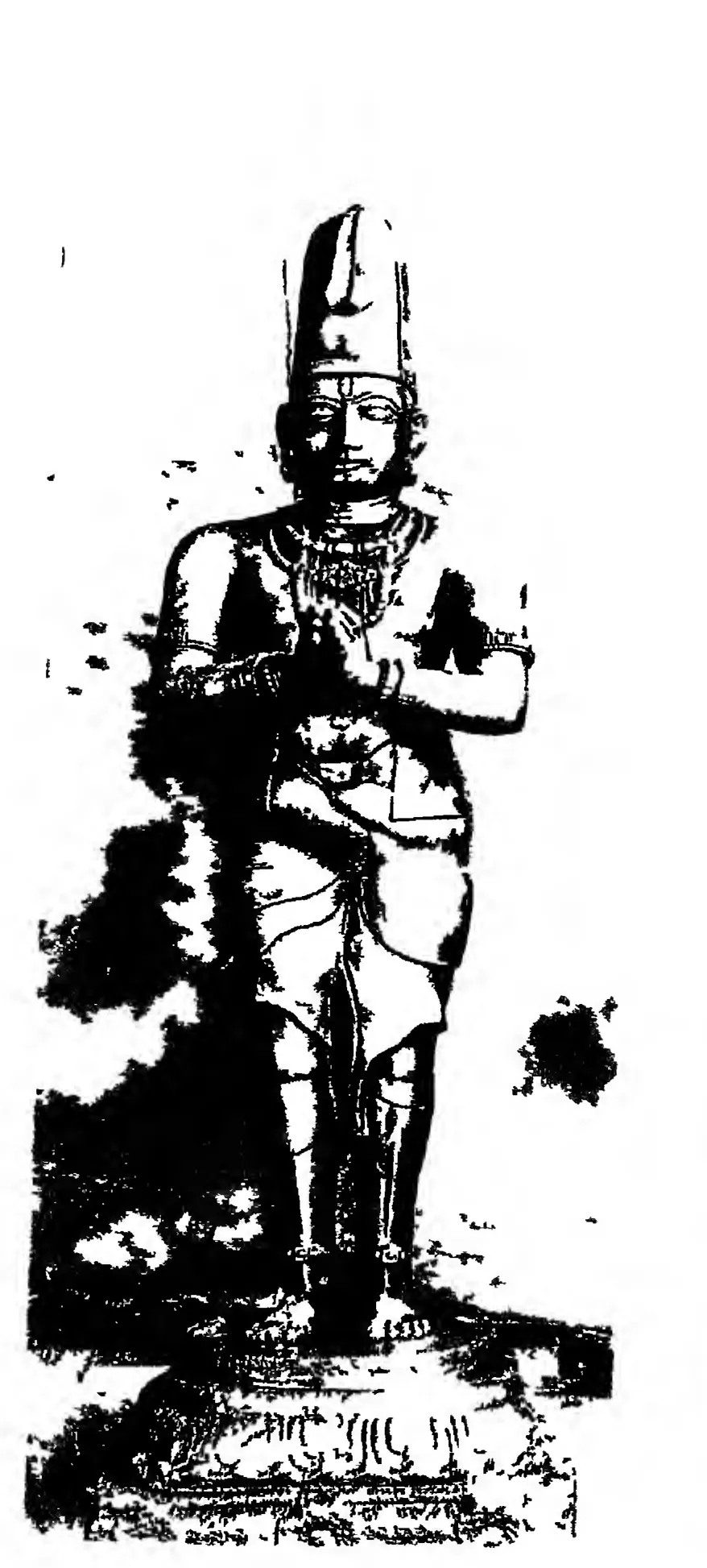
విజయనగర సామ్రాజ్యం పద్నాలుగవ శతాబ్దం నుండి పదిహేడవ శతాబ్దం వరకు దక్షిణ భారతదేశపు గొప్ప హిందూ రాజ్యం.12 తుంగభద్ర దక్షిణ ఒడ్డున ఉన్న తన రాజధాని “విజయ నగరం” పేరు దానికి వచ్చింది.12 ఆ నగర శిథిలాలు హంపి గ్రామం చుట్టూ ఉన్నాయి.12 సుమారు 1336లో హరిహర, బుక్క అనే ఇద్దరు సోదరులు ఆ సామ్రాజ్యాన్ని స్థాపించారు.12
నాలుగు కుటుంబాలు దానిని వరుసగా పాలించాయి:345
- స్థాపకుల సంగమ వంశం
- సింహాసనం తీసుకున్న సేనానులు స్థాపించిన సాళువ, తుళువ వంశాలు
- 1565లో రాజధానిని దోచుకున్న తర్వాత పెనుకొండ, చంద్రగిరిల నుండి పాలించిన ఆరవీడు వంశం345
తెలుగు దేశానికి ఈ సామ్రాజ్యం నాలుగు విధాలుగా ముఖ్యం:678
- పద్నాలుగవ శతాబ్దం నుండి దాని రాజులు ఇప్పటి రాయలసీమ అయిన పశ్చిమ తెలుగు జిల్లాలను, నెల్లూరు దేశాన్ని పట్టుకున్నారు.678
- తీరం కోసం వారు రెడ్లతో, వెలమలతో, బహమనీలతో, ఒడిశా గజపతులతో పోరాడారు.678
- శ్రీకృష్ణదేవరాయల కాలంలో వారు కృష్ణా, గుంటూరు దేశపు కోటలను తీసుకుని సింహాచలం వరకు నడిచారు.678
- వారి ఆస్థానం తెలుగు కవిత్వానికి గొప్ప నెలవుల్లో ఒకటి.678
ఈ పేజీ సామ్రాజ్య కథను తెలుగు దేశానికి సంబంధించినంత వరకు చెప్పి, మిగతాదాన్ని సంగ్రహిస్తుంది.678 పొరుగువారికి వారి సొంత పేజీలు ఉన్నాయి: కొండవీటి రెడ్డి రాజులు, రాజమహేంద్రవరం రెడ్డి రాజులు, రేచర్ల వెలమలు, బహమనీలు, ఒడిశా గజపతులు, గోల్కొండ కుతుబ్ షాహీలు.
ఆధారాలు
1900లో రాబర్ట్ సూయెల్ మొదట ఆ చరిత్రను కూర్చారు.91011 హిందూ శాసనాలు, ముస్లిం చరిత్రలు, పోర్చుగీసు రచయితలు, పారిస్లో దొరికిన రెండు పోర్చుగీసు చరిత్రల నుండి ఆయన పనిచేశారు.91011 ఈ రెండు చరిత్రలను ఆయన అనువదించి తన పుస్తకం చివర ముద్రించారు.91011 ఒకటి సుమారు 1520లో శ్రీకృష్ణదేవరాయలను చూసిన డొమింగో పేస్ కథనం.91011 మరొకటి అచ్యుతరాయల పాలనలో సుమారు 1536 లేదా 1537లో రాసిన, రాజధానిలో గుర్రాల వ్యాపారి అయిన ఫెర్నావో నూనిజ్ చరిత్ర.91011
ఫలితం “అసంబద్ధంగా, ముడిగా, ఆసక్తి లేనిదిగా కనిపించవచ్చు” అని సూయెల్ ఒప్పుకుని, దానిని “కేవలం మొదటి ప్రయత్నం” అని పిలిచారు.9 1919లో ఎస్. కృష్ణస్వామి అయ్యంగార్ Sources of Vijayanagar History (విజయనగర చరిత్ర ఆధారాలు) ప్రచురించారు.1213 అది సంస్కృత, తెలుగు పుస్తకాల నుండి, చాలావరకు వ్రాతప్రతుల నుండి, ప్రతిదానికి ఇంగ్లీషు సంగ్రహంతో భాగాలను ఇస్తుంది.1213 ఆయన విద్యార్థి ఎ. రంగస్వామి సరస్వతి వాటిని సేకరించారు.1213 సూయెల్ పుస్తకం “సాహిత్యంలో వివిధ రూపాల్లో లభించే సాక్ష్యాన్ని నిర్లక్ష్యం చేయడం వల్ల నష్టపోయింది” అని ఆయన రాశారు.1213
సుమారు 1607లో రాసిన పర్షియన్ చరిత్రకారుడు ఫెరిష్తా సుల్తానుల వైపు కథనం ఇస్తాడు.14 హిందూ రాజుల విషయంలో సూయెల్ నూనిజ్ను ఎక్కువగా నమ్మారు.14 నూనిజ్ రాజధానిలోనే, హిందూ సమాచారదారుల నుండి, ఘటనలు జీవించి ఉన్నవారి జ్ఞాపకంలో ఉండగానే రాశాడు.14 ఈ పేజీ ఈ ఆధారాలను అనుసరిస్తుంది. వివాదాస్పదమైన ప్రతి అంశానికి ఆధారం పేరు చెబుతుంది.
పుట్టుక: తెలుగా, కన్నడమా?
సోదరులు అధికారంలోకి ఎలా వచ్చారనేది దక్షిణ భారత చరిత్రలో అతి పాత వాదనల్లో ఒకటి. తుంగభద్ర ఉత్తర ఒడ్డున ఉన్న ఆనెగొంది కోటను ముహమ్మద్ తుగ్లక్ ఎలా తీసుకుని దాని నాయకుని చంపాడో నూనిజ్ చెబుతాడు.1516 తర్వాత సుల్తాన్ ఆ నాయకుని మాజీ మంత్రి “దేవరావు” కింద ఆ దేశాన్ని హిందువులకు తిరిగి ఇచ్చాడు. సూయెల్ అతనిని మొదటి హరిహరునిగా గుర్తించారు.1516 మాధవాచార్య విద్యారణ్య ఋషి సహాయంతో కొత్త నాయకుడు దక్షిణ ఒడ్డున నగరాన్ని స్థాపించాడు.1516
ఇబ్న్ బతూతా అదే యుద్ధాన్ని వర్ణిస్తాడు.1718 “కంపిల” రాయ్ సుల్తాన్ తిరుగుబాటు మేనల్లుడికి ఆశ్రయం ఇచ్చి, తన స్త్రీలను కాల్చి, పోరాడుతూ చనిపోయాడు.1718 బందీలుగా పట్టుకున్న రాయ్ పదకొండు మంది కుమారులను సుల్తాన్ ముస్లింలుగా మార్చాడు.1718
సోదరులు వరంగల్ రాజుకు సేవ చేశారనే సంప్రదాయాలను కూడా సూయెల్ నివేదించారు:19202122
- 1323లో ముస్లింలు వరంగల్ను నాశనం చేసినప్పుడు పారిపోయిన అధికారులుగా ఒక సంప్రదాయం వారిని చేస్తుంది.19202122
- 1801లో ఫ్రాన్సిస్ బుకానన్కు చూపించిన ఒక సంస్కృత పుస్తకం వారిని ప్రతాపరుద్రుని కోశాగార రక్షకులు అని పిలుస్తుంది.19202122
- కూటో స్థాపకుని గొర్రెల కాపరిగా చేశాడు.19202122
- 1474లో భారతదేశంలో ఉన్న నికితిన్ “హిందూ సుల్తాన్ కదం” గురించి మాట్లాడాడు.19202122 దీనిని బట్టి వారు బనవాసి కదంబుల పాత రాజవంశానికి చెందినవారని నికితిన్ భావించాడని సూయెల్ అర్థం చేసుకున్నాడు.2122
సూయెల్ సొంత పునర్నిర్మాణం వారిని వరంగల్ కోశాగారానికి చెందిన, ఆనెగొందిలో సేవలో చేరిన ఇద్దరు కురుబ సోదరులుగా చేసింది.22
1929లో ఎన్. వెంకటరమణయ్య తెలుగు పుట్టుక పక్షాన అత్యంత బలంగా వాదించారు.23 సోదరులు హొయసల అధికారులు అనే అభిప్రాయాన్ని ఆయన తిరస్కరించారు.23 ఏ శాసనమూ వారిని మూడవ వీర బల్లాలుని ఆశ్రితులుగా పిలవదని ఆయన చెప్పారు.23
ఆయన సమకాలీన చరిత్రకారుడు బరనీపై ఆధారపడ్డారు.24 కంపిలిని పాలించడానికి ముహమ్మద్ తుగ్లక్ పంపిన వ్యక్తి వరంగల్ రాజు “కన్యా నాయక్ బంధువుల్లో ఒకడు” అని బరనీ రాశాడు.24 దీని నుండి హరిహర, బుక్క “తెలుగు సంతతికి చెందినవారు, బహుశా వరంగల్ కాకతీయ రాజ కుటుంబానికి బంధువులు” అని వెంకటరమణయ్య తేల్చారు.24
ఒక గమనికలో ఆయన మూడు అంశాలు జోడించారు:24
- బుక్కుడు పోషించినట్లు తెలిసిన ఏకైక దేశభాషా కవి నాచన సోమన తెలుగు కవి.24
- తెలుగు గౌడల (గ్రామ పెద్దల) కుటుంబాలు కన్నడ దేశంలో స్థిరపడ్డాయి.24
- బుక్కుని కోడలు గంగాదేవి తిక్కనతో సహా వరంగల్ తెలుగు కవుల పేర్లు చెప్పింది.24
సోదరులను కంపిల రాయల కోశాగార సంరక్షకులుగా చేయడంలో ఆయన కన్నడ కావ్యం బల్లాళ రాయన యుద్ధను అనుసరించారు.2425 వారిని బందీలుగా ఢిల్లీకి తీసుకెళ్లారని చెప్పడంలో ఆయన రాజకాలనిర్ణయ చరిత్రను అనుసరించారు.2425 ఈ కథనంలో, బహుశా ఇస్లాం స్వీకరించిన తర్వాత, సుల్తాన్ ప్రతినిధులుగా పాలించడానికి వారిని తిరిగి పంపారు.2425
అదే 1929లో హెచ్. హెరాస్ వ్యతిరేక వాదన చేశారు.2627 తెలుగు సిద్ధాంతాన్ని ఆయన బుకానన్ వరకు, మార్క్ విల్క్స్ వరకు వెనక్కి తీసుకెళ్లారు.2627 “కెనరా మధ్యలో ఒక తెలింగ సైన్యం ఒక తెలింగ ఆస్థానాన్ని నిలబెట్టింది” అని విల్క్స్ రాశారు.2627 “కచ్చితంగా తెలుగు సంతతికి చెందిన” తర్వాతి ఆరవీడు రాజుల తెలుగు భాషను వివరించడానికి ఆ సిద్ధాంతాన్ని కల్పించారని హెరాస్ అనుమానించారు.2627
తెలుగు లిపిలో ఒక తొలి దానపత్రం ఉంది: బుక్కుని మేనల్లుడు రెండవ సంగముని బిట్రగుంట తామ్రశాసనాలు.2829 అది తెలుగు దేశం కోసం ఇచ్చింది కాబట్టి అలా ఉందని హెరాస్ వివరించారు.2829 రాజకాలనిర్ణయకు “ఏ చారిత్రక విలువా లేదు” అనే టి. ఎ. గోపీనాథరావు తీర్పును ఆయన ఉదహరించారు.2829 ఆయన అభిప్రాయంలో, హొయసల రాజు మూడవ వీర బల్లాలుడు మొదటి హరిహరుని ఉత్తర సరిహద్దులో తన మహామండలేశ్వరుని (గొప్ప ప్రభువు) గా విజయనగరంలో సింహాసనంపై కూర్చోబెట్టాడు.30
“ఆంధ్రులు ఉదయగిరి దిశగా గుహల్లోకి పరుగెత్తారు” అని గొప్పలు చెప్పుకునే బుక్కుని శాసనాలను హెరాస్ చూపించారు.3132 ఆంధ్రులపై రెండవ హరిహరుని సేనాని చేసిన మరో యుద్ధాన్ని కూడా ఆయన చూపించారు.3132 తొలి రాజులపై తెలుగు దేశం మూడుసార్లు తిరుగుబాటు చేసిందని ఆయన వాదించారు.3132 “సంగమ కుటుంబం తెలుగు కుటుంబం అని అనుకుంటే ఇది నమ్మడం కష్టమైన విషయం” అని ఆయన రాశారు.3132
ఎస్. కృష్ణస్వామి అయ్యంగార్ కూడా ఐదుగురు సోదరులను హొయసల సరిహద్దు రక్షకులుగా చూశారు.336 ఆయన మాటల్లో, బహమనీలకు వ్యతిరేకంగా వారు “ఈ అభేద్యమైన దుర్గ సైన్యాల గోడను” పట్టుకున్నారు.336 1905లో రాస్తూ బి. సూర్యనారాయణ రావు స్థాపకులు బహుశా ప్రతాపరుద్రుని ఆస్థానం నుండి పారిపోయినవారు అని భావించారు.3435 కానీ వారు వరంగల్ నుండి వచ్చారా లేక ద్వారసముద్రం నుండి వచ్చారా అనేది “చెప్పడం కష్టం” అని ఆయన భావించారు.3435
సంగమ రాజులు, తెలుగు దేశం
1340 నాటి మొదటి హరిహరుని తొలి తేదీ ఉన్న శాసనం అతనిని కేవలం మహామండలేశ్వరుడు, “గొప్ప ప్రభువు” అని పిలుస్తుంది.3637 సామ్రాజ్య బిరుదులు తీసుకున్న మొదటి రాజు అతని మేనల్లుడు రెండవ హరిహరుడు.3637 ఎస్. కృష్ణస్వామి అయ్యంగార్ ప్రకారం, రెండవ సోదరుడు కంపుడు నెల్లూరు, ఉదయగిరిలను పట్టుకున్నాడు.6 మూడవ సోదరుడు బుక్కుడు హంపి, ద్వారసముద్రాలను పట్టుకున్నాడు. పెనుకొండ రెండవ స్థానం.6
నెల్లూరులో ఉంచిన 1356 నాటి ఒక తామ్ర దానపత్రం కంపుని కుమారుడు రెండవ సంగముని దానాన్ని నమోదు చేస్తుంది.3839 కంపుడు హరిహరుని తర్వాత వచ్చాడని అది చెబుతుంది.3839 బుక్కుని వారసత్వం వివాదంలో ఉందనడానికి సూయెల్ దానిని సాక్ష్యంగా తీసుకున్నారు.3839
సాయణుని వ్యాకరణ గ్రంథం మాధవీయ ధాతువృత్తి అదే సంగమునికి అంకితం చేయబడింది.40 సంగముని తండ్రి “ఉదయగిరి మహారాజ్యపు ప్రతినిధి పాలకుడు” అని కృష్ణస్వామి అయ్యంగార్ గుర్తించారు.40 కాబట్టి తొలి సంవత్సరాల నుండే నెల్లూరు దేశంలోని ఉదయగిరి తూర్పు తెలుగు దేశంలో విజయనగరానికి కేంద్రం.40 ఉదయగిరి, నెల్లూరు చూడండి.
మొదటి బుక్కుడు (సూయెల్ తర్వాతి కాలనిర్ణయంలో 1355–1377) రాజ్యాన్ని సామ్రాజ్యంగా చేశాడు.4142 అతని కుమారుడు కుమార కంపణుడు మధుర ముస్లిం సుల్తాన్ రాజ్యాన్ని నాశనం చేశాడు.4142 బహమనీ సుల్తాన్ ముహమ్మద్ షా రాయచూరు దోఆబ్లో బుక్కునితో పోరాడాడు.4142 ఇది కృష్ణా, తుంగభద్ర మధ్య భూమి. రెండు శక్తులు దాని కోసం రెండు వందల సంవత్సరాలు పోటీపడ్డాయి.4142
దత్త మండలాల్లో (Ceded Districts) అతని పాలనను తెలుగు ఆధారాలు నమోదు చేస్తాయి.43 1364లో అతని మంత్రి చిక్కప్ప ఒడెయర్ రాజు పేరు మీద బుక్కరాయసముద్రం చెరువును కట్టించాడని హండె అనంతపురం చరిత్రలు చెబుతాయి.43 రాణి పేరు మీద అనంతసాగరాన్ని కూడా అతను కట్టించాడు.43
తీరంలో, తెలంగాణలో బుక్కుని పొరుగువారు కొండవీడు రెడ్లు, ముసునూరి, రేచర్ల నాయకులు.4442 బుక్కుడు “వరంగల్లోని తన మిత్రుని మద్దతుతో” బహమనీల నుండి భూములు కోరాడని సూయెల్ చెబుతారు.4442 ఇద్దరూ కలిసి ఢిల్లీ సుల్తాన్ దగ్గరకు ఉమ్మడి రాయబారం పంపారని ఆయన చెబుతారు.4442 మొదటి బుక్కరాయలు, మొదటి హరిహరరాయలు, ముసునూరి నాయకులు చూడండి.
రెండవ హరిహరుడు, మొదటి దేవరాయల కాలంలో బహమనీలతో యుద్ధాలు కొనసాగాయి. తెలుగు నాయకులు పక్షాలు తీసుకున్నారు.4546 1419లో ఫిరోజ్ షా పానగల్లు వద్ద ఓడిపోయాడు.4546 విజయనగర రాజు “తెలింగాణ రాజా వరకు చుట్టుపక్కల రాజుల నుండి” సహాయం పొందాడని ఫెరిష్తా చెబుతాడు.4546 కానీ కొంచెం తర్వాత అహ్మద్ షా దాడి చేసినప్పుడు, “వరంగల్ సైన్యాలు రాయలను వదిలి ఉపసంహరించుకున్నాయి”.4546 తర్వాత 1424 లేదా 1425లో అహ్మద్ షా వరంగల్ను తీసుకున్నాడు.47 రేచర్ల వెలమలు, ఫిరోజ్ షా చూడండి.
రెండవ దేవరాయల కాలంలో దక్షిణ తీరంపై విజయనగర పట్టు పెరిగింది.4849 క్రీడాభిరామము రచయిత, తెలుగు కవి వల్లభరాయుడు వినుకొండ కోటకు అతని గవర్నర్.4849 కవి పూర్వీకులు మొదటి బుక్కునికి, రెండవ హరిహరునికి సేవ చేశారు.4849 కృష్ణస్వామి అయ్యంగార్ దీనిని “ఈ ప్రత్యేక సరిహద్దులో గవర్నర్ పదవికి మొదటి ఉదాహరణ” అని పిలిచారు.4849
తెలుగు దేశంలోని అనేక ప్రాంతాల్లో రెండవ దేవరాయలను గుర్తించినట్లు సూయెల్ శాసనాల జాబితా చూపిస్తుంది:5051
- నెల్లూరు, కడప (అప్పుడు కడ్డపా) జిల్లాల్లో
- 1425లో గోదావరి జిల్లాలో
- అనంతపురం, కర్నూలు జిల్లాల్లో
- 1444లో ద్రాక్షారామంలో, గుంటూరు జిల్లాలో5051
రెడ్డి కవి శ్రీనాథుడు అతని రాజధానిని సందర్శించాడు.52 అక్కడ చక్రవర్తి ముత్యాల శాలలో తనకు బంగారు నాణేలతో కనకాభిషేకం చేశారని కవి చెప్పాడు.52
గజపతులు, తూర్పు సరిహద్దు
1430ల నుండి ఒడిశా గజపతి రాజులు తీరం వెంబడి దక్షిణానికి ఒత్తిడి తెచ్చారు.53 కపిలేంద్రుడు బహమనీ యుద్ధాలను ఉపయోగించుకుని “తీరం వెంబడి గోదావరి వరకు తన భూభాగాన్ని క్రమంగా విస్తరించాడు” అని కృష్ణస్వామి అయ్యంగార్ రాశారు.53 అతను “దక్షిణాన నెల్లూరు, ఉదయగిరి వరకు తన దాడులను విస్తరించాడు”.53
రెండవ దేవరాయలు చనిపోయినప్పుడు ఏమి జరిగిందో సంస్కృత నాటకం గంగాదాసప్రతాపవిలాసం నమోదు చేస్తుంది.5455 బహమనీ సుల్తాన్, గజపతి కలిసి రాజధానిని ముట్టడించారు. అతని కుమారుడు మల్లికార్జునుడు వారిని తిప్పికొట్టాడు.5455
ఒడిశా విస్తరణ కొనసాగింది.56 సాళువ నాయకుడు నరసింహుడు రికార్డుల్లో కనిపించే సమయానికి గజపతి “అప్పటికే నెల్లూరు జిల్లాను సమర్థవంతంగా స్వాధీనంలో ఉంచుకున్నాడు” అని కృష్ణస్వామి అయ్యంగార్ రాశారు.56 కంచి, రాజమహేంద్రవరం మధ్య దేశమంతా అతనిది.56 ఒడిశా గజపతులు చూడండి.
పునరుద్ధరణ ఇప్పటి చిత్తూరు జిల్లాలోని చంద్రగిరి చుట్టూ నివాసం ఉన్న సాళువ కుటుంబం నుండి వచ్చింది.5557 దాని పూర్వీకుడు సాళువ మంగు కుమార కంపణుని దక్షిణ దండయాత్రలో పోరాడాడు.5557 విజయనగర ఆస్థానం బలహీనపడుతుండగా సాళువ నరసింహుడు తూర్పు ప్రాంతాల్లో తన అధికారాన్ని పెంచుకున్నాడు.5557
బహమనీ సుల్తాన్ మూడవ ముహమ్మద్ షా రాజమహేంద్రవరానికి వచ్చాడు.5758 నది ఆవల అతను “700,000 మంది శపించబడిన కాల్బలంతో అవిశ్వాసి నరసింహ రాయలను” కనుగొన్నాడని బుర్హాన్-ఎ-మాసిర్ చెబుతుంది.5758 వారు “అలెగ్జాండర్ ప్రాకారం లాంటి” గోడ వెనుక కందకాలు తవ్వుకుని ఉన్నారు.5758 కృష్ణస్వామి అయ్యంగార్ 1919లో దీనిని 1474–75 నాటిదిగా, 1928లో సుమారు 1476 నాటిదిగా చెప్పారు.5758
ఫెరిష్తా నరసింహుని “కర్ణాటకం, తెలింగాణ మధ్య దేశాన్ని, సముద్ర తీరం వెంబడి మచిలీపట్నం వరకు కలిగి ఉన్న శక్తివంతమైన రాజా” అని పిలుస్తాడు.59 ఈ యుద్ధాల బహమనీ వైపు కథనం మూడవ ముహమ్మద్ షా పేజీలో ఉంది.
సాళువ నరసింహుడు, రెండవ వంశం
సంగమ వంశం హత్య, ఆక్రమణతో ముగిసింది.60 వైష్ణవ చరిత్ర ప్రపన్నామృతంను 1465 నాటి శ్రీశైలం తామ్రశాసనాలతో కలిపి చదువుతారు.60 వీటి ప్రకారం, విరూపాక్షుడు తన మేనల్లుళ్లను పక్కన పెట్టి సింహాసనం తీసుకున్నాడు.60 తర్వాత అతను దానిపై హక్కు చెప్పగలవారిని ఊచకోత కోశాడు.60
నూనిజ్ పదెయరావు అని పిలిచే ఆ వంశపు చివరి రాజు తన స్త్రీలకే అంకితమయ్యాడని అతను చెబుతాడు.6162 సాళువ నరసింహుని దళపతి ఒకడు రాజధాని ద్వారాలు రక్షణ లేకుండా ఉన్నట్లు కనుగొన్నాడు. రాజు పారిపోయాడు.6162 నూనిజ్ మాటల్లో, “అప్పటి నుండి ఈ బిస్నగ రాజ్యాన్ని నర్సింగ రాజ్యం అని పిలిచారు”.6162
సూయెల్ తర్వాతి రచన ఆ ఆక్రమణను 1485, 1486 మధ్య, నరసింహుని పాలనను 1492 లేదా 1493 వరకు ఉంచుతుంది.34 తిరుగుబాటు చేసిన ప్రాంతాల్లో చాలావరకు నరసింహుడు తిరిగి పొందాడని కృష్ణస్వామి అయ్యంగార్ రాశారు.58 కానీ రాయచూరు దోఆబ్ను తీసుకోవడంలో గానీ, “ఒడిశా రాజా స్వాధీనంలోనే ఉన్న ఉదయగిరిని తిరిగి పొందడంలో” గానీ అతను విఫలమయ్యాడు.58 అతని మరణ సమయానికి ఇంకా తిరుగుబాటులో ఉన్న మూడు కోటలుగా నూనిజ్ రాయచూరు, ఉదయగిరి, కొండవీడుల పేర్లు చెబుతాడు.63
నరసింహుడు ఇద్దరు చిన్న కుమారులను తన సేనాని నరస నాయకుని సంరక్షణలో వదిలాడు.636458 ఒక కుమారుడు హత్యకు గురయ్యాడు.636458 మరొకడు ఇమ్మడి నరసింహుని సింహాసనంపై కూర్చోబెట్టి, నరసుడు అతని పేరు మీద పాలించాడు.636458
1505లో తుళువ కుటుంబం సింహాసనం తీసుకుంది.465 నరసుడు దానిని తీసుకున్నాడని 1932లో సూయెల్ భావించారు.4 అది అతని కుమారుడు వీర నరసింహుడని 1928లో కృష్ణస్వామి అయ్యంగార్ రాశారు.65
1509లో చనిపోయే ముందు వీర నరసింహుడు తన సోదరుడు కృష్ణరాయల కళ్లు పీకించమని తన మంత్రి సాళువ తిమ్మరసును ఆదేశించాడని నూనిజ్ చెబుతాడు.6667 తన చిన్న కుమారుడు వారసుడు కావాలని అతను కోరుకున్నాడు.6667 మంత్రి చనిపోతున్న రాజుకు బదులుగా ఒక మేక కళ్లను చూపించాడు. కృష్ణరాయలు రాజయ్యాడు.6667 సాళువ తిమ్మరసు చూడండి.
శ్రీకృష్ణదేవరాయలు, తూర్పు దండయాత్రలు
తెలుగు దేశంలో శ్రీకృష్ణదేవరాయలను (1509–1529) ఇతర రాజులందరి కంటే ఎక్కువగా గుర్తుంచుకుంటారు.6869 సుమారు 1520లో అతనిని చూసిన పేస్ అతనిని “ఉండగలిగినంత అత్యంత భయపెట్టే, పరిపూర్ణమైన రాజు” అని పిలిచాడు.6869
తిరుగుబాటు చేసిన మూడు కోటలను తీసుకోవాలనే ఆజ్ఞను సాళువ నరసింహుని వీలునామాలో రాజు కనుగొన్నాడని నూనిజ్ చెబుతాడు.70 అతను ఉదయగిరితో ప్రారంభించాడు. “అది ఒరియా రాజుకు చెందినది” అని దాని గురించి నూనిజ్ రాస్తాడు.70 కృష్ణస్వామి అయ్యంగార్ ఉదయగిరి ముట్టడిని 1512–13 నాటిదిగా చెప్పారు.7 రాజు అక్కడి నుండి ఒక బాలకృష్ణ విగ్రహాన్ని తెచ్చాడు.771 దాని కోసం అతను రాజధానిలో ఒక ఆలయాన్ని కట్టించాడు. అది 1514లో పూర్తయింది.771
కొండవీడు 1515 మొదటి సగంలో పతనమైంది.772 లూడర్స్ ద్వారా సూయెల్కు తెలిసిన, సాళువ తిమ్మరసును కీర్తించే ఒక శాసనం దాని స్వాధీనాన్ని 1515 జూన్ 23 నాటిదిగా చెబుతుంది.72 గజపతి రాకుమారుడు వీరభద్రుడు అక్కడ పట్టుబడ్డాడు.772
తర్వాత రాజు విజయవాడ (అప్పుడు బెజవాడ) వద్ద తన శిబిరాన్ని ఎత్తివేశాడు.772 అతను కొండపల్లిని తీసుకుని, అక్కడ ఒడిశా రాజు రాణిని, కుమారుని పట్టుకున్నాడు.772 తర్వాత అతను ఈశాన్యంగా సింహాచలం వరకు నడిచాడు.772 ఉదయగిరి, కొండవీడు, కొండపల్లి, విజయవాడ, సింహాచలం చూడండి.
ఆ యుద్ధం ఒక పెళ్లితో ముగిసింది.73 గజపతి రాజుకు ఒక కుమార్తెను ఇచ్చి “కృష్ణాను సరిహద్దుగా అంగీకరించాడు” అని కృష్ణస్వామి అయ్యంగార్ రాశారు.73 దక్షిణాన ఉన్న భూమిని రాకుమార్తె కట్నంగా ఇచ్చారు.73
రాయవాచకము ఆ పాలన గురించిన తెలుగు గద్య కథనం.74 రాజు సింహాచలం దగ్గరి పొట్నూరు వద్ద విజయ స్తంభం నాటాడని అది చెబుతుంది.74 గజపతి తన కుమార్తె జగన్మోహినిని అతనికి ఇచ్చి “కృష్ణా నదికి దక్షిణాన ఉన్న దేశమంతటినీ అప్పగించాడు” అని అది చెబుతుంది.74
శ్రీకృష్ణదేవరాయల సొంత కావ్యం ఆముక్తమాల్యద తన ఆశ్వాసాంత గద్యాల్లో (ముగింపు వాక్యాల్లో) ఈ దశలను జాబితా చేస్తుంది:75
- ఉదయగిరి వద్ద గజపతి పినతండ్రిని పట్టుకోవడం
- కొండవీడు వద్ద అతని కుమారుడు వీరభద్రుని పట్టుకోవడం
- కొండపల్లి వద్ద ప్రహరేశ్వరుని, అతని నిధిని పట్టుకోవడం
- సింహాచలంలో రాజు పూజ
- పొట్నూరు వద్ద శాసనం ఉన్న స్తంభం75
పొట్నూరు, ప్రతాపరుద్రుడు (గజపతి), వెలిచెర్ల శాసనం చూడండి.
బ్రిగ్స్ అనువదించిన గోల్కొండ చరిత్ర వేరే కథ చెబుతుంది. దానిని సూయెల్ సంగ్రహించారు.767778 దానిలో సుల్తాన్ కులీ కుతుబ్ షా కొండవీడు, బెల్లంకొండల కోసం కృష్ణరాయలతో పోరాడాడు.767778 అతను “అతని సేనాని, అల్లుడు సీవ రాయ్”ను ఓడించి, కొండవీడు హిందువులను లొంగదీసి కప్పం చెల్లించేలా చేశాడు.767778 ఆ కథనం తేదీలు లేకుండా ఇరవై సంవత్సరాలకు పైగా కాలాన్ని కలిగి ఉందని సూయెల్ గుర్తించారు.767778 కొండవీడును ఒడిశా రాజు నుండి తీసుకున్నారని నూనిజ్ చెబుతాడని కూడా ఆయన గుర్తించారు.767778 సుల్తాన్ కులీ చూడండి.
తర్వాత శ్రీకృష్ణదేవరాయలు పడమర వైపు తిరిగాడు.7379 1520లో రాయచూరు వద్ద అతను బీజాపూర్కు చెందిన ఇస్మాయిల్ ఆదిల్ షాను ఓడించాడు. ఆ యుద్ధాన్ని నూనిజ్ విస్తారంగా వర్ణిస్తాడు.7379 ఈ విజయం తర్వాత రాజు “తన డిమాండ్లలో గర్విష్ఠిగా, అహంకారిగా మారాడు” అని సూయెల్ రాశారు.80 ఆయన అభిప్రాయంలో, అతని వారసుల్లోని ఈ అహంకారం నలభై సంవత్సరాల తర్వాత సామ్రాజ్య పతనానికి దారితీసింది.80
ఆస్థానంలో తెలుగు
కళింగపై దండయాత్రలో శ్రీకృష్ణదేవరాయలు విజయవాడలో ఎలా విడిది చేశాడో ఆముక్తమాల్యద చెబుతుంది.8175 “ఆంధ్రమధుసూదన దేవుని (ఆంధ్ర విష్ణువు)” పూజించడానికి అతను శ్రీకాకుళం వెళ్లాడు.8175 ఏకాదశి ఉపవాసం సమయంలో దేవుడు అతనికి కలలో కనిపించి, గోదా కథను తెలుగులో రాయమని చెప్పాడు.8175 1919లో ముద్రించినట్లు దేవుని పద్యం ఇలా ఉంది:82
తెలుఁగ దేలయన్న దేశంబు దెలుఁగేను దెలుఁగు వల్లభుండఁ దెలుఁగొకండ యెల్ల నృపులు గొలువ నెఱుఁగవే బాసాడి దేశభాషలందుఁ దెలుఁగు లెస్స.
సరళ తెలుగులో దాని అర్థం: “తెలుగు ఎందుకని అడిగితే: ఇది తెలుగు దేశం, నేను తెలుగు ప్రభువును; తెలుగు ఒక్కటే ప్రత్యేకమైనది. నిన్ను సేవించే రాజులందరితో మాట్లాడుతూ నీవు దీనిని చూడలేదా? దేశ భాషల్లో తెలుగు ఉత్తమం.” తెలుగు “దేశభాషల్లో ఉత్తమమైనది, అతని ఆస్థానంలో సమావేశమైన వారందరికీ అదొక్కటే అర్థమవుతుంది” అని ఆ పద్యం చెబుతున్నట్లు కృష్ణస్వామి అయ్యంగార్ సంగ్రహం చదువుతుంది.75 రాజ్యపు ప్రజలను వర్ణిస్తూ నూనిజ్ “తెలుంగల్లె”, అంటే తెలుగువారిని, దాని వర్గాల్లో ఒకటిగా పేర్కొంటాడు.83
శ్రీకృష్ణదేవరాయల పాలన తెలుగులో “సాహిత్య స్వేచ్ఛ యొక్క కొత్త యుగాన్ని” ప్రారంభించిందని 1928లో పి. చెంచయ్య, రాజా ఎం. భుజంగరావు రాశారు.884 దానిలో ప్రబంధం లేదా కావ్యం పూర్వ యుగపు అనువాదాల స్థానంలోకి వచ్చింది.884 ఇది అంతగా తెలియని పౌరాణిక ఘట్టంపై నిర్మించిన వర్ణనాత్మక కావ్యం.884
ఆముక్తమాల్యదతో రాజే దానికి నాయకత్వం వహించాడు.8586 సంప్రదాయం అతని ఆస్థానంలోని ఎనిమిది మంది కవులను ఎనిమిది దిక్కుల ఏనుగులైన అష్టదిగ్గజాలుగా లెక్కిస్తుంది.8586 వారు అల్లసాని పెద్దన, నంది తిమ్మన, అయ్యలరాజు రామభద్రుడు, ధూర్జటి, మాదయగారి మల్లన, పింగళి సూరన, రామరాజభూషణుడు, తెనాలి రామకృష్ణుడు.8586 “చివరి ముగ్గురు కవులు శ్రీకృష్ణదేవరాయల పాలనలో రాయలేదనేది దాదాపు నిశ్చితం” అని అవే రచయితలు భావించారు.85 1898లో జి. ఆర్. సుబ్రమయ్య పంతులు అదే సందేహాన్ని వ్యక్తం చేశారు.86 అల్లసాని పెద్దన, నంది తిమ్మన, తెనాలి రామకృష్ణుడు చూడండి.
సుల్తానులపై దండయాత్రలో పెద్దన, ముక్కు తిమ్మన, మాదయగారి మల్లన రాజుతో ఉన్నారని రాయవాచకము చెబుతుంది.87 పోషణ రాజుకే పరిమితం కాలేదు.888990 నాదిండ్ల గోప మంత్రి సాళువ తిమ్మరసు మేనల్లుడు, కొండవీడు గవర్నర్.888990 అతను ప్రబోధచంద్రోదయంపై సంస్కృత వ్యాఖ్యానం, తెలుగు కృష్ణార్జునసంవాదం రాశాడు.888990 మాదయగారి మల్లన తన రాజశేఖరచరిత్రమును గోప సోదరుడు అప్పకు అంకితం చేశాడు.888990
ఈ ఆస్థానం గురించి చెప్పేదానిలో చాలావరకు గాథ.6591 రాజు, అతని మంత్రి అయిన “రాయలు, అప్పాజీ” కథలు హారూన్-ఉర్-రషీద్ గురించి, విక్రమాదిత్యుని గురించి చెప్పిన కథలను పోలి ఉంటాయని కృష్ణస్వామి అయ్యంగార్ రాశారు.65 ఆస్థాన విదూషకునిగా తెనాలి రామకృష్ణుని కథలు కూడా అదే కోవకు చెందుతాయి.91 సుబ్రమయ్య పంతులును అనుసరిస్తూ హెరాస్ వాటిలో ఒకదానిని ఒక పాదసూచికలో “ఈ క్రింది హాస్య కథ”గా మళ్లీ చెప్పారు.92
అచ్యుతరాయలు
అచ్యుతరాయలు 1529 లేదా 1530లో తన సవతి సోదరుని తర్వాత వచ్చాడు.939495 శ్రీకృష్ణదేవరాయలు అతనిని చంద్రగిరి కోటలో ఉంచాడని నూనిజ్ చెబుతాడు.93 అతనికి మొదట తిరుపతిలో, తర్వాత రాజధానిలో పట్టాభిషేకం జరిగిందని అచ్యుతరాయాభ్యుదయం చెబుతుంది.9495
వెంటనే ఆదిల్ షా రాయచూరు, ముద్కల్లను తీసుకున్నాడు.9697 దాదాపు ఈ సమయంలో గోల్కొండ సుల్తాన్ కులీ కొండవీడుపై దాడి చేశాడని సూయెల్ చెబుతారు.9697 దాని స్వాధీనానికి గుర్తుగా సుల్తాన్ కులీ కోటలో ఒక బురుజు కట్టించాడు.9697
అచ్యుతుడు “దుర్వ్యసనాలకు, నిరంకుశత్వానికి లోనయ్యాడు” అని నూనిజ్ రాశాడు.98 ఒక వర్గం ఆహ్వానం మేరకు 1535–36లో బీజాపూర్ సైన్యం రాజధానిలోకి ప్రవేశించిందని ఫెరిష్తా చెబుతాడు.99 మరోవైపు, అతని ఆస్థానపు సంస్కృత కావ్యం దక్షిణ కొసలో ఒక దండయాత్ర, రాయచూరు వద్ద ఒక విజయం ఘనతను అతనికి ఇస్తుంది.100 నిజమైన అధికారం అతని బావమరుదులైన ఇద్దరు సలకం తిరుమలలకు వెళ్లింది.101100
రామరాయలు, 1565 యుద్ధం
1542లో అచ్యుతుని మరణం తర్వాత ముగ్గురు ఆరవీడు సోదరులు రామరాయలు, తిరుమల, వెంకటాద్రి పోరాడి అధికారంలోకి వచ్చారు.102103 తెలుగు రామరాజీయము, హండె అనంతపురం చరిత్రలు ఆ కథను చెబుతాయి.102103 సోదరులు గుత్తికి వెళ్లి, ఆదోని, పెనుకొండ, గండికోట, కర్నూలుల నుండి సైన్యాలను సమీకరించారు.102103 వారు ప్రతినిధి పాలకుడు సలకం తిమ్మను చంపి, శ్రీకృష్ణదేవరాయల మేనల్లుడు సదాశివుని సింహాసనంపై కూర్చోబెట్టారు.102103
తర్వాత శ్రీకృష్ణదేవరాయల అల్లుడు అళియ రామరాయలు 1565 వరకు తన సోదరులతో కలిసి ప్రభుత్వాన్ని పట్టుకున్నాడు.14101 అతను సదాశివుని దాదాపు బందీగా ఉంచాడు.14101 దక్కన్ ఐదుగురు సుల్తానులను అతను ఒకరిపై ఒకరిని ఉసిగొల్పాడు.14101 రామరాజీయములో జాబితా చేసిన అతని బిరుదుల్లో కొండవీడు, చంద్రగిరిల పాలకుడు, కొండపల్లిని పట్టుకున్నవాడు, వరంగల్ రక్షకుడు ఉన్నాయి.104105
చివరికి సుల్తానులు కలిశారు.106107 1565 జనవరి 23న బీజాపూర్, అహ్మద్నగర్, గోల్కొండ, బీదర్ సైన్యాలు కృష్ణాకు దక్షిణాన రామరాయలను ఓడించాయి.106107 అతనిని పట్టుకుని హుసేన్ నిజాం షా ఆజ్ఞ మేరకు తల నరికారు. హిందూ సైన్యం చెదిరిపోయింది.106107
ఆ యుద్ధాన్ని తళ్ళికోట పేరుతో పిలుస్తారు.108109 అది ఆ పట్టణానికి చాలా మైళ్లు దక్షిణాన జరిగిందని సూయెల్ గుర్తించారు.108 హెరాస్ దానిని రాక్షస-తగడి యుద్ధం అని పిలిచారు.109 తిరుమల కీలుబొమ్మ రాజు సదాశివునితో, నిధితో పెనుకొండకు పారిపోయాడు.110111 ఐదు నెలల పాటు విజేతలు రాజధానిని నాశనం చేశారు.110111 సూయెల్ ఆ ఓటమిని “ఒక మహా విపత్తు” అని పిలిచారు.110
పెనుకొండ, చంద్రగిరిలలో ఆరవీడు రాజులు
తిరుమల ఇప్పటి అనంతపురం జిల్లాలోని పెనుకొండను తన రాజధానిగా చేసుకున్నాడు.112113 అతని ఆజ్ఞ మేరకు కోటను మరమ్మతు చేసి విస్తరించారు.112113 హెరాస్ అతని పట్టాభిషేకాన్ని 1569 చివర్లో, అతని మరణాన్ని 1572 ప్రారంభంలో ఉంచారు.114115116117118
తిరుమల సామ్రాజ్యాన్ని “జాతి ప్రాతిపదికన” మూడు ప్రతినిధి రాజ్యాలుగా విభజించాడని హెరాస్ రాశారు:114115116117118
- ఉత్తరాన అతని కుమారుడు శ్రీరంగని కింద తెలుగు ప్రతినిధి రాజ్యం, దాని రాజధాని మొదట ఉదయగిరి, తర్వాత పెనుకొండ
- శ్రీరంగపట్నం (అప్పుడు సెరింగపటం) వద్ద రాముని కింద కన్నడ ప్రతినిధి రాజ్యం
- చంద్రగిరి వద్ద వేంకటపతి కింద తమిళ ప్రతినిధి రాజ్యం114115116117118
1932లో సూయెల్ ప్రకారం అతను సుమారు 1570లో సింహాసనాన్ని స్వాధీనం చేసుకుని 1578లో చనిపోయాడు.5
ఇప్పుడు గోల్కొండ తెలుగు తీరాన్ని తీసుకుంది.119120 దాని సేనాని 1571–72లో రాజమహేంద్రవరాన్ని తీసుకున్నాడు.119120 1579లో కుతుబ్ షా తన ఒప్పందాలను ఉల్లంఘించి వినుకొండ, కొండవీడులను తీసుకుని, కృష్ణాకు దక్షిణాన పెద్ద ప్రాంతాలను ఆక్రమించాడు.119120
అమీనాబాద్లోని 1592 నాటి ఒక శాసనం మెకంజీ రికార్డుల నుండి తెలుసు.121122 ఇబ్రహీం కుతుబ్ షా 1580లో విజయనగరంపై నడిచి “వెంకట రాజు”ను వెళ్లగొట్టాడని అది చెబుతుంది.121122 అతను వినుకొండ, బెల్లంకొండ, తంగెడ, కొండవీడులను తీసుకున్నాడు.121122
మొదటి శ్రీరంగడు ఓడిపోయి పట్టుబడ్డాడు.118123 అప్పుడు పెనుకొండకు ఉత్తరాన ఉన్న భూభాగాన్ని ముస్లింలు పట్టుకున్నారని కృష్ణస్వామి అయ్యంగార్ రాశారు.118123 పెనుకొండ మాత్రం 1577లో బీజాపూర్కు వ్యతిరేకంగా, 1589లో గోల్కొండకు వ్యతిరేకంగా నిలిచింది.124125 1589లో చన్నపట్నం నాయకుడు జగదేవ రాయలు ముట్టడిదారులను తరిమికొట్టాడని అనంతపురం గెజిటీర్ చెబుతుంది.124125 కొండవీడు, మహమ్మద్ కులీ కుతుబ్ షా చూడండి.
రెండవ వేంకటపతిరాయలు (1586–1614) చివరి బలమైన రాజు.126 అతనిని “అన్ని వర్గాల ఏకగ్రీవ ఓటుతో” ఎన్నుకున్నారని 1602 నాటి ఒక జెసూట్ లేఖ చెబుతుంది.126 అతని సోదరుడు రాముని చిన్న కుమారులను పక్కన పెట్టారు.126 సుమారు 1592లో అతను రాజధానిని తిరిగి చంద్రగిరికి, 1606లో వెల్లూరుకు మార్చాడు.127128129
రెండవ వేంకటపతిరాయలు పెనుకొండ నుండి మహమ్మద్ కులీ కుతుబ్ షాను తిప్పికొట్టి, తెలుగు దేశంలో చాలా భాగాన్ని తిరిగి పొందాడని హెరాస్ రాశారు.130131132 బ్రిగ్స్ అనువదించిన గోల్కొండ చరిత్ర అవే దండయాత్రలను ముస్లిం విజయాలుగా వర్ణిస్తుంది.130131132 కృష్ణాను సరిహద్దుగా చేసుకుని శాంతి కుదిరిందని రామరాజీయము చెబుతుంది.130131132
సామ్రాజ్య ముగింపు
రెండవ వేంకటపతిరాయలు 1614లో అరవై ఏడు సంవత్సరాల వయసులో చంద్రగిరిలో చనిపోయాడు.133134 జెసూట్ మాన్యుయెల్ బర్రాదాస్ కథనంలో, అతను తన మేనల్లుడు చిక్క రాయలు, అంటే రెండవ శ్రీరంగని, తన వారసునిగా పేర్కొన్నాడు.133134
నాయకుడు జగ్గరాయలు చనిపోయిన రాజు రాణుల్లో ఒకరి తండ్రి.135136 అతను ఆమెదిగా చెప్పిన కుమారుని (ఆమెదని చెప్పిన బాలుని) శ్రీరంగనికి వ్యతిరేకంగా నిలబెట్టి, శ్రీరంగని, అతని కుటుంబాన్ని ఊచకోత కోశాడు.135136 రాముడు అనే ఒక బాలుని వెంకటగిరి కుటుంబ పూర్వీకుడు, విధేయుడైన యాచమ నాయకుడు రహస్యంగా తప్పించాడు.135136 తంజావూరుకు చెందిన రఘునాథ నాయకుని సహాయంతో, తొప్పూరు వద్ద యుద్ధంలో జగ్గరాయలు పడిపోయిన తర్వాత రాముని సింహాసనంపై కూర్చోబెట్టారు.135136
ఈ యుద్ధం తర్వాత సామ్రాజ్యం “తన సాధారణ స్థితికి తిరిగి రాలేదు” అని కృష్ణస్వామి అయ్యంగార్ రాశారు.137138 చివరి రాజుల కాలానికి “విజయనగరంగా ఉన్నదానిలో గణనీయమైన భాగం ముస్లింల చేతుల్లోకి వెళ్లింది” అని ఆయన రాశారు.137138
చివరి దశలు తెలుగు దక్షిణంలో జరిగాయి.139140 సూయెల్ శాసనాల జాబితా ఈ ఘటనలను నమోదు చేస్తుంది:139140
- అబ్దుల్లా కుతుబ్ షా సేనాని 1642లో ఉదయగిరిని తీసుకున్నాడు.
- 1646 నాటికి గోల్కొండ కడప జిల్లాను పాలించింది.
- ఆ సంవత్సరం దాని సైన్యం రాజ నివాసమైన చంద్రగిరిని తీసుకుంది. మూడవ శ్రీరంగడు బెద్నూరు నాయకుని దగ్గరకు పారిపోయాడు.139140
తర్వాత చాలా సంవత్సరాల పాటు కూడా పడిపోయిన రాజుల పేరు మీద ఆలయాలకు దానాలు “కేవలం మర్యాదపూర్వక కల్పనగా” ఇంకా ఇచ్చారని అనంతపురం గెజిటీర్ జోడిస్తుంది.113 కుతుబ్ షాహీలు, గోల్కొండ చూడండి.
దళపతులు, నాయకులు, అమరం భూములు
రాజ్యాన్ని ఎలా పట్టుకున్నారో నూనిజ్ వర్ణిస్తాడు.141 “బిస్నగ రాజ్యం రెండు వందల మందికి పైగా దళపతుల మధ్య విభజించబడింది” అని అతను రాశాడు.141 “వారికి ఉన్న భూములు, ఆదాయాల ప్రకారం వారు తప్పనిసరిగా నిర్వహించాల్సిన సైన్యాలను రాజు నిర్ణయిస్తాడు” అని అతను జోడించాడు.141 “వారు అతనికి ఎంత ఆదాయం చెల్లించాలో” కూడా రాజు నిర్ణయించాడు.141
అతను ఈ సామంతులను “రాజు నుండి భూమినంతా పట్టుకున్న కౌలుదారుల వంటివారు” అని పిలిచాడు.142 వారు తమ ఆదాయంలో సగం రాజుకు చెల్లించి, మిగతాది తమ సైన్యాల కోసం ఉంచుకున్నారు.142 “భూములు పట్టుకున్నవారు అంత నిరంకుశులు కాబట్టి సామాన్య ప్రజలు చాలా కష్టాలు పడతారు” అని అతను జోడించాడు.142
అతని దళపతుల జాబితా శ్రీకృష్ణదేవరాయల చివరి మంత్రి భూములుగా ఉదయగిరి, కొండవీడు, పెనుకొండలను ఇస్తుంది.143144 సూయెల్ సందేహంతో కనిగిరి, సిద్ధవటంగా గుర్తించిన రెండు స్థలాలను అది జోడిస్తుంది.143144 “ఈ పెద్ద నగరాలన్నీ” “ఒరియా రాజ్యానికి” సరిహద్దులో ఉన్నాయని నూనిజ్ చెబుతాడు.143144 సైన్యాల వాటాను నిర్వహించి కప్పం చెల్లించినంత కాలం ప్రతి నాయకునికి “తనకు కేటాయించిన భూభాగంలో పూర్తి స్వాతంత్ర్యం ఇచ్చారు” అని సూయెల్ సంగ్రహించారు.79
తెలుగు ఆధారాలు అలాంటి సైనిక నాయకులను అమరనాయకులు అని పిలుస్తాయి.145 శ్రీకృష్ణదేవరాయలు “తన అమరనాయక సేనానులను” సంప్రదించినట్లు రాయవాచకము చెబుతుంది.145 వారిలో పెమ్మసాని రామలింగడు ఉన్నాడు. కృష్ణస్వామి అయ్యంగార్ అతనిని కొండవీడు పెమ్మసాని గవర్నర్ల పూర్వీకునిగా భావించారు.145
నిజాం షాను పట్టుకున్న హండె హనుమప్ప నాయుడికి రామరాయలు ఎలా బహుమతి ఇచ్చాడో హండె అనంతపురం చరిత్రలు చెబుతాయి.146 అతను అతనికి తూర్పున నందెల, బుక్కరాయసముద్రం, ధర్మవరం, “కనికల్లు”లను, పడమరన బళ్లారి, కురుగోడులను ఇచ్చాడు.146 హనుమప్ప 1583 వరకు వాటిని పాలించాడు.146
“సైనిక పట్టా కింద పట్టుకున్న” మధుర దేశపు సంబంధిత పాళయాలను హెరాస్ వర్ణించారు.147 వాటిని పట్టుకున్నవారి బిరుదుకు “సాయుధ శిబిరాన్ని పట్టుకున్నవాడు” అని అర్థం.147 సామ్రాజ్యం పతనమైన తర్వాత పాలెగాళ్లు (స్థానిక నాయకులు) సుల్తానుల, మరాఠాల కింద తెలుగు లోతట్టు ప్రాంతంలో చాలా భాగాన్ని “దాదాపు స్వతంత్ర అధికారంతో” పట్టుకున్నారు.124
విదేశీ సందర్శకులు ఏమి చూశారు
అనేక మంది విదేశీ సందర్శకులు వర్ణనలు వదిలారు.148149 సుమారు 1420లో వచ్చిన ఇటలీకి చెందిన నికోలో కాంటి రాజు “భారతదేశంలోని ఇతర రాజులందరి కంటే శక్తివంతుడు” అని చెప్పాడు.148149
పర్షియన్ రాయబారి అబ్దుర్ రజాక్ 1443లో రాజధానిలో ఉన్నాడు.150151 “బిద్జనగర్ నగరం ఎలాంటిదంటే కంటి పాప అలాంటి స్థలాన్ని ఎప్పుడూ చూడలేదు” అని అతను రాశాడు.150151 రాజు అధికారం “సెరెండిబ్ సరిహద్దు నుండి కల్బర్గా దేశపు అంచుల వరకు” చేరిందని అతను చెప్పాడు.150151 రష్యాకు చెందిన అఫనాసీ నికితిన్ దాని రాజును “హిందూ సుల్తాన్ కదం” అని పిలిచాడు.152
సుమారు 1520లో పేస్, సుమారు 1536లో నూనిజ్ శ్రీకృష్ణదేవరాయల ఆస్థానాన్ని, అతని ఉత్సవాలను, అతని సైన్యాన్ని వర్ణించారు.153 దోపిడీకి రెండు సంవత్సరాల తర్వాత ఇటలీకి చెందిన సెసరె ఫెడెరిచి వచ్చాడు.153 నగరపు ఇళ్లు నిలిచి ఉన్నాయని, “కానీ ఖాళీగా ఉన్నాయి, చెప్పుకునే దాని ప్రకారం వాటిలో పులులు, ఇతర అడవి జంతువులు తప్ప ఏమీ నివసించడం లేదు” అని అతను కనుగొన్నాడు.153
ఆధారాలు ఎక్కడ విభేదిస్తాయి
- పుట్టుక. సూయెల్ నివేదించిన సంప్రదాయాలు, బుకానన్ సమాచారదారు, విల్క్స్ సోదరులను వరంగల్ కోశాగార అధికారులుగా చేస్తారు.2021 వెంకటరమణయ్య (1929) వారిని కంపిల కోశాగార సంరక్షకులుగా, కాకతీయుల బంధువులైన తెలుగు సంతతి వారిగా చేశారు.24 హెరాస్ (1929), కృష్ణస్వామి అయ్యంగార్ (1921, 1928) వారిని మూడవ బల్లాలుడు సింహాసనంపై కూర్చోబెట్టిన హొయసల అధికారులుగా చేశారు.3033 కూటో స్థాపకుని గొర్రెల కాపరిగా చేశాడు. సూయెల్ చదివినట్లు, నికితిన్ వారిని కదంబులతో ముడిపెట్టాడు.2021
- తొలి పాలనలు. మొదటి హరిహరుడు 1343 వరకు, మొదటి బుక్కుడు 1343–1379 (సూయెల్ 1900).3739 మొదటి హరిహరుడు సుమారు 1355 వరకు, మొదటి బుక్కుడు 1355–1377 (సూయెల్ 1932).3 హరిహరుని తర్వాత రాజులుగా కంపుడు, రెండవ సంగముడు (1356 నాటి నెల్లూరు తామ్రశాసనాలు).39
- విరూపాక్షుడు. మల్లికార్జునుని కుమారుడు (1900 నాటి సూయెల్ వంశావళి).154 రెండవ దేవరాయల కుమారుడు, మల్లికార్జునుని తమ్ముడు (1919లో కృష్ణస్వామి అయ్యంగార్ చదివిన శ్రీశైలం తామ్రశాసనాలు, ఆయన 1928 అధ్యాయం).15558 రెండవ దేవరాయల తమ్ముడు ప్రతాప దేవరాయల కుమారుడు (సూయెల్ 1932).3
- తుళువ ఆక్రమణ. 1505లో నరసుని చేత (సూయెల్ 1932).4 1505లో నరసుడు చనిపోయిన తర్వాత అతని కుమారుడు వీర నరసింహుని చేత (కృష్ణస్వామి అయ్యంగార్ 1928).65 నూనిజ్ నరసుని కుమారుడు “బుస్బల్రావు”ను కృష్ణరాయల పూర్వీకునిగా చేస్తాడు.66
- కొండవీడు, 1515. ఒడిశా నుండి తీసుకున్నారు (నూనిజ్, శాసనాలు, ఆముక్తమాల్యద).7275 గోల్కొండ సుల్తాన్ కులీతో దాని కోసం పోరాడారు (బ్రిగ్స్ అనువదించిన గోల్కొండ చరిత్ర).77
- తిరుమల. 1569 చివర్లో పట్టాభిషేకం, 1572లో మరణం (హెరాస్).114117 సుమారు 1570 నుండి 1578 వరకు రాజు (సూయెల్ 1932).5 1568లో సదాశివుని హత్య చేశాడు, “అని చెబుతారు” (సూయెల్ 1900).156
- రెండవ వేంకటపతిరాయల యుద్ధాలు. గోల్కొండపై విజయాలు, కృష్ణా సరిహద్దుగా నిర్ణయం (హెరాస్, రామరాజీయము).131132 గోల్కొండ విజయాలు (గోల్కొండ చరిత్ర).131132
- 1565 యుద్ధం. తళ్ళికోట (సాధారణ పేరు); తళ్ళికోటకు చాలా దక్షిణాన జరిగింది (సూయెల్); రాక్షస-తగడి (హెరాస్).108109 జనవరి 23న (సూయెల్ 1900) లేదా 1565 జనవరి 25న (సూయెల్ 1932) జరిగింది.106157
Footnotes
-
Robert Sewell, A Forgotten Empire (Vijayanagar) (1900), p. 1 (archive.org (opens in a new tab)). ↩ ↩2 ↩3 ↩4
-
Sewell, A Forgotten Empire (1900), p. 2 (archive.org (opens in a new tab)). ↩ ↩2 ↩3 ↩4
-
Sewell, Historical Inscriptions (1932), p. 400, pedigree of the first dynasty (archive.org (opens in a new tab)). ↩ ↩2 ↩3 ↩4 ↩5
-
Sewell, Historical Inscriptions (1932), p. 401, pedigrees of the second and third dynasties (archive.org (opens in a new tab)). ↩ ↩2 ↩3 ↩4 ↩5 ↩6
-
Sewell, Historical Inscriptions (1932), p. 402, pedigree of the Aravidu dynasty (archive.org (opens in a new tab)). ↩ ↩2 ↩3 ↩4
-
S. Krishnaswami Aiyangar, “Hindu States in Southern India”, in Wolseley Haig (ed.), The Cambridge History of India, Vol. III (1928), p. 489 (archive.org (opens in a new tab)). ↩ ↩2 ↩3 ↩4 ↩5 ↩6 ↩7 ↩8 ↩9 ↩10
-
Krishnaswami Aiyangar, in Cambridge History of India, Vol. III (1928), p. 496 (archive.org (opens in a new tab)). ↩ ↩2 ↩3 ↩4 ↩5 ↩6 ↩7 ↩8 ↩9 ↩10 ↩11 ↩12 ↩13 ↩14
-
P. Chenchiah and Raja M. Bhujanga Rao, A History of Telugu Literature (1928), p. 69 (archive.org (opens in a new tab)). ↩ ↩2 ↩3 ↩4 ↩5 ↩6 ↩7 ↩8 ↩9
-
Sewell, A Forgotten Empire (1900), p. 3 (archive.org (opens in a new tab)). ↩ ↩2 ↩3 ↩4 ↩5 ↩6
-
Sewell, A Forgotten Empire (1900), preface, p. vi (archive.org (opens in a new tab)). ↩ ↩2 ↩3 ↩4 ↩5
-
Nuniz, in Sewell, A Forgotten Empire (1900), p. 361, Sewell’s note (archive.org (opens in a new tab)). ↩ ↩2 ↩3 ↩4 ↩5
-
S. Krishnaswami Aiyangar (ed.), Sources of Vijayanagar History (1919), preface, p. v (archive.org (opens in a new tab)). ↩ ↩2 ↩3 ↩4
-
Krishnaswami Aiyangar, Sources of Vijayanagar History (1919), introduction, p. 1 (archive.org (opens in a new tab)). ↩ ↩2 ↩3 ↩4
-
Sewell, A Forgotten Empire (1900), p. 110 (archive.org (opens in a new tab)). ↩ ↩2 ↩3 ↩4 ↩5 ↩6
-
Sewell, A Forgotten Empire (1900), p. 7 (archive.org (opens in a new tab)). ↩ ↩2 ↩3
-
Sewell, A Forgotten Empire (1900), p. 19 (archive.org (opens in a new tab)). ↩ ↩2 ↩3
-
Sewell, A Forgotten Empire (1900), p. 16 (archive.org (opens in a new tab)). ↩ ↩2 ↩3
-
Sewell, A Forgotten Empire (1900), p. 17 (archive.org (opens in a new tab)). ↩ ↩2 ↩3
-
Sewell, A Forgotten Empire (1900), p. 20 (archive.org (opens in a new tab)). ↩ ↩2 ↩3 ↩4 ↩5
-
Sewell, A Forgotten Empire (1900), p. 21 and note (archive.org (opens in a new tab)). ↩ ↩2 ↩3 ↩4 ↩5 ↩6 ↩7
-
Sewell, A Forgotten Empire (1900), p. 22 (archive.org (opens in a new tab)). ↩ ↩2 ↩3 ↩4 ↩5 ↩6 ↩7 ↩8
-
Sewell, A Forgotten Empire (1900), p. 23 (archive.org (opens in a new tab)). ↩ ↩2 ↩3 ↩4 ↩5 ↩6 ↩7
-
N. Venkataramanayya, Kampili and Vijayanagara (1929), p. 22 (archive.org (opens in a new tab)). ↩ ↩2 ↩3
-
Venkataramanayya, Kampili and Vijayanagara (1929), p. 26 and note (archive.org (opens in a new tab)). ↩ ↩2 ↩3 ↩4 ↩5 ↩6 ↩7 ↩8 ↩9 ↩10 ↩11
-
Venkataramanayya, Kampili and Vijayanagara (1929), p. 27 (archive.org (opens in a new tab)). ↩ ↩2 ↩3
-
H. Heras, Beginnings of Vijayanagara History (1929), p. 61 (archive.org (opens in a new tab)). ↩ ↩2 ↩3 ↩4
-
Heras, Beginnings of Vijayanagara History (1929), p. 62 (archive.org (opens in a new tab)). ↩ ↩2 ↩3 ↩4
-
Heras, Beginnings of Vijayanagara History (1929), pp. 63–64 (archive.org (opens in a new tab)). ↩ ↩2 ↩3
-
Heras, Beginnings of Vijayanagara History (1929), p. 64 (archive.org (opens in a new tab)). ↩ ↩2 ↩3
-
Heras, Beginnings of Vijayanagara History (1929), p. 67 (archive.org (opens in a new tab)). ↩ ↩2
-
Heras, Beginnings of Vijayanagara History (1929), pp. 118–119 (archive.org (opens in a new tab)). ↩ ↩2 ↩3 ↩4
-
Heras, Beginnings of Vijayanagara History (1929), pp. 120–121 (archive.org (opens in a new tab)). ↩ ↩2 ↩3 ↩4
-
S. Krishnaswami Aiyangar, South India and her Muhammadan Invaders (1921), pp. 181–182 (archive.org (opens in a new tab)). ↩ ↩2 ↩3
-
B. Suryanarain Row, A History of Vijayanagar: The Never to be Forgotten Empire (1905), p. 19 (archive.org (opens in a new tab)). ↩ ↩2
-
Suryanarain Row, A History of Vijayanagar (1905), p. 28 (archive.org (opens in a new tab)). ↩ ↩2
-
Sewell, A Forgotten Empire (1900), p. 25 (archive.org (opens in a new tab)). ↩ ↩2
-
Sewell, A Forgotten Empire (1900), pp. 26–27 (archive.org (opens in a new tab)). ↩ ↩2 ↩3
-
Sewell, A Forgotten Empire (1900), p. 27 (archive.org (opens in a new tab)). ↩ ↩2 ↩3
-
Sewell, A Forgotten Empire (1900), p. 28 (archive.org (opens in a new tab)). ↩ ↩2 ↩3 ↩4 ↩5
-
Krishnaswami Aiyangar, Sources of Vijayanagar History (1919), p. 47, extract 8, the Madhaviya Dhatuvritti (archive.org (opens in a new tab)). ↩ ↩2 ↩3
-
Krishnaswami Aiyangar, in Cambridge History of India, Vol. III (1928), p. 490 (archive.org (opens in a new tab)). ↩ ↩2 ↩3 ↩4
-
Sewell, A Forgotten Empire (1900), pp. 32–33 (archive.org (opens in a new tab)). ↩ ↩2 ↩3 ↩4 ↩5 ↩6 ↩7
-
Krishnaswami Aiyangar, Sources of Vijayanagar History (1919), p. 45, extract 7, the annals of Hande Anantapuram (archive.org (opens in a new tab)). ↩ ↩2 ↩3
-
Sewell, A Forgotten Empire (1900), pp. 30–31 (archive.org (opens in a new tab)). ↩ ↩2 ↩3
-
Sewell, A Forgotten Empire (1900), p. 63, quoting Ferishta (archive.org (opens in a new tab)). ↩ ↩2 ↩3 ↩4
-
Sewell, A Forgotten Empire (1900), p. 67 (archive.org (opens in a new tab)). ↩ ↩2 ↩3 ↩4
-
Sewell, A Forgotten Empire (1900), p. 71 (archive.org (opens in a new tab)). ↩
-
Krishnaswami Aiyangar, Sources of Vijayanagar History (1919), introduction, pp. 4–5 (archive.org (opens in a new tab)). ↩ ↩2 ↩3 ↩4
-
Krishnaswami Aiyangar, Sources of Vijayanagar History (1919), p. 56, extract 17, the Kridabhiramamu (archive.org (opens in a new tab)). ↩ ↩2 ↩3 ↩4
-
Robert Sewell, ed. S. Krishnaswami Aiyangar, The Historical Inscriptions of Southern India (1932), pp. 215–216 (archive.org (opens in a new tab)). ↩ ↩2
-
Sewell, Historical Inscriptions (1932), pp. 217–220 (archive.org (opens in a new tab)). ↩ ↩2
-
Krishnaswami Aiyangar, Sources of Vijayanagar History (1919), pp. 61–62, extract 20, verses attributed to Srinatha (archive.org (opens in a new tab)). ↩ ↩2
-
Krishnaswami Aiyangar, in Cambridge History of India, Vol. III (1928), p. 491 (archive.org (opens in a new tab)). ↩ ↩2 ↩3
-
Krishnaswami Aiyangar, Sources of Vijayanagar History (1919), p. 65, extract 25, the Gangadasapratapavilasam (archive.org (opens in a new tab)). ↩ ↩2
-
Krishnaswami Aiyangar, in Cambridge History of India, Vol. III (1928), p. 493 (archive.org (opens in a new tab)). ↩ ↩2 ↩3 ↩4 ↩5
-
Krishnaswami Aiyangar, Sources of Vijayanagar History (1919), introduction, p. 7 (archive.org (opens in a new tab)). ↩ ↩2 ↩3
-
Krishnaswami Aiyangar, Sources of Vijayanagar History (1919), introduction, p. 8, quoting the Burhan-i Ma’asir (archive.org (opens in a new tab)). ↩ ↩2 ↩3 ↩4 ↩5 ↩6 ↩7
-
Krishnaswami Aiyangar, in Cambridge History of India, Vol. III (1928), p. 494 (archive.org (opens in a new tab)). ↩ ↩2 ↩3 ↩4 ↩5 ↩6 ↩7 ↩8 ↩9 ↩10
-
Sewell, A Forgotten Empire (1900), p. 101, quoting Ferishta (archive.org (opens in a new tab)). ↩
-
Krishnaswami Aiyangar, Sources of Vijayanagar History (1919), introduction, p. 6 (archive.org (opens in a new tab)). ↩ ↩2 ↩3 ↩4
-
Fernao Nuniz, “Chronicle”, in Sewell, A Forgotten Empire (1900), p. 306 (archive.org (opens in a new tab)). ↩ ↩2 ↩3
-
Nuniz, in Sewell, A Forgotten Empire (1900), p. 307 (archive.org (opens in a new tab)). ↩ ↩2 ↩3
-
Nuniz, in Sewell, A Forgotten Empire (1900), p. 308 and note (archive.org (opens in a new tab)). ↩ ↩2 ↩3 ↩4
-
Nuniz, in Sewell, A Forgotten Empire (1900), p. 309 (archive.org (opens in a new tab)). ↩ ↩2 ↩3
-
Krishnaswami Aiyangar, in Cambridge History of India, Vol. III (1928), p. 495 (archive.org (opens in a new tab)). ↩ ↩2 ↩3 ↩4 ↩5
-
Nuniz, in Sewell, A Forgotten Empire (1900), p. 314 (archive.org (opens in a new tab)). ↩ ↩2 ↩3 ↩4
-
Nuniz, in Sewell, A Forgotten Empire (1900), p. 315 (archive.org (opens in a new tab)). ↩ ↩2 ↩3
-
Sewell, A Forgotten Empire (1900), p. 121 (archive.org (opens in a new tab)). ↩ ↩2
-
Domingos Paes, “Narrative”, in Sewell, A Forgotten Empire (1900), p. 247 (archive.org (opens in a new tab)). ↩ ↩2
-
Nuniz, in Sewell, A Forgotten Empire (1900), p. 316 (archive.org (opens in a new tab)). ↩ ↩2
-
Sewell, A Forgotten Empire (1900), p. 130 (archive.org (opens in a new tab)). ↩ ↩2
-
Sewell, A Forgotten Empire (1900), p. 131 and note (archive.org (opens in a new tab)). ↩ ↩2 ↩3 ↩4 ↩5 ↩6 ↩7
-
Krishnaswami Aiyangar, in Cambridge History of India, Vol. III (1928), p. 497 (archive.org (opens in a new tab)). ↩ ↩2 ↩3 ↩4 ↩5
-
Krishnaswami Aiyangar, Sources of Vijayanagar History (1919), p. 116, the Rayavachakamu (archive.org (opens in a new tab)). ↩ ↩2 ↩3
-
Krishnaswami Aiyangar, Sources of Vijayanagar History (1919), p. 133, the Amuktamalyada (archive.org (opens in a new tab)). ↩ ↩2 ↩3 ↩4 ↩5 ↩6 ↩7
-
Sewell, A Forgotten Empire (1900), p. 132 (archive.org (opens in a new tab)). ↩ ↩2 ↩3 ↩4 ↩5
-
Sewell, A Forgotten Empire (1900), p. 134 and notes (archive.org (opens in a new tab)). ↩ ↩2 ↩3 ↩4 ↩5 ↩6
-
Sewell, A Forgotten Empire (1900), p. 135 (archive.org (opens in a new tab)). ↩ ↩2 ↩3 ↩4 ↩5
-
Sewell, A Forgotten Empire (1900), p. 136 (archive.org (opens in a new tab)). ↩ ↩2 ↩3
-
Sewell, A Forgotten Empire (1900), p. 122 (archive.org (opens in a new tab)). ↩ ↩2
-
Krishnaswami Aiyangar, Sources of Vijayanagar History (1919), p. 132, extract 40, the Amuktamalyada (archive.org (opens in a new tab)). ↩ ↩2 ↩3
-
Krishnadeva Raya, Amuktamalyada, canto I, as printed in Krishnaswami Aiyangar, Sources of Vijayanagar History (1919), p. 135 (archive.org (opens in a new tab)). The English translation is ours. ↩
-
Nuniz, in Sewell, A Forgotten Empire (1900), p. 390 and note (archive.org (opens in a new tab)). ↩
-
Chenchiah and Bhujanga Rao, A History of Telugu Literature (1928), p. 70 (archive.org (opens in a new tab)). ↩ ↩2 ↩3
-
Chenchiah and Bhujanga Rao, A History of Telugu Literature (1928), p. 72 (archive.org (opens in a new tab)). ↩ ↩2 ↩3 ↩4
-
G. R. Subramiah Pantulu, “Discursive Remarks on the Augustan Age of Telugu Literature”, Indian Antiquary XXVII (1898), p. 299 (archive.org (opens in a new tab)). ↩ ↩2 ↩3 ↩4
-
Krishnaswami Aiyangar, Sources of Vijayanagar History (1919), p. 113, the Rayavachakamu (archive.org (opens in a new tab)). ↩
-
Krishnaswami Aiyangar, Sources of Vijayanagar History (1919), p. 144, extract 45, Nadindla Gopa’s commentary on the Prabodhachandrodaya (archive.org (opens in a new tab)). ↩ ↩2 ↩3 ↩4
-
Krishnaswami Aiyangar, Sources of Vijayanagar History (1919), p. 146, extract 46, the Rajasekharacharitramu of Madayagari Mallana (archive.org (opens in a new tab)). ↩ ↩2 ↩3 ↩4
-
Krishnaswami Aiyangar, Sources of Vijayanagar History (1919), p. 149, extract 47, the Krishnarjunasamvadam of Nadindla Gopa (archive.org (opens in a new tab)). ↩ ↩2 ↩3 ↩4
-
Chenchiah and Bhujanga Rao, A History of Telugu Literature (1928), p. 83 (archive.org (opens in a new tab)). ↩ ↩2
-
Heras, The Aravidu Dynasty, Vol. I (1927), p. 520 and note (archive.org (opens in a new tab)). ↩
-
Sewell, A Forgotten Empire (1900), p. 165 (archive.org (opens in a new tab)). ↩ ↩2
-
Krishnaswami Aiyangar, Sources of Vijayanagar History (1919), p. 158, extract 53, the Achyutarayabhyudayam (archive.org (opens in a new tab)). ↩ ↩2
-
Krishnaswami Aiyangar, Sources of Vijayanagar History (1919), introduction, pp. 11–12 (archive.org (opens in a new tab)). ↩ ↩2
-
Sewell, A Forgotten Empire (1900), p. 166 (archive.org (opens in a new tab)). ↩ ↩2 ↩3
-
Sewell, A Forgotten Empire (1900), p. 167 (archive.org (opens in a new tab)). ↩ ↩2 ↩3
-
Nuniz, in Sewell, A Forgotten Empire (1900), p. 367 (archive.org (opens in a new tab)). ↩
-
Sewell, A Forgotten Empire (1900), pp. 170–171, quoting Ferishta (archive.org (opens in a new tab)). ↩
-
Krishnaswami Aiyangar, Sources of Vijayanagar History (1919), introduction, p. 14 (archive.org (opens in a new tab)). ↩ ↩2
-
Krishnaswami Aiyangar, in Cambridge History of India, Vol. III (1928), p. 498 (archive.org (opens in a new tab)). ↩ ↩2 ↩3 ↩4
-
Krishnaswami Aiyangar, Sources of Vijayanagar History (1919), introduction, p. 16 (archive.org (opens in a new tab)). ↩ ↩2 ↩3 ↩4
-
Krishnaswami Aiyangar, Sources of Vijayanagar History (1919), p. 178, extract 56, the annals of Hande Anantapuram (archive.org (opens in a new tab)). ↩ ↩2 ↩3 ↩4
-
Krishnaswami Aiyangar, Sources of Vijayanagar History (1919), p. 182, extract 57, the Ramarajiyamu (archive.org (opens in a new tab)). ↩
-
Krishnaswami Aiyangar, Sources of Vijayanagar History (1919), p. 184, the Ramarajiyamu (archive.org (opens in a new tab)). ↩
-
Sewell, A Forgotten Empire (1900), p. 202 (archive.org (opens in a new tab)). ↩ ↩2 ↩3 ↩4
-
Sewell, A Forgotten Empire (1900), p. 205 (archive.org (opens in a new tab)). ↩ ↩2 ↩3
-
Sewell, A Forgotten Empire (1900), p. 199 and note (archive.org (opens in a new tab)). ↩ ↩2 ↩3
-
Heras, The Aravidu Dynasty, Vol. I (1927), p. 194, chapter IX (archive.org (opens in a new tab)). ↩ ↩2 ↩3
-
Sewell, A Forgotten Empire (1900), p. 206 (archive.org (opens in a new tab)). ↩ ↩2 ↩3
-
Sewell, A Forgotten Empire (1900), p. 207 (archive.org (opens in a new tab)). ↩ ↩2
-
W. Francis, Madras District Gazetteers: Anantapur (1905), p. 20 (archive.org (opens in a new tab)). ↩ ↩2
-
Francis, Anantapur (1905), p. 21 (archive.org (opens in a new tab)). ↩ ↩2 ↩3
-
Heras, The Aravidu Dynasty, Vol. I (1927), p. 250 (archive.org (opens in a new tab)). ↩ ↩2 ↩3 ↩4
-
Heras, The Aravidu Dynasty, Vol. I (1927), p. 254 (archive.org (opens in a new tab)). ↩ ↩2 ↩3
-
Heras, The Aravidu Dynasty, Vol. I (1927), p. 255 (archive.org (opens in a new tab)). ↩ ↩2 ↩3
-
Heras, The Aravidu Dynasty, Vol. I (1927), p. 260 (archive.org (opens in a new tab)). ↩ ↩2 ↩3 ↩4
-
Krishnaswami Aiyangar, Sources of Vijayanagar History (1919), introduction, p. 19 (archive.org (opens in a new tab)). ↩ ↩2 ↩3 ↩4 ↩5
-
Sewell, A Forgotten Empire (1900), p. 217 (archive.org (opens in a new tab)). ↩ ↩2 ↩3
-
Sewell, A Forgotten Empire (1900), p. 218 (archive.org (opens in a new tab)). ↩ ↩2 ↩3
-
Krishnaswami Aiyangar, Sources of Vijayanagar History (1919), p. 239, extract 77, the Aminabad inscription of Amin Mulk (archive.org (opens in a new tab)). ↩ ↩2 ↩3
-
Krishnaswami Aiyangar, Sources of Vijayanagar History (1919), p. 240 and note (archive.org (opens in a new tab)). ↩ ↩2 ↩3
-
Krishnaswami Aiyangar, Sources of Vijayanagar History (1919), p. 232, extract 73, the annals of Hande Anantapuram (archive.org (opens in a new tab)). ↩ ↩2
-
Francis, Anantapur (1905), p. 22 (archive.org (opens in a new tab)). ↩ ↩2 ↩3
-
Krishnaswami Aiyangar, Sources of Vijayanagar History (1919), p. 229, extract 71, the Satyaparinayam of Ekamranatha (archive.org (opens in a new tab)). ↩ ↩2
-
Heras, The Aravidu Dynasty, Vol. I (1927), p. 301, quoting a Jesuit letter of 1602 (archive.org (opens in a new tab)). ↩ ↩2 ↩3
-
Heras, The Aravidu Dynasty, Vol. I (1927), p. 310 (archive.org (opens in a new tab)). ↩
-
Heras, The Aravidu Dynasty, Vol. I (1927), p. 311 (archive.org (opens in a new tab)). ↩
-
Heras, The Aravidu Dynasty, Vol. I (1927), p. 320 (archive.org (opens in a new tab)). ↩
-
Heras, The Aravidu Dynasty, Vol. I (1927), p. 327 (archive.org (opens in a new tab)). ↩ ↩2 ↩3
-
Heras, The Aravidu Dynasty, Vol. I (1927), p. 328 (archive.org (opens in a new tab)). ↩ ↩2 ↩3 ↩4 ↩5
-
Heras, The Aravidu Dynasty, Vol. I (1927), p. 334 (archive.org (opens in a new tab)). ↩ ↩2 ↩3 ↩4 ↩5
-
Sewell, A Forgotten Empire (1900), p. 222, the letter of Manuel Barradas (archive.org (opens in a new tab)). ↩ ↩2
-
Barradas, in Sewell, A Forgotten Empire (1900), p. 224 (archive.org (opens in a new tab)). ↩ ↩2
-
Barradas, in Sewell, A Forgotten Empire (1900), p. 223 (archive.org (opens in a new tab)). ↩ ↩2 ↩3 ↩4
-
Krishnaswami Aiyangar, Sources of Vijayanagar History (1919), introduction, p. 20 (archive.org (opens in a new tab)). ↩ ↩2 ↩3 ↩4
-
Krishnaswami Aiyangar, Sources of Vijayanagar History (1919), introduction, p. 21 (archive.org (opens in a new tab)). ↩ ↩2
-
Krishnaswami Aiyangar, Sources of Vijayanagar History (1919), introduction, p. 22 (archive.org (opens in a new tab)). ↩ ↩2
-
Sewell, Historical Inscriptions (1932), p. 278 (archive.org (opens in a new tab)). ↩ ↩2 ↩3
-
Sewell, Historical Inscriptions (1932), p. 279 (archive.org (opens in a new tab)). ↩ ↩2 ↩3
-
Nuniz, in Sewell, A Forgotten Empire (1900), p. 389 (archive.org (opens in a new tab)). ↩ ↩2 ↩3 ↩4
-
Nuniz, in Sewell, A Forgotten Empire (1900), p. 373 (archive.org (opens in a new tab)). ↩ ↩2 ↩3
-
Nuniz, in Sewell, A Forgotten Empire (1900), p. 385 and notes (archive.org (opens in a new tab)). ↩ ↩2 ↩3
-
Nuniz, in Sewell, A Forgotten Empire (1900), p. 386 and notes (archive.org (opens in a new tab)). ↩ ↩2 ↩3
-
Krishnaswami Aiyangar, Sources of Vijayanagar History (1919), p. 112 and note, extract 38, the Rayavachakamu (archive.org (opens in a new tab)). ↩ ↩2 ↩3
-
Krishnaswami Aiyangar, Sources of Vijayanagar History (1919), p. 179, the annals of Hande Anantapuram (archive.org (opens in a new tab)). ↩ ↩2 ↩3
-
H. Heras, The Aravidu Dynasty of Vijayanagara, Vol. I (1927), p. 135 (archive.org (opens in a new tab)). ↩ ↩2
-
Sewell, A Forgotten Empire (1900), p. 81 (archive.org (opens in a new tab)). ↩ ↩2
-
Sewell, A Forgotten Empire (1900), p. 84, quoting Nicolo Conti (archive.org (opens in a new tab)). ↩ ↩2
-
Sewell, A Forgotten Empire (1900), p. 73 (archive.org (opens in a new tab)). ↩ ↩2 ↩3
-
Sewell, A Forgotten Empire (1900), p. 88, quoting Abdur Razzaq (archive.org (opens in a new tab)). ↩ ↩2 ↩3
-
Sewell, A Forgotten Empire (1900), p. 105, quoting Nikitin (archive.org (opens in a new tab)). ↩
-
Sewell, A Forgotten Empire (1900), p. 208, quoting Federici (archive.org (opens in a new tab)). ↩ ↩2 ↩3
-
Sewell, A Forgotten Empire (1900), p. 24, pedigree after Epigraphia Indica III (archive.org (opens in a new tab)). ↩
-
Krishnaswami Aiyangar, Sources of Vijayanagar History (1919), pp. 68–69, extract 26, the Srisailam plates of Virupaksha (archive.org (opens in a new tab)). ↩
-
Sewell, A Forgotten Empire (1900), pp. 212–213 (archive.org (opens in a new tab)). ↩
-
Sewell, Historical Inscriptions (1932), p. 403, notes to the pedigrees (archive.org (opens in a new tab)). ↩
చిత్రాలు
 "A king, perhaps Tirumala", unlabelled stone image in the Tirumala temple (ASI Annual Report 1911-12, plate LXXVI, fig. 5 (PDF p. 354))పాత ఫోటో · 1915
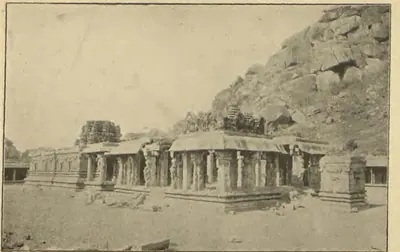 "Achyuta Raya's Temple" (Longhurst, Hampi Ruins, 3rd ed. 1933, fig. 49, p. 106 (PDF p. 120))పాత ఫోటో · 1933
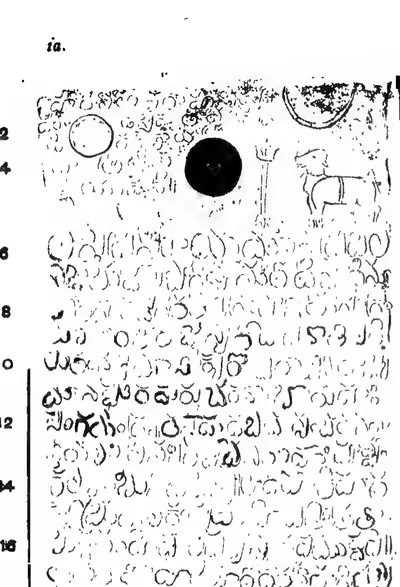 "Bitragunta Grant of Samgama II.—Saka-Samvat 1278", plate i a (Epigraphia Indica III, plate following p. 24 (PDF p. 50))శాసన ప్రతి · 1895
 "Bitragunta Grant of Samgama II.—Saka-Samvat 1278", plate i b (Epigraphia Indica III, plate following p. 24 (PDF p. 50))శాసన ప్రతి · 1895
 "Bitragunta Grant of Samgama II.—Saka-Samvat 1278", plate ii a (Epigraphia Indica III, plate following p. 24 (PDF p. 50))శాసన ప్రతి · 1895
 "Bitragunta Grant of Samgama II.—Saka-Samvat 1278", plate ii b (Epigraphia Indica III, plate following p. 24 (PDF p. 51))శాసన ప్రతి · 1895
 "Bitragunta Grant of Samgama II.—Saka-Samvat 1278", plate iii a (Epigraphia Indica III, plate following p. 24 (PDF p. 51))శాసన ప్రతి · 1895
 "Bitragunta Grant of Samgama II.—Saka-Samvat 1278", plate iii b (Epigraphia Indica III, plate following p. 24 (PDF p. 51))శాసన ప్రతి · 1895
 "Bitragunta Grant of Samgama II.—Saka-Samvat 1278", plate iv a (Epigraphia Indica III, plate following p. 24 (PDF p. 58))శాసన ప్రతి · 1895
 "Bitragunta Grant of Samgama II.—Saka-Samvat 1278", plate iv b (Epigraphia Indica III, plate following p. 24 (PDF p. 58))శాసన ప్రతి · 1895
 "Bitragunta Grant of Samgama II.—Saka-Samvat 1278", plate v (Epigraphia Indica III, plate following p. 24 (PDF p. 58))శాసన ప్రతి · 1895
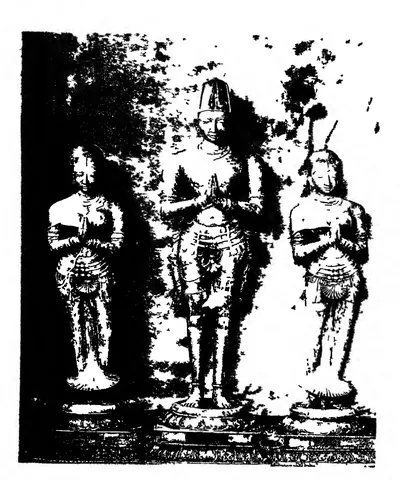 "Chinnadevi", "Krishnaraya-Maharaya" and "Tirumaladevi", copper statues in the Tirumala temple (ASI Annual Report 1911-12, plate LXXVI, figs. 1-3 (PDF p. 354))పాత ఫోటో · 1915
అన్నీ చూపించు (60)
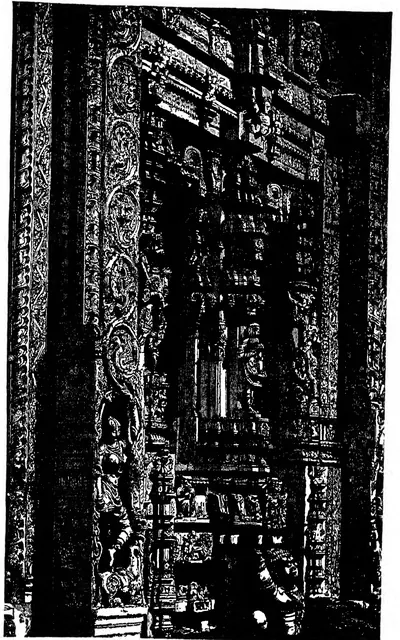 "Entrance through Gopuram at Tadpatri" (Fergusson, rev. 1910, Vol. I, woodcut 237, p. 405 (PDF p. 452))రేఖాచిత్రం · 1910
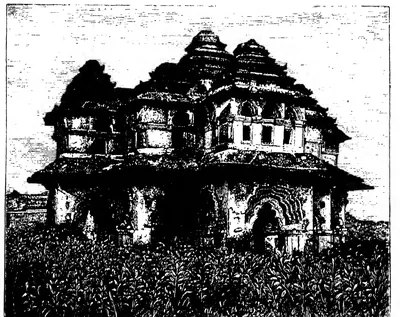 "Garden Pavilion at Vijayanagar" (Fergusson, rev. 1910, Vol. I, woodcut 243, p. 417 (PDF p. 464))రేఖాచిత్రం · 1910
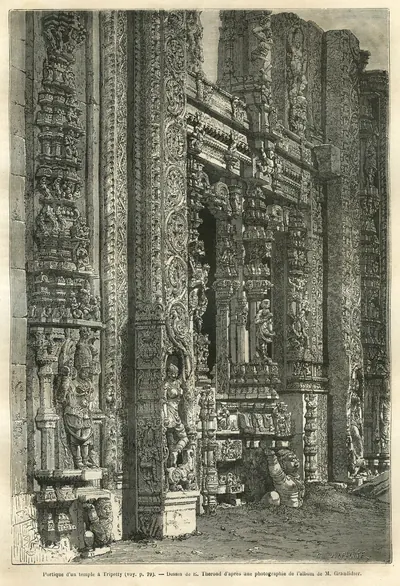 "Gate of the temple at Tripetty", wood engraving by E. Therond, about 1878రేఖాచిత్రం · 1878
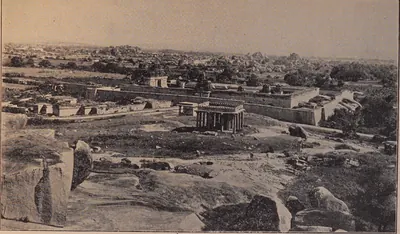 "General view of Krishnapuram showing the Krishna Temple in a high walled enclosure", Hampi (Madras Archaeological Report 1916-17, plate X (PDF p. 249))పాత ఫోటో · 1917
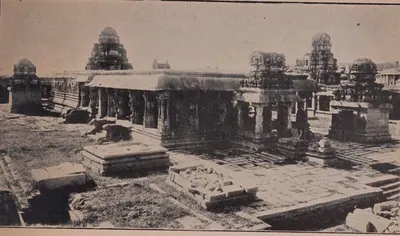 "General view of the Krishna Temple at Krishnapuram", Hampi (Madras Archaeological Report 1916-17, plate XI-a (PDF p. 251))పాత ఫోటో · 1917
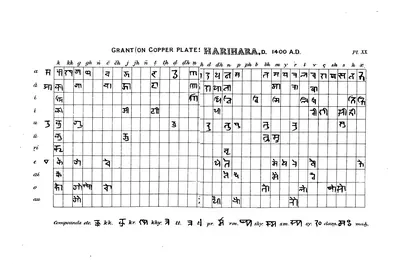 "Grant (on copper plates) of Harihara, d. 1400 A.D." (Burnell, Elements of South-Indian Palaeography, 1878, Pl. XX)పుస్తక చిత్రపటం · 1878
 "Hampi Ruins from Hemakutam Hill" (Longhurst, Hampi Ruins, 3rd ed. 1933, fig. 1, frontispiece (PDF p. 14))పాత ఫోటో · 1933
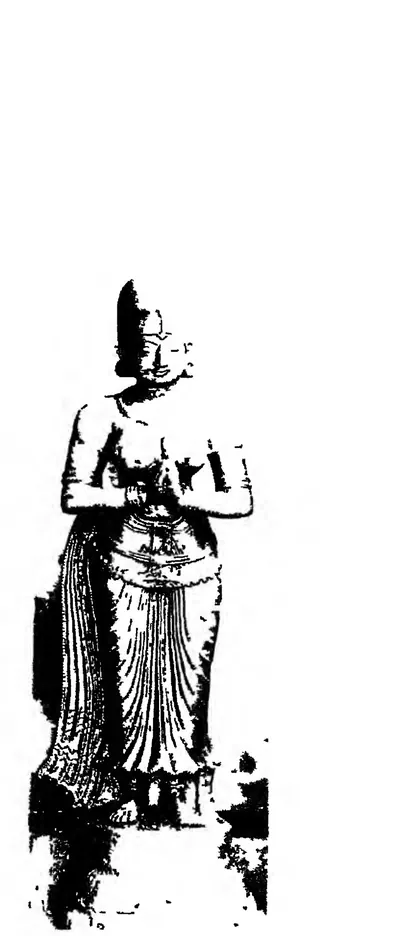 "His queen, perhaps Vengalamba", unlabelled stone image in the Tirumala temple (ASI Annual Report 1911-12, plate LXXVI, fig. 6 (PDF p. 354))పాత ఫోటో · 1915
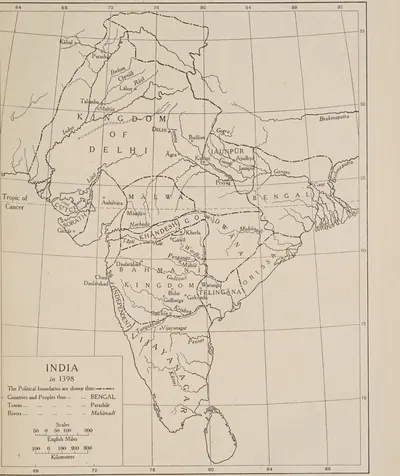 "India in 1398", showing Telingana between the Bahmani kingdom, Orissa and Vijayanagar (The Cambridge History of India, Vol. III, Map 4, between pp. 192 and 193, PDF p. 235 of the archive.org scan cambridgehistory03wols)పటం · 1928
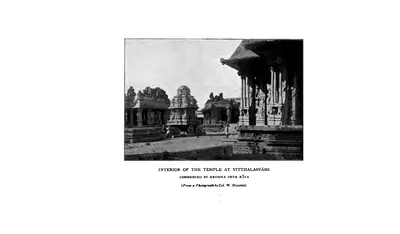 "Interior of the Temple at Vitthalasvami, commenced by Krishna Deva Raya" (from a photograph by Col. W. Hooper) (Sewell 1900, PDF p. 161)పాత ఫోటో · 1900
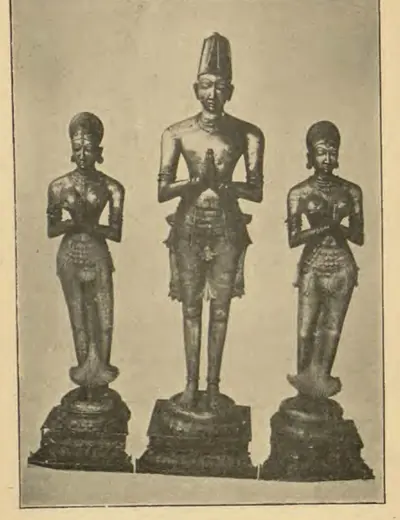 "Metal images of Krishna Raya and his two queens, Tirupati Temple, Chittoor District" (Longhurst, Hampi Ruins, 3rd ed. 1933, fig. 14, p. 42 (PDF p. 56))పాత ఫోటో · 1933
 "Plan of the ground floor of Chandragiri Palace (From Drawings by R. F. Chisholm)" (Fergusson, rev. 1910, Vol. I, woodcut 245, p. 418 (PDF p. 465))నిర్మాణ నక్షా · 1910
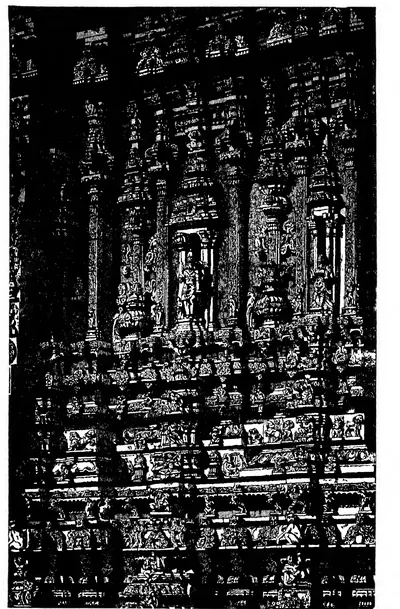 "Portion of Gopuram at Tadpatri" (Fergusson, rev. 1910, Vol. I, woodcut 238, p. 406 (PDF p. 453))రేఖాచిత్రం · 1910
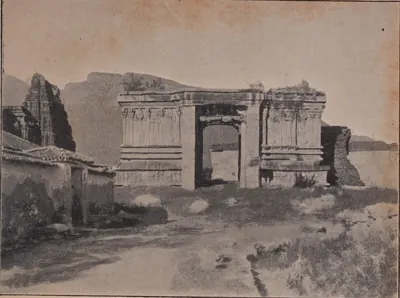 "Raghunayaka Temple, Eastern Gateway", Udayagiri (Madras Archaeological Report 1916-17, plate II-a (PDF p. 233))పాత ఫోటో · 1917
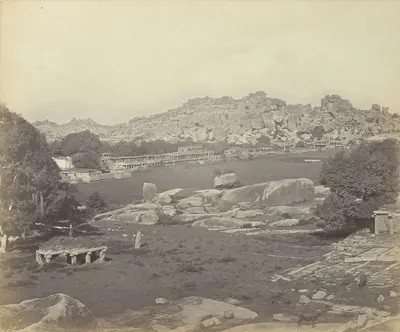 "Ruins of Vijianuggur": the market street in front of the Virupaksha temple (Hampi Bazaar), photographed by Edmund David Lyon about 1868పాత ఫోటో · 1868
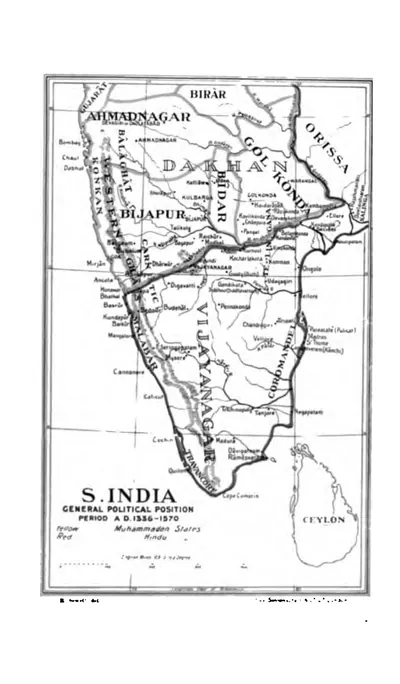 "S. India, General Political Position, Period A.D. 1336-1570" (Sewell 1900, to face p. 1 (PDF p. 38))పటం · 1900
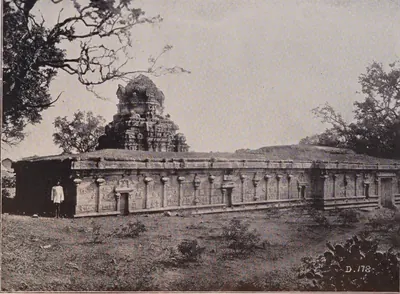 "Siva temple at Penukonda, Anantapur district" (Madras Archaeological Report 1915-16, plate V (b) (PDF p. 165 of the bound volume 31761123499139))పాత ఫోటో · 1916
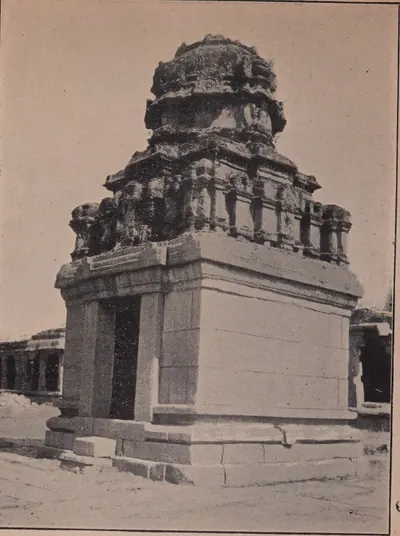 "Small attendant shrine with inscriptions at the Krishna Temple at Krishnapuram" (Madras Archaeological Report 1916-17, plate XII-b (PDF p. 253))పాత ఫోటో · 1917
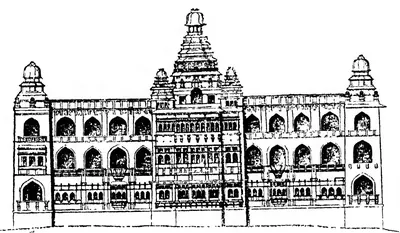 "South Elevation of Chandragiri Palace" (Fergusson, History of Indian and Eastern Architecture, rev. 1910, Vol. I, woodcut 244, p. 418 (PDF p. 465))రేఖాచిత్రం · 1910
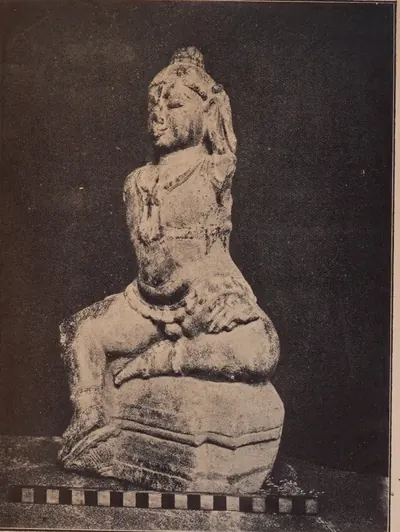 "Stone image of Balakrishna from the Krishna temple at Krishnapuram" (Madras Archaeological Report 1916-17, plate XII-a (PDF p. 253))పాత ఫోటో · 1917
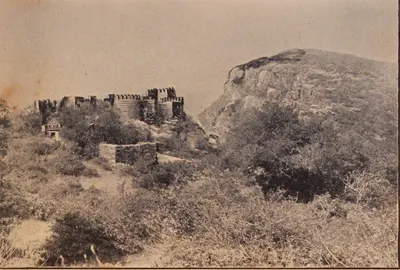 "The Citadel in Udayagiri Fort" (Madras Archaeological Report 1916-17, plate I-b (PDF p. 231))పాత ఫోటో · 1917
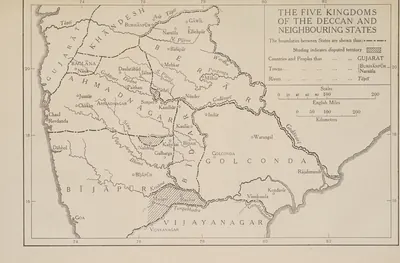 "The Five Kingdoms of the Deccan and Neighbouring States", with Golconda holding Telingana from Warangal to Rajahmundry and Kondavir (The Cambridge History of India, Vol. III (1928), Map 6)పటం · 1928
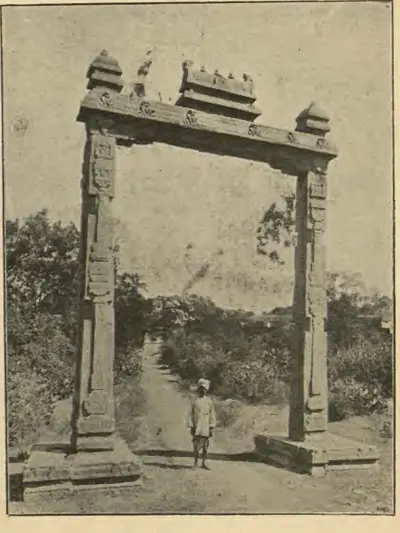 "The King's Balance" (Longhurst, Hampi Ruins, 3rd ed. 1933, fig. 13, p. 40 (PDF p. 54))పాత ఫోటో · 1933
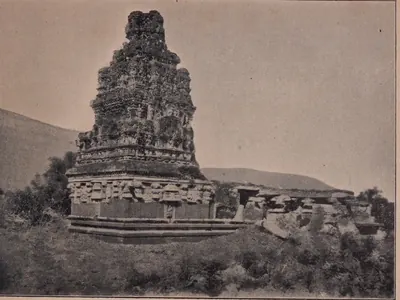 "The Krishna Temple at Udayagiri" (Madras Archaeological Report 1916-17, plate IV-a (PDF p. 237))పాత ఫోటో · 1917
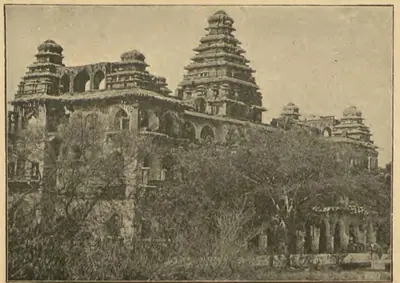 "The Palace at Chandragiri" (A. H. Longhurst, Hampi Ruins Described and Illustrated, 3rd ed. 1933, fig. 6, p. 16 (PDF p. 30))పాత ఫోటో · 1933
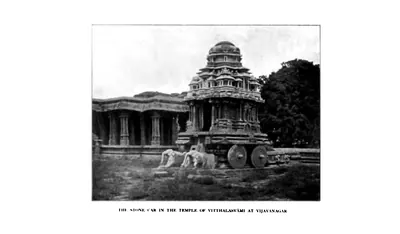 "The Stone Car in the Temple of Vitthalasvami at Vijayanagar" (Sewell 1900, PDF p. 220)పాత ఫోటో · 1900
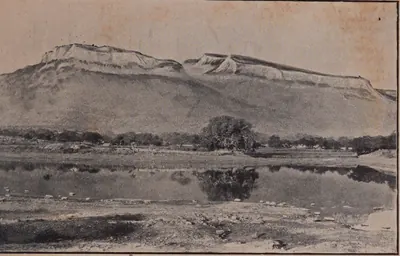 "Udayagiri in the Nellore District" (Madras Archaeological Report 1916-17, plate I-a (PDF p. 231 of 31761123499139))పాత ఫోటో · 1917
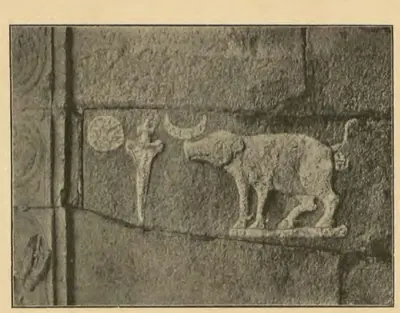 "Varaha or Boar crest of the Vijayanagar Kings" (Longhurst, Hampi Ruins, 3rd ed. 1933, fig. 5, p. 11 (PDF p. 25))పాత ఫోటో · 1933
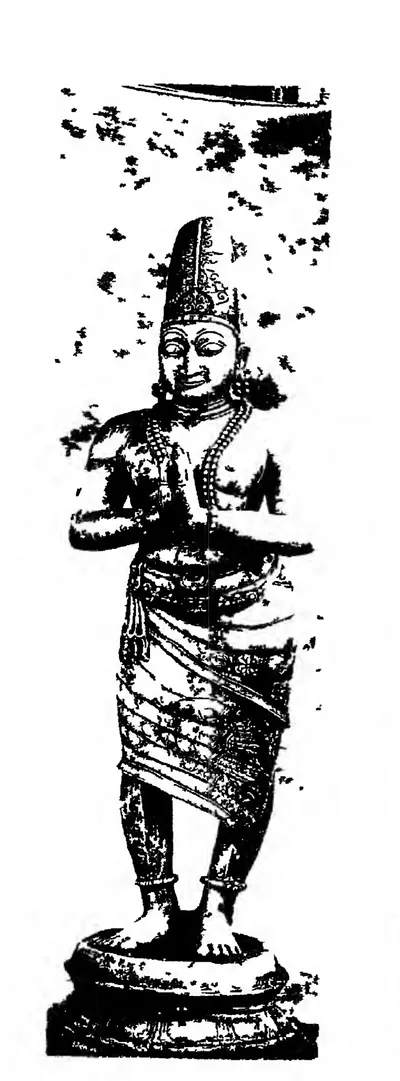 "Venkatapatiraya", labelled copper statue at the entrance of the Tirumala temple (ASI Annual Report 1911-12, plate LXXVI, fig. 4 (PDF p. 354))పాత ఫోటో · 1915
 "View of City Gateway, Vijayanagar" (Fergusson, rev. 1910, Vol. I, woodcut 168, p. 311 (PDF p. 352))రేఖాచిత్రం · 1910
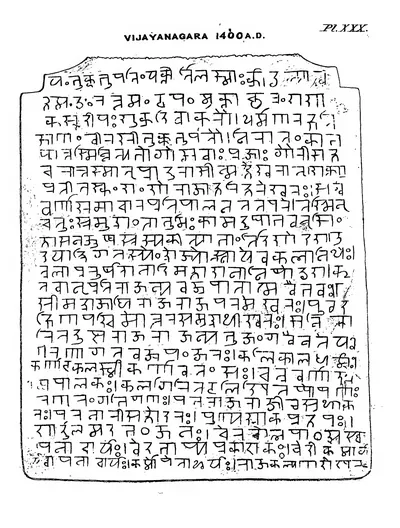 "Vijayanagara 1400 A.D." (Burnell, Elements of South-Indian Palaeography, 1878, Pl. XXX)పుస్తక చిత్రపటం · 1878
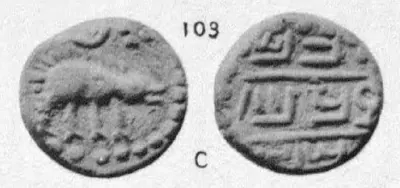 Copper coin No. 103: boar facing right, sword and sun above; legend Chalam Triramala taka (Elliot, Coins of Southern India, 1886, Plate III, No. 103 (PDF p. 191 of scan 00074712bsb))నాణెం · 1886
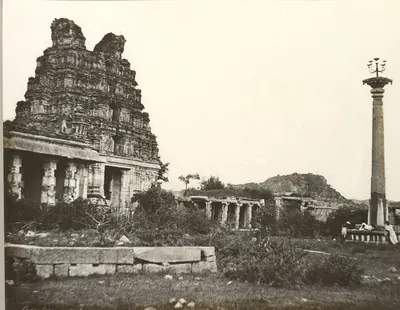 Eastern gopura and lamp column of the Vitthala temple, Hampi, photographed by Alexander Greenlaw in 1856పాత ఫోటో · 1856
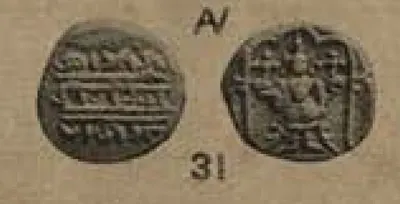 Gold coin attributed to Rama Raja, the "Gandikota pagoda": Vishnu standing under a canopy (V. A. Smith, Catalogue of the Coins in the Indian Museum, Vol. I, 1906, plate XXX, 31 (PDF p. 427))నాణెం · 1906
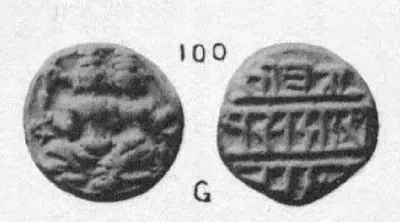 Gold coin No. 100: Siva and Parvati seated; legend Sri Pratapa Sadasiva Raya (Elliot, Coins of Southern India, 1886, Plate III, No. 100 (PDF p. 191 of scan 00074712bsb))నాణెం · 1886
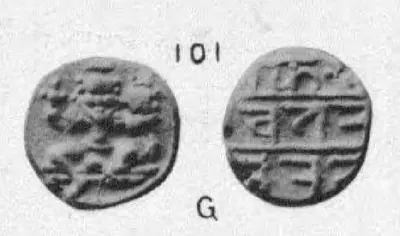 Gold coin No. 101: Siva and Parvati seated; legend possibly Sri Rama Triramala Raya (Elliot, Coins of Southern India, 1886, Plate III, No. 101 (PDF p. 191 of scan 00074712bsb))నాణెం · 1886
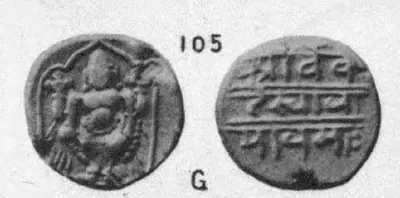 Gold coin No. 105: Vishnu; legend Sri Venkatesvaraya namah (Elliot, Coins of Southern India, 1886, Plate III, No. 105 (PDF p. 191 of scan 00074712bsb))నాణెం · 1886
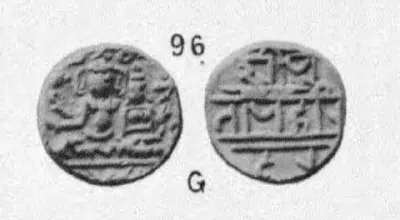 Gold coin No. 96: Siva and Parvati seated; Nagari legend Sri Pratapa Harihara (Elliot, Coins of Southern India, 1886, Plate III, No. 96 (PDF p. 191 of scan 00074712bsb))నాణెం · 1886
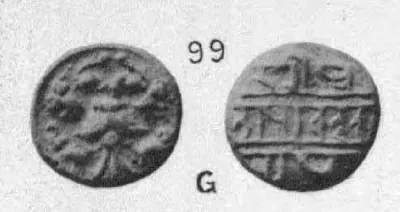 Gold coin No. 99: two-headed Gandabherunda bird holding elephants; legend Sri Pratapa Achyuta Raya (Elliot, Coins of Southern India, 1886, Plate III, No. 99 (PDF p. 191 of scan 00074712bsb))నాణెం · 1886
 Gold half-pagoda of Krishnadeva Raya: god and goddess seated (V. A. Smith, Catalogue of the Coins in the Indian Museum, Vol. I, 1906, plate XXX, 27 (PDF p. 427))నాణెం · 1906
 Gold half-pagoda of Krishnadeva Raya: seated Vishnu with shell (V. A. Smith, Catalogue of the Coins in the Indian Museum, Vol. I, 1906, plate XXX, 28 (PDF p. 427))నాణెం · 1906
 Grantha of the 13th-15th centuries: Srirangam inscription of Sundara Pandya and Vijayanagara grants of 1383 and 1424 (Ojha 1918, Plate 56)పుస్తక చిత్రపటం · 1918
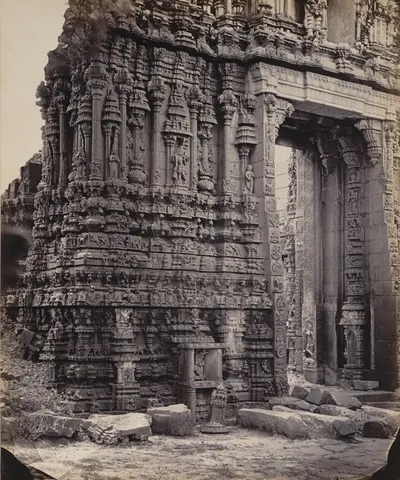 Sculptured base of the south gopura of the Ramalingesvara temple, Tadpatri, photographed by Edmund David Lyon about 1868పాత ఫోటో · 1868
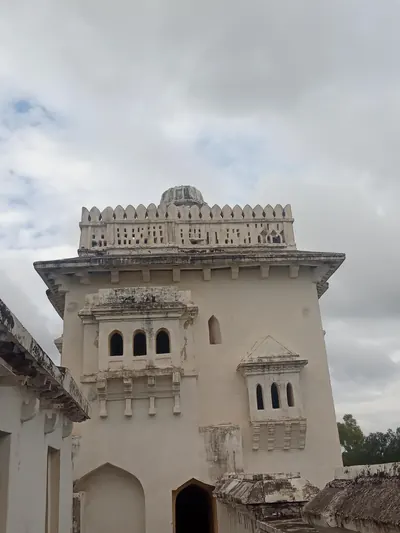 The Gagan Mahal, Penukonda (2019)ఫోటో · 2019
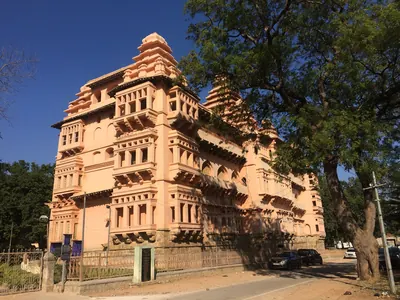 The Raja Mahal at Chandragiri (2017)ఫోటో · 2017
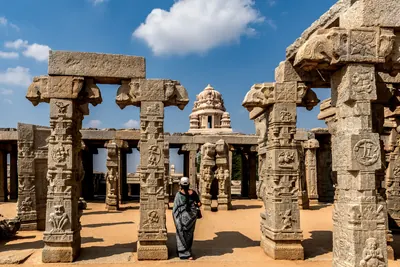 The unfinished kalyana-mandapa of the Virabhadra temple, Lepakshi (2020)ఫోటో · 2020
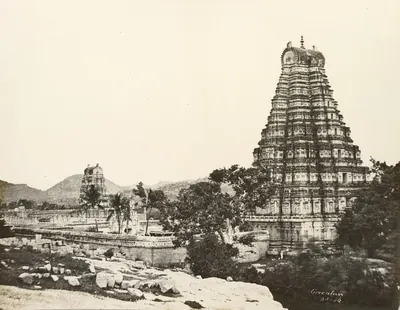 Virupaksha temple complex, Hampi, photographed by Alexander Greenlaw in 1856పాత ఫోటో · 1856
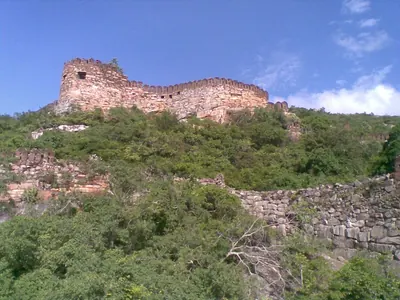 Walls and bastion of the Udayagiri fort on the hill above Udayagiri, Nellore districtఫోటో · 2012
సంబంధిత
వ్యక్తులు
మొదటి హరిహరరాయలు
సుమారు క్రీ.శ. 1336–1355
విజయనగరపు మొదటి పాలకుడు, సంగముని ఐదుగురు కొడుకులలో పెద్దవాడు. తన సోదరుడు బుక్కరాయలతో కలిసి ఆయన దాదాపు 1336లో తుంగభద్ర మీద రాజ్యాన్ని స్థాపించాడు. 1340 నాటి ఆయన తేదీ ఉన్న మొదటి శాసనం ఆయనను మహామండలేశ్వరుడు, 'గొప్ప ప్రభువు' అని మాత్రమే అంటుంది. ఆయన, ఆయన సోదరులు వరంగల్ కాకతీయుల సేవ నుంచి వచ్చారా, కంపిలి రాయల సేవ నుంచి వచ్చారా, హొయసలుల సేవ నుంచి వచ్చారా అనే విషయంపై వివాదం ఉంది. తెలుగు దేశంలో విజయనగరపు మొదటి స్థావరాలైన ఉదయగిరి, నెల్లూరులను ఆయన సోదరుడు కంపుడు పాలించాడు.
మొదటి బుక్కరాయలు
సుమారు క్రీ.శ. 1355–1377
విజయనగరపు రెండవ పాలకుడు, మొదటి హరిహరుని సోదరుడు, వారసుడు. ఆయన సరిహద్దు రాజ్యాన్ని సామ్రాజ్యంగా మార్చాడు. రాయచూరు దోఆబ్ కోసం ఆయన బహమనీ సుల్తానులు మొదటి ముహమ్మద్ షా, ముజాహిద్లతో పోరాడాడు. ఆయన కొడుకు కుమార కంపణుడు మదురై సుల్తానత్ను నాశనం చేశాడు. ఆంధ్రులను ఉదయగిరి వైపు కొండలలోకి తరిమానని ఆయన శాసనాలు గొప్పలు చెబుతాయి. 1364లో ఆయన మంత్రి అనంతపురం ప్రాంతంలో బుక్కరాయసముద్రం చెరువును కట్టించాడు. సూయెల్ 1900లో ఆయన పాలనను 1343–1379గా, 1932లో 1355–1377గా చెప్పారు.
రెండవ దేవరాయలు (ప్రౌఢ దేవరాయలు)
క్రీ.శ. 1422–1446
1422 లేదా 1423 నుంచి 1446 వరకు విజయనగర రాజు, మొదటి వంశంలో గొప్ప పాలకుడు. ఆయన తన సైన్యంలో ముస్లిం విలుకాండ్రను చేర్చుకున్నాడు. 1443లో తన ప్రాణాలపై జరిగిన ప్రయత్నం నుంచి బయటపడ్డాడు. పర్షియన్ రాయబారి అబ్దుర్ రజాక్ను స్వీకరించాడు. ఆయన శాసనాలు గోదావరి డెల్టా, గుంటూరు, నెల్లూరు ప్రాంతాల వరకు చేరాయి. తెలుగు కవి వల్లభరాయుడు ఆయన తరఫున వినుకొండను పాలించాడు. ఆయన ముత్యాల శాలలో శ్రీనాథుడికి కనకాభిషేకం జరిగింది. ఆయన మరణం తర్వాత బహమనీ సుల్తాన్, ఒరిస్సా గజపతి కలిసి ఆయన రాజధానిని ముట్టడించారు.
సాళువ నరసింహరాయలు
సుమారు క్రీ.శ. 1485–1492
చంద్రగిరి సాళువ కుటుంబ నాయకుడు. ఆయన ఒరిస్సా గజపతులను తీరం వెంట రాజమహేంద్రవరం వైపు వెనక్కి తరిమి, 1470లలో అక్కడ బహమనీ సుల్తాన్ను ఎదుర్కొన్నాడు. 1485–86లో ఆయన చివరి సంగమ రాజు నుంచి విజయనగర సింహాసనాన్ని తీసుకుని, రెండవ వంశమైన సాళువ వంశాన్ని స్థాపించాడు. ఆయన 1492–93లో చనిపోయి, తన చిన్న కొడుకులను తన సేనాపతి నరస నాయకుని సంరక్షణలో వదిలాడు. ఆయన ఒరిస్సా నుంచి ఉదయగిరిని తిరిగి పొందాడా అనేది వివాదాస్పదం.
శ్రీకృష్ణదేవరాయలు
క్రీ.శ. 1509–1529
1509 నుంచి 1529 వరకు విజయనగర రాజు, తుళువ వంశీయుడు, ఆ సామ్రాజ్యపు అత్యంత ప్రసిద్ధ పాలకుడు. 1512–16లో ఆయన గజపతి ప్రతాపరుద్రుని నుంచి ఉదయగిరి, కొండవీడు, కొండపల్లిలను తీసుకున్నాడు. ఆయన సింహాచలం వరకు దండెత్తి, గజపతి కూతురిని పెళ్లి చేసుకున్నాడు. 1520లో రాయచూరు దగ్గర ఆదిల్ షాను ఓడించాడు. ఆయన తెలుగు కావ్యం ఆముక్తమాల్యద రాశాడు. అందులో దేశ భాషలలో తెలుగు ఉత్తమమైనదని దేవుడు చెబుతాడు. అల్లసాని పెద్దన, నంది తిమ్మనలు ఉన్న ఆయన ఆస్థానం తెలుగు ప్రబంధ (దీర్ఘ కథా కావ్యం) యుగాన్ని మొదలుపెట్టింది.
అచ్యుతదేవరాయలు
క్రీ.శ. 1529–1542
1529 లేదా 1530 నుంచి 1542 వరకు విజయనగర రాజు. ఆయన శ్రీకృష్ణదేవరాయలకు సవతి సోదరుడు, వారసుడు. చంద్రగిరిలో చాలా సంవత్సరాలు నిర్బంధంలో ఉన్న తర్వాత ఆయనకు తిరుపతిలో పట్టాభిషేకం జరిగింది. ఆయన రాయచూరు, ముద్గల్లను బీజాపూర్కు కోల్పోయాడు. అదే సమయంలో గోల్కొండ సుల్తాన్ కులీ కొండవీడుపై దాడి చేశాడు. ఆయన ఆస్థాన కావ్యం ఆయనకు దక్షిణ దండయాత్రను, రాయచూరులో విజయాన్ని ఆపాదిస్తుంది. ఆయన రాజధానిలో నివసించిన నూనిజ్ ఆయనను నిరంకుశుడని, ఆయన ఇద్దరు బావమరుదులైన సాళకం తిరుమలల మాట మీద నడిచేవాడని అన్నారు. ఆయన మరణం తర్వాత వారి సంరక్షక పాలన అంతర్యుద్ధానికి దారి తీసింది.
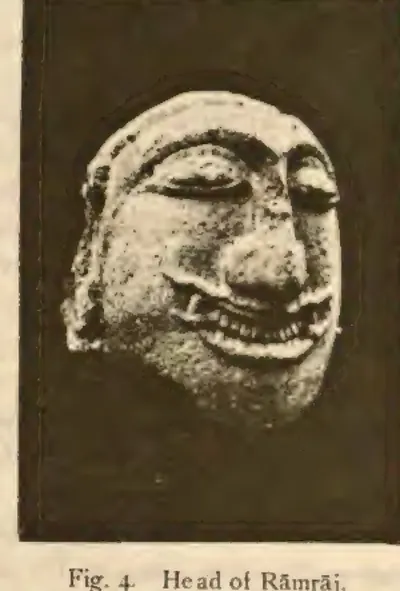
అళియ రామరాయలు
క్రీ.శ. 1542–1565
అరవీటి కుటుంబ నాయకుడు, శ్రీకృష్ణదేవరాయల అల్లుడు (అళియ). అచ్యుతరాయల మరణం తర్వాత ఆయన, ఆయన సోదరులు తిరుమల, వేంకటాద్రి కలిసి సంరక్షక పాలకుడు సాళకం తిమ్మను పడగొట్టారు. ఆయన 1542లో సదాశివుడిని సింహాసనంపై కూర్చోబెట్టి, 1565 వరకు ఆయన పేరు మీద సామ్రాజ్యాన్ని పాలించాడు. ఆయన కుటుంబ భూములు కర్నూలు, ఆదోని, గుత్తి చుట్టూ ఉండేవి. ఆయన పాలకులు కొండవీడును పాలించారు. ఆయన దక్కన్ సుల్తానులను ఒకరిపై ఒకరిని ఉసిగొల్పాడు. చివరకు వారంతా ఆయనకు వ్యతిరేకంగా ఏకమయ్యారు. 1565 జనవరి యుద్ధంలో ఆయనను పట్టుకుని తల నరికారు.
తిరుమలదేవరాయలు (ఆరవీడు)
సుమారు క్రీ.శ. 1569–1572
అళియ రామరాయల సోదరుడు, విజయనగర నాల్గవ వంశమైన ఆరవీటి వంశపు మొదటి రాజు. 1565 యుద్ధంలో ఆయన సైన్యంలోని ఒక పక్షానికి నాయకత్వం వహించి, అక్కడ ఒక కన్ను కోల్పోయాడు. ఆయన రాజు సదాశివునితో, ఖజానాతో పెనుకొండకు పారిపోయాడు. అది రాజధాని అయింది. దాదాపు 1569–70లో ఆయన సింహాసనం ఎక్కి, సామ్రాజ్యాన్ని మూడు రాజప్రతినిధి ప్రాంతాలుగా విభజించాడు. తెలుగు ప్రాంతం ఉదయగిరి, పెనుకొండలలో ఆయన కొడుకు శ్రీరంగని కింద ఉంది. తెలుగు కావ్యం వసుచరిత్రము ఆయనకు అంకితం. హెరాస్ ఆయన మరణాన్ని 1572 నాటిదిగా, సూయెల్ 1578 నాటిదిగా చెబుతారు.
రెండవ వేంకటపతిరాయలు
క్రీ.శ. 1586–1614
1586 నుంచి 1614 వరకు విజయనగర రాజు, తిరుమలరాయల చిన్న కొడుకు, సామ్రాజ్యపు చివరి బలమైన పాలకుడు. చిన్న వయసులోని తన అన్న కొడుకులను కాదని ఆయనను రాజుగా ఎన్నుకున్నారు. ఆయన మొదట పెనుకొండ నుంచి, తర్వాత చంద్రగిరి నుంచి, 1606 నుంచి వెల్లూరు నుంచి పాలించాడు. తెలుగు దేశం కోసం ఆయన గోల్కొండతో పోరాడాడు. కృష్ణా నదిని సరిహద్దుగా చేసి శాంతి కుదిరిందని తెలుగు రామరాజీయము చెబుతుంది. జెసూట్ మిషనరీలు ఆయన ఆస్థానంలో నివసించారు. తెనాలి రామకృష్ణుడు, తరిగొప్పుల మల్లనలను ఆయన కవులలో లెక్కిస్తారు. 1614లో చంద్రగిరిలో ఆయన మరణం తర్వాత వారసత్వ యుద్ధం వచ్చింది.
అల్లసాని పెద్దన
శ్రీకృష్ణదేవరాయల ఆస్థానంలో ప్రధాన తెలుగు కవి, అష్టదిగ్గజాల (ఆస్థానంలోని ఎనిమిది మంది కవులు)లో మొదటివాడు. ఆయనను ఆంధ్రకవితాపితామహ, 'తెలుగు కవిత్వానికి తాత' అని పిలిచారు. మార్కండేయ పురాణంలోని ఒక కథను సంపన్నమైన వర్ణనలతో తిరిగి చెప్పి, రాజుకు అంకితం ఇచ్చిన ఆయన స్వారోచిష మనుచరిత్రము తెలుగు ప్రబంధానికి (దీర్ఘ కథా కావ్యం) నమూనా అయింది. రాజు ఆయనను కవిగండపెండేరంతో, కోకట గ్రామంతో సత్కరించాడు. రాజు మరణంపై పెద్దన ఒక ప్రసిద్ధ పద్యంలో శోకించాడు.
అయ్యలరాజు రామభద్రుడు
కడప జిల్లాలోని ఒంటిమిట్టకు చెందిన తెలుగు కవి. శ్రీకృష్ణదేవరాయల ఆస్థానంలోని ఎనిమిది మంది కవులలో ఆయనను లెక్కిస్తారు. పురాణ కథల సంకలనం సకలకథాసార సంగ్రహము రాయమని రాజు ఆయనను కోరాడు, కానీ అది పూర్తి కాకముందే చనిపోయాడు. తర్వాత రామభద్రుడు రాముడిపై రాసిన తన కావ్యం రామాభ్యుదయమును గొబ్బూరి నరసరాజుకు అంకితం ఇచ్చాడు. ఎక్కువ మంది పిల్లలు ఉన్నందుకు ఆయనకు పిల్లల రామభద్రయ్య అనే ముద్దుపేరు వచ్చింది.
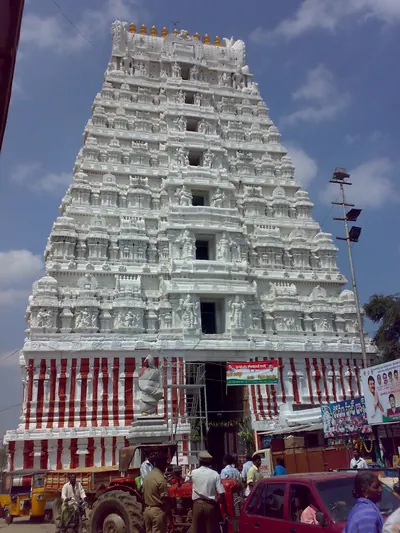
ధూర్జటి
శ్రీకాళహస్తికి చెందిన తెలుగు శైవ కవి. శ్రీకృష్ణదేవరాయల ఆస్థానంలోని ఎనిమిది మంది కవుల (అష్టదిగ్గజాలు)లో ఆయనను లెక్కిస్తారు. శ్రీకాళహస్తి పుణ్యక్షేత్రంపై కావ్యం శ్రీకాళహస్తి మాహాత్మ్యము, అక్కడి దేవునిపై భక్తి పద్యాల సమూహం శ్రీకాళహస్తీశ్వర శతకము ఆయన రాశాడు. ఆయన శైలి మాధుర్యం గురించి రాజు అడిగిన ప్రశ్నపై ఒక పద్యం నుంచి ఆయన విచ్చలవిడి జీవితం గురించిన కథలు వచ్చాయి.
జక్కన
15వ శతాబ్దం మొదటి కాలపు తెలుగు కవి, ఉజ్జయిని పురాణ రాజు విక్రమాదిత్యుని కథలైన విక్రమార్క చరిత్రము రచయిత. విజయనగర రాజు రెండవ దేవరాయల ఆస్థానంలో ఆదరణ పొందిన కుటుంబానికి చెందిన వెన్నెలకంటి సిద్ధమంత్రికి ఆయన దానిని అంకితం ఇచ్చాడు. నన్నెచోడుని శైలిని అనుకరించిన తర్వాతి కవులలో కె. సీతారామయ్య ఆయనను లెక్కించారు.
మాదయగారి మల్లన
కొండవీడుకు చెందిన తెలుగు శైవ కవి, శ్రీకృష్ణదేవరాయల ఆస్థానంలోని ఎనిమిది మంది కవులలో ఒకరిగా లెక్కించబడినవాడు. ఆయన కథా కావ్యం రాజశేఖర చరిత్రము రాజు మంత్రి సాళువ తిమ్మరసు మేనల్లుడు (nephew), అల్లుడు నాదెండ్ల అప్పకు అంకితం. దాని ప్రారంభం మంత్రి కుటుంబాన్ని గుర్తిస్తుంది. సుల్తానులపై విజయం తర్వాత రాయవాచకము ఆయనను రాజుతో పాటు ఉంచుతుంది.
మోహనాంగి
విజయనగర శ్రీకృష్ణదేవరాయల కూతురు. తెలుగు సంప్రదాయంలో ఆమెను కవయిత్రిగా, కవిత్వ విమర్శకురాలిగా గుర్తుంచుకుంటారు. ఇప్పుడు అందుబాటులో లేని ప్రేమ కావ్యం మరీచి పరిణయము ఆమె రాసిందని చెబుతారు. బజారులో శంకుసాల నృసింహుని పద్యాలు కొని ఆయనను రాజు దృష్టికి తెచ్చిన రాకుమారిగా, తెనాలి రామకృష్ణుని హాస్యానికి గురైనవారిగా ఆస్థాన కథలు ఆమెను చెబుతాయి. ఆమె గురించి తెలిసినదంతా ఈ కథల నుంచే వస్తుంది.
నాచన సోమన
14వ శతాబ్దంలో విజయనగర మొదటి బుక్కరాయల ఆస్థానంలోని తెలుగు కవి, కృష్ణుని తర్వాతి జీవితాన్ని తిరిగి చెప్పే ఉత్తర హరివంశము రచయిత. విమర్శకులు ఆయనను తెలుగు మహాభారతపు ముగ్గురు కవులతో సమానంగా ఉంచారు. బుక్కరాయలు పోషించినట్లు తెలిసిన ఏకైక దేశభాషా కవి ఆయనే అని ఎన్. వెంకటరమణయ్య ఎత్తి చూపారు.
నంది తిమ్మన (ముక్కు తిమ్మన)
శ్రీకృష్ణదేవరాయల ఆస్థానంలోని తెలుగు కవి, అష్టదిగ్గజాలలో (ఎనిమిది మంది గొప్ప కవులు) ఒకరు. ఆయనను ప్రజలు ముక్కు తిమ్మన అని పిలిచారు. ఆయన నియోగి బ్రాహ్మణుడు, శైవుడు, కవి మలయమారుతుని మేనల్లుడు (nephew). ఆయన రాజుకు అంకితమైన, సత్యభామ కోసం కృష్ణుడు స్వర్గం నుంచి పారిజాత వృక్షాన్ని తెచ్చిన కథ అయిన పారిజాతాపహరణము రాశాడు. దాని పరిచయం నరస నాయకుడు, శ్రీకృష్ణదేవరాయల జీవితాలకు ఆధారం. రాజును ఒక రాణితో రాజీ పడేలా చేయడానికి అది రాయబడిందని సంప్రదాయం చెబుతుంది.
పిల్లలమర్రి పినవీరభద్రుడు
15వ శతాబ్దం చివరి భాగపు తెలుగు కవి. విజయనగర రెండవ వంశపు మొదటి రాజు అయిన సాళువ నరసింహుని ఆస్థానంలో ఉన్నాడు. ఆ రాజుకు అంకితం ఇచ్చిన ఆయన జైమిని భారతము సాళువ కుటుంబ యుద్ధాల కథనంతో మొదలవుతుంది. ఆయన చుట్టూ చాలా కథలు పుట్టాయి: బాలుడిగా ఆయన శ్రీనాథుడిని నోరు మూయించాడని, సరస్వతీ దేవి ఒకే రాత్రిలో ఆయన కావ్యాన్ని రాసిందని.
రామరాజభూషణుడు (భట్టుమూర్తి)
16వ శతాబ్దం చివరి భాగపు తెలుగు కవి, వసుచరిత్రము రచయిత. ద్వంద్వార్థాలతో నిండిన పద్యాలలో చెప్పిన వసు రాజు పెళ్లి కథ అది. అది తర్వాతి కవులకు నమూనా అయింది. ఆయన బిరుదుకు 'రామరాజు ఆస్థానానికి ఆభరణం' అని అర్థం. ఆయన సొంత పేరు భట్టుమూర్తి. ఆయన వసుచరిత్రమును తిరుమలరాయలకు, కావ్యశాస్త్ర గ్రంథం నరసభూపాలీయమును రామరాయల సోదరుని లేదా సోదరి కొడుకుకు అంకితం ఇచ్చాడు. ఆ రెండు పేర్లు ఒకే కవికి చెందినవా అని పండితులు చాలా కాలం వాదించుకున్నారు.
సాళువ తిమ్మరసు (అప్పాజీ)
విజయనగర రాజులు వీర నరసింహుడు, శ్రీకృష్ణదేవరాయల ప్రధాన మంత్రి. తెలుగు సంప్రదాయంలో తిమ్మరసు అని, అప్పాజీ, 'తండ్రి' అని ప్రసిద్ధుడు. ఆయన కృష్ణరాయలను కళ్లు పీకించడం నుంచి కాపాడి రాజుగా చేశాడని నూనిజ్ చెబుతాడు. ఆయన ఒరిస్సాపై దండయాత్రను నిర్వహించి, 1515లో కొండవీడును తీసుకుని, తన కుటుంబమైన నాదెండ్ల సోదరుల ద్వారా దానిని పాలించాడు. యువ రాకుమారునికి విషం పెట్టాడని అనుమానించి రాజు తర్వాత ఆయనను గుడ్డివానిగా చేసి బంధించాడని నూనిజ్ చెబుతాడు. తెలుగు సంప్రదాయం రాజును, ఆయన మంత్రిని చాలా కథలకు నాయకులుగా చేస్తుంది.
తరిగొప్పుల మల్లన
16వ శతాబ్దం చివర, 17వ శతాబ్దం మొదటి భాగపు తెలుగు కవి, కృష్ణుని కొడుకు చంద్రభానుని పెళ్లి కథ చంద్రభాను చరిత్రము రచయిత. ఆయన చంద్రగిరిలోని విజయనగర రాజు వేంకటపతిరాయల వర్గానికి చెందినవాడు. అక్కడ ఆయన అన్న దత్త మంత్రి ఒక మంత్రి.
తెనాలి రామకృష్ణుడు
తెలుగు కవి, పాండురంగ మాహాత్మ్యము రచయిత. సంప్రదాయం ఆయనను శ్రీకృష్ణదేవరాయల ఆస్థానపు అష్టదిగ్గజాలలో లెక్కిస్తుంది. విదూషకుడిగా ఆయన తెలుగు దేశమంతటా ప్రసిద్ధుడు. రికార్డు చాలా తక్కువ. ఆయన మొదట శైవుడిగా తెనాలి రామలింగ పేరుతో రాసి, తర్వాత వైష్ణవుడయ్యాడు. ఆయన పోషకుల, సమకాలికుల ఆధారాలు ఆయనను శ్రీకృష్ణదేవరాయల కాలంలో కాకుండా, 16వ శతాబ్దం చివరి భాగంలో ఆరవీటి రాజుల ఆస్థానంలో ఉంచుతాయి. ఆయన గురించి చెప్పే హాస్య కథలు జానపద కథలు.
వినుకొండ వల్లభరాయుడు
15వ శతాబ్దపు తెలుగు కవి, విజయనగర రాజు రెండవ దేవరాయల కింద వినుకొండ పాలకుడు. వరంగల్ వీధుల సజీవ పర్యటనను నాటకంగా చెప్పే క్రీడాభిరామము కర్తగా ఆయన పేరు చెబుతారు. మొదటి బుక్కరాయల కాలం నుంచి ఆయన కుటుంబం విజయనగర రాజులకు మంత్రులుగా, సేనానులుగా, రాజ రత్నాల భాండాగారికులుగా సేవ చేసింది. పి. టి. రాజు, కె. సీతారామయ్య దానికి బదులు క్రీడాభిరామమును శ్రీనాథునికి ఆపాదిస్తారు.
కట్టడాలు
పెనుకొండ కోట, గగన్ మహల్
క్రీ.శ. 1354
పెనుకొండ కొండ కోట, మైదానంలో దాని అర్ధవృత్తాకార గోడలు, దాని లోపల ఉన్న గగన్ మహల్ రాజభవనం, రామ, ఈశ్వర ఆలయాలు. ఉత్తర ద్వారం దగ్గర ఉన్న ఒక శాసనం, మొదటి బుక్కరాయల కొడుకు విరూపణ్ణ కాలంలో 1354 మార్చి 25న కోటను కట్టారని చెబుతుంది. 1576–77 నాటి మరో శాసనం, తిరుమలదేవరాయల కోసం చెన్నప్ప నాయుడు ఒక లోపలి కోట, ద్వారాలు, బురుజులు కట్టించాడని నమోదు చేస్తుంది. గగన్ మహల్, దాని మండపం హంపిలోని రాజభవనాల లాగే తోరణాలున్న 'ఇండో-సార్సెనిక్' శైలిలో ఉన్నాయి. రెండు ఆలయాలపై రామాయణ, పురాణ ఉబ్బెత్తు శిల్పాలు ఉన్నాయి.
శ్రీకాళహస్తీశ్వర ఆలయం, శ్రీకాళహస్తి
క్రీ.శ. 1516
శ్రీకాళహస్తి దక్షిణ కొండ పాదాల దగ్గర ఉన్న వాయు లింగ శివాలయం. దానిలో చోళ శాసనాలు ఉన్నాయి. 1516 నాటి ఒక తెలుగు శాసనం దానిలోని వంద స్తంభాల మండపాన్ని, పెద్ద గోపురాన్ని (ద్వార శిఖరాన్ని) శ్రీకృష్ణదేవరాయలకు ఆపాదిస్తుంది. చోళ రాజులు, శ్రీకృష్ణదేవరాయలు దీన్ని విస్తరించారని ఉత్తర ఆర్కాట్ మాన్యువల్ చెబుతుంది. ఫెర్గూసన్ పుస్తకాన్ని సవరించినవారు దాని వాయు లింగాన్ని దక్షిణ భారతదేశంలో శివుడి ఐదు ముఖ్య చిహ్నాలైన పంచలింగాలలో చేర్చారు.
వీరభద్ర ఆలయం, లేపాక్షి
క్రీ.శ. 1538
అనంతపురం జిల్లాలోని లేపాక్షిలో తక్కువ ఎత్తు రాతి కొండపై ఉన్న వీరభద్ర ఆలయం. దానికి స్తంభాల వసారాతో రెండు ప్రాకారాలు, పూర్తికాని కళ్యాణ మండపం (పెళ్లి మండపం), సుమారు అరవై చెక్కిన స్తంభాల పెద్ద మండపం ఉన్నాయి. ఆ మండపం పైకప్పును ఇతిహాసాల, పురాణాల చిత్రాలు కప్పి ఉన్నాయి. ప్రధాన ద్వారం దగ్గర ఉన్న శాసనం దీని నిర్మాణాన్ని 1538 నాటిదిగా చెబుతుంది. అచ్యుతరాయల పాలనలో 1533–1538 నాటి దాని శాసనాలు, దీన్ని కట్టించినవాడిగా పెనుగొండకు చెందిన విరూపణ్ణ పేరు చెబుతాయి. ఆయన శ్రీకృష్ణదేవరాయల ఖజానా అధికారి అని, రాజు ఆజ్ఞతో తన కళ్లు తానే పొడుచుకున్నాడని స్థానిక సంప్రదాయం చెబుతుంది. దాని దగ్గర ఒకే రాతితో చెక్కిన పెద్ద నంది ఉంది.
చంద్రగిరి కోట, రాజమహల్
తిరుపతి దగ్గర ఉన్న చంద్రగిరి కొండకోట. మైదానంలో దానికి ప్రాకారం ఉన్న ఆవరణ ఉంది. దాని లోపల రెండు రాజభవనాలు ఉన్నాయి: మూడు అంతస్తుల రాజమహల్ (రాజు భవనం), చిన్న రాణీమహల్. స్థానిక సంప్రదాయం ఈ కోట 1000 నాటిదని చెబుతుంది. వెంకటపతి పెనుగొండ నుంచి వచ్చినప్పుడు దాన్ని విస్తరించి ఒక రాజభవనం కట్టించాడని కూడా చెబుతుంది. వాస్తుశిల్పి ఆర్. ఎఫ్. చిషోమ్ రాజమహల్ పదిహేడవ శతాబ్దపు లేదా పద్దెనిమిదవ శతాబ్దం మొదటి నాటి పని అని అంచనా వేశారు. 1920లో పురావస్తు శాఖ శైలిని బట్టి కోటను, రాజభవనాలను పదిహేడవ శతాబ్దానికి చెందినవిగా నిర్ణయించింది.
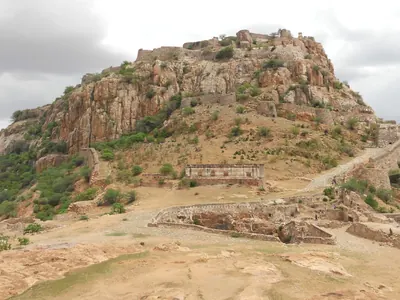
గుత్తి కోట
అనంతపురం జిల్లాలోని గుత్తి వద్ద రాతి కొండల వలయంపై ఉన్న కొండ కోట. పట్టణం చుట్టూ బయటి ప్రాకారం ఉంది. సముద్ర మట్టానికి 2,105 అడుగుల ఎత్తున ఒక నిటారైన బండపై అంతర్దుర్గం ఉంది. పద్నాలుగు ద్వారాల గుండా వంకర టింకరగా సాగే రాతి దారి దానికి చేరుస్తుంది. దాని శిఖరంపై 1121–23 నాటి పశ్చిమ చాళుక్య శాసనాలు, విజయనగర రాజు బుక్కను పొగిడే ఒక శ్లోకం చెక్కి ఉన్నాయి. దీన్ని శ్రీకృష్ణదేవరాయలు కట్టించాడని స్థానిక నమ్మకం. అనంతపురం గెజిటీర్ దాన్ని తోసిపుచ్చింది. మురారిరావు, హైదర్ అలీ, కంపెనీ వరుసగా దీన్ని పాలించారు.
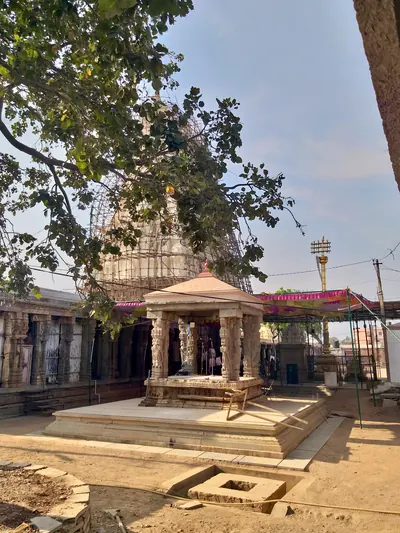
నరసింహ ఆలయాలు, అహోబిలం
కర్నూలు జిల్లాలోని నల్లమల కొండలలో దిగువ అహోబిలం, ఎగువ అహోబిలంలో ఉన్న నరసింహ ఆలయాలు. దిగువ అహోబిలంలో పూర్తికాని ఒక పెద్ద మండపం (స్తంభాల మండపం) ఉంది. ఫెర్గూసన్ పుస్తకాన్ని సవరించినవారు దాని నమూనాను విజయనగరంలోని విఠల ఆలయంతో పోల్చారు. కానీ దాని శైలి నాయకుల పనిలా ఉందన్నారు. సుమారు 1300లో ప్రతాపరుద్రుడు దీన్ని కట్టించాడన్న స్థానిక సంప్రదాయాన్ని వారు తోసిపుచ్చారు. అచ్యుతరాయలు, సదాశివరాయలు, మొదటి శ్రీరంగరాయలు, వెంకటపతిరాయల శాసనాలు మండపాలు, ఒక జయస్తంభం, ఒక గరుడ స్తంభం గురించి చెబుతాయి. గోల్కొండ రాజు ఏడు సంవత్సరాలు ఆలయాన్ని ఆక్రమించిన తర్వాత దాన్ని ఎలా తిరిగి దక్కించుకున్నారో కూడా అవి చెబుతాయి.
వేంకటేశ్వర ఆలయం, తిరుమల
తిరుపతి పైన తిరుమల కొండపై ఉన్న వేంకటేశ్వరుడి (శ్రీనివాస పెరుమాళ్) ఆలయం. దాని గోడలపై 1514 నాటి శ్రీకృష్ణదేవరాయల శాసనాలు, 1512–13 నాటి ఆయన రాణుల శాసనాలు ఉన్నాయి. రాజు, ఆయన రాణులు చిన్నాదేవి, తిరుమలాదేవిల రాగి విగ్రహాలు అక్కడ ఉన్నాయి. వాటిని ఆయన దేవుడి ముందు నిలబెట్టాడని తెలుగు రాయవాచకము చెబుతుంది. పేరు రాసి ఉన్న వెంకటపతి రాగి విగ్రహం కూడా ఉంది. ఫెర్గూసన్ పుస్తకాన్ని సవరించినవారు ఆలయాన్ని 'రెండో తరగతి ద్రావిడ ఆలయానికి సరైన ఉదాహరణ' అని భావించారు.
శాసనాలు
పెనుకొండ కోట శాసనం (1354)
క్రీ.శ. 1354
పెనుకొండ కోట ఉత్తర ద్వారపు ఒక బురుజుపై ఉన్న కనరీస్ (కన్నడ) శాసనం. దాని తేదీ శక 1276, జయ. ఇ. హుల్ష్ దాన్ని 1354 మార్చి 25కు సమానం చేశారు. మొదటి బుక్కరాయలు పాలిస్తూ, ఆయన కొడుకు విరూపణ్ణ పెనుగొండె సీమను పాలిస్తున్నప్పుడు మంత్రి అనంతరసుడు కోటను కట్టించాడని అది నమోదు చేస్తుంది. పట్టణం గురించి తేదీ ఉన్న అతి తొలి రికార్డు ఇదే. మొదటి విజయనగర వంశపు ఒక రాకుమారుడు అక్కడ నివసించాడని అది చూపిస్తుంది.
మొదటి బుక్కరాయల గుత్తి శిలాశాసనం
సుమారు క్రీ.శ. 1355
అనంతపురం జిల్లాలోని గుత్తి కోట శిఖరం దగ్గర ఒక రాతిపై చెక్కిన ఒకే సంస్కృత శ్లోకం. రాజు బుక్కుని భూపాలన చక్రానికి కేంద్రంగా 'కోటల రాజు గుత్తి-దుర్గాన్ని' అది పొగుడుతుంది. ఆ రాతిని కుడి వైపు మెలికలున్న విష్ణువు శంఖంతో అది పోలుస్తుంది. 1890లో దానిని సంపాదకత్వం వహించిన ఇ. హుల్ష్ ఆ రాజును విజయనగరానికి చెందిన మొదటి బుక్కునిగా భావించారు. 1882 నాటి సూయెల్ జాబితాలు శ్రీకృష్ణదేవరాయల ఒక అధికారిని సూచించాయి.
రెండవ సంగముని బిట్రగుంట దానశాసనం (1356)
క్రీ.శ. 1356
నెల్లూరు కలెక్టర్ కార్యాలయంలో ఉంచిన ఐదు రాగి రేకులు. 1895లో హెచ్. కృష్ణ శాస్త్రి వాటిని సంపాదకత్వం వహించి ప్రచురించారు. శక 1278 (1356) లో కంపుని కుమారుడు రెండవ సంగముడు బ్రాహ్మణులకు చేసిన దానాన్ని అవి నమోదు చేస్తాయి. అతను శ్రీకంఠపురంగా పేరు మార్చిన కావలి దగ్గరి బిట్రగుంట గ్రామాన్ని, కడప ప్రాంతంలో పుష్పగిరి దగ్గరి సింకేసరిని ఇచ్చాడు. దానపత్రం మొదటి సంగముని ఐదుగురు కుమారుల పేర్లు చెబుతుంది. అది మొదటి హరిహరుని వారసునిగా బుక్కుని కాకుండా కంపుని చేస్తుంది. రెండవ సంగముడు తన పినతండ్రి మొదటి బుక్కుని అధిపతిగా అంగీకరించకుండానే నెల్లూరు, కడప జిల్లాల్లోని భాగాలను పట్టుకున్నాడని కృష్ణ శాస్త్రి తేల్చారు.
బుక్కరాయసముద్రం చెరువు శాసనం (1364)
క్రీ.శ. 1364
అనంతపురంలోని పెద్ద చెరువు బుక్కరాయసముద్రం వద్ద ఒక రాతిపై ఉన్న కన్నడ శాసనం. దానికి విజయనగర బుక్కరాయల పాలనలో శక 1286, క్రోధి (1364) తేదీ ఉంది. 1919లో వి. రంగాచార్య సంగ్రహించినట్లు, మంత్రి అనంతరస ఒడయరు ఆ చెరువును తవ్వించి, దాని ఒడ్డున శంకరుని ఆలయం కట్టించాడని అది నమోదు చేస్తుంది. సి. పి. బ్రౌన్ 'రాజుల యుద్ధాలు' (The Wars of the Rajas) గా అనువదించిన తెలుగు చరిత్ర అదే సంవత్సరం ఇస్తుంది, కానీ కట్టించినవానిగా చిక్కప్ప ఒడెయరు పేరు చెబుతుంది.
కృష్ణదేవరాయలు, ఆయన రాణుల తిరుమల శాసనాలు (1513–1514)
క్రీ.శ. 1513–1514
తిరుమల కొండపై వేంకటేశ్వర ఆలయపు మొదటి, రెండవ ప్రాకారాల గోడలపై ఉన్న తెలుగు, కన్నడ, తమిళ శాసనాలు. శక 1434 (1512–13) నాటి రెండు శాసనాలు కృష్ణదేవరాయల రాణులు చిమ్నాజీ అమ్మ, తిరుమలమ్మల దానాలను నమోదు చేస్తాయి. శక 1436 (1514–15) నాటి నాలుగు శాసనాలు మూడు భాషలలో ఉన్నాయి. వాటిలో ఒకటి ప్రతాపరుద్ర గజపతిపై ఆయన దాడిని, కొండవీడు వరకు ఆయనను వెంబడించడాన్ని, ఉదయగిరిని పట్టుకోవడాన్ని పేర్కొంటుంది. రాజు, ఆయన ఇద్దరు రాణుల రాగి విగ్రహాలను కూడా ఆలయం భద్రపరుస్తోంది. ఆయన వాటిని దేవుడి ముందు నిలిపాడని తెలుగు రాయవాచకము చెబుతుంది.
కృష్ణదేవరాయల అమరావతి శాసనం (1515)
క్రీ.శ. 1515
అమరావతిలోని అమరేశ్వర ఆలయంలో ఒక రాతి పలకపై తెలుగు అక్షరాల్లో ఉన్న సంస్కృత పద్య శాసనం. 1903లో హెచ్. లూడర్స్ దానిని సంపాదకత్వం వహించి ప్రచురించారు. శివనసముద్రం, ఉదయగిరి, వినుకొండ, బెల్లంకొండలను జయించి, గజపతి కుమారుడు వీరభద్రుని ప్రాణాలతో పట్టుకున్న తర్వాత కొండవీడును తీసుకున్నవానిగా అది శ్రీకృష్ణదేవరాయలను పొగుడుతుంది. శక 1437 (1515) లో రాజు కృష్ణా ఒడ్డున అమరేశ దేవుని ముందు తులాపురుష దానం (తన బరువు బంగారం దానం) చేసి అగ్రహారాలు (బ్రాహ్మణ గ్రామాలు) ఇచ్చాడని అది నమోదు చేస్తుంది. అతని తూర్పు దండయాత్రను వర్ణించే మొదటి శాసనంగా దొరికింది ఇదే.
మంగళగిరి, కాజ స్తంభ శాసనాలు (1515–1518)
క్రీ.శ. 1515–1518
గుంటూరు దేశంలోని రెండు నాలుగు ముఖాల స్తంభాలు. ఒకటి మంగళగిరిలోని కొండ ఆలయ మెట్ల దగ్గర పడి ఉంది. మరొకటి కాజలోని కోదండరామస్వామి ఆలయంలో ఉంది. వాటిపై సుమారు 257 పంక్తుల దాదాపు ఒకే సంస్కృత పాఠం ఉంది. 1901లో హెచ్. లూడర్స్ వాటిని సంపాదకత్వం వహించారు. శ్రీకృష్ణదేవరాయల మంత్రి సాళువ తిమ్మరసు 1515 జూన్ 23న గజపతి పాలకుల నుండి కొండవీడును తీసుకున్నాడని అవి నమోదు చేస్తాయి. 1516, 1518 మధ్య వినుకొండ, కొండవీడు పాలకులుగా అతని మేనల్లుళ్లు నాదెండ్ల అప్ప, గోపన చేసిన దానాలను కూడా అవి జాబితా చేస్తాయి.
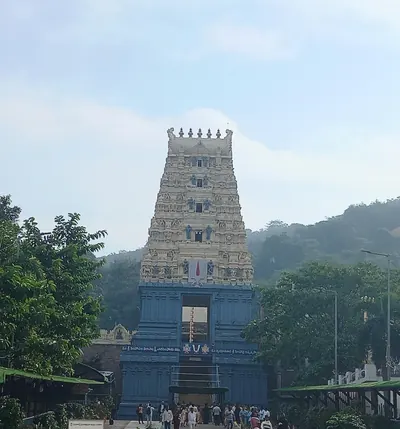
కృష్ణదేవరాయల సింహాచలం శాసనాలు (1516–1519)
క్రీ.శ. 1516–1519
విశాఖపట్నం దగ్గరి సింహాచలంలోని వరాహ-నరసింహ ఆలయంలో ఉన్న కృష్ణదేవరాయల మూడు తెలుగు శాసనాలు. అవి ఆస్థాన-మండపం (సభా మండపం) పునాదిపై, కేంద్ర గుడి చుట్టూ ఉన్న వసారాలోని ఒక గుండ్రని స్తంభంపై ఉన్నాయి. వాటి తేదీలు శక 1438 (1516), 1441 (1519). తన మొదటి దండయాత్రలో ఉదయగిరి, కొండవీడు, కొండపల్లి, రాజమహేంద్రవరాలను లొంగదీసుకున్న తర్వాత రాజు సింహాద్రికి వచ్చాడని అవి నమోదు చేస్తాయి. తన తల్లిదండ్రుల పుణ్యం కోసం ఆయన దేవుడికి 991 ముత్యాల హారాన్ని, ఇతర ఆభరణాలను ఇచ్చాడు. ఆయన రాణులు చిన్నాదేవి, తిరుమలదేవి కూడా దానాలు చేశారు. తర్వాత రాజు అనేక గ్రామాలను ఇచ్చాడు.
కృష్ణదేవరాయల శ్రీకాళహస్తి శాసనం (1516)
క్రీ.శ. 1516
శ్రీకాళహస్తిలోని కాళహస్తీశ్వర ఆలయ రెండవ ప్రాకారపు పడమటి గోడపై ఉన్న తెలుగు శాసనం. దాని తేదీ కృష్ణదేవరాయల పాలనలో శక 1438, ధాత్రి (1516). 1919లో వి. రంగాచార్య సంగ్రహించినట్లు, అది రాజు విజయాలను, ఆయన కాళహస్తి సందర్శనను, ఆలయపు వంద స్తంభాల మండపం (సభా భవనం), పెద్ద గోపురం (ద్వార శిఖరం) నిర్మాణాన్ని పేర్కొంటుంది. తెలుగు రాయవాచకము దానికి బదులుగా కాళహస్తిలో రాజు దానాలను శ్రీముఖ అనే చక్ర సంవత్సరానికి చెందినవిగా చెబుతుంది.
నాదెండ్ల గోపన కొండవీడు స్తంభ శాసనం (1520)
క్రీ.శ. 1520
కొండవీడులో అగ్రహారం (బ్రాహ్మణ గ్రామం) దగ్గర సంస్కృతం, తెలుగులో చెక్కిన నాలుగు ముఖాల స్తంభం. 1901లో హెచ్. కృష్ణ శాస్త్రితో కలిసి హెచ్. లూడర్స్ దానిని సంపాదకత్వం వహించారు. దానికి 1520 మే 2 నాటి చంద్రగ్రహణపు తేదీ ఉంది. కొండవీడు పాలకుడు, సాళువ తిమ్మరసు మేనల్లుడు నాదెండ్ల గోపన కొండవీడులోని రఘునాయక ఆలయాన్ని మళ్లీ కట్టించాడని అది నమోదు చేస్తుంది. కొండవీడు దేశంలోని ప్రతి దారిపై సరుకుల సుంకాలను అతను ఆ ఆలయానికి ఇచ్చాడు. సుమారు యాభై వస్తువుల రేట్ల జాబితా కూడా దానిలో ఉంది. దానాన్ని భంగపరిచే ఒడ్డ, తెలుగు, తురక రాజులను రికార్డు శపిస్తుంది.
అచ్యుతరాయల కాలపు లేపాక్షి ఆలయ శాసనాలు (1533–1538)
క్రీ.శ. 1533–1538
అనంతపురం జిల్లాలోని లేపాక్షి వీరభద్ర ఆలయ గోడలపై ఉన్న సుమారు పదిహేను సంస్కృత, కన్నడ శాసనాలు. 1912లో వాటిని నకలు చేశారు. వాటికి అచ్యుతరాయల పాలనలో శక 1455, 1460 (1533–1538) మధ్య తేదీలు ఉన్నాయి. వీరభద్ర (వీరేశ్వర), పాపవినాశ, రఘునాథ గుళ్లకు గ్రామాలు, సుంకాలు, భూముల దానాలను అవి నమోదు చేస్తాయి. దాతలు లేపాక్షికి చెందిన నంది లక్కిసెట్టి కుమారులు, పెనుకొండ విరూపణ్ణ (వీరప్పణ్ణయ్య), అతని సోదరుడు వీరణ నాయకుడు, రాజు స్వయంగా. స్థానిక సంప్రదాయం విరూపణ్ణను శ్రీకృష్ణదేవరాయల కోశాధికారిగా చెబుతుంది.
సదాశివరాయల కనుమ దానశాసనం (1548)
క్రీ.శ. 1548
అనంతపురం కలెక్టర్ దగ్గర ఉన్న, వరాహ ముద్రతో ఉన్న ఐదు తామ్ర రేకులు. 1918లో ఎస్. వి. విశ్వనాథ వాటిని సంపాదకత్వం వహించారు. శక 1470 (1548) లో విజయనగర రాజు సదాశివరాయలు చేసిన దానాన్ని అవి నమోదు చేస్తాయి. గుత్తి వలితలోని ముండిమడుగు సీమలో ఉన్న కనుమ గ్రామాన్ని అతను చెన్నకేశవ దేవునికి, ముప్పై బ్రాహ్మణ వాటాలకు ఇచ్చాడు. నాయకుడు అప్పలరాజు కోరిక మేరకు, తుంగభద్రపై విఠలేశ్వర దేవుని సన్నిధిలో దానం చేయబడింది. అప్పటికి తెలిసిన సదాశివరాయల తొలి తామ్ర దానపత్రం అదే అని దాని సంపాదకుడు పిలిచారు.
చెన్నప్ప నాయుని పెనుకొండ శాసనం (1577)
సుమారు క్రీ.శ. 1577
పెనుకొండ కోట ఉత్తర ద్వారం వద్ద ఉన్న ఆంజనేయ ఆలయ దక్షిణ గోడపై ఉన్న శాసనం. దాని తేదీ మొదటి శ్రీరంగరాయల పాలనలో శక 1499, ధాత (1576–77). తిరుమల అధికారి చెన్నప్ప నాయుడు తిరుమల కోసం పెనుకొండలో ఒక లోపలి కోట, ద్వారాలు, బురుజులు, కందకాలు కట్టించాడని అది నమోదు చేస్తుంది. 1566–67, 1568–69, 1576–77లో ఆయన ముస్లిం సేనానులను తిప్పికొట్టాడు. పెనుకొండను దేవుడు కట్టించిన నగరంగా, దాని గోడలను జయించానని ఏ మనిషీ గొప్పగా చెప్పుకోలేనిదిగా పిలుస్తూ శాసనం ముగుస్తుంది. 1565 యుద్ధానికి ముందే తిరుమల పెనుకొండను పాలించాడనడానికి రుజువుగా హెచ్. కృష్ణ శాస్త్రి దాన్ని చదివారు.
మొదటి శ్రీరంగరాయల అహోబిలం శాసనం (1584)
క్రీ.శ. 1584
కర్నూలు జిల్లాలోని దిగువ అహోబిలంలోని నరసింహ ఆలయం వద్ద ఒక రాతి పలకపై ఉన్న తెలుగు శాసనం. దానికి 'పెనుగొండలో పాలిస్తున్న' మొదటి శ్రీరంగరాయల పాలనా కాలంలో శక 1506 (1584) తేదీ ఉంది. 1919లో వి. రంగాచార్య దానిని సంగ్రహించారు. నాయకుడు వెంకటరాజు తాత గోల్కొండ రాజు ఇబ్రహీం అయిన 'విభురాము'ను వెళ్లగొట్టినందుకు అది ఆలయంలో అతనికి హక్కులు ఇస్తుంది. హండె నాయకులతో మైత్రిలో ఇబ్రహీం ఏడు సంవత్సరాలు ఆలయాన్ని ఆక్రమించాడు. 1585 నాటి వేంకటపతి సహచర పలక అదే నాయకుడు ఆలయానికి చేసిన దానాన్ని నమోదు చేస్తుంది.
ఆధారసూచికలు
గమనికలు (0)
ఆధారాలు (12)
ఈ పేజీలో పొరపాటు కనిపించిందా? మాకు తెలియజేయండి
చివరి సవరణ: