తెలుగు చరిత్ర · Telugu History

Two thousand years of the Trilinga land: kingdoms, people and everyday life

From the Stone Age and Asoka’s edicts to the two states of 2014 and their new districts of 2016–2025: the rulers, monuments, poets, crafts, faiths and everyday lives of the Telugu land — Coastal Andhra, Rayalaseema and Telangana — told from open, cited sources.

Trilinga: the land of the three lingas

The Telugu country has long been called Trilinga, “the land of the three lingas” of Shiva, and the name Telingana is traditionally explained from it.3,4,5,6 Vidyanatha’s Prataparudriya, written at the court of the Kakatiya king Prataparudra, places the three lingas at Srisailam, Kaleshvara and Draksharama.1,2

Most of our sources, from 1828 on, take Kaleshvara to be Kaleshwaram on the Godavari;4,5,6,7,8 Vidyanatha’s 1909 editor and the Madras gazetteers name Kalahasti instead. The map shows both.2,3,9 Some scholars doubt the explanation of the name altogether.10

More on the name, with all the readings →

Sources (10)
  1. Vidyanatha, Prataparudriya, ed. K. P. Trivedi (1909), p. 213, v. 22 (opens in a new tab)
  2. K. P. Trivedi, introduction to the Prataparudriya (1909), p. xii and notes (opens in a new tab)
  3. Imperial Gazetteer of India: Madras, Vol. I (1908), p. 192 (opens in a new tab)
  4. A. H. Arden, A Progressive Grammar of the Telugu Language (1873), p. 1 (opens in a new tab)
  5. J. A. C. Boswell, A Manual of the Nellore District (1873), p. 147 (opens in a new tab)
  6. P. Chenchiah and Raja M. Bhujanga Rao, A History of Telugu Literature (1928), p. 14 (opens in a new tab)
  7. H. H. Wilson, The Mackenzie Collection, Vol. I (1828), pp. 272–273 (opens in a new tab)
  8. Syed Siraj ul Hassan, The Castes and Tribes of H.E.H. the Nizam’s Dominions, Vol. I (1920), p. 121 (opens in a new tab)
  9. F. R. Hemingway, Madras District Gazetteers: Godavari, Vol. I (1907), p. 52 (opens in a new tab)
  10. A. C. Burnell, Elements of South-Indian Palaeography (1878), p. 23, note 1 (opens in a new tab)

Temple locations: Wikidata (CC0).
The temples of Trilinga, with both places proposed for KaleshvaraSrisailamDraksharamaKaleshwaramKalahastiN0200 km

Base map: Natural Earth (opens in a new tab) (public domain). Musi river: © OpenStreetMap contributors (opens in a new tab) (data under the ODbL).

Explore by era

Full timeline →

Swipe sideways to see the whole chart; tap a bar for details.

Each bar is a ruling power in its region; time runs left to right. Dashed = approximate dates. Select a bar for details.

250 BCE025050075010001250150017502000Mauryas & Satavahanas (300 BCE – 225 CE)Ikshvakus, Vishnukundins & early kingdoms (225–624 CE)Eastern Chalukyas & the Deccan powers (624–1163 CE)Kakatiyas (1163–1323 CE)Nayakas, Reddis & Bahmanis (1323–1518 CE)Vijayanagara & the Qutb Shahis (1336–1687 CE)Mughals, Asaf Jahis & the British (1687–1948 CE)Reform, freedom & people's movements (1850–1956 CE)Andhra State & Andhra Pradesh (1953–2014 CE)TelanganaMauryasIkshvakusSatavahanasVakatakasKotilingala coin kingsRashtrakutas of MalkhedGajapatis of OrissaEastern Chalukyas of VengiKakatiyasWestern Chalukyas of KalyaniCoastal AndhraMauryasIkshvakusCholas of TanjoreSatavahanasPallavasPallavasSalankayanas of VengiEastern Gangas of KalingaEastern Chalukyas of VengiEast India CompanyChalukyas of BadamiVelanati ChodasMusunuri NayakasWestern Chalukyas of KalyaniCholas of TanjoreRayalaseemaMauryasSatavahanasPallavasTelugu Cholas of RenaduChalukyas of BadamiBanasHoysalasMughal EmpireVaidumbasNawabs of KurnoolNolamba-PallavasRashtrakutas of MalkhedMarathasMysore under Haidar Ali and Tipu Sultan250 BCE025050075010001250150017502000
Show as a list

Mauryas & Satavahanas 300 BCE – 225 CE

Telangana
Mauryas (c. 272 BCE – 185 BCE) · Satavahanas (c. 220 BCE – 225 CE) · Kotilingala coin kings (c. 200 BCE – 52 BCE)
Coastal Andhra
Mauryas (c. 260 BCE – 185 BCE) · Satavahanas (c. 220 BCE – 225 CE)
Rayalaseema
Mauryas (c. 268 BCE – 185 BCE) · Satavahanas (c. 1–225 CE)

Ikshvakus, Vishnukundins & early kingdoms 225–624 CE

Telangana
Ikshvakus (c. 225–352 CE) · Vishnukundins (c. 375–612 CE) · Vakatakas (c. 300–500 CE)
Coastal Andhra
Ikshvakus (c. 225–350 CE) · Vishnukundins (c. 500–630 CE) · Pallavas (c. 250–630 CE) · Salankayanas of Vengi (c. 300–470 CE) · Eastern Gangas of Kalinga (c. 537–1434 CE) · Eastern Chalukyas of Vengi (c. 615–973 CE) · Chalukyas of Badami (c. 615–642 CE)
Rayalaseema
Pallavas (c. 300–900 CE) · Telugu Cholas of Renadu (c. 550–800 CE)

Eastern Chalukyas & the Deccan powers 624–1163 CE

Telangana
Chalukyas of Badami (c. 655–753 CE) · Chalukyas of Mudigonda (c. 890–1218 CE) · Chalukyas of Vemulavada (c. 750–973 CE) · Kakatiyas (c. 1052–1162 CE) · Rashtrakutas of Malkhed (c. 753–973 CE) · Telugu Chodas of Kanduru (c. 1060–1160 CE) · Eastern Chalukyas of Vengi (c. 935–973 CE) · Western Chalukyas of Kalyani (c. 973–1163 CE)
Coastal Andhra
Vishnukundins (c. 500–630 CE) · Chalukyas of Badami (c. 655–680 CE) · Cholas of Tanjore (c. 999–1135 CE) · Pallavas (c. 250–630 CE) · Eastern Chalukyas of Vengi (c. 999–1077 CE) · Kotas of Dharanikota (c. 1100–1276 CE) · Eastern Gangas of Kalinga (c. 537–1434 CE) · Haihayas of Kona and Palnadu (c. 1073–1364 CE) · Telugu Chodas of Pottapi and Nellore (c. 1106–1316 CE) · Velanati Chodas (c. 1118–1209 CE) · Western Chalukyas of Kalyani (c. 1118–1126 CE)
Rayalaseema
Pallavas (c. 300–900 CE) · Cholas of Tanjore (c. 985–1268 CE) · Telugu Cholas of Renadu (c. 550–800 CE) · Western Chalukyas of Kalyani (c. 1000–1190 CE) · Chalukyas of Badami (c. 654–753 CE) · Telugu Chodas of Pottapi and Nellore (c. 1120–1268 CE) · Banas (c. 700–915 CE) · Vaidumbas (c. 750–1000 CE) · Nolamba-Pallavas (c. 750–974 CE) · Rashtrakutas of Malkhed (c. 750–973 CE)

Kakatiyas 1163–1323 CE

Telangana
Chalukyas of Mudigonda (c. 890–1218 CE) · Kakatiyas (c. 1163–1323 CE)
Coastal Andhra
Kakatiyas (c. 1185–1323 CE) · Kotas of Dharanikota (c. 1100–1276 CE) · Eastern Gangas of Kalinga (c. 537–1434 CE) · Haihayas of Kona and Palnadu (c. 1073–1364 CE) · Telugu Chodas of Pottapi and Nellore (c. 1106–1316 CE) · Velanati Chodas (c. 1118–1209 CE) · Pandyas (c. 1260–1264 CE) · Cholas of Tanjore (c. 1135–1264 CE)
Rayalaseema
Cholas of Tanjore (c. 985–1268 CE) · Pandyas (1285–1293 CE) · Western Chalukyas of Kalyani (c. 1000–1190 CE) · Kakatiyas (c. 1250–1323 CE) · Telugu Chodas of Pottapi and Nellore (c. 1120–1268 CE) · Hoysalas (c. 1178–1342 CE)

Nayakas, Reddis & Bahmanis 1323–1518 CE

Telangana
Delhi Sultanate (Tughluqs) (c. 1323–1336 CE) · Bahmani Sultanate (c. 1347–1518 CE) · Musunuri Nayakas (c. 1336–1368 CE) · Gajapatis of Orissa (c. 1459–1461 CE) · Adil Shahis of Bijapur (c. 1489–1686 CE) · Recherla Velamas (Padmanayakas) (c. 1361–1475 CE) · Shitab Khan (Sitapati) of Warangal (c. 1504–1516 CE)
Coastal Andhra
Vijayanagara Empire (c. 1350–1579 CE) · Delhi Sultanate (Tughluqs) (c. 1323–1326 CE) · Reddis of Rajahmundry (c. 1386–1448 CE) · Bahmani Sultanate (c. 1471–1489 CE) · Eastern Gangas of Kalinga (c. 537–1434 CE) · Gajapatis of Orissa (c. 1446–1571 CE) · Haihayas of Kona and Palnadu (c. 1073–1364 CE) · Reddis of Kondaveedu (c. 1325–1424 CE) · Musunuri Nayakas (c. 1325–1346 CE)
Rayalaseema
Vijayanagara Empire (c. 1336–1646 CE) · Reddis of Kondaveedu (c. 1346–1386 CE) · Hoysalas (c. 1178–1342 CE)

Vijayanagara & the Qutb Shahis 1336–1687 CE

Telangana
Bahmani Sultanate (c. 1347–1518 CE) · Vijayanagara Empire (c. 1563–1565 CE) · Musunuri Nayakas (c. 1336–1368 CE) · Gajapatis of Orissa (c. 1459–1461 CE) · Adil Shahis of Bijapur (c. 1489–1686 CE) · Recherla Velamas (Padmanayakas) (c. 1361–1475 CE) · Shitab Khan (Sitapati) of Warangal (c. 1504–1516 CE) · Qutb Shahis of Golconda (c. 1518–1687 CE)
Coastal Andhra
Vijayanagara Empire (c. 1350–1579 CE) · Reddis of Rajahmundry (c. 1386–1448 CE) · Bahmani Sultanate (c. 1471–1489 CE) · Qutb Shahis of Golconda (c. 1524–1687 CE) · Eastern Gangas of Kalinga (c. 537–1434 CE) · Gajapatis of Orissa (c. 1446–1571 CE) · Haihayas of Kona and Palnadu (c. 1073–1364 CE) · Reddis of Kondaveedu (c. 1325–1424 CE) · Musunuri Nayakas (c. 1325–1346 CE)
Rayalaseema
Vijayanagara Empire (c. 1336–1646 CE) · Marathas (c. 1677–1687 CE) · Reddis of Kondaveedu (c. 1346–1386 CE) · Adil Shahis of Bijapur (c. 1568–1686 CE) · Qutb Shahis of Golconda (c. 1579–1687 CE) · Hoysalas (c. 1178–1342 CE) · Mughal Empire (c. 1686–1724 CE)

Mughals, Asaf Jahis & the British 1687–1948 CE

Telangana
Mughal Empire (1687–1724 CE) · British Crown (Madras Presidency) (1860–1947 CE) · Asaf Jahi Nizams of Hyderabad (1724–1948 CE)
Coastal Andhra
Mughal Empire (1687–1724 CE) · French East India Company (1750–1759 CE) · Nawabs of the Carnatic (Arcot) (c. 1710–1801 CE) · British Crown (Madras Presidency) (1858–1947 CE) · Asaf Jahi Nizams of Hyderabad (1724–1753 CE) · Madras State (1947–1953 CE) · East India Company (1759–1858 CE)
Rayalaseema
Nawabs of the Carnatic (Arcot) (c. 1710–1801 CE) · British Crown (Madras Presidency) (1858–1947 CE) · Nawabs of Cuddapah (c. 1714–1779 CE) · East India Company (1792–1858 CE) · Madras State (1947–1953 CE) · Banganapalle State (c. 1724–1948 CE) · Mughal Empire (c. 1686–1724 CE) · Morari Rao Ghorpade of Gooty (c. 1741–1776 CE) · Nawabs of Kurnool (c. 1690–1839 CE) · Asaf Jahi Nizams of Hyderabad (c. 1724–1800 CE) · Marathas (c. 1743–1774 CE) · Mysore under Haidar Ali and Tipu Sultan (c. 1762–1799 CE)

Reform, freedom & people's movements 1850–1956 CE

Telangana
British Crown (Madras Presidency) (1860–1947 CE) · Asaf Jahi Nizams of Hyderabad (1724–1948 CE) · Hyderabad State (Indian Union) (1948–1956 CE)
Coastal Andhra
French East India Company (1817–1954 CE) · British Crown (Madras Presidency) (1858–1947 CE) · Madras State (1947–1953 CE) · East India Company (1759–1858 CE) · Andhra State (1953–1956 CE)
Rayalaseema
British Crown (Madras Presidency) (1858–1947 CE) · East India Company (1792–1858 CE) · Madras State (1947–1953 CE) · Banganapalle State (c. 1724–1948 CE) · Andhra State (1953–1956 CE)

Andhra State & Andhra Pradesh 1953–2014 CE

All three regions
Andhra Pradesh (united) (1956–2014 CE)
Telangana
Hyderabad State (Indian Union) (1948–1956 CE)
Coastal Andhra
French East India Company (1817–1954 CE) · Andhra State (1953–1956 CE)
Rayalaseema
Andhra State (1953–1956 CE)
Kingdoms and empires Sultanates Colonial powers Indian states (1947 onward) Uncertain or debated dates Held another region firstSelect an era band to zoom in; hover over a bar for its name and dates.

Featured

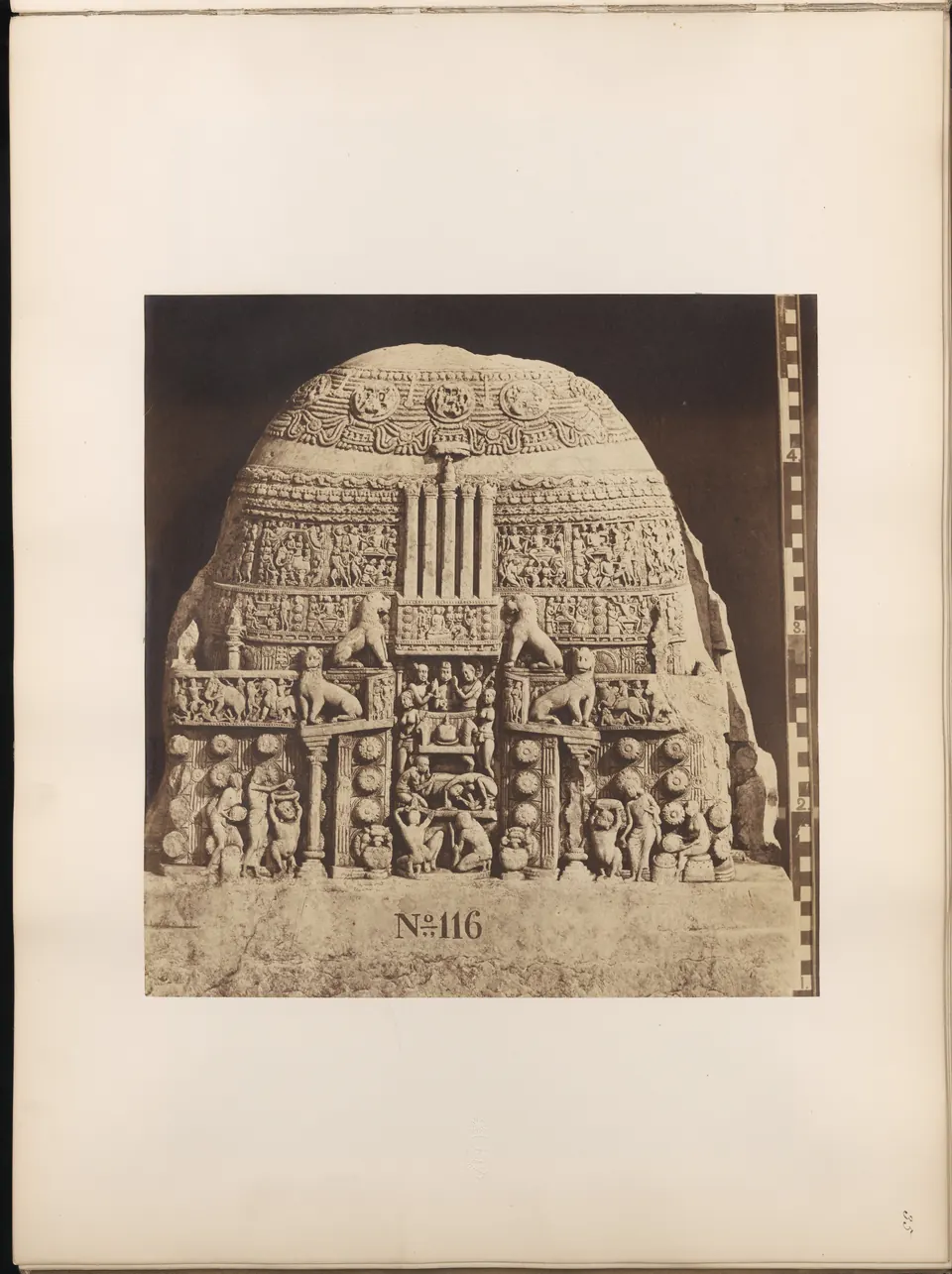
  1. 1858 albumen photograph of an Amaravati drum slab showing a carved stupa with nagas worshipping at its gateway (Elliot no. 116).Monuments · c. 200 BCE – 300 CEAmaravati MahachaityaThe great Buddhist stupa at Amaravati stood beside the Krishna. It may have been founded around 200 BCE and was rebuilt with carved limestone railings in the 2nd–3rd centuries CE. From 1796, people dug it up for building materials. It is now known mainly through its scattered sculptures.Read more →

    Amaravati drum slab, photographed 1858

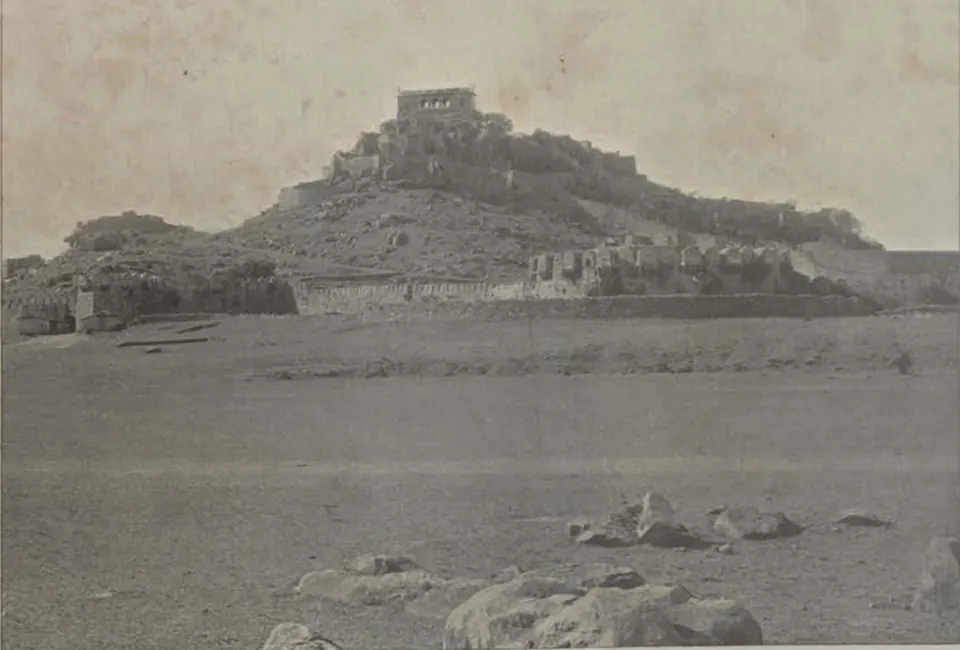
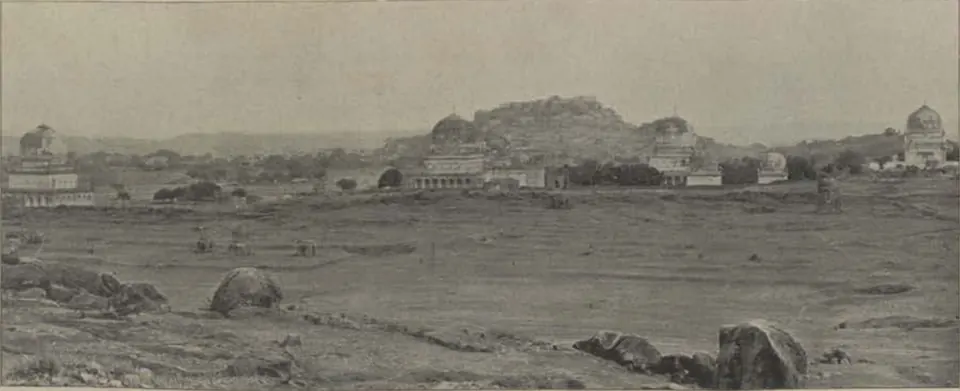
  2. The citadel of Golconda on its hill, seen across an open plain.MonumentsGolconda FortGolconda is a walled hill fortress five miles west of Hyderabad. The ruler of Warangal handed it to the Bahmani sultans in the 14th century. It later became the seat of the Qutb Shahi sultans, and Ibrahim Qutb Shah rebuilt it in stone. After a siege lasting more than eight months, it fell to Aurangzeb in 1687.Read more →

    Golconda: "View of the Citadel and Fort Walls, Golconda" (Campbell 1898, p. 239)

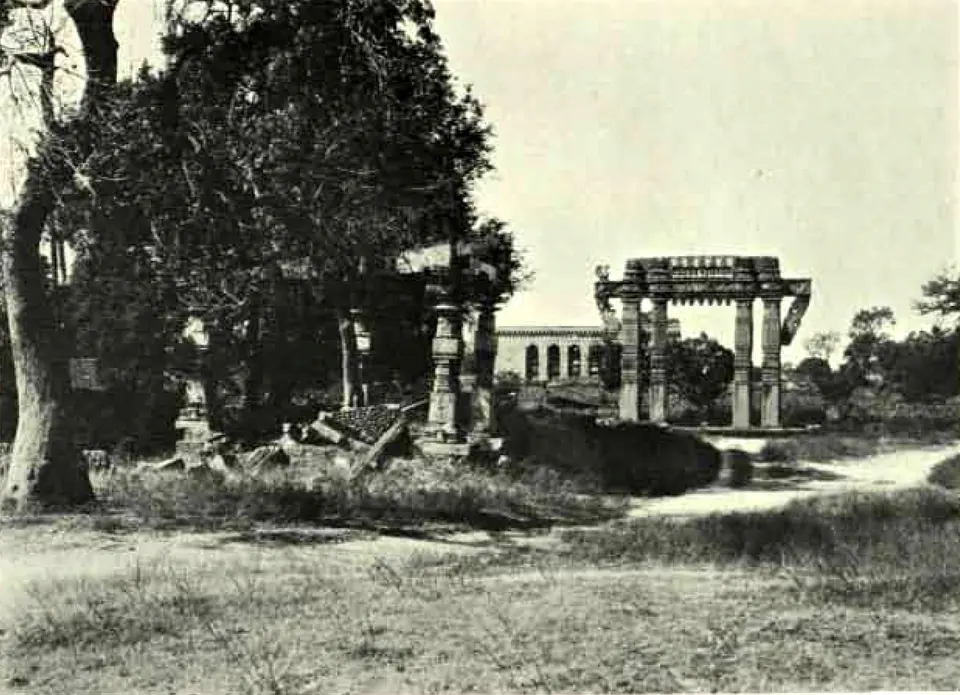
  3. A carved stone gateway standing among grass and trees, with fallen temple stones and a pillar at the left and an arcaded building in the distance.MonumentsWarangal FortWarangal fort was the fortified Kakatiya capital of Orugallu. An earthen wall and a stone wall, with moats, surrounded the round city. Four carved stone gateways survive from its central Svayambhu temple. The fort resisted Delhi armies from 1310, before falling to them in the 1320s.Read more →

    Ruins of the Old Temple, Warangal Fort (Hyderabad Arch. Report 1925-26, Pl. XVI (a))

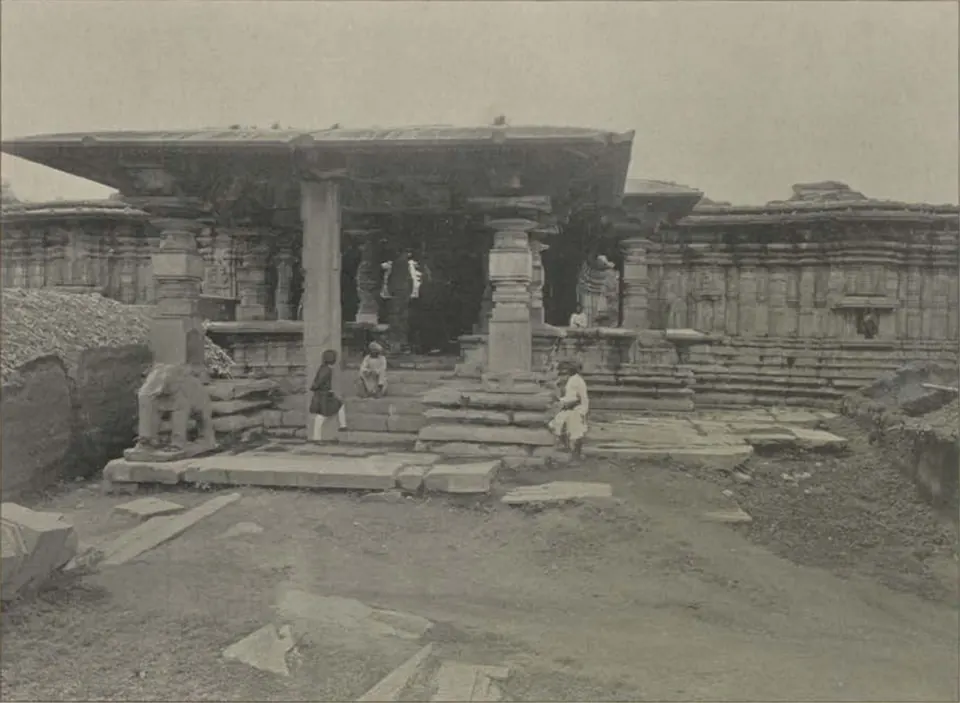
  4. The Thousand Pillar Temple at Hanamkonda, a pillared hall of dark stone with people on its steps.Monuments · 1163 CEThousand Pillar TempleThe Rudreshvara temple at Hanamkonda has three shrines, dedicated to Shiva, Vishnu and Surya. The Kakatiya ruler Rudradeva consecrated it in January 1163. He also had the story of his family's rise to power inscribed at the temple.Read more →

    Hanamkonda: "The 1,000-Pillared Temple, Hanamkonda" (Campbell 1898, p. 481)

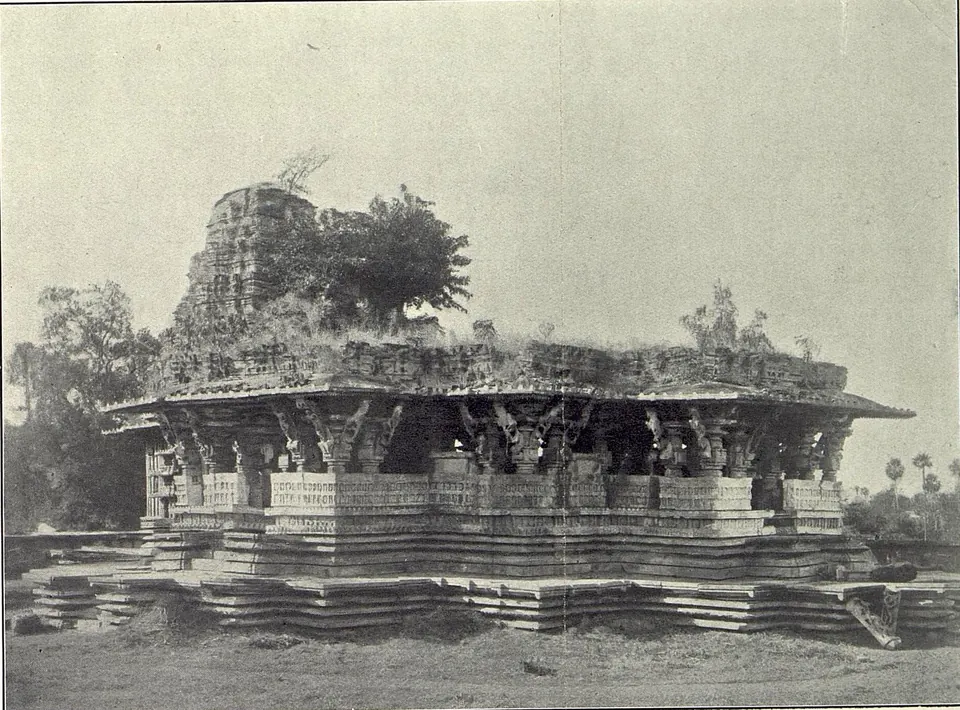
  5. The Ramappa temple seen from the south-east: a pillared hall with deep eaves on a broad stepped platform, its roof and broken tower overgrown with plants and a small tree.Monuments · 1213 CERamappa TempleRecherla Rudra, a Kakatiya general, founded the Rudreshvara temple at Palampet in 1213, beside Ramappa lake. It is famous for the bracket figures beneath its eaves, carved dark-stone pillars and lightweight brick tower. It has been a UNESCO World Heritage Site since 2021.Read more →

    Great Temple, Palampet: view from S.-E. (Yazdani 1922, Pl. XXVIII (a))

  6. The Qutb Shahi tombs with their domes, and Golconda fort on its hill behind.Monuments · c. 1543–1674 CEQutb Shahi TombsThis royal burial ground lies half a mile north of Golconda Fort. It contains the domed tombs of seven Qutb Shahi kings and their family members, along with mosques and a bath where bodies were washed before burial. The buildings date from the 1540s to the 1670s.Read more →

    Golconda: "The Kings' Tombs, with Golconda in the Background" (Campbell 1898, p. 246)

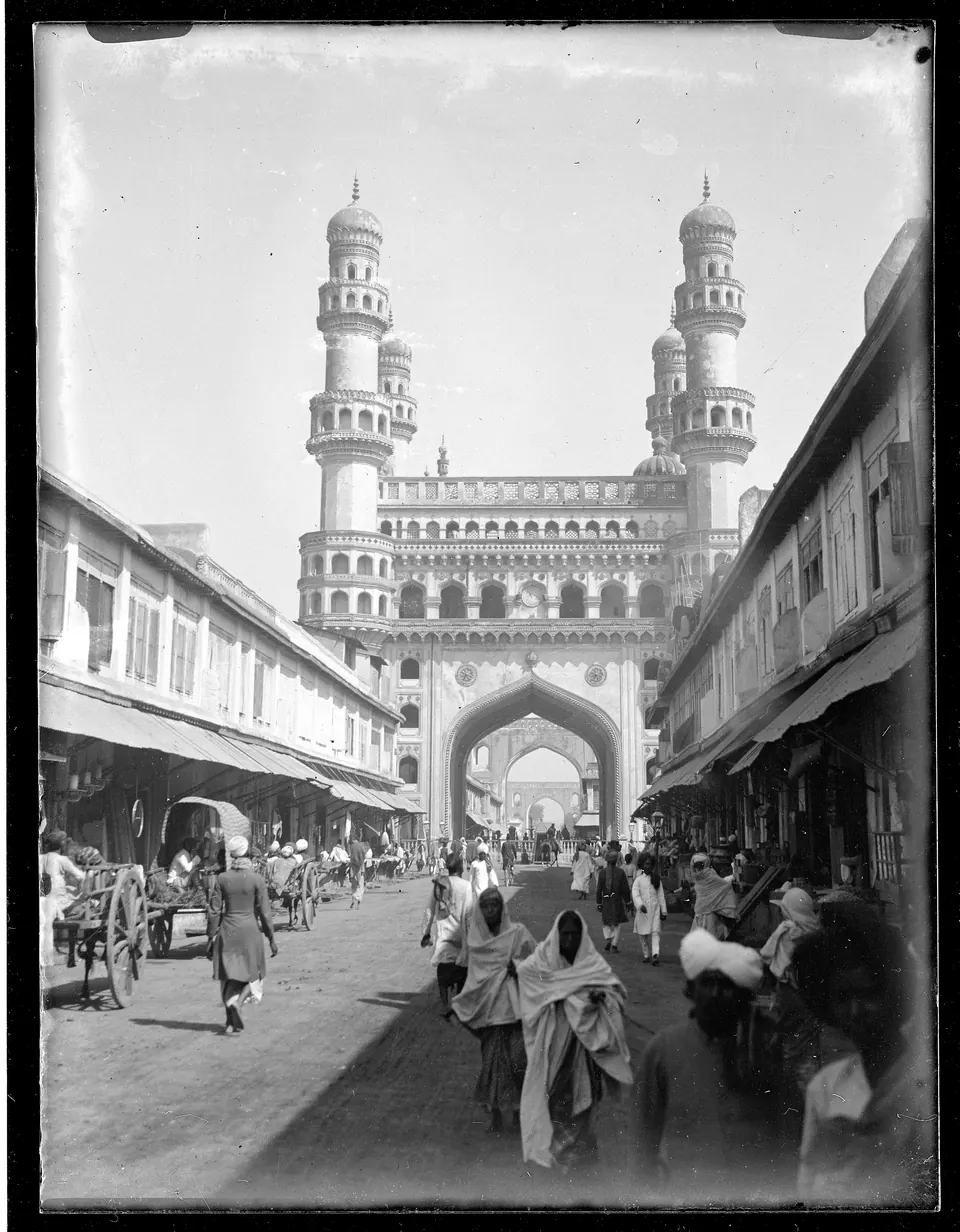
  7. 1887 glass-plate photograph of the Charminar at the end of a market street, with pedestrians in the foreground.Monuments · c. 1591 CECharminarCharminar is a gateway monument with four minarets in the centre of old Hyderabad. Muhammad Quli Qutb Shah built it when he founded the city. The Imperial Gazetteer dates it to 1591; Bilgrami gives AH 999–1000 (1590–91).Read more →

    Charminar in 1887

Explore by theme

View all →

Recently added

Places

Hayathnagar

Village about nine miles east of Hyderabad on the old Masulipatam road. Hayat Bakhsh Begum, mother of Abdullah Qutb Shah, founded it in AH 1035 (1625–26) as Hayatabad. A great Qutb Shahi mosque stands inside a walled caravanserai (travellers' inn) with several hundred rooms. It has been identified with Tavernier's 'Jatenagar', the second stage on his route from Golconda to the Kollur diamond mine.

Institutions

Government Training College, Rajahmundry

1883 CE

A college for training Telugu teachers at Rajahmundry. It began in 1883 as a district board normal school, became a college in February 1894 and trained graduates for the L.T. (Licentiate in Teaching) from 1904. Its graduate class was moved to Saidapet near Madras in 1911, but a separate Teachers' College for the Telugu districts reopened at Rajahmundry on 2 July 1917.

People

Kandukuri Rajyalakshmi

1851–1910 CE

Kandukuri Rajyalakshmi (1851–1910), born Bapamma at Kanteru, was the wife and partner of the reformer Kandukuri Veeresalingam. She taught in his girls' school, cooked and carried water for the first widow remarriages when others refused, took in widows and deserted women at Rajahmundry, and is called the first woman of the Andhra region to take up social reform.

People

Mulla Abdul Qayum

1853–1906 CE

Mulla Abdul Qayum (1853–1906) was a scholar and officer of the Nizam's Hyderabad who led the early public awakening there. He joined the Indian National Congress soon after 1885, wrote a plea for compulsory education in 1894, helped to found the Dairat-ul-Maarif and a state library, and with Aghornath Chattopadhyaya began the Swadeshi agitation in Hyderabad in 1905.

People

Sattiraju Sitaramaiah

1864–1945 CE

Sattiraju Sitaramaiah (1864–1945) was a lawyer and journalist of the Godavari country who founded the Hindu Sundari at Eluru in April 1902, the first Telugu journal for women to be edited by women. He also ran a law fortnightly and a weekly, the Deshopakari, and put the educated women of the Andhra country in touch with one another.

People

K. N. Kesari

1875–1953 CE

Dr K. N. Kesari (1875–1953) rose from a poor family to wealth by his own effort in Madras, and spent much of it on public causes. On 1 March 1928 he founded the Gruhalakshmi, a Telugu monthly for women, which he edited until his death and which gave an award to women writers. His memoir, Naa Chinnanati Muchchatlu, came out in 1953.

Latest updates

All updates →

How we source

Every page lists the books, inscriptions, images and videos it draws on. We write in our own words, quote only public-domain texts, and credit every image.

About →